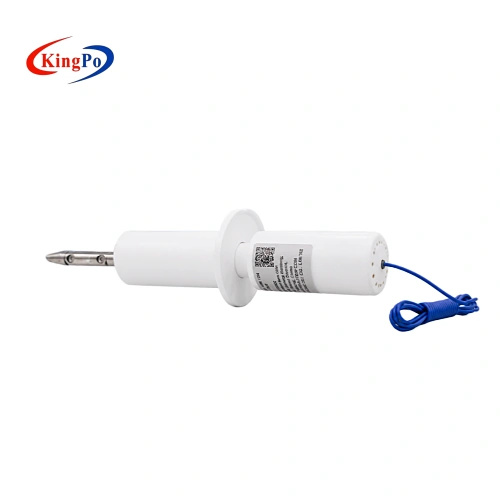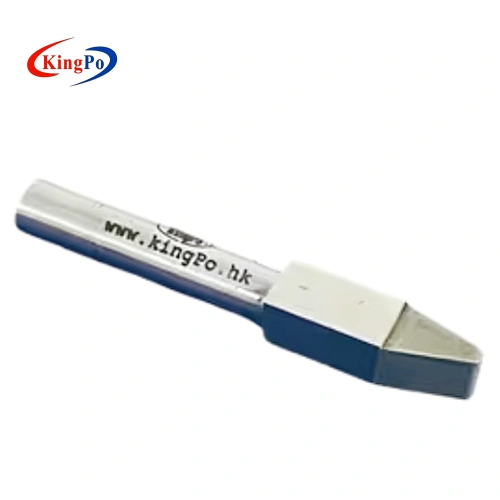
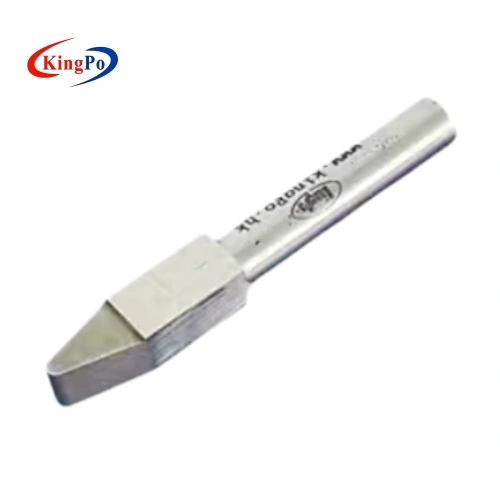
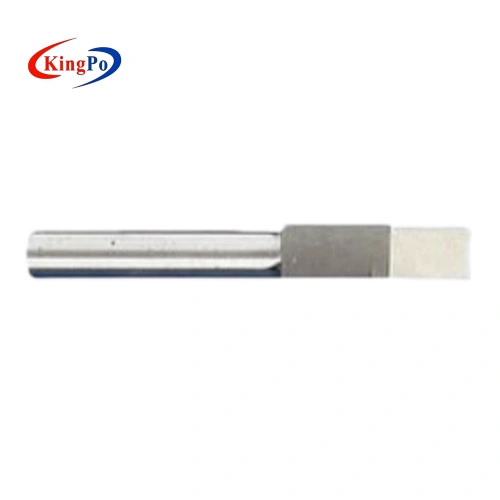
KINGPO IEC 61010-2-012 scratching tool with hard-soldered K10 carbide tip in angled view
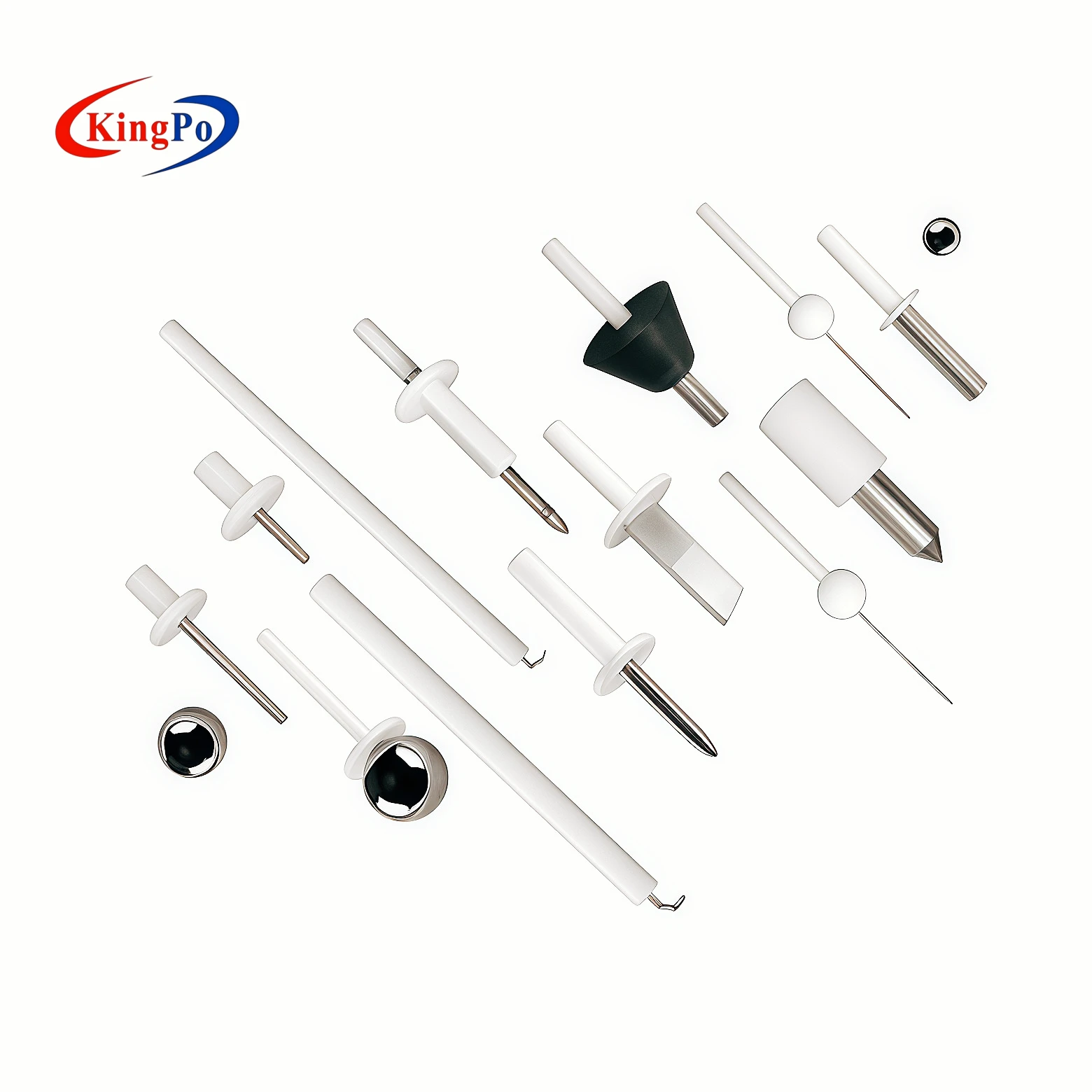
IEC 61010-2-012 Figure 103 scratching tool with K10 carbide tip shown from the side
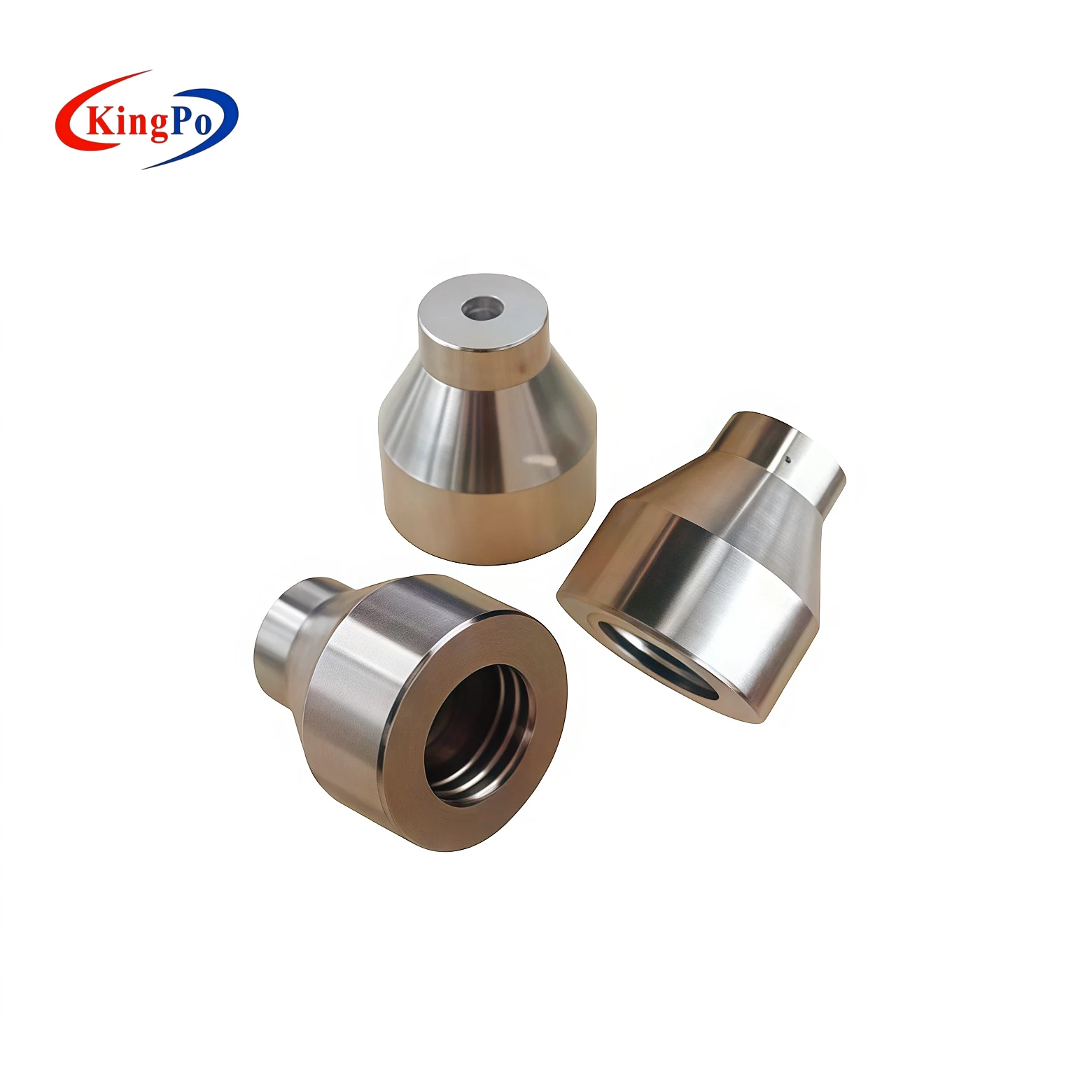
IEC 61010-2-012 Figure 103 carbide scratching tool for laboratory safety testing
KINGPO IEC 61010-2-012 scratching tool with hard-soldered K10 carbide tip in angled view
IEC 61010-2-012 Figure 103 scratching tool with K10 carbide tip shown from the side
IEC 61010-2-012 Figure 103 carbide scratching tool for laboratory safety testing

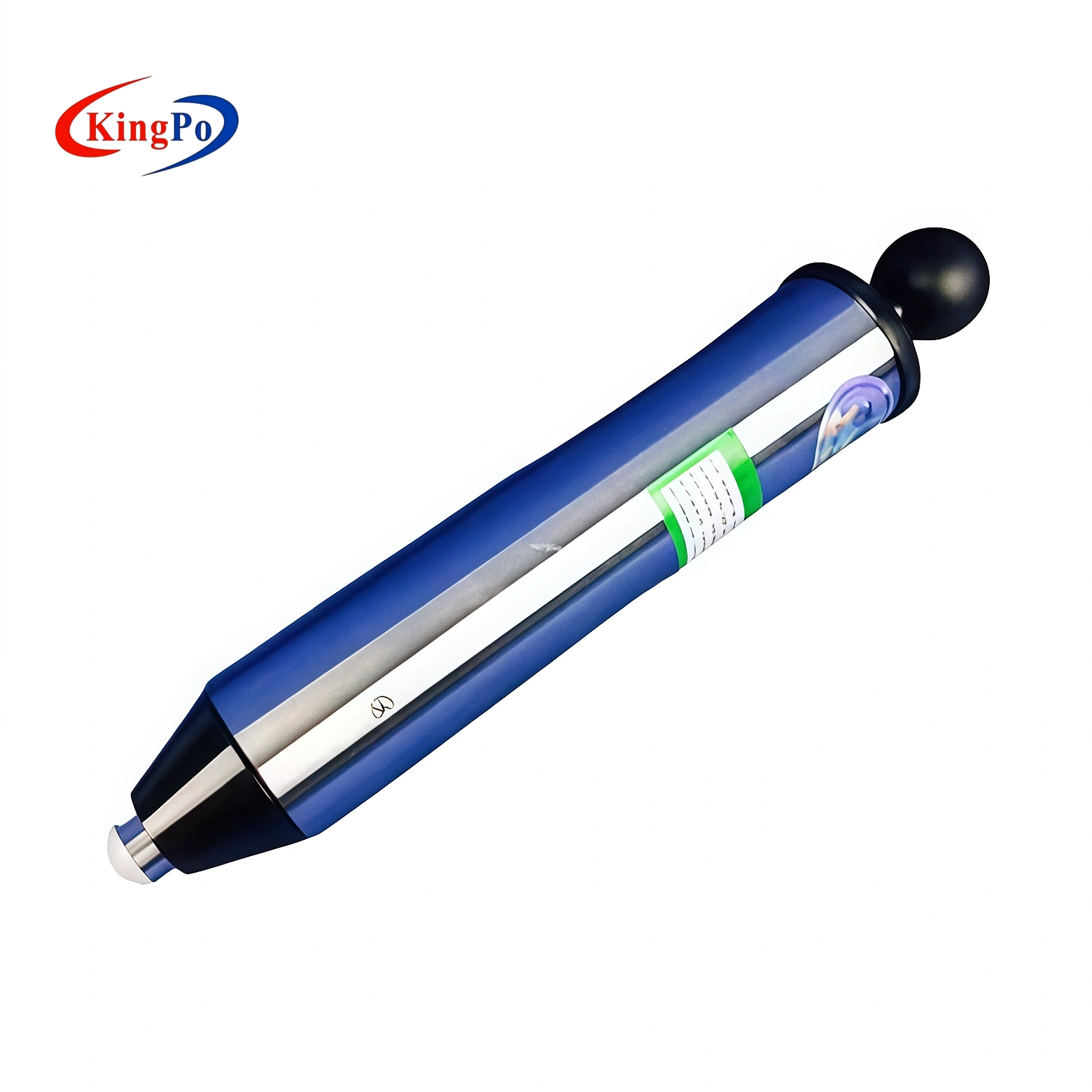
IEC 61010-2-012 Figure 103 Scratching Tool / Refrigerant Circuit Scratch Test Tool

The KingPo KP-ST10 Scratching Tool is designed for scratch testing associated with IEC 61010-2-012:2019, Figure 103, which specifies the details of the scratching tool tip used in the standard’s safety test procedures. IEC 61010-2-012 addresses particular safety requirements for climatic and environmental testing equipment and other temperature-conditioning equipment.

  • Model: KP-ST10
  • Applicable Standard: IEC 61010-2-012:2019
  • Standard Reference: Figure 103 – Details of scratching tool tip
  • Test Function: Produces the prescribed scratch on applicable surfaces during the relevant safety test
  • Tip Material: Hard-soldered K10 carbide
  • Surface Roughness: 1.6 μm
  • Typical Users: Product safety laboratories, certification/testing organizations, manufacturers and R&D/QA departments
  • Configuration Note: Confirm the applicable standard edition, test clause and EUT before ordering

IEC 61010-2-012 Figure 103 Scratching Tool

Product Overview

IEC 61010-2-012 contains particular safety requirements for equipment used for climatic and environmental testing and other forms of temperature conditioning. Its scope includes equipment in which refrigerating systems, heating functions or other environmental-conditioning functions can introduce additional hazards. The standard is intended to be used together with IEC 61010-1.

The KP-ST10 IEC 61010-2-012 Figure 103 Scratching Tool provides the mechanical scratching tip required for the applicable scratch-test procedure.
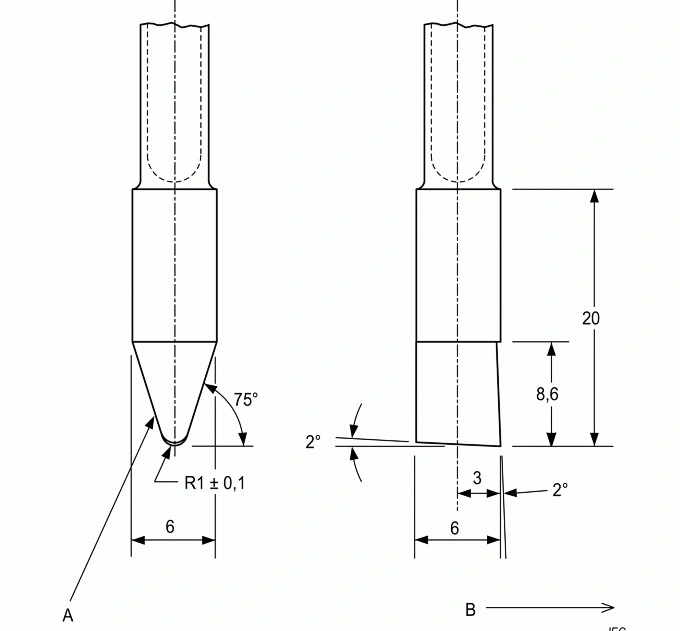
IEC 61010-2-012 Figure 103 scratching tool tip dimensions and geometry

This is not a general-purpose coating scratch tester or a measurement instrument for determining scratch resistance. Its purpose is more specific: it provides a defined scratching tool for use where the IEC 61010-2-012 test procedure requires an applicable surface to be scratched before the subsequent safety assessment.

The scratching tool therefore represents one component of the overall compliance test setup. Use of the KP-ST10 alone does not demonstrate conformity with the complete IEC 61010-2-012 standard.

What Does the Scratching Tool Test?

The KP-ST10 is used to create scratches on applicable surfaces specified by the relevant IEC 61010-2-012 test procedure.

In refrigerating-system safety evaluation, scratching is used to assess surfaces that may be exposed to foreseeable mechanical damage. Related IEC 61010 refrigerating-equipment requirements use scratch testing on accessible surfaces of protected cooling systems, followed where applicable by further pressure evaluation.

For IEC 61010-2-012 projects, the exact:

  • surface to be scratched,
  • number and location of scratches,
  • applied test conditions,
  • subsequent test procedure, and
  • acceptance criteria

should always be determined from the applicable edition and clause of the standard for the equipment under test.

Technical Specifications

The confirmed product-specific information currently available for KingPo KP-ST10 is shown below.

Item Specification
Product Name IEC 61010-2-012 Figure 103 Scratching Tool
Model KP-ST10
Applicable Standard IEC 61010-2-012:2019
Figure Reference Figure 103
Figure Description Details of scratching tool tip
Tip Material Hard-soldered K10 carbide
Surface Roughness 1.6 μm
Product Type Mechanical scratching test tool

IEC 61010-2-012 and the Figure 103 Requirement

IEC 61010-2-012:2019 is titled “Safety requirements for electrical equipment for measurement, control, and laboratory use – Part 2-012: Particular requirements for climatic and environmental testing and other temperature conditioning equipment.” Figure 103 in this standard is identified as the figure showing the details of the scratching tool tip.

IEC explains that Part 2-012 specifically addresses hazards associated with equipment where heating and refrigerating systems interact in a manner that can create additional or more severe hazards. It can also apply to certain equipment involving other environmental-conditioning factors.

This distinction matters when selecting the test tool because the IEC 61010 series contains different Part 2 standards for different equipment architectures.

IEC 61010-2-011 or IEC 61010-2-012?

These standards should not be treated as interchangeable simply because the equipment contains a refrigerating system.

IEC 61010-2-011 addresses equipment incorporating refrigerating systems, while IEC 61010-2-012 addresses equipment in which heating and refrigerating functions interact to create additional hazards, together with certain other climatic/environmental conditioning functions. The IEC 61010-2-012 introduction specifically explains the relationship among Parts 2-010, 2-011 and 2-012.

For this reason, laboratories should confirm the applicable Part 2 standard before ordering a scratching tool solely by figure number.

How the Scratching Tool Is Used

A typical laboratory workflow is:

01
Confirm the applicable standard and clause.
Determine that IEC 61010-2-012 applies to the EUT and confirm the standard edition being used.
02
Identify the specified test surface.
Determine which accessible refrigerating-system or related surface is subject to the scratch test under the applicable requirement.
03
Verify the scratching tool.
Check that the Figure 103 tool and carbide tip are suitable for the controlled test procedure.
04
Perform the prescribed scratching operation.
Apply the tool according to the force, direction, location and other conditions defined by the applicable standard or laboratory procedure.
05
Carry out the required subsequent assessment.
Complete any inspection, pressure test or other evaluation required by the applicable clause.
The test force and other procedural values should be taken from the controlled copy of the applicable standard rather than inferred from the scratching tool itself.

Figure 103 Tool Construction

Hard-Soldered K10 Carbide Tip

The KP-ST10 uses a hard-soldered K10 carbide tip. This is the principal working element that contacts the test surface during scratching. The source product specification identifies K10 carbide as the tip material.

Surface Roughness

The specified surface roughness is:

1.6 μm

This value is retained from the original KP-ST10 technical information and should be treated as a tool specification rather than as a DUT acceptance criterion.

Figure 103 Geometry

The product is referenced to IEC 61010-2-012 Figure 103, which defines the details of the scratching tool tip.

Where dimensional inspection data are required for an accredited laboratory or certification project, the required drawing dimensions and verification documentation should be confirmed before quotation.
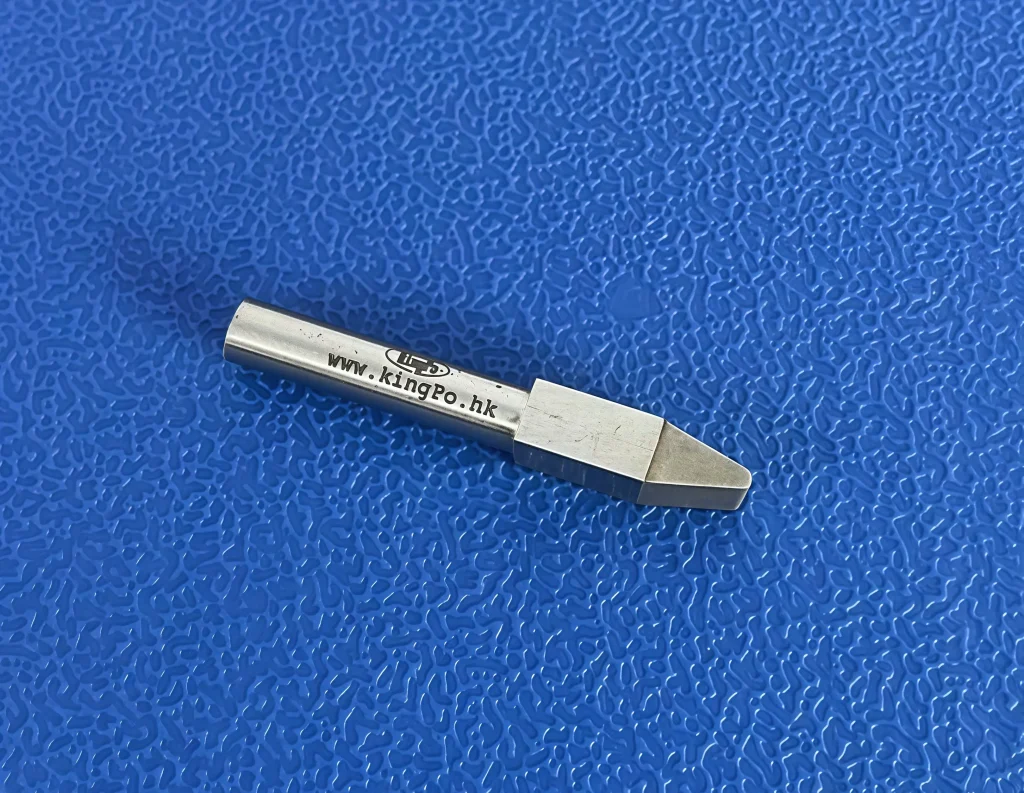
KingPo KP-ST10 IEC 61010-2-012 Figure 103 scratching tool with K10 carbide tip

Typical Test Objects

Depending on the equipment design and applicable clause, the Figure 103 scratching tool may be relevant when evaluating accessible surfaces associated with refrigerating systems in equipment within the scope of IEC 61010-2-012.

Typical equipment categories covered by the standard can include:

✓ climatic test equipment,
✓ environmental test chambers,
✓ temperature-conditioning equipment,
✓ equipment incorporating interacting heating and refrigerating functions,
✓ laboratory or industrial equipment combining temperature conditioning with other environmental factors.
IEC 61010-2-012 should not automatically be applied to every product containing refrigeration. The equipment architecture and the relationship between its heating, cooling and environmental-conditioning functions determine which IEC 61010 Part 2 standard is appropriate.

Who Uses the KP-ST10 Scratching Tool?

The KP-ST10 is suitable for organizations performing controlled product-safety evaluation, including:

Third-party testing laboratories
Certification and conformity-assessment organizations
Climatic and environmental chamber manufacturers
Laboratory-equipment manufacturers
Product safety engineering departments
R&D laboratories
QA and QC departments

For these users, the main purchasing requirement is not simply carbide hardness. It is confirmation that the supplied tool corresponds to the applicable standard, edition and Figure 103 test requirement.

Engineering Notes
The KP-ST10 is a standard-specific mechanical test tool, not a complete IEC 61010-2-012 test system.

IEC 61010-2-012 includes requirements covering multiple hazards and test conditions beyond scratching. A Figure 103 scratching tool addresses only the test operations for which that tool is specified.

For compliance work:

  • confirm the applicable Part 2 standard before testing;
  • use the correct standard edition;
  • identify the relevant clause before selecting the DUT surface;
  • use the prescribed test conditions from the standard;
  • complete any subsequent assessment required after scratching;
  • maintain appropriate inspection or verification records for the tool where required by the laboratory quality system.

Compliance & Regulatory Assurance

  • The KP-ST10 Scratching Tool is designed for scratching-tool applications associated with IEC 61010-2-012 Figure 103, supporting standard-oriented laboratory and certification testing where the applicable edition, clause and test procedure have been confirmed.
  • Final suitability should be confirmed against the applicable standard edition and test procedure. Inspection or material documentation can be provided according to the confirmed configuration.
Product Documentation
Download the KINGPO KP-ST10 IEC 61010-2-012 Figure 103 Scratching Tool technical datasheet, including specifications, application notes, test-use guidance and configuration information.

Download Datasheet

Technical Inquiry & Expert Support

To confirm whether KingPo KP-ST10 is appropriate for your test project, please provide:

  • Applicable standard: IEC 61010-2-012 or other standard
  • Standard edition: if specified by the project
  • Clause / Figure: Figure 103 and the applicable test clause, if known
  • Equipment under test: climatic chamber, environmental test equipment, temperature-conditioning equipment or other EUT
  • Refrigerating-system configuration: where relevant to the test
  • Required documentation: dimensional report, material information, calibration or accredited laboratory documentation
  • Additional fixture requirement: tool only or controlled-force / positioning arrangemen

Providing this information before quotation helps avoid supplying a mechanically similar scratching tool intended for a different standard or test procedure.


FAQ

What is the KP-ST10 scratching tool used for?
The KP-ST10 is a standard-specific scratching tool intended for the procedure associated with IEC 61010-2-012 Figure 103. It is used to create the required scratching condition on the specified surface before the subsequent safety evaluation defined by the applicable test procedure. It is not a general-purpose material scratch-hardness tester.
Which standard does the KP-ST10 correspond to?
The primary reference is IEC 61010-2-012:2019, Figure 103, which specifies the details of the scratching-tool tip used in the relevant safety-testing framework. Customers should confirm the exact standard edition and any national or regional adoption used by their laboratory before ordering.
Is the KP-ST10 a complete automatic scratching test machine?
No. The published KP-ST10 information describes the scratching tool itself and does not specify automatic force control, powered travel, programmed scratch length or integrated pass/fail evaluation. If your laboratory requires a controlled fixture or automated test station, those requirements should be discussed separately before quotation.
What material is used for the scratching tip?
KINGPO’s published specification identifies a hard-soldered K10 carbide tip. This is part of the KP-ST10 product configuration. Customers requiring material verification, inspection records or specific documentation should state these requirements when requesting a quotation so the available documentation scope can be confirmed.
What does the 1.6 μm surface roughness value refer to?
The original KINGPO product information lists 1.6 μm surface roughness. However, the public product data does not clearly identify the roughness parameter, measurement location or inspection method. Laboratories requiring traceable verification should therefore request clarification or dimensional inspection information before placing an order.
What types of equipment may require this scratching tool?
The tool is mainly relevant to safety testing of climatic, environmental and other temperature-conditioning equipment covered by IEC 61010-2-012. Typical applications can involve environmental test chambers and equipment combining heating and refrigeration functions where the applicable safety procedure requires the Figure 103 scratching-tool geometry.
Can the KP-ST10 also be used for IEC 61010-2-011 testing?
IEC 61010-2-011 also includes a Figure 103 scratching-tool reference, but suitability should not be assumed solely because the Figure number is the same. The laboratory should provide the exact standard edition and test reference so the required geometry and application can be checked before KINGPO confirms compatibility.
Does the scratching tool determine whether the equipment passes or fails?
No. The KP-ST10 creates the prescribed mechanical scratching condition as one step in the overall compliance procedure. Final conformity depends on the complete test sequence, applicable acceptance criteria, equipment configuration and laboratory execution. The scratching tool itself does not provide certification or an automatic pass/fail result.
What information should be provided before requesting a quotation?
Please provide the applicable IEC 61010 standard and edition, relevant clause or Figure reference, equipment under test, test surface or component, and whether you need only the scratching tool or additional fixtures. Any dimensional inspection, material documentation or project-specific technical-document requirements should also be stated clearly.
Who typically purchases the IEC 61010-2-012 Figure 103 scratching tool?
Typical users include product-safety laboratories, certification and conformity-assessment laboratories, environmental equipment manufacturers, refrigeration-system engineering teams and internal R&D or compliance departments. It is particularly suitable when a laboratory wants a dedicated Figure-specific tool rather than relying on an improvised scriber or unrelated scratch-testing instrument.

Related Products

Related News

KingPo recently completed the delivery, commissioning, and technical support of a medical electrical safety test equipment package for Sichuan Institute […]

Follow this 2026 step-by-step leakage current test guide for accurate results, safety compliance, and meeting IEC 60601-1 standards in electrical devices.
IEC61010 Safety Standards​ set essential rules for electrical equipment, protecting users from shock, fire, and mechanical hazards in various industries.
Electric fans energy efficiency test ensures IEC 60879 compliance by using standardized methods, supporting certification, and delivering reliable energy savings.

Abstract & Technical Summary In high-bandwidth oscilloscope measurements involving power electronics, high-speed digital signals, and PCB testing, the optimal high-precision […]

Essential equipment for residual voltage testing under IEC 60601-1, IEC 60335-1, IEC 61010-1, IEC 62368-1 and similar safety standards. 1. […]

Abstract Routine tests are mandatory production-line verifications performed on each unit of electrical equipment intended for measurement, control, and laboratory […]

Dielectric strength tester ensures medical device reliability by detecting insulation faults, preventing electrical hazards, and meeting safety standards.
Scroll to Top

Get A Free Quote Now !

Contact Form
If you have any questions, please do not hesitate to contact us.