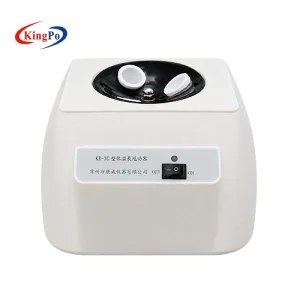
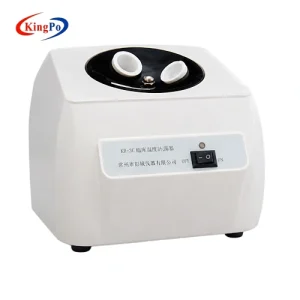
Front view of the KR-3C IEC 61010-2-020 thermometer centrifuge for resetting glass clinical thermometers.
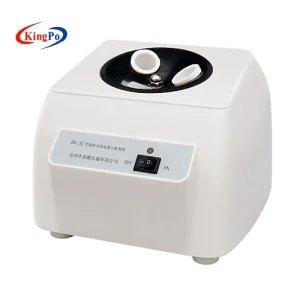
Left angled view of the KR-3C glass clinical thermometer centrifuge in a laboratory environment.
Right angled view of an IEC 61010-2-020 thermometer centrifuge designed for batch thermometer resetting.
Front view of the KR-3C IEC 61010-2-020 thermometer centrifuge for resetting glass clinical thermometers.
Left angled view of the KR-3C glass clinical thermometer centrifuge in a laboratory environment.
Right angled view of an IEC 61010-2-020 thermometer centrifuge designed for batch thermometer resetting.

IEC 61010-2-020 Thermometer Centrifuge for Glass Clinical Thermometers

The IEC 61010-2-020 Thermometer Centrifuge uses centrifugal action to return the retained liquid column of maximum-indicating glass clinical thermometers to a lower starting position before reuse or verification.

  • Primary Purpose: This Thermometer Centrifuge supports batch liquid-column resetting before repeated m easurement or verification.
  • Suitable Samples: Liquid-in-glass clinical thermometers with a maximum-indicating structure.
  • Typical Users: Metrology laboratories, thermometer manufacturers, inspection facilities and medical departments.
  • Workflow Position: Sample preparation before calibration, indication-error verification or quality inspection.
  • Equipment Boundary: The glass thermometer shaker resets the retained column but does not generate a reference temperature or measure thermometer error.

Thermometer Centrifuge Product Overview

Product Overview

IEC 61010-2-020 Thermometer Centrifuge for Glass Thermometer Resetting

Maximum-indicating liquid-in-glass clinical thermometers retain the highest measured temperature because a restriction between the capillary and sensing bulb prevents the liquid column from returning automatically after cooling.

Before the next measurement or verification cycle, the retained column must be returned to a suitable starting position. Manual shaking is repetitive and operator-dependent, particularly when a laboratory or manufacturer processes large batches.

The KR-3C is presented as an IEC 61010-2-020 Thermometer Centrifuge for motor-driven batch resetting of up to 60 thermometers. This dedicated Glass Clinical Thermometer Centrifuge, also described as a Clinical Thermometer Shake-Down Centrifuge, supports verification preparation, production inspection and repeated measurement workflows.

≤ 60
Thermometers per Batch
1,400 r/min
Rotational Speed
KR-3C
Dedicated Resetting Device

Technical Data

Technical Specifications

Parameter Specification
Model KR-3C
Product Name IEC 61010-2-020 Thermometer Centrifuge
Operating Principle Centrifugal column resetting
Rotational Speed 1,400 r/min
Maximum Loading Capacity ≤ 60 thermometers per batch
Rated Power 25 W
Rated Voltage AC 220 V ±22 V
Rated Frequency 50 Hz ±1 Hz
Main Function Resetting retained liquid columns in maximum-indicating glass clinical thermometers
Overall dimensions, net weight, operating time, holder dimensions, noise level and effective centrifugal acceleration are not confirmed in the available source material and should be verified before quotation.

Application Boundary

Application Scope and Limitations

The IEC 61010-2-020 Thermometer Centrifuge is intended for maximum-indicating liquid-in-glass clinical thermometers that retain their reading after removal from the measurement environment.

Suitable Applications

Resetting maximum-indicating liquid-in-glass clinical thermometers
Lowering the retained column before another measurement
Preparing samples before verification or calibration
Batch processing during production quality control
Preparing thermometers for repeated immersion tests
Routine handling of reusable glass thermometers where permitted

Equipment Limitations

Does not generate or control a reference temperature
Does not measure thermometer indication error
Does not provide automatic pass/fail results
Does not replace a calibration bath or reference thermometer
Does not process digital, electronic or infrared thermometers
Does not function as a general-purpose laboratory centrifuge

Operating Principle

Centrifugal Column Reset Principle

When a maximum-indicating clinical thermometer is heated, the thermometric liquid expands through the capillary restriction. After cooling, the restriction prevents the indicated maximum from returning freely to the sensing bulb.

The IEC 61010-2-020 Thermometer Centrifuge applies centrifugal force in the direction required to move the retained liquid back through the restriction. As a motor-driven Clinical Thermometer Shake-Down Centrifuge, the KR-3C replaces repetitive hand shaking with a defined rotational process.

STEP 01
Reading Retained
The maximum-indicating structure holds the highest measured reading.
STEP 02
Centrifugal Force Applied
The equipment rotates the correctly loaded thermometers at the rated speed.
STEP 03
Column Returned
The thermometer is prepared for the next measurement or verification cycle.
Reset performance can vary with filling liquid, capillary design, retained reading, sample dimensions and loading arrangement. Inspect the liquid-column position after each cycle.

Laboratory Workflow

Typical Operating Procedure

Before operating the IEC 61010-2-020 Thermometer Centrifuge, inspect the thermometers and arrange the samples according to the approved loading procedure.

1

Inspect the Samples
Check for cracks, damaged bulbs, separated liquid columns and other visible abnormalities.

2

Load the Thermometers
Place compatible thermometers into the designated holders or loading containers.

3

Balance the Load
Distribute samples evenly and use suitable cushioning where required.

4

Start the Reset Cycle
Operate the equipment in accordance with the laboratory work instruction.

5

Confirm Complete Stop
Wait until every rotating component has stopped before handling the samples.

6

Verify the Column Position
Remove the thermometers and confirm that each liquid column has reached the required position.

Standards Context

Reference Standards and Verification Context

LABORATORY CENTRIFUGE SAFETY

IEC 61010-2-020:2016

IEC 61010-2-020:2016 specifies particular safety requirements for electrically powered laboratory centrifuges and is intended to be read together with IEC 61010-1:2010.

The IEC 61010-2-020 Thermometer Centrifuge is used for a specialized laboratory centrifuging task: returning retained liquid columns in compatible glass clinical thermometers.

Any claim of full conformity or certification should be supported by the applicable product design review, safety test report and supplied compliance documentation.

CHINA METROLOGY REGULATION

JJG 111-2019 Clinical Thermometers

JJG 111-2019 applies to liquid-in-glass clinical thermometers with a maximum-indicating structure and a measuring range of 30.0°C to 43.0°C.

The IEC 61010-2-020 Thermometer Centrifuge supports column resetting and sample preparation within verification workflows based on JJG 111-2019.

The KR-3C is supporting equipment rather than a complete thermometer verification system. It neither generates a reference temperature nor determines indication error.

Typical Supporting Equipment
• Temperature calibration bath
• Reference thermometer or SPRT
• Multi-thermometer holder
• Reading or magnification device
• Timing instrument
• Environmental monitoring equipment

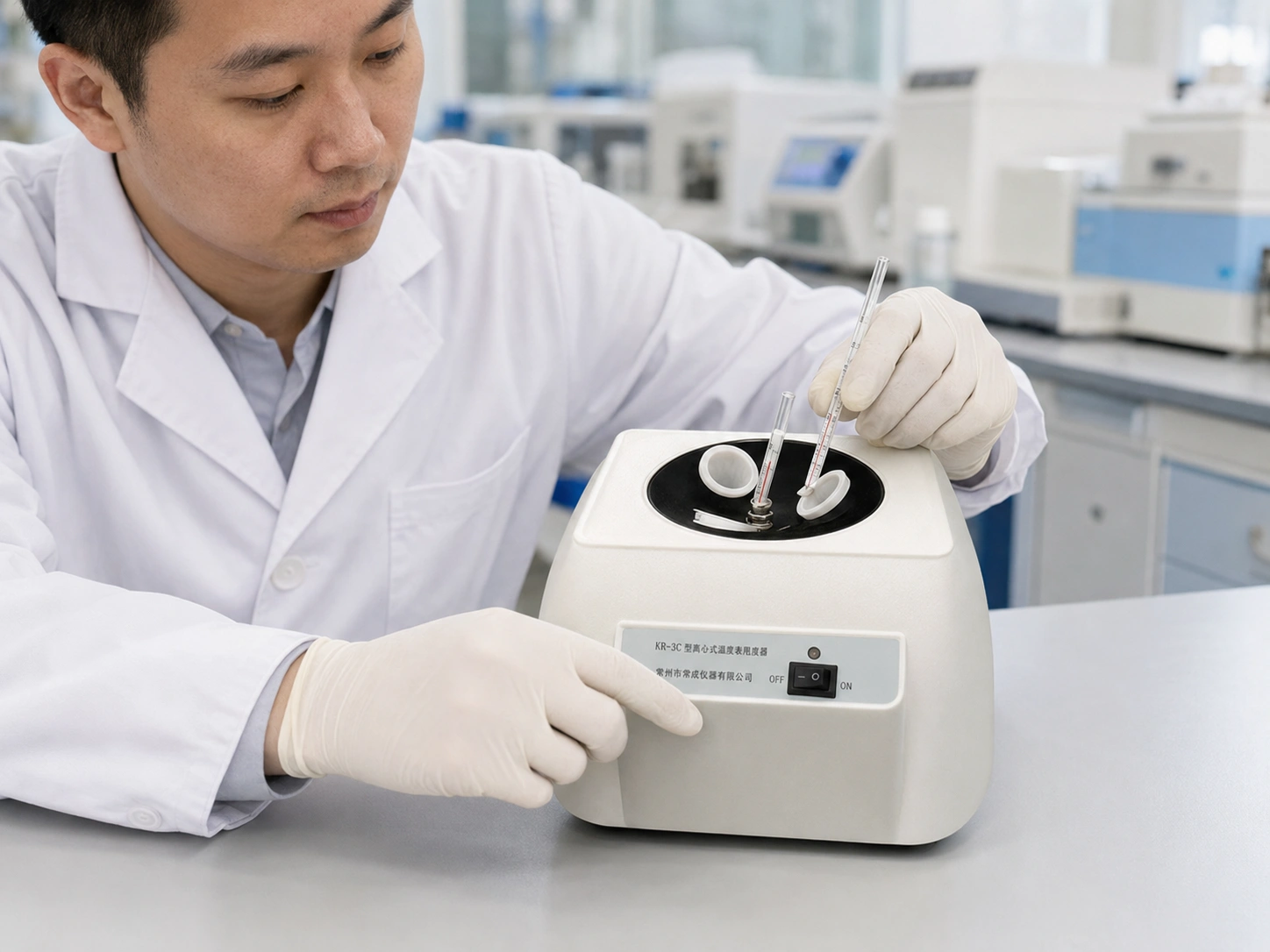
Laboratory technician operating the IEC 61010-2-020 thermometer centrifuge before clinical thermometer verification.

Use Environments

Typical Laboratory and Production Applications

01

Legal Metrology Laboratories

The IEC 61010-2-020 Thermometer Centrifuge prepares batches before verification, repeated immersion and indication-error testing.

02

Thermometer Manufacturers

An IEC 61010-2-020 Thermometer Centrifuge supports production inspection, sampling, final quality control and repeated performance testing.

03

Calibration and Inspection Facilities

The IEC 61010-2-020 Thermometer Centrifuge can work alongside a calibration bath, reference thermometer, holder and reading station.

04

Hospitals and Medical Departments

Where reusable glass thermometers remain permitted, the IEC 61010-2-020 Thermometer Centrifuge reduces repetitive manual shake-down work.

Buyer Value

Operational and Procurement Value

For laboratories and manufacturers, the IEC 61010-2-020 Thermometer Centrifuge provides a dedicated solution for one clearly defined stage of the glass clinical thermometer workflow.

Batch Processing

The IEC 61010-2-020 Thermometer Centrifuge processes up to 60 compatible thermometers per batch.

Reduced Manual Handling

Motor-driven resetting reduces repetitive hand shaking during multi-sample preparation.

Controlled Preparation

A defined rotational process helps reduce operator-to-operator variation in preparation.

Dedicated System Role

The Glass Clinical Thermometer Centrifuge can serve as a stand-alone Clinical Thermometer Shake-Down Centrifuge or support a larger verification setup.

Project Confirmation

Configuration and Selection Notes

Before ordering the IEC 61010-2-020 Thermometer Centrifuge, confirm the thermometer construction, filling liquid, sample dimensions, applicable procedure and local electrical supply.

Thermometer Filling Liquid

Specify whether the samples contain mercury, a gallium-based metallic liquid or another thermometric liquid.

Sample Dimensions

Provide overall length, maximum diameter, bulb dimensions and thermometer construction.

Loading Arrangement

Confirm holder compatibility, cushioning needs and balanced-loading requirements for the intended batch.

Applicable Procedure

Identify IEC 61010-2-020, JJG 111-2019, EN 12470-1 or the relevant internal procedure so the IEC 61010-2-020 Thermometer Centrifuge can be reviewed within the complete workflow and the applicable standard boundary can be confirmed.

Power Supply

The confirmed supply is AC 220 V ±22 V at 50 Hz ±1 Hz. Any alternative requirement must be confirmed before ordering.

Required Documentation

Confirm requirements for an English manual, factory report, speed record, packing list or third-party documentation.

Equipment Care

Safety and Routine Maintenance

The IEC 61010-2-020 Thermometer Centrifuge, holders and loading accessories should be inspected regularly to support safe and stable operation.

Safe Sample Handling

  • Inspect thermometers for cracks and damaged bulbs before loading.
  • Do not process abnormal samples without further assessment.
  • Distribute the load evenly and use suitable cushioning.
  • Wait for all rotating components to stop before handling samples.
  • Follow local mercury-control procedures where applicable.

Routine Inspection

  • Check thermometer holders and cushioning materials.
  • Inspect rotating components and electrical controls.
  • Check the power cable for visible damage.
  • Investigate unusual vibration or operating noise.
  • Keep loading containers clean.
  • Verify rotational speed according to the laboratory quality procedure.

Compliance & Regulatory Assurance

The KR-3C clinical thermometer shaker supports the liquid-column resetting and sample-preparation stages of verification procedures for maximum-indicating glass clinical thermometers. It can be used in workflows related to JJG 111-2019 and EN 12470-1, depending on the thermometer type, filling liquid, applicable test method and laboratory requirements.

Final compliance depends on the complete verification arrangement, including the calibration bath, reference thermometer, sample holders, reading equipment, operating procedure and applicable edition of the standard. The KR-3C is supporting preparation equipment and should not be represented as an independently certified verification or calibration system. Equipment documentation, speed records and traceability information can be confirmed according to project requirements.

Technical Datasheet
KR-3C Centrifugal Clinical Thermometer Shaker
Product overview, centrifugal reset principle, technical specifications, standards context and laboratory application guidance.


Download PDF

Technical Inquiry & Expert Support

To confirm whether the KR-3C clinical thermometer shaker matches your application, please provide the information below when submitting an inquiry. These details help verify thermometer compatibility, loading requirements, electrical configuration and documentation needs before quotation.

Information Needed Description
Thermometer Type Confirm that the samples are maximum-indicating liquid-in-glass clinical thermometers and specify the thermometric filling liquid.
Applicable Procedure Provide JJG 111-2019, EN 12470-1 or the relevant national, laboratory or production procedure used in your project.
Sample Dimensions Provide the thermometer length, maximum diameter, bulb dimensions and construction details for holder compatibility review.
Loading Requirements Confirm the expected number of thermometers per batch, holder arrangement and any cushioning or sample-protection requirements.
Electrical Supply The standard configuration is AC 220 V ±22 V, 50 Hz ±1 Hz. Specify the destination-country power supply before ordering.
Documentation Needs Specify requirements for an English manual, datasheet, factory inspection report, speed record, packing list or traceability documentation.

Note: Final suitability should be reviewed together with the thermometer construction, holder compatibility, loading method, applicable procedure and complete verification arrangement.

Thermometer Centrifuge Detail Display

Thermometer Centrifuge FAQ

What is a clinical thermometer shaker used for?
A clinical thermometer shaker returns the retained liquid column of a maximum-indicating glass clinical thermometer to a suitable starting position. The KR-3C automates this preparation step before repeated measurements, verification, calibration or production inspection, reducing the repetitive manual shaking required when laboratories or manufacturers process multiple thermometers.
Which thermometer types are compatible with the KR-3C?
The KR-3C is intended for maximum-indicating liquid-in-glass clinical thermometers. It is not designed for digital, electronic, infrared or phase-change thermometers. Before ordering, customers should confirm the thermometer’s filling liquid, overall length, maximum diameter, bulb dimensions and construction so holder and loading compatibility can be reviewed.
Which standards are relevant to this clinical thermometer shaker?
The equipment can support sample preparation in workflows related to JJG 111-2019 and EN 12470-1:2000+A1:2009. JJG 111-2019 covers clinical thermometers within a 30.0°C–43.0°C measuring range, while EN 12470-1 addresses metallic liquid-in-glass clinical thermometers with a maximum-indicating device.
Does the KR-3C perform thermometer calibration or verification?
No. The clinical thermometer shaker only resets the retained liquid column and prepares samples for subsequent testing. It does not generate a reference temperature, measure indication error or provide pass/fail results. A complete verification arrangement normally also requires a calibration bath, reference thermometer, sample holder, reading device and documented test procedure.
How many thermometers can the KR-3C process per batch?
The specified maximum loading capacity is up to 60 thermometers per batch, with a rated rotational speed of 1,400 r/min. Actual loading suitability depends on thermometer dimensions, holder configuration and balanced-loading requirements. Customers should provide sample specifications before purchase rather than assuming every thermometer format can be loaded at the maximum capacity.
Can the glass thermometer shaker process mercury-free thermometers?
Potentially, but compatibility should be confirmed according to the filling liquid and thermometer construction. EN 12470-1 applies specifically to thermometers filled with metallic liquid, while national restrictions may affect mercury-containing products. Customers using gallium-based or other mercury-free glass thermometers should provide samples or detailed drawings for technical evaluation.
How does the thermometer shake-down machine reset the liquid column?
The thermometer shake-down machine rotates correctly positioned thermometers to generate centrifugal force. This force moves the retained thermometric liquid back through the capillary restriction toward the sensing bulb. Reset performance can vary with filling liquid, capillary design, retained reading, sample dimensions and loading arrangement, so the column position should be inspected after each cycle.
How is the KR-3C used in a verification laboratory?
The clinical thermometer shaker is normally used before immersion or indication-error testing. After inspecting and loading the thermometers evenly, the operator performs the reset cycle and verifies the resulting column position. The prepared thermometers can then be transferred to the calibration bath and evaluated against the applicable laboratory or legal-metrology procedure.
What information is required before ordering the KR-3C?
Customers should provide the thermometer type, filling liquid, overall dimensions, bulb dimensions, expected batch quantity and applicable standard or internal procedure. The destination power supply should also be confirmed. The standard electrical specification is AC 220 V ±22 V, 50 Hz ±1 Hz; alternative electrical requirements require confirmation before quotation.
What safety and maintenance checks are recommended?
Inspect thermometers for cracks, damaged bulbs or separated liquid columns before loading. Samples should be distributed evenly, and operators must wait until all rotating components stop before removal. Holders, cushioning materials, electrical controls and the power cable should be checked regularly. Unusual vibration or noise should be investigated before further operation.

Related Products

Related News

Essential equipment for residual voltage testing under IEC 60601-1, IEC 60335-1, IEC 61010-1, IEC 62368-1 and similar safety standards. 1. […]

Global power supply specifications for households and industry: voltage, frequency, plug types, and standards for safe device use worldwide.
Environmental test chamber solutions boost product reliability by simulating real-world stress, identifying weaknesses, and ensuring consistent performance.

Abstract Thermage, a non-invasive radiofrequency (RF) skin tightening technology, is widely used in medical aesthetics. With operating frequencies increasing to […]

Technical Insight for IEC 60601-2-2 High-Frequency Surgical Equipment Testing High-frequency electrosurgical units (ESU) operate in the radio frequency range above […]

KingPo completed the delivery of a customized HME Moisture Loss Measurement System to UL Solutions Suzhou Laboratory on March 23, […]

Scroll to Top

Get A Free Quote Now !

Contact Form
If you have any questions, please do not hesitate to contact us.