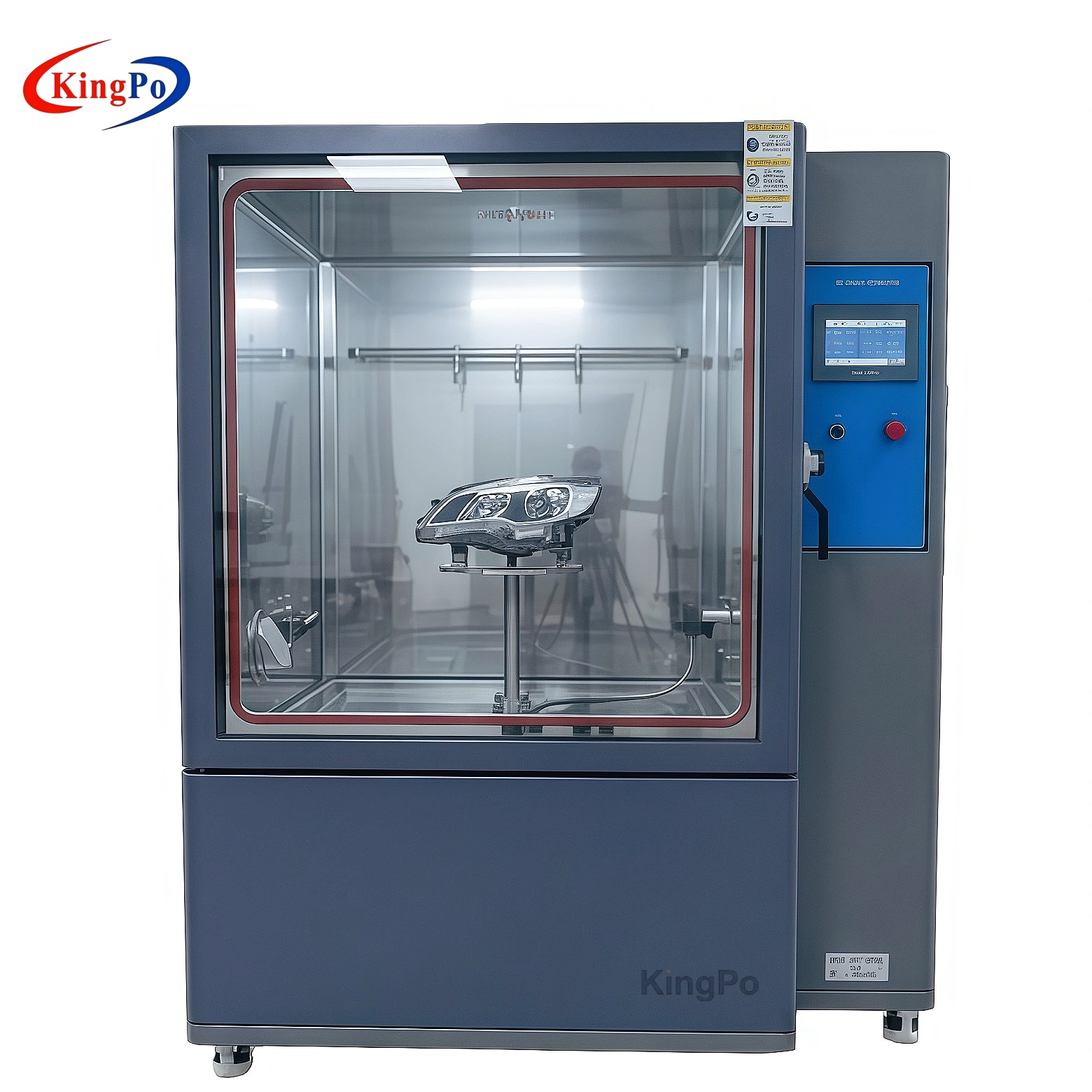
You guarantee compliance with iec 60879 when you use an electric fans energy efficiency test that follows strict standardized procedures. Advanced test chambers, such as those from KingPo, help you measure air volume, wind speed, and energy consumption accurately. You benefit from reliable results that support product certification, improve fan design, and deliver energy savings to consumers.
Key Takeaways
-
Use standardized procedures to ensure your electric fans meet IEC 60879 compliance.
-
Conduct thorough air delivery tests to measure airflow and energy consumption accurately.
-
Choose accredited labs for testing to guarantee valid and reproducible results.
-
Keep detailed records of all tests to support compliance and certification efforts.
-
Understand the specific input power limits for different fan types to ensure proper testing.
-
Calculate the Service Value (SV) to assess how efficiently your fan converts energy into airflow.
-
Implement automated data collection to reduce errors and improve testing efficiency.
-
Regularly maintain and calibrate your testing equipment to achieve consistent results.
Electric Fans Energy Efficiency Test and Compliance
Testing and IEC 60879 Link
You need to follow a clear process to ensure your electric fans energy efficiency test meets all requirements. The steps below show how you can achieve compliance with IEC 60879:
-
Define the scope of the standard for your fan type.
-
Conduct air delivery tests using the correct method for each fan.
-
Calculate the Service Value (SV) to measure energy efficiency.
-
Control the environment and power supply during each test.
You must use standardized procedures because IEC 60879 gives you a framework for testing. This standard sets strict rules for measuring air delivery and energy use. It also describes different setups for ceiling, pedestal, table, wall, and box fans. When you follow these steps, you make sure your results are accurate and repeatable.
Advanced performance test chamber systems, such as those from KingPo, help you meet these requirements. These chambers use programmable controls to keep temperature and humidity steady. You can rely on them to deliver consistent results for every electric fans energy efficiency test.
Accredited Labs and Certification
You should always choose an accredited laboratory for your electric fan energy efficiency test. Accredited labs follow strict protocols and use advanced equipment. This ensures your results are valid and can be reproduced.
Here is how accredited labs maintain high standards:
|
Requirement |
Description |
|---|---|
|
Testing Protocols |
Labs use official procedures and allow oversight to prevent bias or errors. |
|
Validation of AEDM |
Labs check the Alternative Efficiency Determination Method with real test data from current fans. |
|
Simulated Losses |
Labs confirm that simulated losses match or exceed measured losses for reliable results. |
When you use a certified lab, you get test reports that regulators and markets accept. This helps you prove that your fans meet all testing requirements for fans and energy efficiency standards.
Documentation Process
You must keep detailed records for every electric fans energy efficiency test. Good documentation helps you show compliance and supports certification.
Tip: Always include the following in your records:
Test setup and conditions
Fan type and model
Measured values for air volume, wind speed, and input power
Calculated Service Value and efficiency rating
Calibration certificates for your performance test chamber
KingPo’s performance test chamber makes this process easier. The system collects data automatically and generates reports. You can use these reports for certification, audits, and product development.
Discover the Test Chamber
Learn more about KingPo’s Electric Fans Energy Efficiency Test Chamber and how it can enhance your testing processes.
By following these steps, you ensure your electric fans energy efficiency test meets IEC standards. You also build trust with customers and regulators.
IEC 60879 Standard Overview
Scope and Fan Types
You need to understand the scope of the IEC 60879 standard before you start testing electric fans. This applied standard covers the performance and construction of electric circulating fans for household and similar purposes. You find that the standard applies to a wide range of fan types, each with specific input power and voltage limits.
Table, Floor, and Column Fans
You often see table, floor, and column fans in homes and offices. These fans must meet strict input power limits to qualify under the standard. The table below shows the requirements for these fan types:
|
Fan Type |
Input Power Limit |
|---|---|
|
Conventional Fans |
< 125W |
|
Tower Fans |
< 125W |
|
Bladeless Fans |
< 125W |
You must check that your fan models stay within these limits. If your fan exceeds the input power threshold, it does not qualify for testing under the applied standard.
Ceiling, Wall, and Exhaust Fans
You also find ceiling, wall, and exhaust fans in many environments. These fans must follow similar input power restrictions. The table below helps you identify which fans fall within the scope:
|
Fan Type |
Input Power Limit |
|---|---|
|
Ceiling Fans |
< 125W |
|
Table and Pedestal Fans |
< 125W |
|
Wall Fans |
< 125W |
|
Louvre/Box Fans |
< 125W |
You must verify the rated voltage for each fan. The standard sets clear voltage limits:
|
Fan Type |
Rated Voltage Limit |
|---|---|
|
Single-phase Fans |
≤ 250 V |
|
Other Fans |
≤ 480 V |
Tip: Always check both input power and voltage before you start performance testing. This ensures your fan meets the requirements of the applied standard.
Performance Criteria
You must measure several key criteria to confirm compliance with IEC 60879. The standard requires you to test air volume, wind speed, input power, and energy efficiency. You also need to calculate the Service Value, which shows how efficiently your fan delivers airflow compared to its energy use.
You use advanced test chambers to collect accurate data. These chambers help you maintain stable environmental conditions and automate measurements. You rely on these tools to produce reliable results for performance and construction of electric circulating fans.
You must document all test conditions and results. This helps you prove compliance and supports certification. When you follow the standard, you improve product quality and build trust with consumers.
Electric Fan Energy Efficiency Test Methods
Air Volume Measurement
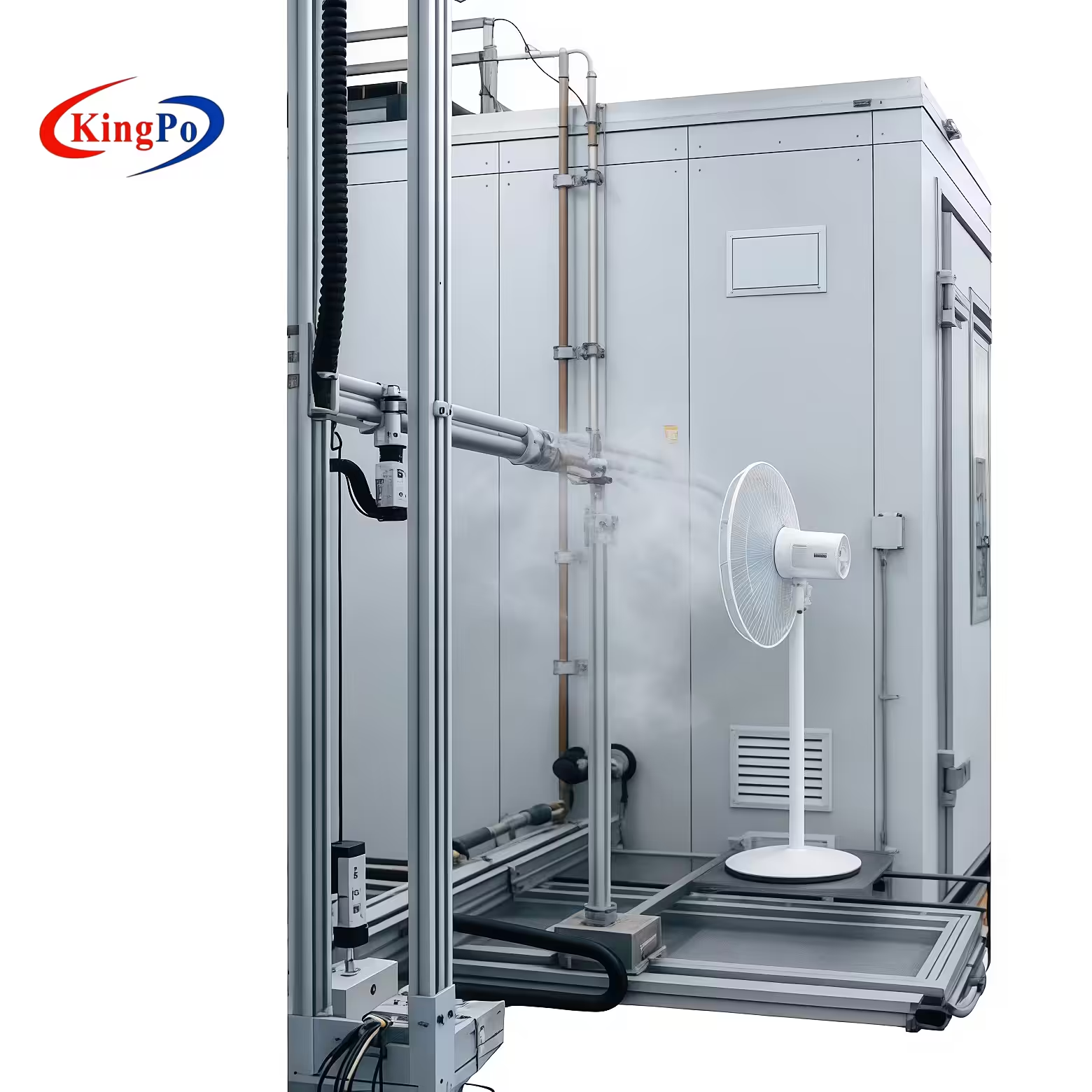
You start by measuring airflow, which is a key indicator of fan performance. The test chamber uses advanced systems to ensure accurate results. You place the fan inside the chamber and set it to operate at different speeds. The chamber controls temperature and humidity, so you get consistent data.
Single Enthalpy Difference System
You use the single enthalpy difference system to measure air volume. This system calculates airflow by comparing the energy content of air entering and leaving the chamber. You rely on sensors to track temperature and humidity changes. The chamber’s insulation and environmental controls help you minimize errors. You get precise airflow measurements that support efficiency calculations.
Anemometer Guide Rail
You also use an anemometer guide rail for airflow tests. The chamber moves the anemometer along a fixed path in front of the fan. You record wind speed at multiple points. The computer system scans and collects data automatically. You save time and reduce human error. This method gives you a detailed map of airflow distribution, which helps you optimize fan design.
Wind Speed and Rotation Speed
You measure wind speed and rotation speed to assess fan efficiency. You construct a cup anemometer and count rotations per minute. You calibrate the equipment in a wind tunnel with controlled conditions. You check wind tunnel blockage ratio and turbulence intensity to ensure accuracy. You perform calibrations within a wind speed range of 4 to 16 meters per second. You establish a linear relationship between wind speed and rotation frequency using calibration coefficients.
|
Procedure |
Description |
|---|---|
|
Constructing a cup anemometer and measuring rotational rate by counting rotations per minute. |
|
|
Professional Calibration |
Using a wind tunnel with controlled conditions to verify equipment calibration and perform measurements. |
|
Calibration Requirements |
Ensuring wind tunnel blockage ratio, turbulence intensity, and traceable calibrations are maintained. |
|
Measurement Range |
Performing calibrations under specified wind speed ranges (4 m·s−1 to 16 m·s−1). |
|
Transfer Function |
Establishing a linear relationship between wind speed and rotation frequency through calibration coefficients. |
You use these procedures to get reliable wind speed and rotation speed data. You need this information to calculate efficiency and compare fan models.
Input Power and Efficiency Rating
You measure input power to determine how much energy the fan uses. You record air volume, wind speed, and rotation speed at different positions. You test the fan at maximum speed and other settings. You calculate the efficiency rating using these values. The chamber’s automatic data acquisition system collects and reports all measurements.
|
Parameter |
Description |
|---|---|
|
Input Power |
Measured to calculate energy efficiency rating as per IEC 60879 standards. |
|
Air Volume |
Evaluated at various positions to assess performance. |
|
Wind Speed |
Important for determining the effectiveness of the fan. |
|
Rotation Speed |
Necessary for comprehensive efficiency profiling. |
-
The efficiency of a fan is expressed as the Service Value.
-
You must take measurements at maximum speed and multiple speed settings.
-
This approach gives you a detailed efficiency profile.
Tip: Automatic data acquisition and environmental controls in KingPo’s chamber help you achieve high accuracy and repeatability in every test.
You use these methods to ensure your fan meets efficiency requirements and delivers reliable airflow. You get results that support product certification and help you improve fan performance.
Service Value Calculation
You need to calculate the Service Value (SV) to determine how efficiently your fan converts electrical energy into airflow. The SV is a key metric in IEC 60879 compliance. You use the following formula:
Service Value (SV) = Air Volume (m³/min) / Input Power (W)
You measure air volume and input power during the test. You record these values at the fan’s maximum speed and at other speed settings. You use KingPo’s chamber to automate this process. The chamber collects air volume and power data in real time. You get accurate SV calculations without manual errors.
Tip: Always check the SV for each speed setting. This helps you identify the most efficient operating point for your fan.
You compare SV values across different fan models. Higher SV means better energy efficiency. You use SV to optimize fan design and select the best components. You also use SV to support certification and marketing claims.
You can organize your SV results in a table for easy comparison:
|
Fan Model |
Air Volume (m³/min) |
Input Power (W) |
Service Value (SV) |
|---|---|---|---|
|
Model A |
120 |
40 |
3.0 |
|
Model B |
150 |
50 |
3.0 |
|
Model C |
100 |
30 |
3.33 |
You use this table to show which fan delivers the most airflow per watt. You make informed decisions based on SV data.
Noise and Durability Tests
You must test noise and durability to ensure your fan meets quality standards. Noise testing checks how loud your fan operates. You place the fan in KingPo’s chamber and use a sound level meter. You measure noise at different speeds and distances. You record the decibel (dB) levels for each setting.
You follow IEC 60879 guidelines for noise measurement. You keep the environment quiet and control background noise. You use automatic data acquisition to log results. You compare noise levels to standard limits. Lower noise means better comfort for users.
Durability testing checks how long your fan lasts under normal use. You run the fan for extended periods in the chamber. You monitor performance and look for signs of wear. You use environmental controls to simulate real-world conditions. You record any drop in airflow, speed, or efficiency.
Note: Regular durability tests help you spot design weaknesses early. You improve reliability and reduce warranty claims.
You document all noise and durability test results. You use this data to refine your fan design and support product certification. You build trust with customers by showing your fan meets strict standards.
Lab Controls and Technical Requirements
Thermal Stability and Insulation
You need to maintain stable conditions in your test chamber to get accurate results. The chamber uses 100mm rigid polyurethane insulation and 0.6mm color steel plates. This construction keeps the temperature steady and prevents outside air from affecting your tests. You rely on these materials to reduce heat loss and keep the chamber environment consistent. When you test electric fans, you avoid fluctuations that could change airflow or energy measurements. You get repeatable results because the chamber stays thermally stable.
Tip: Always check the insulation before starting a test. Good insulation helps you avoid errors in your energy efficiency measurements.
Environmental Conditions
You must control temperature and humidity during every test. The chamber uses an external air conditioning system to keep these conditions within strict limits. You set the humidity and temperature to match the requirements for electric fan testing. Stable environmental conditions help you get reliable data.
Here is a table showing the typical ranges for humidity and temperature control:
|
Humidity Range |
Temperature Control |
|---|---|
|
30–80% RH ±3% RH |
Maintained by external air conditioning system |
You monitor these values throughout the test. If the temperature or humidity changes, your results may not reflect the true performance of the fan. You use sensors and automated controls to keep the environment steady. This approach ensures your tests meet industry standards and produce valid results.
The chamber’s design and air conditioning system work together to create the right environment. You avoid outside influences and keep your tests consistent. Accurate environmental control is essential for energy efficiency testing.
Calibration and Sample Prep
You must calibrate your equipment before every test. Calibration ensures your measurements are accurate and traceable. You check each sensor and instrument to confirm they work correctly. You follow a routine to measure air volume, wind speed, rotation speed, and input power.
Here is a table summarizing the calibration aspects you need to address:
|
Calibration Aspect |
Description |
|---|---|
|
Air Volume Measurement |
Measure the air volume produced by the fan at multiple positions. |
|
Wind Speed Measurement |
Assess the wind speed generated by the fan to ensure it meets standards. |
|
Rotation Speed Measurement |
Check the rotation speed of the fan blades for accurate performance metrics. |
|
Input Power Measurement |
Measure the electrical input power to evaluate energy efficiency. |
|
Energy Efficiency Rating |
Calculate the energy efficiency rating based on the above measurements. |
You prepare your fan samples by cleaning and inspecting them. You make sure each fan is free from dust and damage. You place the fan in the chamber according to the test protocol. You document the setup and record the calibration certificates. This process helps you prove your results are valid and supports certification.
You build confidence in your test results when you follow strict calibration and sample preparation routines.
Advanced Testing Systems
Automated Data Collection
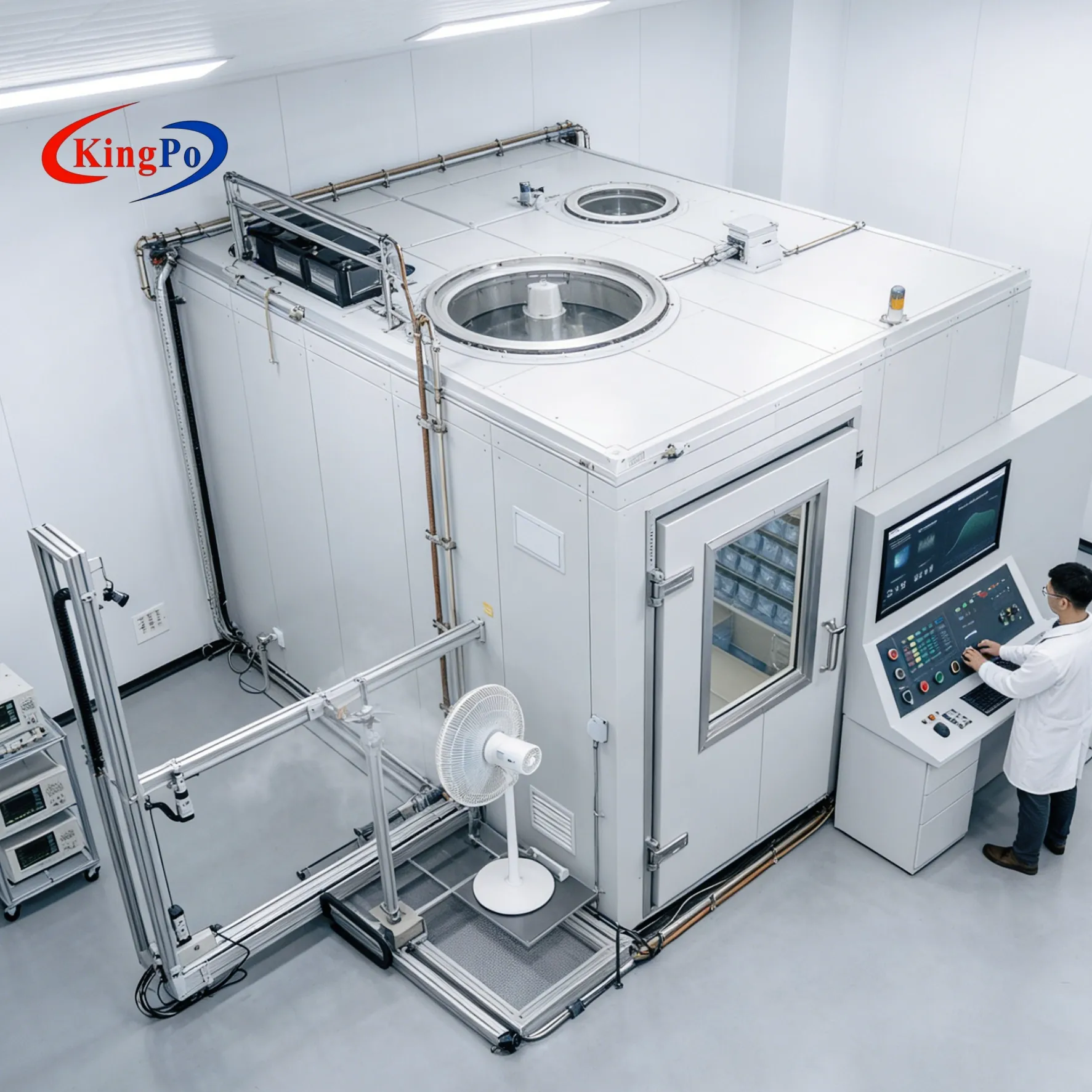
You can improve your testing process with automated data collection. Modern electric fan test chambers, like those from KingPo, use sensors and computer systems to record every measurement. You do not need to write down results by hand. The system captures air volume, wind speed, input power, and temperature in real time. This approach reduces human error and saves you time.
You benefit from automatic data logging because it creates a complete record for each test. The system stores data in digital files, making it easy for you to review and share results. You can also set up the chamber to run tests at different speeds or under various conditions without stopping to adjust settings. This flexibility helps you compare fan models quickly and accurately.
Tip: Automated data collection ensures you always have reliable records for audits and certification.
Remote Control and Reporting
You can control advanced test chambers remotely. This feature lets you start, stop, or adjust tests from a computer or mobile device. You do not need to stand next to the equipment. Remote control keeps you safe and allows you to monitor tests from anywhere.
Automated reporting tools generate detailed reports as soon as tests finish. You receive summaries, charts, and tables that show how each fan performed. These reports help you spot trends and identify areas for improvement.
Here is a table showing the main benefits of remote control and automated reporting in advanced testing systems:
|
Benefit |
Description |
|---|---|
|
Energy Efficiency |
Variable speed control matches fan output to demand, reducing power use. |
|
Remote Monitoring |
You can use SCADA or IoT platforms for centralized control and real-time diagnostics. |
|
Predictive Maintenance |
Sensors detect performance issues early, so you can fix problems before failures occur. |
|
Improved Safety |
Automated responses protect you from hazards like temperature spikes or gas buildup. |
|
Scalability |
You can expand or reconfigure systems as your needs change. |
Impact on R&D and Quality Assurance
You gain a strong advantage in research and development when you use advanced testing systems. Automated data collection and remote control let you test new fan designs faster. You can run multiple tests in less time and gather more data for analysis. This process helps you find the best design features and improve energy efficiency.
Quality assurance also improves with advanced systems. You can check every fan model against the same standards. Automated reports make it easy to spot defects or performance issues. You build trust with customers by showing that your fans meet strict quality and efficiency standards.
When you invest in advanced testing systems, you support innovation and deliver better products to the market.
Benefits of IEC 60879 Compliance
Manufacturer Advantages
Market Access
You gain a clear path to new markets when your electric fans comply with IEC 60879. Many regions require products to meet international standards before they allow sales. You avoid delays and costly re-testing by following a recognized method for measuring efficiency and energy use. You also meet energy labeling and safety criteria that regulators demand.
Here is a table that shows how compliance helps you enter global markets:
|
Evidence Description |
Relevance to Market Access |
|---|---|
|
IEC 60879 establishes a standardized method for measuring performance and energy efficiency. |
Compliance with this standard is increasingly required for market access in various regions. |
|
Adhering to IEC 60879 ensures products meet international energy labeling and safety criteria. |
This facilitates entry into global markets for electric fan manufacturers. |
You build trust with distributors and retailers because your products meet recognized standards. You expand your business and reach more customers.
Product Optimization
You improve your fan designs when you follow IEC 60879 testing. You use accurate data from advanced chambers to compare models and identify the best features. You find ways to boost efficiency and reduce energy consumption. You also spot weaknesses early and fix them before production.
Tip: Use automated data collection to track changes in airflow and efficiency during development.
You create fans that deliver better airflow with less power. You stand out in the market by offering products that save energy and perform reliably.
Consumer Benefits
Energy Savings
You help consumers lower their electricity bills when your fans meet IEC 60879 standards. Fans with high efficiency use less energy to move air. You give buyers clear information about energy use and airflow. They can choose models that fit their needs and save money over time.
-
Consumers benefit from reduced energy costs.
-
Efficient fans support sustainability goals.
-
Energy labeling makes it easy to compare products.
You make it simple for people to select fans that offer the best balance of comfort and energy savings.
Reliability
You deliver reliable products when you test fans according to IEC 60879. You use strict methods to check durability and noise levels. Consumers get fans that last longer and operate quietly. You reduce warranty claims and build a reputation for quality.
Note: Reliable fans improve user satisfaction and encourage repeat purchases.
You show customers that your fans meet tough standards for efficiency and performance. You earn their trust and loyalty.
Testing Challenges and Solutions
Performance Variability
You may notice that electric fans do not always perform the same way during every test. Many factors can cause this variability. Some of the most common sources include:
-
Aerodynamic losses, such as friction, flow detachment, and mixing of air streams inside the fan.
-
Mechanical losses, including friction in bearings and other moving parts.
-
Changes in rotational speed, which can affect both efficiency and power demand.
-
Temperature effects that can lower material strength and limit how fast the fan can spin.
-
Installation factors, like tip clearance and casing design, which influence how much air leaks around the fan blades.
-
Operational conditions, such as dirty blades, mechanical wear, and aging, which can reduce fan performance over time.
-
Airflow estimation errors and improper speed settings, which may lead to reduced capacity or unstable airflow.
A study that monitored ventilation fans in a building found that dirty blades, mechanical wear, and aging caused significant performance variability. When you compare expected and actual energy use, you see that these operational issues can have a big impact on test results.
Technical Barriers
You might face several technical barriers when you try to achieve accurate energy efficiency measurements. Calibration errors in sensors can lead to incorrect readings. Inconsistent environmental conditions, such as temperature or humidity changes, can affect the airflow and energy use of the fan. Poor sample preparation, like not cleaning the fan or failing to check for damage, can also skew your results.
Sometimes, you may struggle with setting up the fan in the chamber. If you do not follow the correct installation procedure, you might see unexpected drops in efficiency. You need to make sure all equipment is properly maintained and calibrated before each test. Using advanced test chambers with automatic controls helps you reduce many of these technical challenges.
Best Practices
You can overcome most challenges by following best practices during energy efficiency testing. Here are some tips to help you get reliable results:
-
Clean and inspect each fan before testing to remove dust and check for wear.
-
Calibrate all sensors and instruments before every test session.
-
Maintain stable temperature and humidity in the test chamber.
-
Use automatic data collection to reduce human error.
-
Record all test conditions and results for future reference.
-
Compare actual energy use with expected values to spot any unusual performance changes.
Tip: Regular maintenance and careful setup help you achieve consistent and accurate energy efficiency results.
By following these steps, you improve the reliability of your energy efficiency tests and ensure your fans meet IEC 60879 standards.
You ensure IEC 60879 compliance when you use a reliable energy efficiency test for electric fans. Advanced testing systems and standardized methods help you achieve accurate results. Manufacturers gain market access and improve product quality. Consumers benefit from energy savings and dependable performance. Prioritize proper testing and compliance to build trust and support innovation in the fan industry.
FAQ
What is IEC 60879?
IEC 60879 is an international standard. It defines how you test the performance and energy efficiency of electric fans for household and similar uses.
Why should you test your electric fans for energy efficiency?
You test your fans to meet market regulations. Testing helps you improve product quality, reduce energy use, and build trust with customers.
How does KingPo’s test chamber help you achieve compliance?
KingPo’s chamber gives you precise control over temperature and humidity. You get automatic data collection and reporting. This makes your tests accurate and repeatable.
What types of fans can you test with this system?
You can test table, floor, column, ceiling, wall, and exhaust fans. The chamber supports fans with input power up to 125W.
What is Service Value (SV) and why does it matter?
Service Value (SV) shows how efficiently your fan turns electricity into airflow. You use SV to compare models and prove energy savings.
Tip: Higher SV means better energy efficiency.
Do you need to calibrate the test chamber before each test?
Yes. You must calibrate all sensors and instruments before every test. Calibration ensures your results are accurate and reliable.
How do you use test results for certification?
You submit your test reports to accredited labs or certification bodies. These reports prove your fans meet IEC 60879 requirements.