
IEC 60335-2-6 Figure 101 Test Vessels
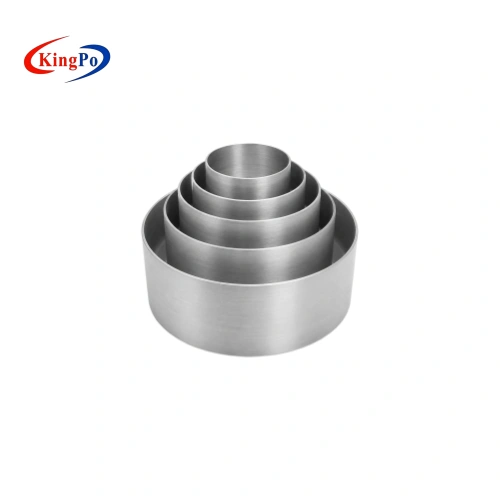
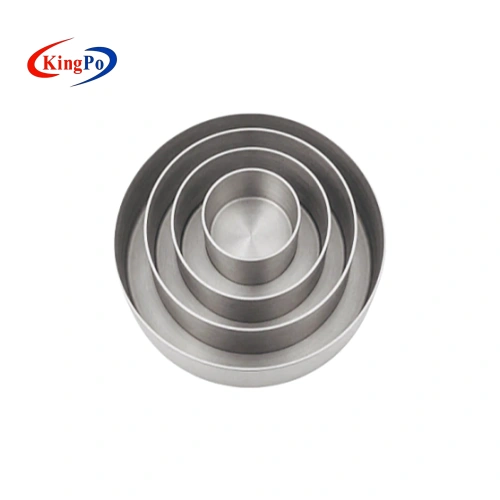
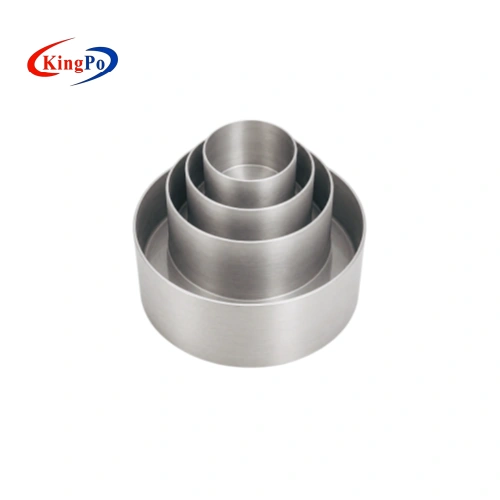
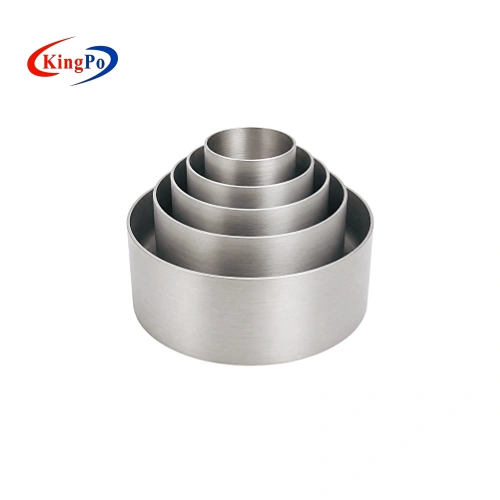
The IEC 60335-2-6 Figure 101 Test Vessels are standard aluminium vessels used to establish defined normal operating conditions when testing electric hob elements. The set includes five vessel sizes for cooking zones from up to 110 mm through 300 mm, helping appliance manufacturers and laboratories apply a consistent thermal load during safety testing.
- Applicable Standard: IEC 60335-2-6, Figure 101
- Relevant Test Condition: Normal operation according to Clause 3.1.9.101
- Test Object: Hob elements other than induction hob elements and induction wok elements
- Main Test Purpose: Establishing a standardized cooking load during appliance safety testing
- Vessel Material: Unpolished commercial-quality aluminium
- Vessel Sizes: Ø110, Ø145, Ø180, Ø220 and Ø300 mm
- Quantity: 5 test vessels
- Lids: Matching lid for each vessel
- Typical Users: Appliance manufacturers, R&D laboratories, third-party test laboratories and conformity assessment facilities
- Configuration Note: Confirm the applicable IEC edition and hob type before quotation
IEC 60335-2-6 Figure 101 Test Vessels
Product Overview
The IEC 60335-2-6 Figure 101 Test Vessels are laboratory test accessories used to provide a repeatable thermal load when applicable electric hob elements are evaluated under the normal operating conditions defined in IEC 60335-2-6.
Unlike ordinary household cookware, the vessels use defined material, bottom geometry and dimensions to reduce test variation. The complete set covers the principal cooking-zone diameter ranges specified by Figure 101, helping laboratories select the appropriate vessel for the hob element under test.
Technical Specifications
| Diameter of Cooking Zone | Approx. Vessel Diameter | Approx. Vessel Height | Approx. Bottom Thickness | Water Quantity |
|---|---|---|---|---|
| ≤ 110 mm | 110 mm | 140 mm | 8 mm | 0.6 L |
| > 110 to ≤ 145 mm | 145 mm | 140 mm | 8 mm | 1.0 L |
| > 145 to ≤ 180 mm | 180 mm | 140 mm | 9 mm | 1.5 L |
| > 180 to ≤ 220 mm | 220 mm | 120 mm | 10 mm | 2.0 L |
| > 220 to ≤ 300 mm | 300 mm | 100 mm | 10 mm | 3.0 L |
Construction
Note: Dimensions should be checked against the edition of IEC 60335-2-6 applicable to the customer’s test program.
What These Test Vessels Are Used For
IEC 60335-2-6 defines normal operating conditions for stationary cooking ranges, hobs, ovens and similar appliances. For hob elements other than induction hob elements and induction wok elements, the test load consists of a vessel containing water.
The purpose of the Figure 101 vessel is to create a controlled and reproducible cooking load rather than to measure a parameter by itself. It forms part of the overall test setup used when appliance temperature and operating behavior are evaluated under the normal-operation condition specified in Clause 3.1.9.101.
IEC 60335-2-6 Figure 101 Test Method
For applicable non-induction hob elements, the selected vessel is filled with cold water and positioned centrally on the cooking zone.
Why Vessel Geometry Matters
Hob safety testing can be influenced by the thermal characteristics and contact condition of the cookware placed on the cooking zone. Vessel diameter, material, bottom flatness and liquid quantity can all affect heat transfer from the hob.
Figure 101 therefore defines reference vessel dimensions and controls the bottom geometry. Using the specified vessel helps laboratories improve repeatability between tests and reduces variation associated with ordinary cookware of unknown construction.
Selecting the Correct Vessel
For circular hob elements, select the vessel according to the diameter of the cooking zone:
| Cooking-Zone Diameter | Recommended Figure 101 Vessel |
|---|---|
| ≤ 110 mm | Ø110 mm |
| > 110 to ≤ 145 mm | Ø145 mm |
| > 145 to ≤ 180 mm | Ø180 mm |
| > 180 to ≤ 220 mm | Ø220 mm |
| > 220 to ≤ 300 mm | Ø300 mm |
For non-circular cooking zones, the applicable standard instructions and the actual hob geometry should be confirmed before the test configuration is selected.
Figure 101 vs. Figure 102 Test Vessels
| Item | Figure 101 | Figure 102 |
|---|---|---|
| Main Application | Hob elements other than induction hob elements and induction wok elements | Induction hob elements |
| Vessel Material | Unpolished commercial-quality aluminium | Low-carbon steel |
| Typical Test Medium | Water | Cooking oil |
| Relevant Normal Operation | Clause 3.1.9.101 | Clause 3.1.9.101 |
| Interchangeable? | No | No |
If your project involves an induction cooktop, please specify this when requesting a quotation so that the correct Figure 102 vessel configuration can be considered.
Key Features
Five Standard Vessel Sizes
Ø110, Ø145, Ø180, Ø220 and Ø300 mm vessels cover the principal cooking-zone ranges specified in Figure 101.
Aluminium Construction
Unpolished commercial-quality aluminium is used for the Figure 101 vessel configuration.
Controlled Bottom Geometry
Flat-bottom construction supports repeatable thermal contact with the hob surface during testing.
Matching Lids
Each vessel is supplied with a corresponding lid for the specified normal-operation test setup.
Laboratory-Oriented Set
The complete size range reduces reliance on household cookware with uncontrolled material or dimensional differences.
Typical Applications
Household Appliance Safety Laboratories
For IEC 60335-2-6 test setups involving applicable stationary electric cooking appliances and hob elements.
Hob & Cooking Appliance Manufacturers
For product development, engineering verification and pre-compliance testing before third-party evaluation.
Third-Party Test Laboratories
For standardized load preparation across different cooking-zone diameters.
Quality & R&D Departments
For repeatable normal-operation conditions when comparing appliance designs, controls or cooking-zone configurations.
Compliance & Regulatory Assurance
The IEC 60335-2-6 Figure 101 Test Vessels are used to establish the normal operating load for applicable electric hob elements. Vessel material, dimensions, flat-bottom construction and water loading follow the relevant Figure 101 test requirements.
Before ordering, please confirm the standard edition, hob type and cooking-zone dimensions. Figure 101 applies to non-induction hob elements, while induction hob testing uses the Figure 102 vessel configuration. KINGPO can supply the required vessel set based on the confirmed test setup and documentation needs.
Technical Inquiry & Expert Support
Selecting the correct test vessel depends on the applicable standard, hob type and cooking-zone dimensions. To help confirm the correct configuration before quotation, please provide the following project information.
| Information to Confirm | Recommended Details |
|---|---|
| Applicable Standard | Standard number and applicable edition |
| Relevant Requirement | Applicable clause or Figure 101 requirement |
| Test Object | Type of hob or cooking appliance |
| Cooking Zone | Diameter, shape or relevant dimensions |
| Vessel Configuration | Required vessel sizes or complete five-vessel set |
| Documentation | Dimensional inspection or other project documentation requirements |
If the project involves induction hob elements, non-circular cooking zones or a special laboratory setup, please provide the sample details and test requirements so the appropriate vessel type and configuration can be confirmed.
For laboratories, appliance manufacturers and third-party testing organizations, KINGPO can assist with reviewing the requested test configuration before quotation to help ensure the supplied vessels match the intended IEC 60335-2-6 test setup.
IEC 60335-2-6 Figure 101 Test Vessels
FAQ
Related Products

Related News
KingPo Eurofins IEC 60335 Test Equipment Delivered to Finland Espoo, Finland — Jun 2023 —A complete set of high-precision IEC 60335 […]
KingPo HCT IEC 60335 Test Equipment Delivered to Korea Seoul, Korea — Jun 2021 — High-precision KingPo HCT IEC 60335 test […]
Abstract & Technical Summary Energy efficiency testing systems integrate high-precision power analysis, thermal performance modeling, and standardized testing methodologies to […]
As service robots (Service Robots) are increasingly deployed in commercial, public, and healthcare environments, human-robot interaction safety, mobility-related hazards, and […]
The 83rd International Electrotechnical Commission (IEC) General Assembly, held in Shanghai, China from October 14 to 25, 2019, marked a […]
