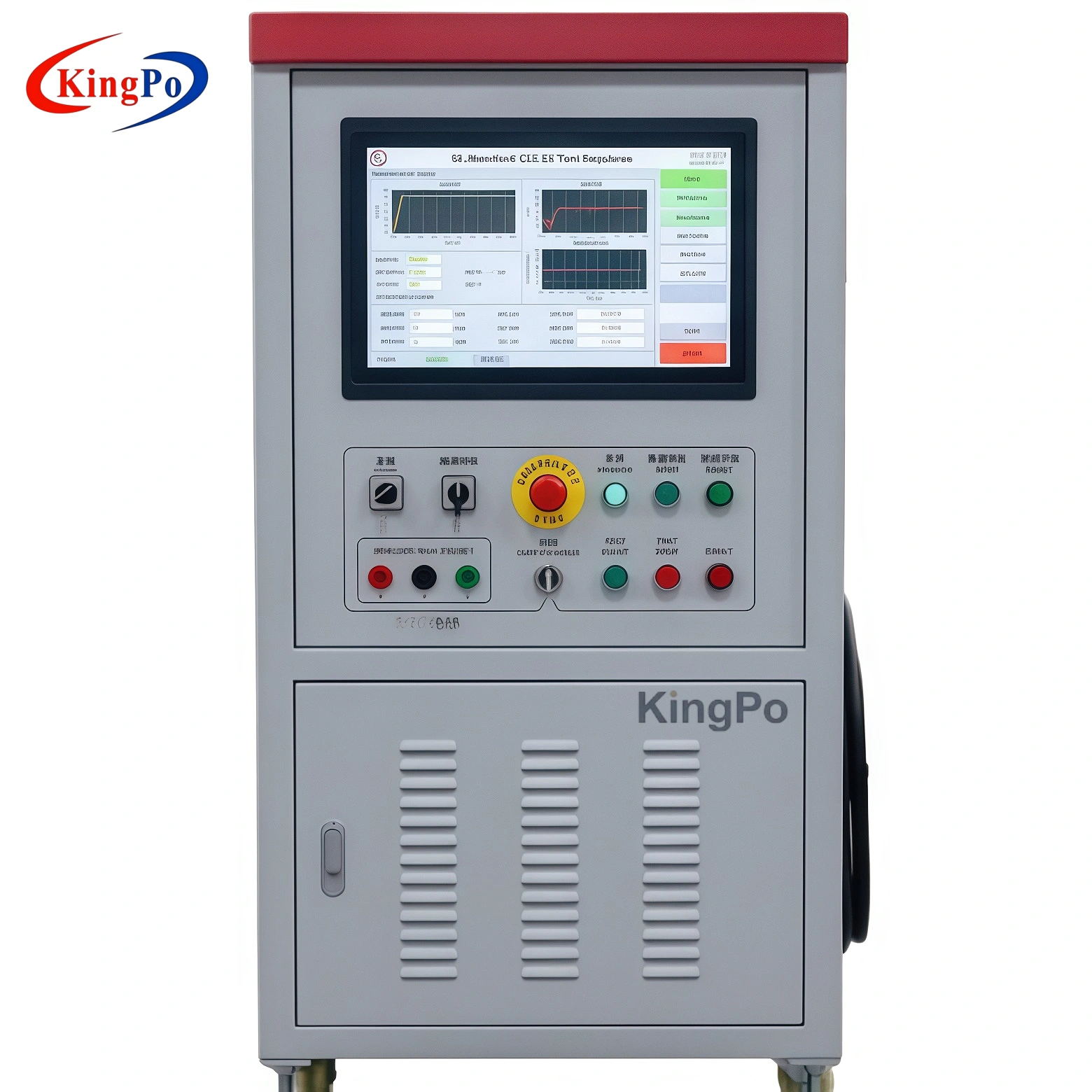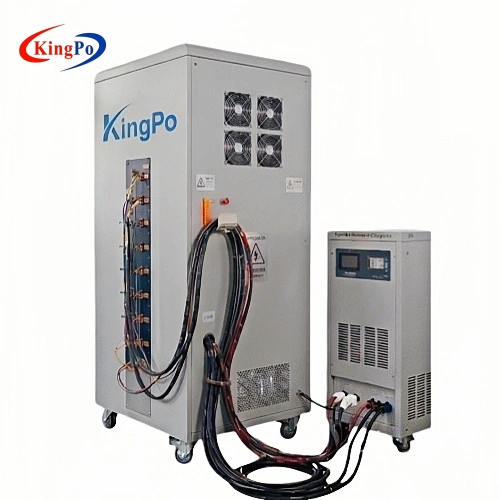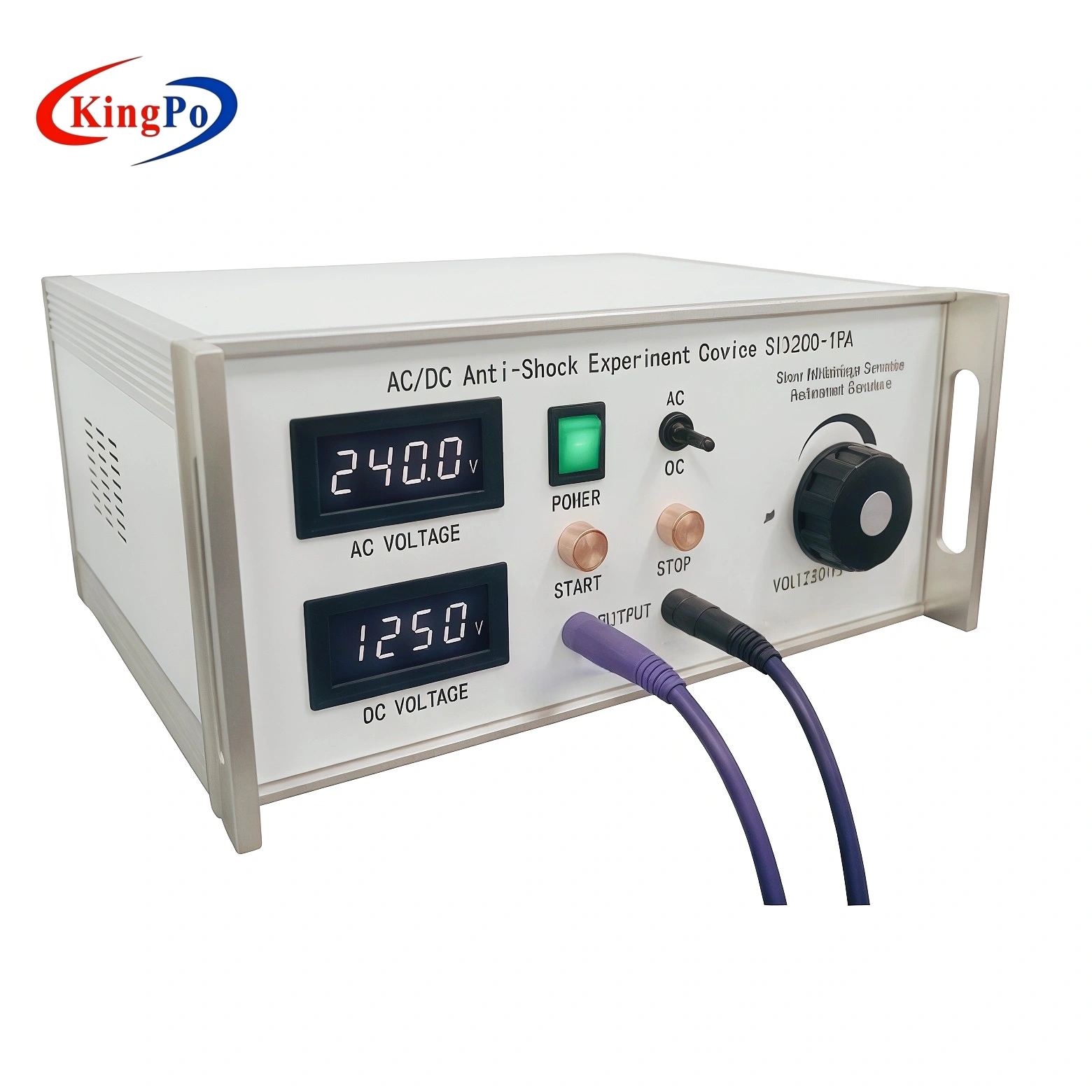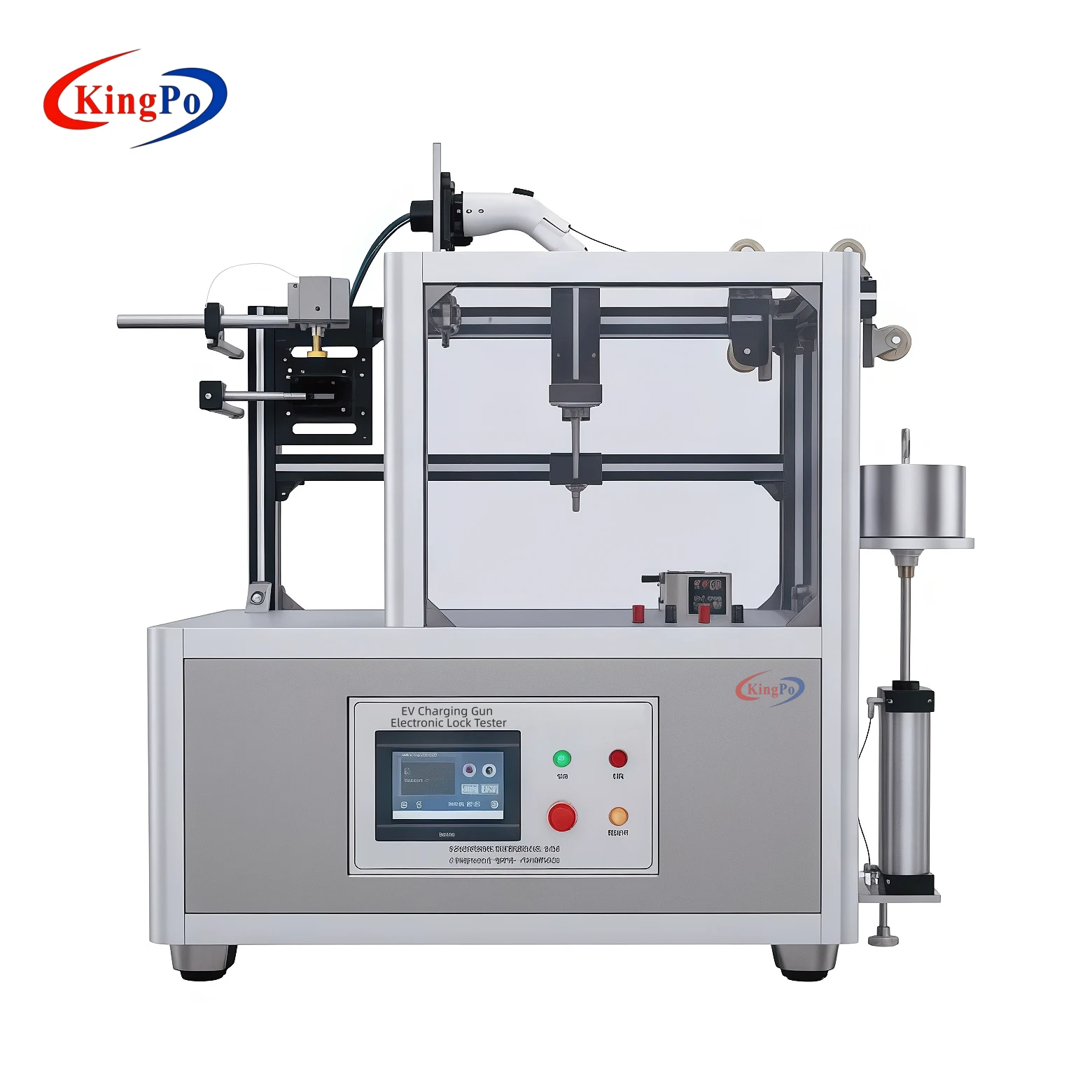
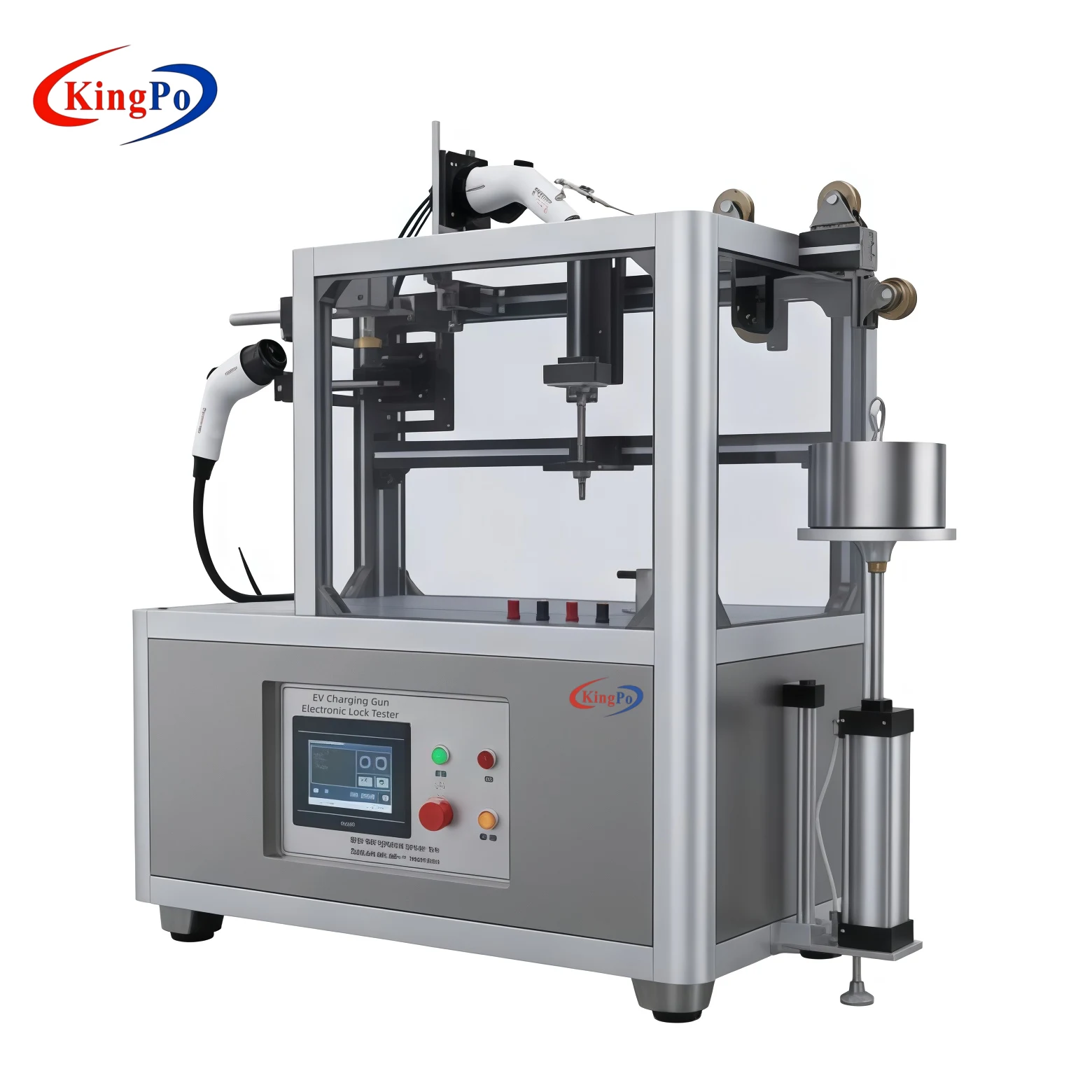

Comprehensive Tester for Electronic Locking Device of EV Charging Gun
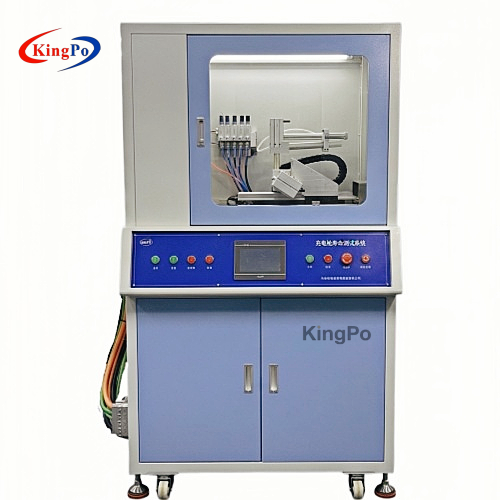
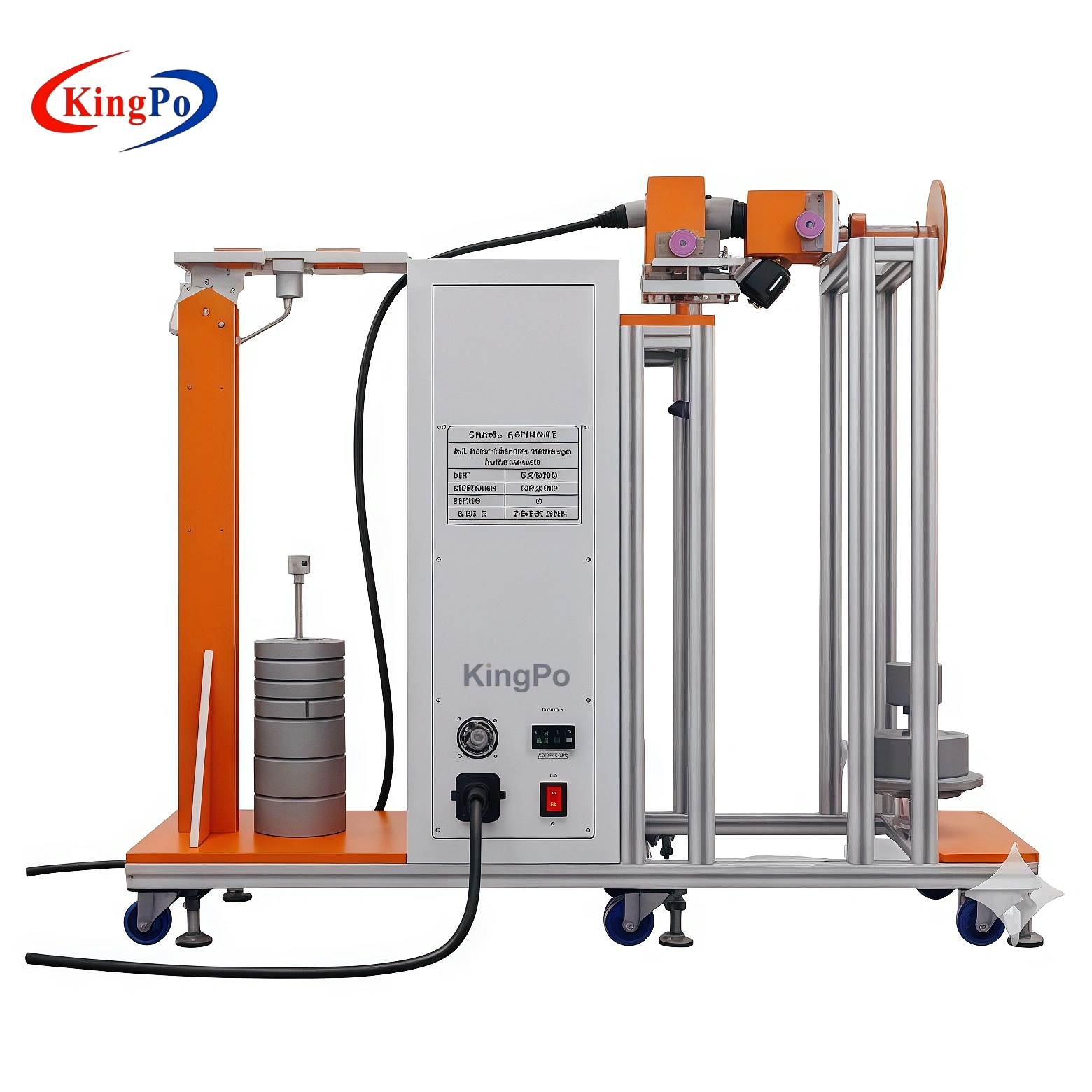
The EV Charging Gun Electronic Lock Tester IEC 62196-1 for Performance and Durability Testing is a professional high-precision comprehensive testing system manufactured by KingPo. It is specifically engineered to perform mechanical durability, pull force, unlocking force, load current monitoring, actuation response time measurement, and emergency unlocking tests on the electronic locking mechanisms of EV charging guns and vehicle connectors, in full compliance with IEC 62196-1:2022 Chapter 14, GB/T 20234.1-2023 Clause 6.3.4 & 7.15.2, and GB/T 18487.1-2023 Clause 10.6.
Technical Parameters
Force and Mechanical Parameters
| Parameter | Specification | Remark / Notes |
|---|---|---|
| Pull Force Range | 0–50 N | Accuracy ±0.5% F.S., Resolution 0.1 N |
| Unlocking Force Range | 0–100 N | Accuracy ±0.5% F.S., Resolution 0.1 N |
| Displacement Measurement | 0–50 mm | High-resolution tracking of locking lever position |
| Actuation Response Time | Millisecond level measurement | Critical for evaluating lock/unlock speed |
| Parameter | Specification | Remark / Notes |
|---|---|---|
| Load Current | 1–200 mA adjustable | Real-time lock status monitoring |
| Test Cycles | 0–99999 times | Programmable with power-off memory |
| Interval Time | 0–200 s (resolution 1 s) | Adjustable between operations |
| Control System | Mitsubishi PLC + 7-inch color HMI | Manual / Fully programmable modes |
| Work Station | Single station | Multi-standard interchangeable fixtures |
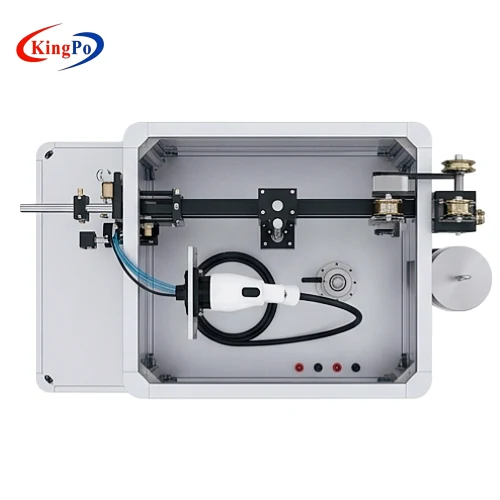
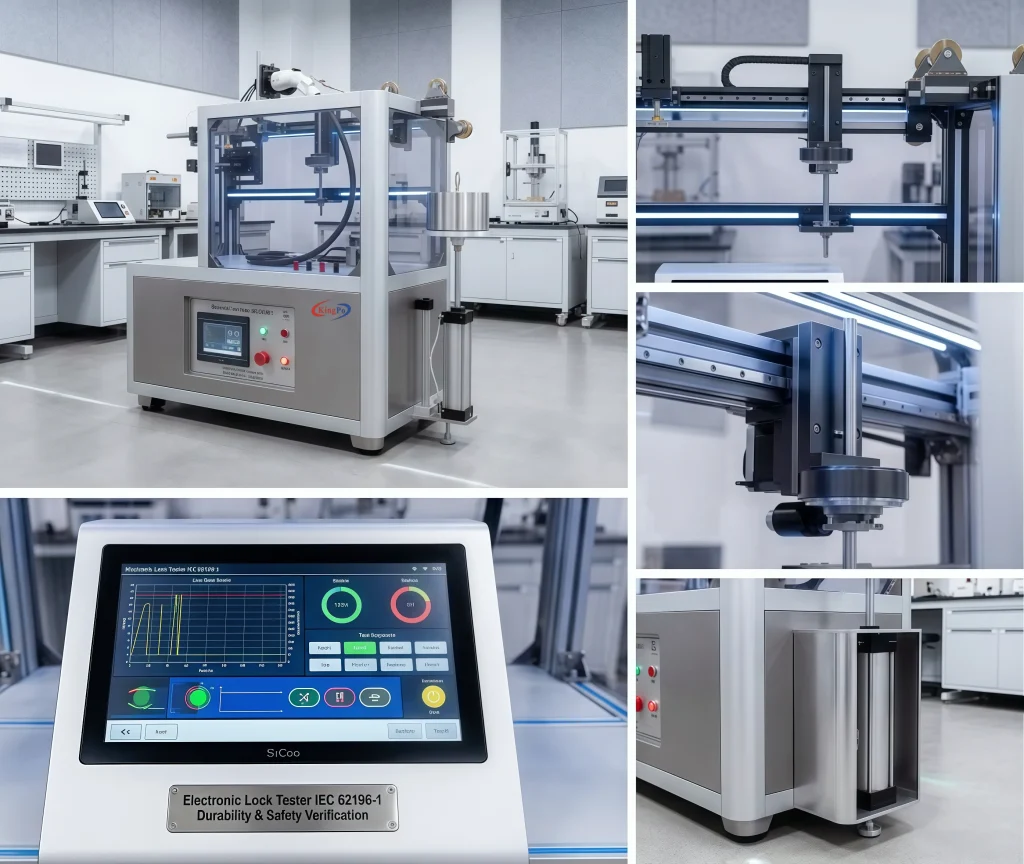
The EV Charging Gun Electronic Lock Tester features a precision servo-driven force application mechanism equipped with high-accuracy load cells and linear displacement sensors, enabling controlled axial thrust or tension on the locking lever with excellent repeatability. It simulates real-world vehicle coupling scenarios with programmable pull-force vectors, accurately replicating the mechanical stress experienced during actual charging gun insertion and removal.
Mitsubishi PLC intelligent control combined with a 7-inch color HMI allows flexible programming of test sequences, automatic polarity switching, and real-time signal feedback for lock/unlock status. The system is equipped with multi-standard interchangeable fixtures compatible with GB, EU (Type 2), and US charging interfaces, built-in signal feedback detection, and comprehensive safety protections including grounding, short-circuit, and overload safeguards. The robust mechanical frame with anti-vibration foot pads ensures superior stability during extended high-cycle durability testing, delivering laboratory-grade precision and long-term reliability.
Testing Principle
The tester applies programmable mechanical force to the electronic locking lever of the charging gun connector while supplying an adjustable load current (1–200 mA). It executes repeated lock/unlock cycles according to preset parameters, continuously monitors force, displacement, current and status feedback signals, and automatically records the number of successful operations until the preset cycle count is reached or a failure occurs. Dedicated manual emergency unlocking tests are also supported to verify the locking device’s safety performance under simulated fault conditions, thereby comprehensively assessing mechanical endurance, electrical integrity and functional reliability as required by the standards.

Common Error Mitigation
To achieve the highest measurement repeatability and data integrity:
- Always verify precise axial alignment of the force application device with the locking lever using calibration tools before each test sequence.
- Confirm secure clamping and fixture compatibility with the specific connector type to avoid eccentric loading.
- Utilize real-time signal feedback monitoring to validate lock/unlock status at every cycle.
- Maintain stable environmental conditions and allow sufficient stabilization time between operations.
- Perform regular calibration of force sensors, displacement transducers, and current output circuits to prevent measurement drift.
Primary Use Cases & Business Value
The EV Charging Gun Electronic Lock Tester IEC 62196-1 serves as a critical validation platform for EV charging system manufacturers and certification laboratories. It enables thorough assessment of electronic lock durability under repeated mechanical and electrical stress, early identification of design weaknesses, and confirmation that locking mechanisms meet stringent safety and performance requirements. This directly contributes to enhanced product reliability, reduced risk of field failures, smoother regulatory approval, and improved overall safety of EV charging infrastructure.
Industrial Applications & Lab Scenarios
- EV Charging Gun Manufacturers — Full life-cycle durability and force characteristic testing of electronic locks
- Vehicle Connector Suppliers — Interlock mechanism performance and emergency unlocking verification
- Third-Party Certification Laboratories — Compliance testing per IEC 62196-1 and GB standards
- R&D Departments — Optimization of locking force, stroke, response time and mechanical robustness
- Quality Control Teams — Batch consistency verification and reliability assessment of production charging connectors