Key Takeaways
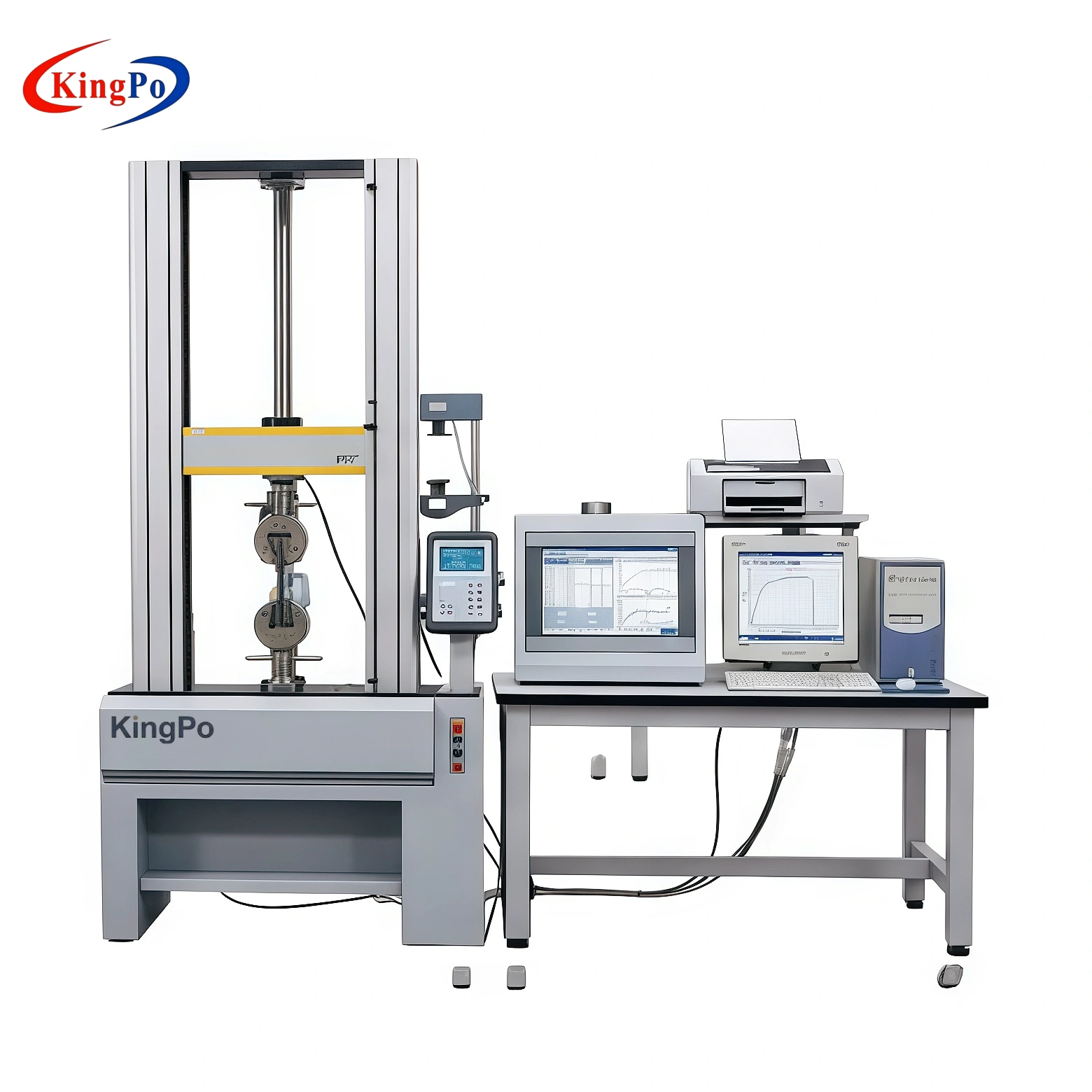
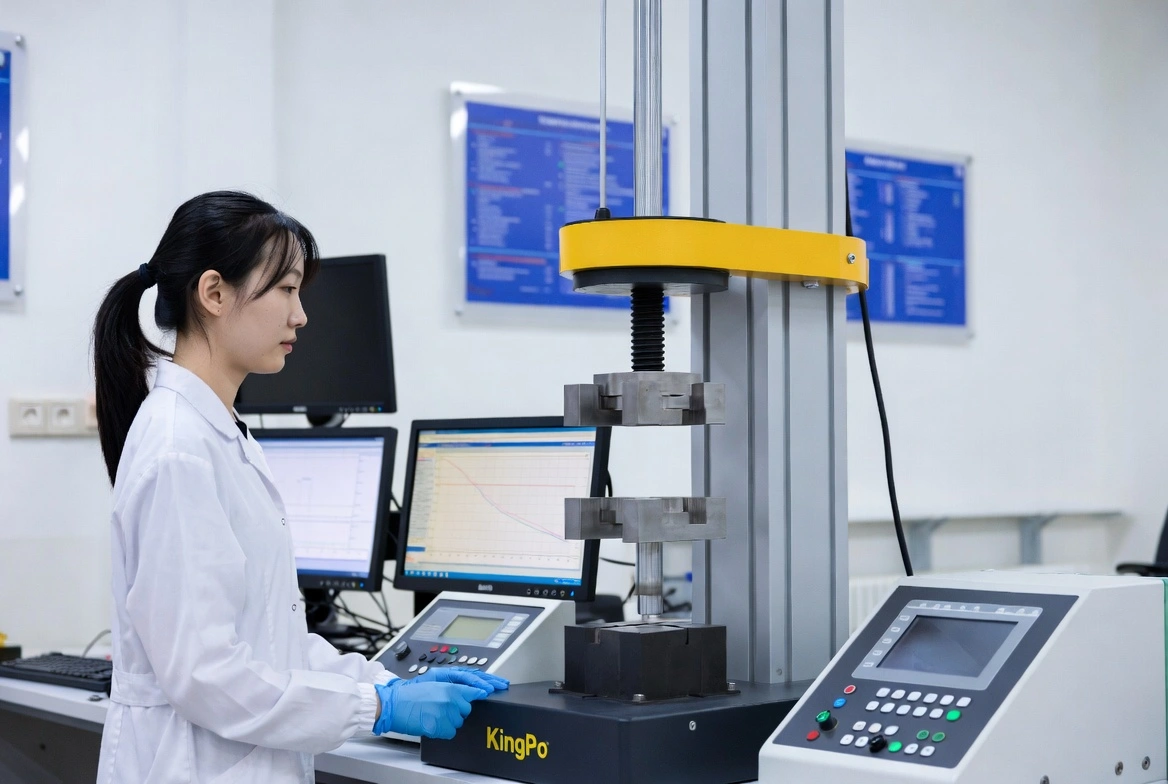
- A tensile strength testing machine evaluates the mechanical properties of plastics and other materials under controlled tension, providing critical data on tensile strength, elongation at break, and modulus of elasticity.
- ASTM D638 is the globally recognized standard for determining tensile properties of unreinforced and reinforced plastics using dumbbell-shaped specimens.
- KingPo universal tensile strength testing machines deliver precise, repeatable results with speeds from 0.5 to 1000 mm/min and load capacities up to 50 kN, fully compliant with ASTM D638.
- Proper testing procedure, specimen conditioning, and regular calibration are essential to obtain accurate, certifiable data.
- Choosing the right tensile strength testing machine significantly reduces material failure risks and accelerates product certification.
Abstract / Technical Summary
The tensile strength testing machine is an essential instrument in materials science and quality control laboratories for measuring the tensile properties of plastics, composites, and related materials. This comprehensive guide focuses on ASTM D638, the primary standard for determining tensile strength, elongation, and modulus of plastics. Drawing on more than 15 years of practical experience, KingPo provides detailed insights into test principles, equipment selection, professional testing procedures, and best practices. Whether you are an R&D engineer, quality manager, or certification specialist, this article equips you with actionable knowledge to achieve reliable, traceable results that meet international requirements.
Introduction
We at KingPo have collaborated extensively with plastics manufacturers, automotive suppliers, and accredited testing laboratories to evaluate the long-term mechanical performance of materials. In real-world service conditions, exposure to mechanical stress causes degradation far more rapidly than expected. Accurate tensile testing is therefore essential for effective R&D, quality control, and compliance with international standards such as ASTM D638. This comprehensive guide explains the principles, key standards, professional testing procedures, and best practices of tensile strength testing, based on more than 15 years of hands-on experience with the KingPo tensile strength testing machine series.
Why Tensile Strength Testing Machine Matters in Today’s Market
Modern plastics and composite materials face increasingly demanding mechanical environments. Without reliable tensile testing, manufacturers risk premature failure, costly recalls, and regulatory non-compliance. A professional tensile strength testing machine allows you to:
- Predict real-world performance under tension before market launch
- Optimize material formulations and thickness design
- Meet mandatory certification requirements with documented evidence
- Reduce field failure rates and strengthen customer confidence
Understanding Tensile Strength Testing Standards
Tensile testing is governed by several authoritative standards. The most relevant include ASTM D638 (plastics), ISO 527 (plastics), and GB/T 1040 (Chinese equivalent).
Tensile Testing Standards Comparison Table
| Standard | Test Type | Key Requirements | Primary Applications |
|---|---|---|---|
| ASTM D638 | Tensile properties of plastics | Dumbbell specimens, constant crosshead speed, report tensile strength, elongation, modulus | Unreinforced & reinforced plastics |
| ISO 527 | Tensile properties of plastics | Similar geometry, multiple speeds, precise strain measurement | International plastics certification |
| GB/T 1040 | Tensile properties of plastics | Aligns with ISO 527, Chinese market requirements | Domestic compliance & export |
Key Features of Professional Tensile Strength Testing Machine
When selecting a tensile strength testing machine, focus on these critical capabilities.
KingPo Tensile Strength Testing Machine Technical Specifications Table
| Parameter | Specification | Benefit |
|---|---|---|
| Load Capacity | 5 kN / 10 kN / 50 kN | Covers wide range of plastic materials |
| Crosshead Speed | 0.5–1000 mm/min (programmable) | Meets ASTM D638 speed requirements |
| Accuracy | ±0.5 % of full scale | Traceable, certifiable results |
| Grip Types | Pneumatic / mechanical wedge | Secure holding without slippage |
| Extensometer | Video / contact type | Precise strain measurement |
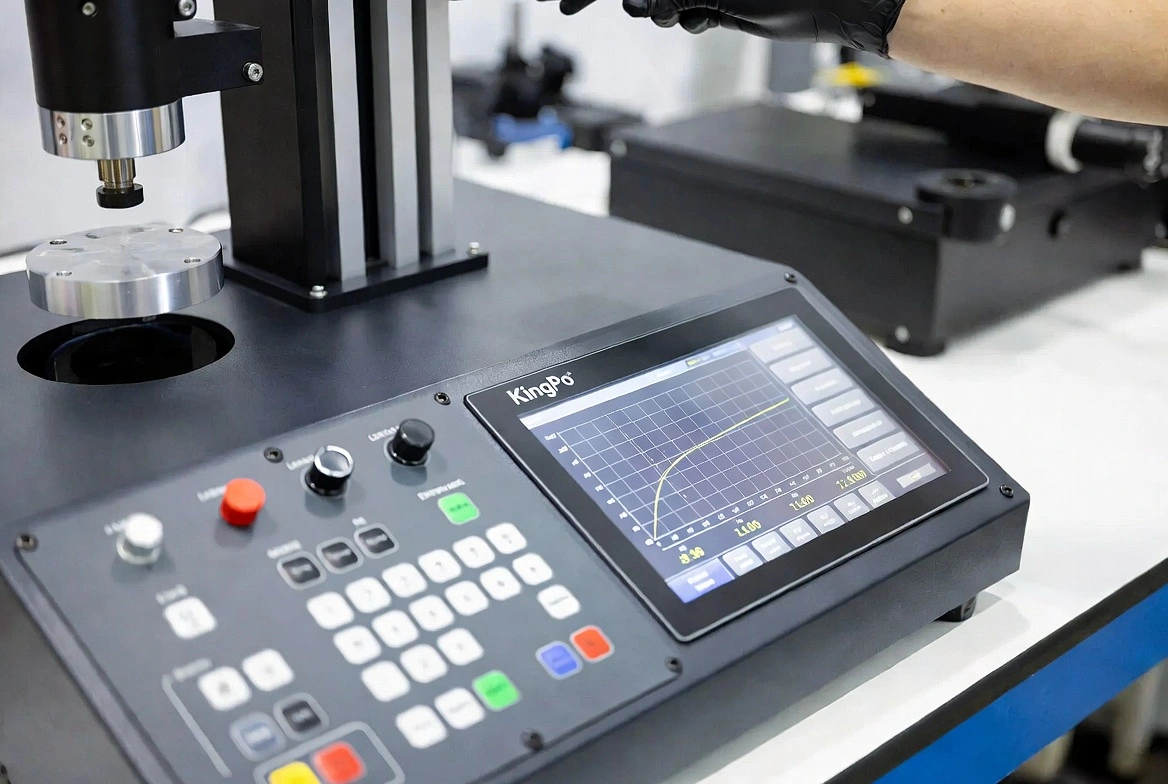
| Software | KingPo TestMaster (touchscreen) | Real-time curve display & automatic report |
| Standards Compliance | ASTM D638, ISO 527, GB/T 1040 | Full international & domestic certification |
Performing accurate tensile strength testing requires strict adherence to international standards and precise equipment operation. Below is the standardized laboratory procedure developed from our 15+ years of experience with KingPo tensile strength testing machines.
Step 1: Specimen Preparation and Conditioning
Prepare test specimens in accordance with ASTM D638 (Type I, II, IV or V dumbbell-shaped samples). Measure and record initial dimensions with a digital micrometer (accuracy ±0.01 mm). Condition specimens at 23 ± 2 °C and 50 ± 10 % RH for at least 40 hours unless otherwise specified.
Key parameters & compliance: Gauge length 50 mm (Type I).
Common pitfalls & solutions: Inconsistent thickness leads to premature failure — always use calibrated calipers and reject outliers beyond ±5 % tolerance.
Step 2: Machine Setup and Calibration
Mount the appropriate grips. Perform zero-load calibration and verify extensometer alignment. Set test parameters via the touchscreen: test speed, preload force, and data acquisition rate (minimum 50 Hz recommended).
Key parameters & compliance: ASTM D638 requires constant crosshead speed; KingPo machines support 0.5–1000 mm/min with ±0.5 % accuracy.
Safety note: Ensure emergency stop is functional and safety shields are in place.
Step 3: Test Execution
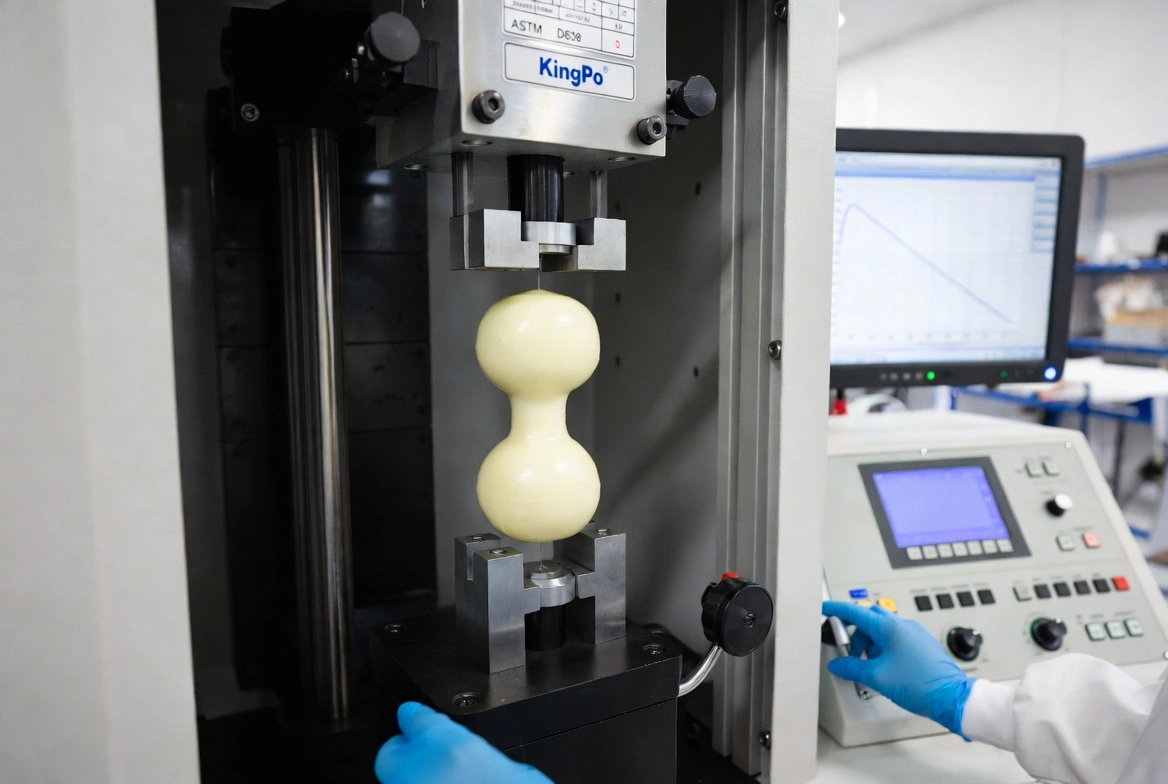
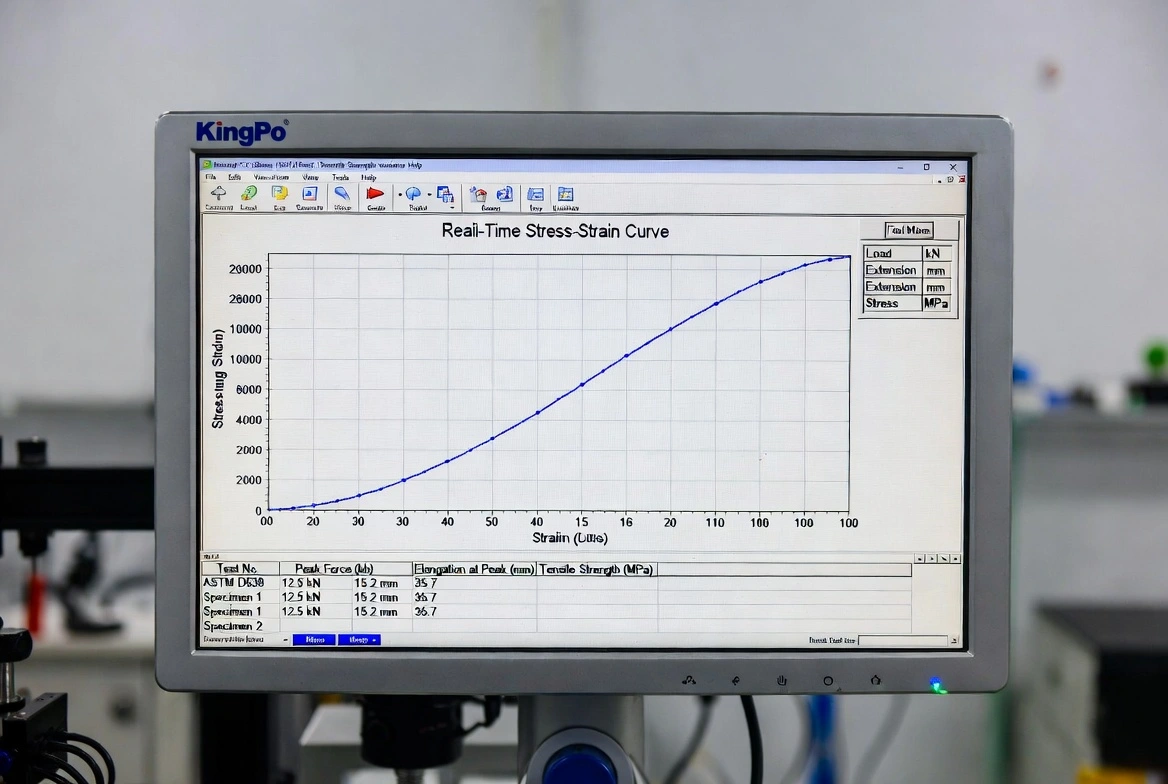
Insert the specimen centrally, apply minimal preload (<0.5 N), and initiate the test. Monitor real-time stress-strain curve on the software interface. Record yield strength, ultimate tensile strength, elongation at break, and modulus of elasticity.
Data interpretation: Calculate tensile strength as maximum force divided by original cross-sectional area (σ = F/A₀).
Common pitfalls & solutions: Slippage at grips — increase grip pressure or use serrated faces for rigid plastics.
Step 4: Post-Test Analysis and Reporting
Remove the specimen, inspect fracture surface for ductile/brittle characteristics. The system automatically generates a traceable report including raw data, stress-strain curve, and statistical analysis (mean, standard deviation for ≥5 specimens).
Compliance check: Ensure results meet ASTM D638 reporting requirements (Section 12).
Step 5: Equipment Maintenance After Testing
Clean grips and extensometer, perform daily visual inspection of load cell and ball screws. Log test cycles for preventive maintenance scheduling.
KingPo Tensile Strength Testing Machine Advantages
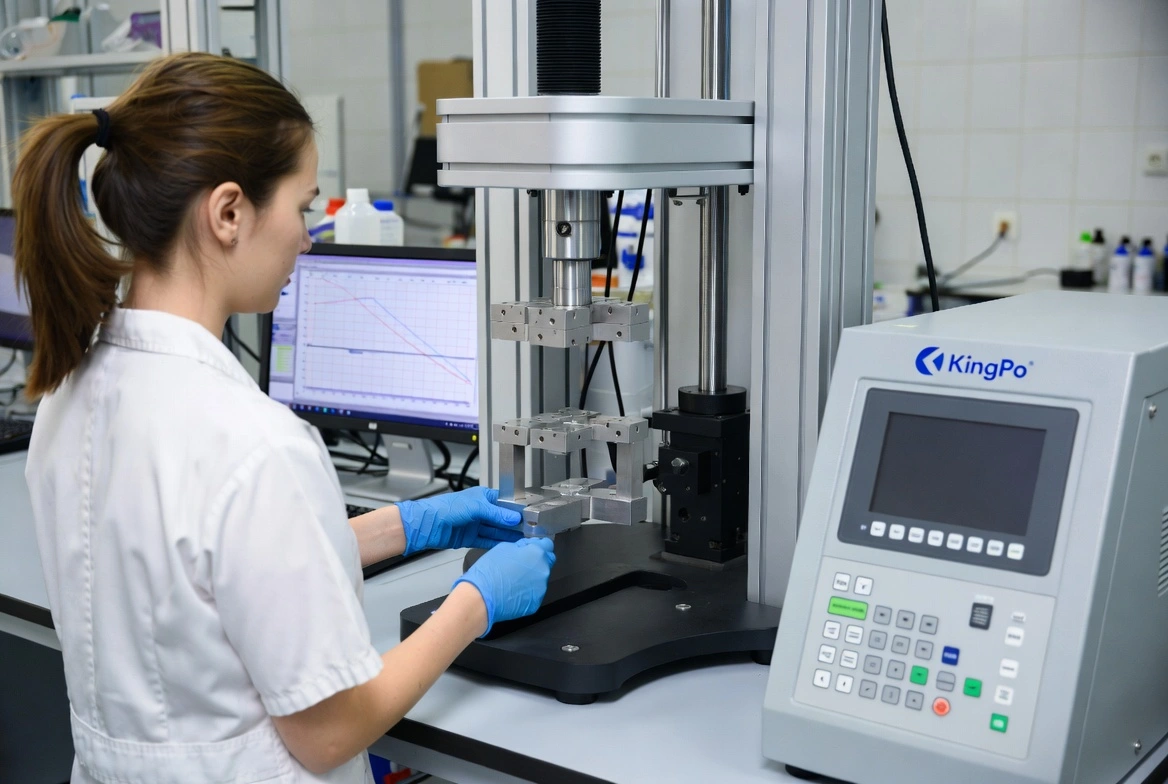
We at KingPo design and manufacture our tensile strength testing machines under ISO 9001 and CE certification. Every unit includes full compliance with ASTM D638, precise servo control, robust safety interlocks, 1-year comprehensive warranty, on-site installation, operator training, and 48-hour technical response from our Dongguan facility. Since 2022 we have delivered multiple units to leading plastics manufacturers worldwide, consistently achieving excellent measurement repeatability and faster certification cycles.
Real-World Applications and Case Studies
Our tensile strength testing machines are widely used by automotive plastics suppliers to validate dashboard components, by medical device manufacturers for IEC 60601-1 compliant cable testing, and by packaging companies to ensure film durability. One major plastics client reduced material failure complaints by 38 % after implementing our ASTM D638 protocol.
Best Practices and Maintenance for Long-Term Reliability
Consistent performance depends on disciplined maintenance. Follow this practical schedule:
Maintenance Checklist
| Frequency | Item to Check | Recommended Action |
|---|---|---|
| Daily | Grips and load cell | Visual inspection and cleaning |
| Weekly | Extensometer alignment | Verify calibration |
| Monthly | Ball screws and drive system | Lubricate and check for wear |
| Quarterly | Software and sensors | Update and full diagnostic test |
| Annually | Full system calibration | Professional ISO-certified service |
After-Sales Support and Technical Assistance
We at KingPo provide comprehensive after-sales support including on-site installation, operator training, 1-year free warranty, and lifelong technical assistance. Our experienced engineers are available 48 hours a day to resolve any issues.
Future Trends in Tensile Strength Testing
The industry is moving toward multi-functional machines that combine tensile testing with bending, compression, and fatigue in a single system. Our modular design ensures easy future upgrades, protecting your investment as testing requirements become more stringent.
Conclusion
Choosing the right tensile strength testing machine is a strategic decision that directly impacts material reliability, certification success, and long-term product performance. By combining precise engineering, full ASTM D638 compliance, and professional usability, KingPo’s tensile strength testing machines deliver the accuracy and repeatability you need to succeed in today’s demanding markets.
For a tailored configuration that precisely matches your ASTM D638 tensile testing requirements, please visit our Tensile Strength Testing Machine product page. Our engineering team will respond with detailed technical specifications and a competitive quote within 24 hours.
FAQ
What is the most common specimen type in ASTM D638?
- Type I dumbbell specimens are most frequently used for general-purpose plastics; Type IV is preferred for thin films.
How often should a tensile strength testing machine be calibrated?
- We recommend professional calibration every 12 months or after 50,000 test cycles to maintain traceability.
Can the same machine test both plastics and medical cables?
- Yes. KingPo universal tensile strength testing machines support both ASTM D638 plastics testing and IEC 60601-1 cord bend protection tests with interchangeable fixtures.
What is the typical test speed range for ASTM D638?
- ASTM D638 specifies speeds from 5 mm/min to 500 mm/min depending on the material and specimen type.
How do I avoid grip slippage during testing?
- Use appropriate grip pressure, serrated faces for rigid plastics, or pneumatic grips for softer materials.