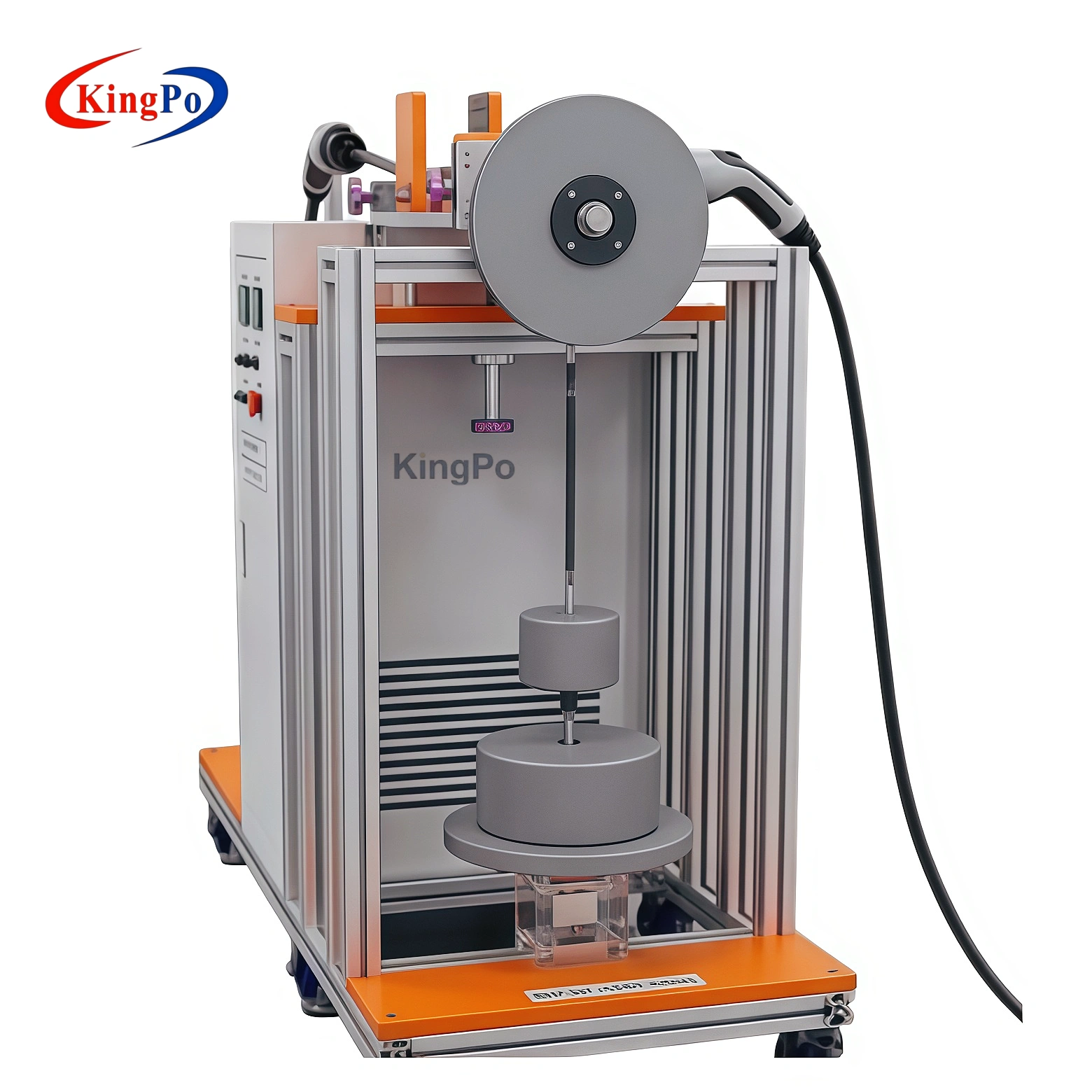
IEC 61851-23 EV Charger Cable Test Equipment โ€“ KingPo Electric Drive System Applying 160Nโ€“500N Pull Force on EV Charging Cable Assemblies
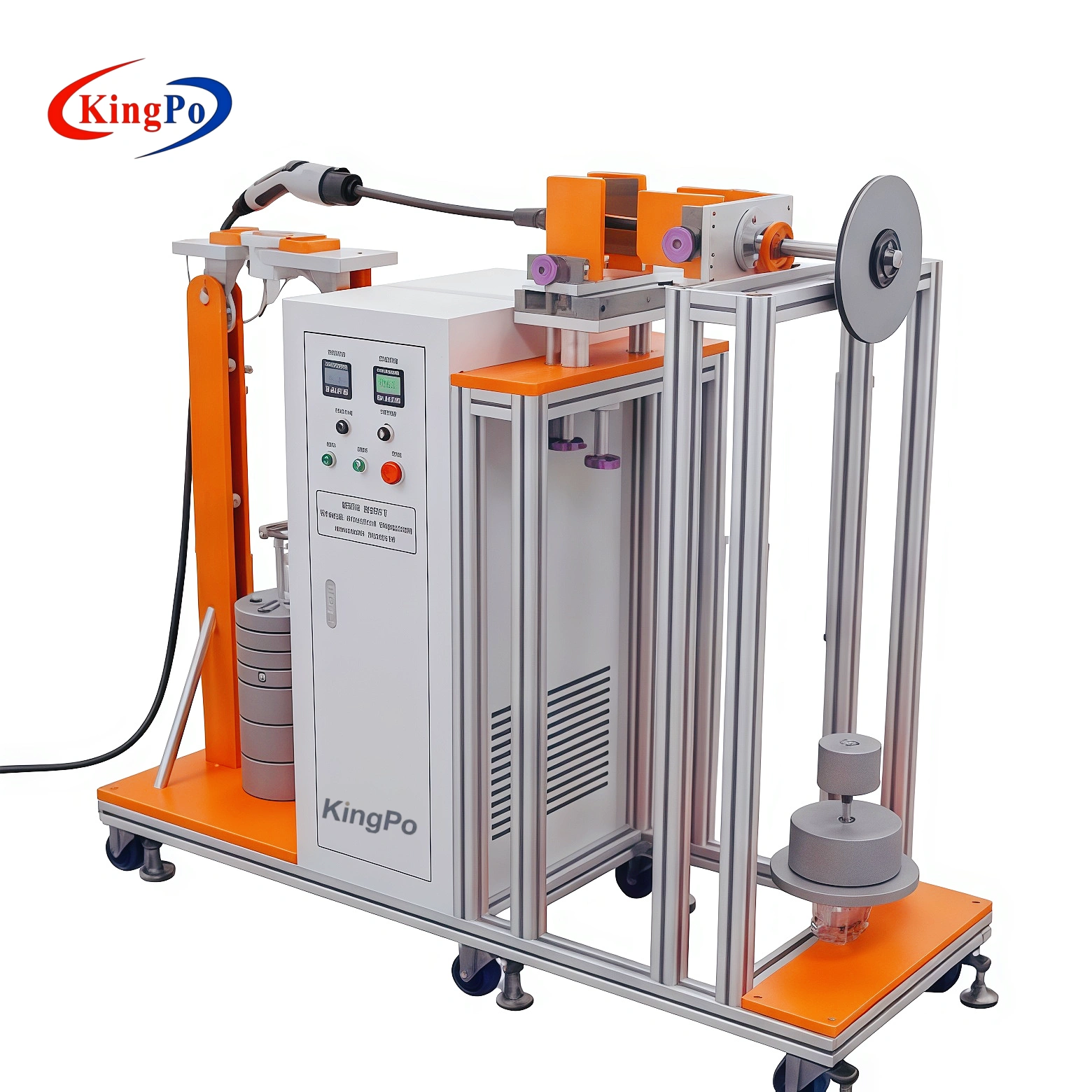
IEC 61851-23 EV Charger Cable Test Equipment โ€“ KingPo Precision Tester for Side B Cable Assembly Mechanical Strength and Anchorage Pull Torque Testing
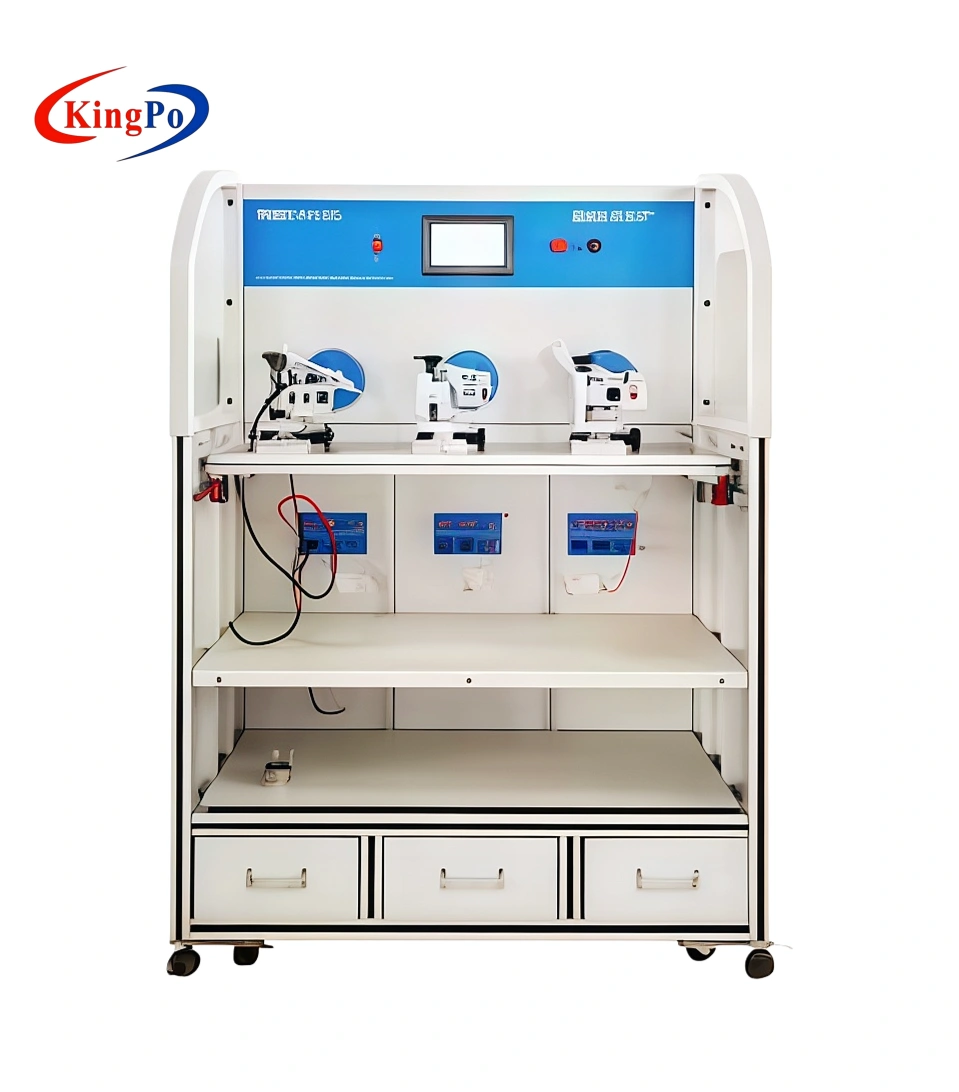
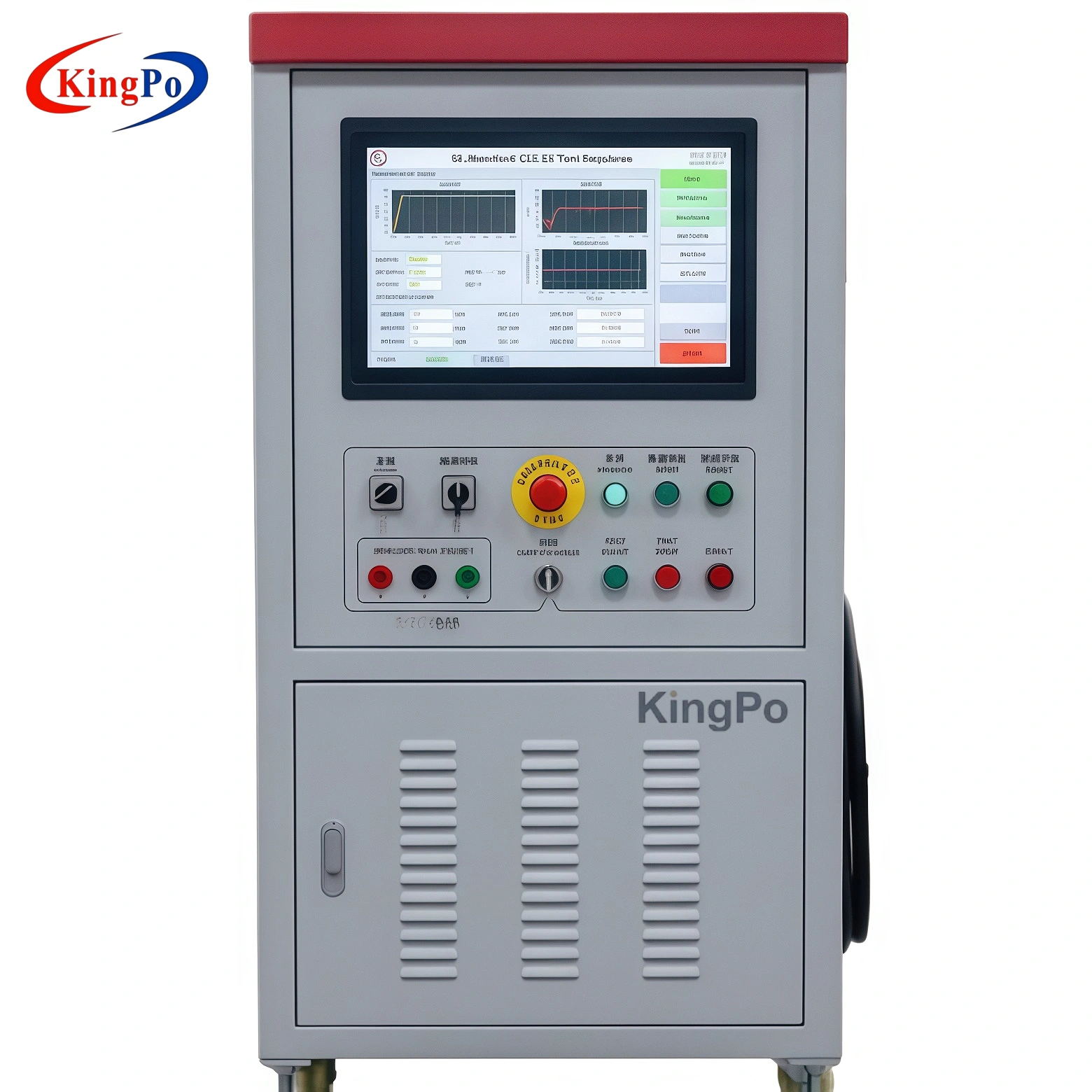
IEC 61851-23 EV Charger Cable Test Equipment Control Panel โ€“ KingPo PLC Touch Screen for Programmable Pull Cycles and Torque Duration
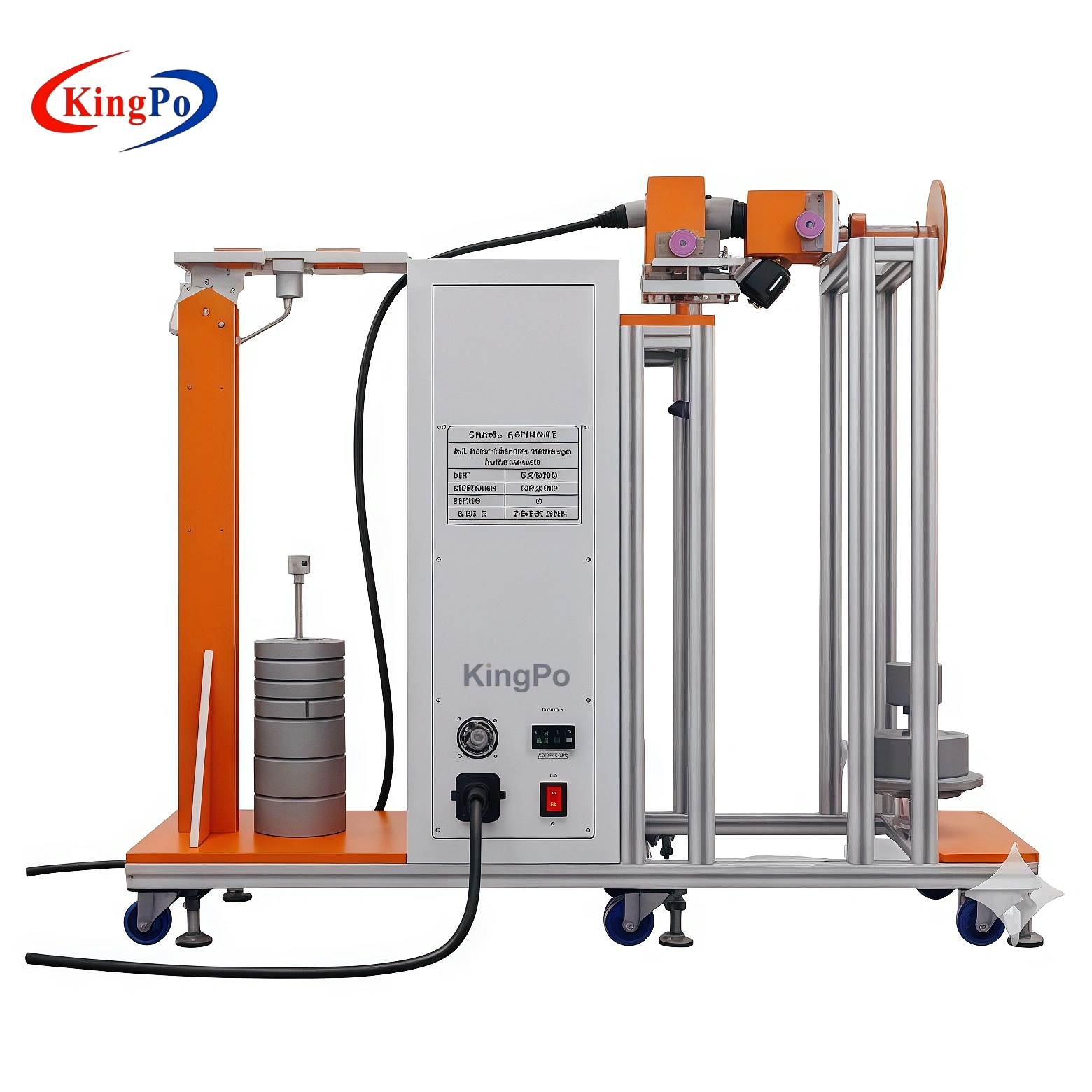
IEC 61851-23 EV Charger Cable Test Equipment โ€“ KingPo Weight-Based Torque Application (0.6โ€“16.3Nยทm) with R100mm Torque Wheel for Cable Twist Resistance
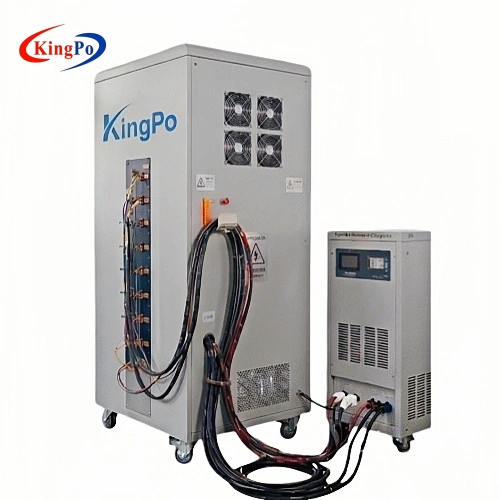
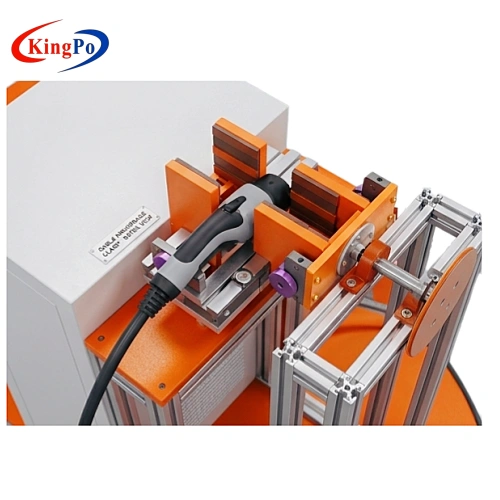
IEC 61851-23 EV Charger Cable Test Equipment โ€“ KingPo Electric Drive System Applying 160Nโ€“500N Pull Force on EV Charging Cable Assemblies
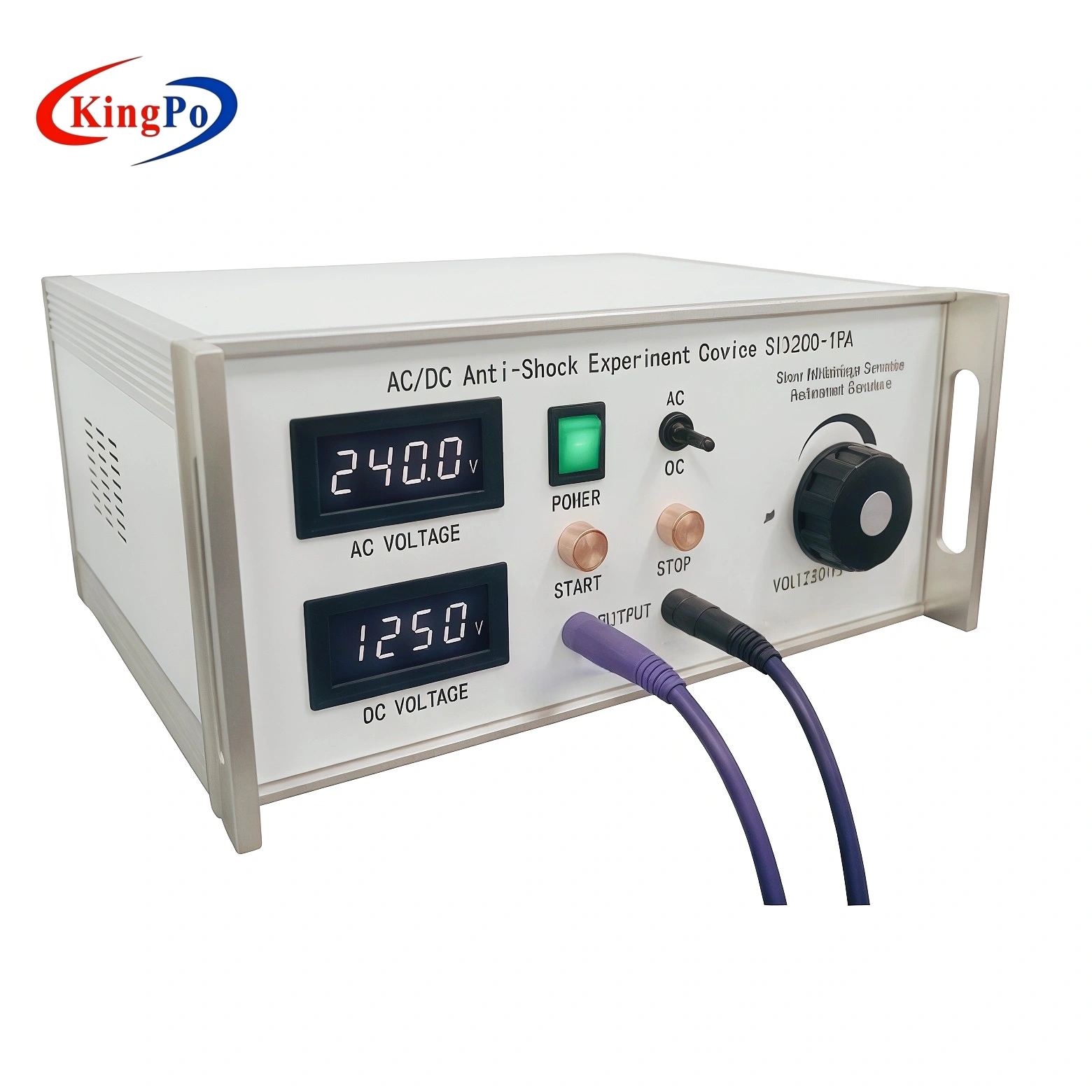
IEC 61851-23 EV Charger Cable Test Equipment โ€“ KingPo Precision Tester for Side B Cable Assembly Mechanical Strength and Anchorage Pull Torque Testing
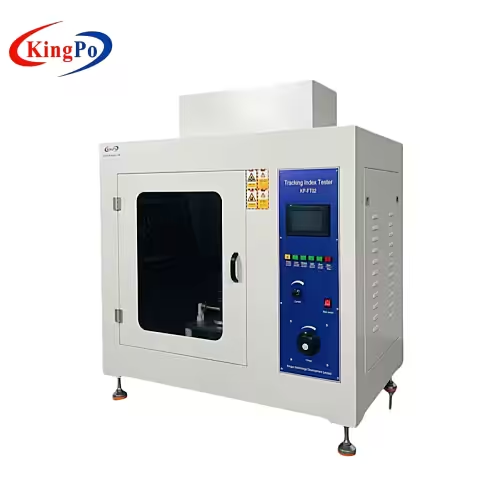
IEC 61851-23 EV Charger Cable Test Equipment Control Panel โ€“ KingPo PLC Touch Screen for Programmable Pull Cycles and Torque Duration
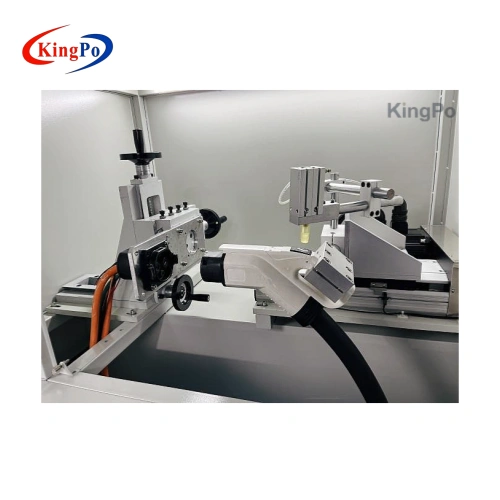
IEC 61851-23 EV Charger Cable Test Equipment โ€“ KingPo Weight-Based Torque Application (0.6โ€“16.3Nยทm) with R100mm Torque Wheel for Cable Twist Resistance

EV Charger Cable Test Equipment โ€“ IEC 61851-23 Side B Cable Assembly Pull Torque Tester

EV Charger Cable Test Equipment โ€“ IEC 61851-23 compliant precision system evaluates the mechanical strength of EV charging cable assemblies through anchorage pull force and torque resistance testing, ensuring connector retention and durability.

  • Standard Compliance: IEC 61851-23:2023 Figure 111 โ€“ EV charger cable test equipment
  • Test Content: Axial pull force and rotational torque resistance on Side B cable assemblies
  • Drive Mode: Electric drive for pull force, weight-based torque application
  • Pull Force: 160N, 200N, 240N, 250N, 500N (achieved by weight superposition)
  • Torque Values: 0.6Nยทm, 0.7Nยทm, 1.4Nยทm, 2.7Nยทm, 5.4Nยทm, 11.0Nยทm, 16.3Nยทm (weight superposition)
  • Torque Wheel: R100mm (ฮฆ200mm) ยฑ0.5mm
  • Tensile Frequency: 1 time/s
  • Pull Cycles: 1โ€“999999 cycles, preset with power-off memory
  • Torque Application Time: 0โ€“99H59M59S, preset
  • Control System: PLC with touch screen operation
  • Fixture: Universal clamp, one set
  • MOQ: 1
  • Delivery Period: 30 days

EV Charger Cable Test Equipment Description

IEC 61851-23 EV Charger Side B Cable Assembly Anchorage Pull & Torque Test Equipment

The EV Charger Cable Test Equipment is a specialized mechanical testing system manufactured by KingPo for evaluating the anchorage strength and torque resistance of Side B cable assemblies used in electric vehicle charging stations. Designed in full compliance with IEC 61851-23:2023 Figure 111, this EV charger cable test equipment performs precise pull force and torque tests to verify connector retention and rotational durability under simulated operational stresses.

The system applies controlled axial pull forces and torsional loads to the cable-plug interface, ensuring the charging cable assembly maintains mechanical integrity throughout its service life. It is an essential quality control tool for EVSE manufacturers, test laboratories, and certification bodies.

KingPo Factory Advantages

KingPo is an ISO9001 and CE certified manufacturer specializing in EV charging cable and connector testing equipment. We have delivered multiple IEC 61851-23 compliant EV charger cable test equipment units to leading EV manufacturers and accredited laboratories. All units include calibration certificates (additional cost), on-site installation guidance, 1-year warranty and 48-hour technical response from our Dongguan facility.

Professional Construction & Technical Precision

Key features include:

  • Electric drive mechanism for consistent and repeatable pull force application
  • Weight-based torque loading via calibrated torque wheel (R100mm ยฑ0.5mm) for precise torsional stress
  • PLC control with touch screen interface for easy programming of cycles and timing
  • Power-off memory function to preserve test data and settings
  • Universal fixture compatible with various EV charging cable assemblies
  • Automatic stop upon reaching preset cycle count or torque duration

These elements ensure high accuracy, excellent repeatability, and reliable compliance with IEC 61851-23 requirements for EV charger cable testing.

Technical Parameters

Parameter Specification
Model Number SNQC1007B EV Charger Cable Test Equipment
Applicable Standard IEC 61851-23:2023 Figure 111
Control Operation Mode PLC automatic control with touch screen
Drive Mode Electric (pull force) + weight-based (torque)
Pull Force Values 160N, 200N, 240N, 250N, 500N (weight superposition)
Torque Values 0.6Nยทm, 0.7Nยทm, 1.4Nยทm, 2.7Nยทm, 5.4Nยทm, 11.0Nยทm, 16.3Nยทm (weight superposition)
Torque Wheel R100mm (ฮฆ200mm) ยฑ0.5mm
Tensile Frequency 1 time/s (actual pull time detected by electrical signal)
Pull Cycles 1โ€“999999 cycles, preset (default 100ยฑ1 cycles)
Torque Application Time 0โ€“99H59M59S, preset
Power Failure Protection With power-off data storage memory function
Fixture Universal clamp, one set
Power Supply AC 220V ยฑ10%, 50/60Hz, 1kW
Dimensions (Wร—Dร—H) Approx. 1600 ร— 600 ร— 1450 mm
Weight Approx. 180 kg
Primary Use Cases & Business Value

The EV charger cable test equipment supports key stages:

  • Product Development โ€“ Validate mechanical robustness of new EV charging cable designs
  • Certification Testing โ€“ Generate data for IEC 61851-23 compliance of Side B cable assemblies
  • Quality Control โ€“ Batch verification of anchorage pull and torque resistance in production
  • Failure Analysis โ€“ Identify risks of connector displacement or rotational failure under stress

It improves product reliability, reduces field failures, and accelerates certification for EV charging infrastructure.
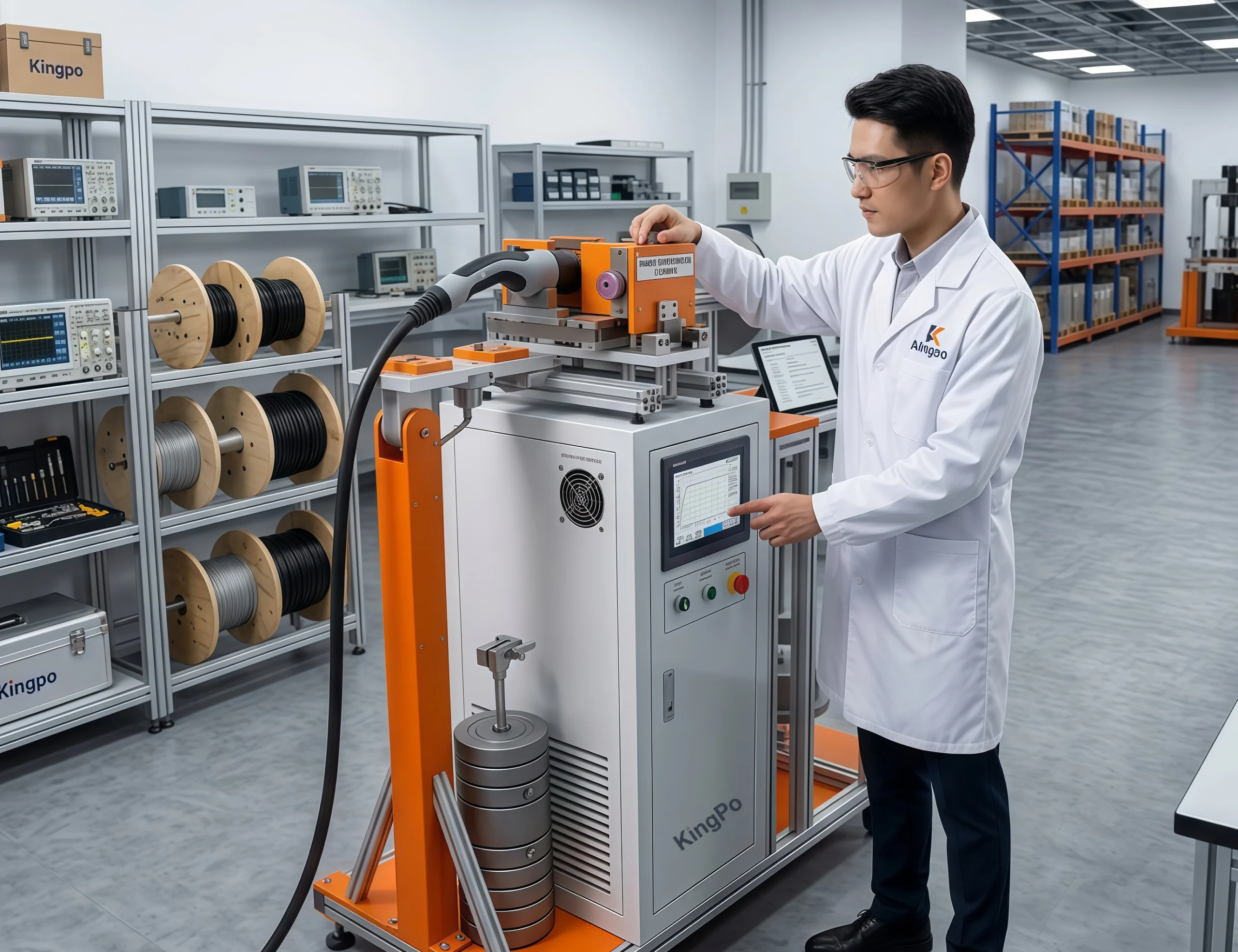
IEC 61851-23 EV Charger Cable Test Equipment โ€“ KingPo Universal Clamp Fixture for Pull and Torque Testing of Side B Cable Assemblies
IEC 61851-23 EV Charger Cable Test Equipment

Procurement Benefits

Electric drive combined with precise weight loading delivers consistent, repeatable results with minimal operator intervention. Programmable cycles and power-off memory enhance testing efficiency. Robust construction and universal fixtures provide excellent flexibility. This EV charger cable test equipment strengthens mechanical validation of charging cable assemblies, supports IEC 61851-23 compliance, and minimizes quality risks. Contact us today for your quote โ€“ we will respond within 24 hours with detailed technical specifications and pricing.

EV Charger Cable Test Equipment Applications

  • Side B Cable Assemblies for EV Charging Stations โ€“ Pull force and torque resistance testing per IEC 61851-23
  • EV Charger Plug and Cable Connections โ€“ Anchorage strength and rotational durability evaluation
  • Production Quality Assurance โ€“ Batch mechanical testing of charging cable assemblies
  • Certification Laboratories โ€“ Compliance verification for EVSE manufacturers
  • R&D Validation โ€“ Optimization of cable retention and torque resistance
Compliance & Regulatory Assurance

This equipment is strictly designed and manufactured in accordance with IEC 61851-23:2023 Figure 111 for testing the anchorage and torque resistance of EV charger Side B cable assemblies. It evaluates the ability of the cable and connector interface to withstand specified pull forces and torsional loads, thereby ensuring mechanical robustness, connector retention, and long-term reliability in electric vehicle conductive charging systems. Calibration certificates are available at additional cost. Regular verification of force application, torque accuracy, and cycle counting is recommended to maintain traceability.

Technical Inquiry for IEC 61851-23 EV Charger Cable Test Equipment

KingPo specializes in mechanical durability testing equipment for EV charging cables and connectors. If you require precise anchorage pull and torque testing according to IEC 61851-23 for Side B cable assemblies, our engineering team can provide customized fixture solutions and technical support.

The Core Value We Deliver to You

  • Accurate weight-based pull force (160โ€“500N) and torque (0.6โ€“16.3Nยทm) application
  • Programmable cycles up to 999999 with power-off memory
  • PLC touch screen control for easy operation and automated testing
  • Universal fixture suitable for various EV charging cable types
  • Reliable compliance with IEC 61851-23 mechanical requirements

Take Action Now Tell us your cable specifications, required force/torque values or test volume โ€” our engineering team will reply with tailored recommendations within 24 hours.

EV Charger Cable Test Equipment Detail Display

EV Charger Cable Test Equipment FAQs

What standard does the EV Charger Cable Test Equipment comply with?
The equipment is designed and manufactured according to IEC 61851-23:2023 Figure 111, which specifies the test methods for anchorage pull force and torque resistance of EV charging cable assemblies.
What pull force values can the EV Charger Cable Test Equipment apply?
It supports standard pull forces of 160N, 200N, 240N, 250N, and 500N, achieved through precise superposition of calibrated weights.
What torque values are available for testing on this EV charger cable test equipment?
The system can apply torque values of 0.6Nยทm, 0.7Nยทm, 1.4Nยทm, 2.7Nยทm, 5.4Nยทm, 11.0Nยทm, and 16.3Nยทm using calibrated weights and a torque wheel of R100mm ยฑ0.5mm.
How are test cycles and duration controlled in the EV Charger Cable Test Equipment?
Tests are fully programmable via the PLC touch screen. Pull cycles can be set from 1 to 999999, and torque application time ranges from 0 to 99 hours 59 minutes 59 seconds.
Does the EV Charger Cable Test Equipment have power-off protection?
Yes. It features power-off data storage memory, preserving test settings and progress to ensure data integrity after unexpected power interruptions.
What is the tensile frequency of the pull test?
The system performs pull actions at a frequency of 1 time per second, with actual pull time detected and verified by electrical signal for accuracy.
Is the fixture suitable for different types of EV charging cables?
Yes. The universal clamp fixture is designed to accommodate various Side B cable assemblies used in EV charging stations.
How is compliance determined after testing with the EV Charger Cable Test Equipment?
After completing the preset cycles, the maximum displacement of the charging connector relative to the cable is measured. The result must remain within the allowable limit specified in IEC 61851-23.
What maintenance is recommended for the EV Charger Cable Test Equipment?
Regular inspection of weights, torque wheel alignment, and drive mechanism is advised. Periodic calibration of force and torque application is recommended to maintain measurement traceability.
How can I request a quotation or customized configuration for this EV charger cable test equipment?
Contact our engineering team with your specific cable types, required force/torque values, or special test requirements. We will provide a tailored solution and quote within 24 hours.

Related Products

Related News

1.Abstract & Technical Summary The KingPo IEC 62552 Refrigerator Test Chamber delivers industry-leading climate simulation chamber performance for energy consumption […]

The Ultimate Guide to Desktop Temperature Humidity Chamber in 2026: Precision High-Low Cycling, Environmental Adaptability, and Reliability Verification โ€“ A […]

IEC 61855 Automatic Airflow Performance Measurement streamlines hair dryer compliance with accurate, automated testing and audit-ready reports every time.
IEC 62368-1 Clause 9.6.2 Wireless Charging Foreign Object Temperature Rise Test Kit streamlines compliance, ensuring safe and certified wireless charging devices.
Ensure IEC 60601 compliance in 2026 with Defib-proof and Energy Reduction Tester for safer, faster medical device approval and reliable patient protection.

The IEC 60695 series, titled Fire Hazard Testing, forms a comprehensive framework developed by the International Electrotechnical Commission (IEC) to […]

The Defibrillation Immunity Testing Requirements for Active Implantable Medical Devices (AIMDs): Standards Breakdown, Visual Insights, and Recommendation for the KP-1050S […]

IP (Ingress Protection) ratings are enclosure protection standards developed by the International Electrotechnical Commission (IEC), primarily assessing the ability of […]

Scroll to Top

Get A Free Quote Now !

Contact Form
If you have any questions, please do not hesitate to contact us.