IEC 61851-23 EV Charger Side B Cable Assembly Anchorage Pull & Torque Test Equipment
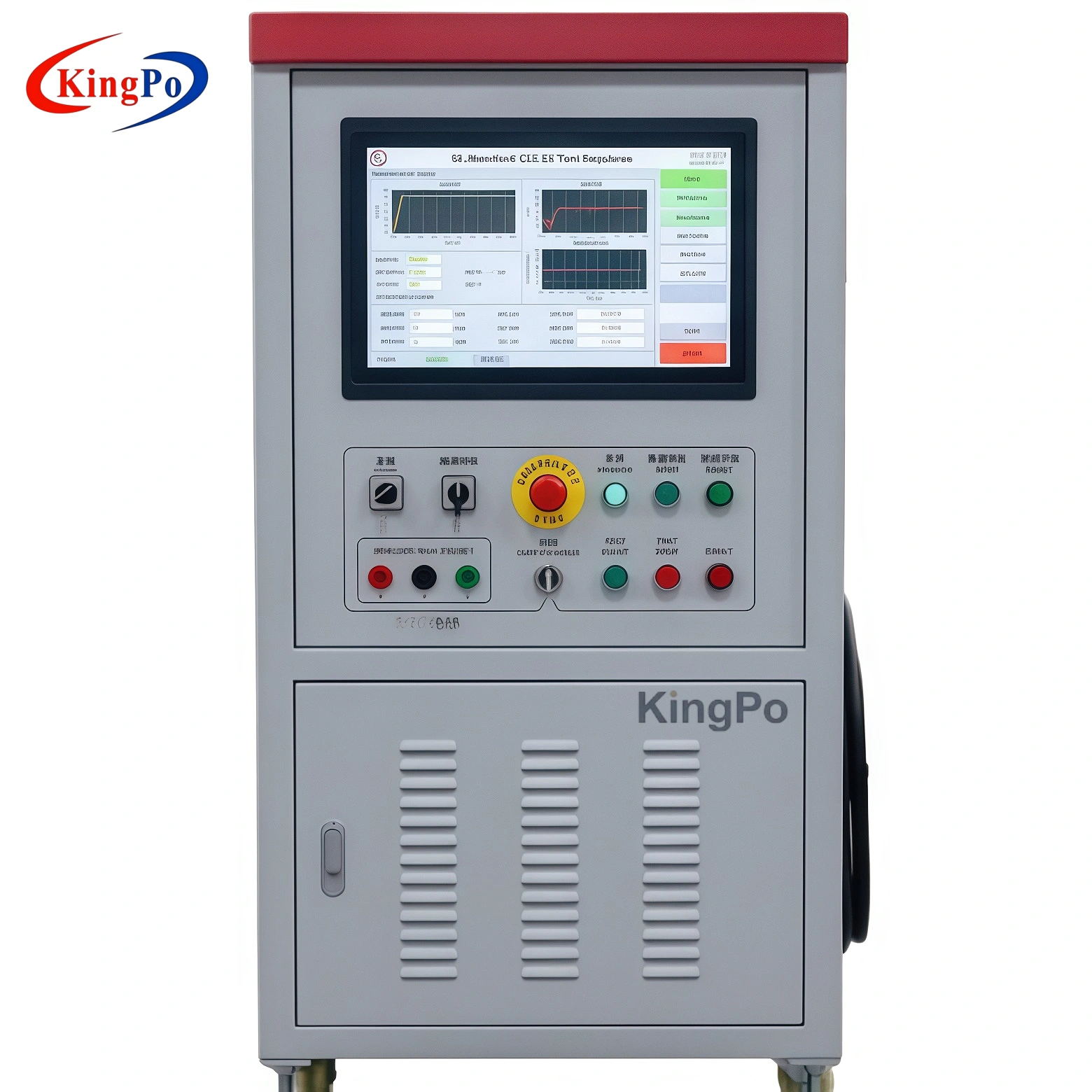
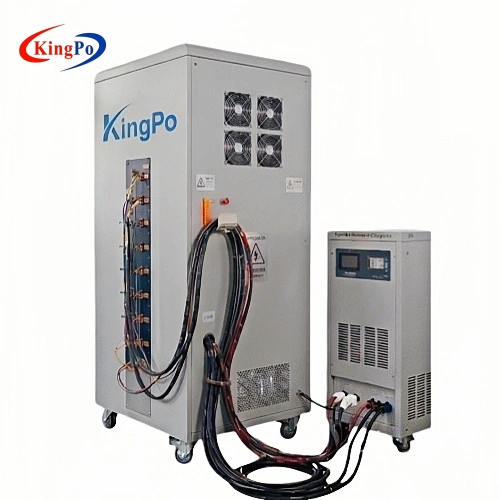
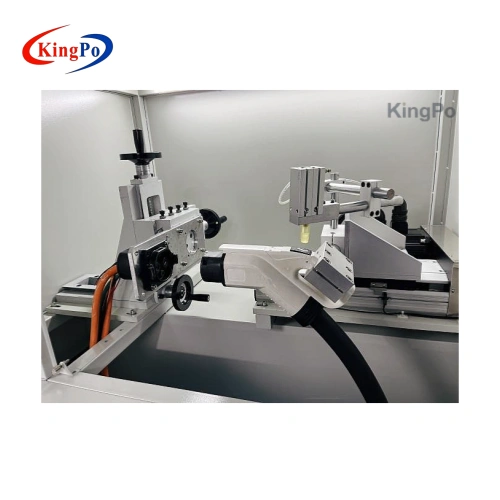
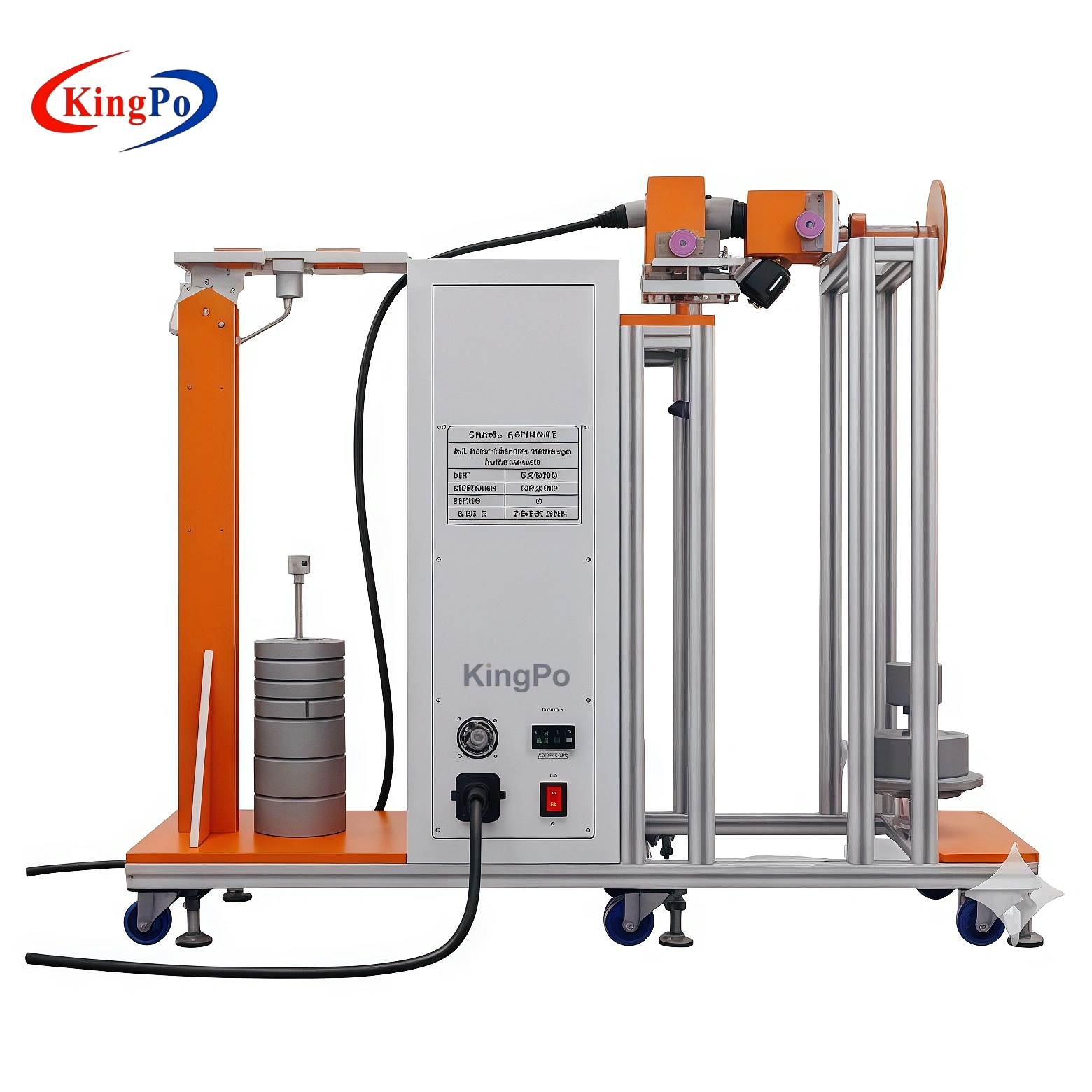
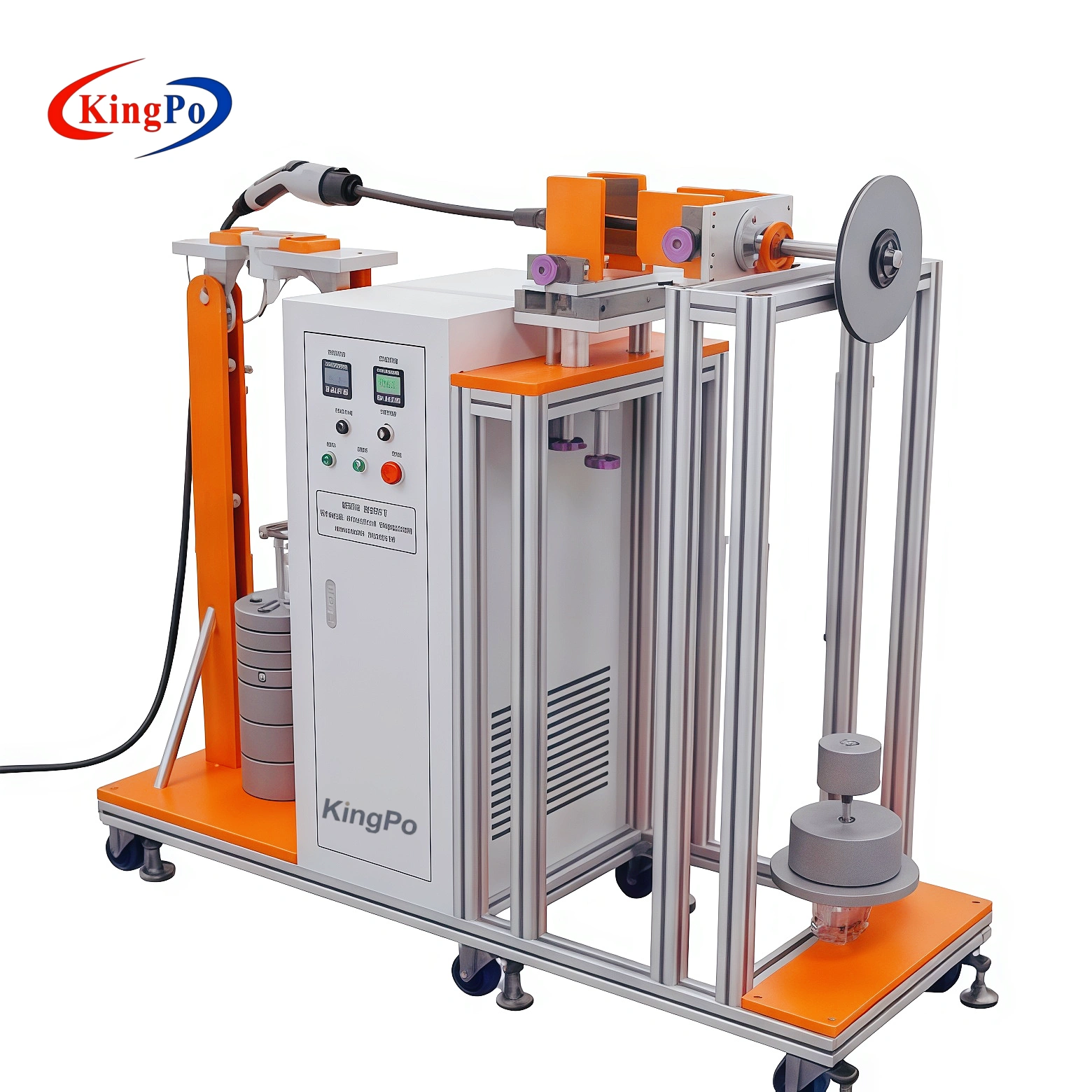
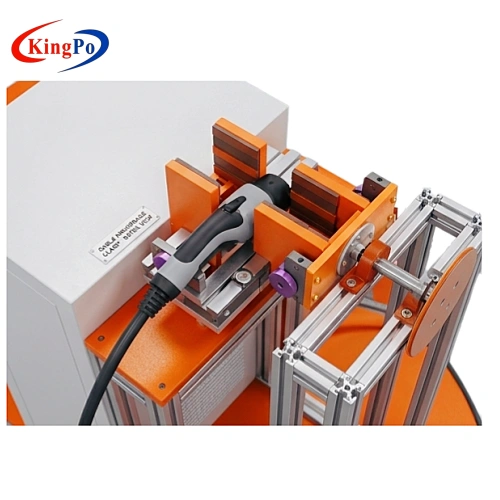
The EV Charger Cable Test Equipment is a specialized mechanical testing system manufactured by KingPo for evaluating the anchorage strength and torque resistance of Side B cable assemblies used in electric vehicle charging stations. Designed in full compliance with IEC 61851-23:2023 Figure 111, this EV charger cable test equipment performs precise pull force and torque tests to verify connector retention and rotational durability under simulated operational stresses.
The system applies controlled axial pull forces and torsional loads to the cable-plug interface, ensuring the charging cable assembly maintains mechanical integrity throughout its service life. It is an essential quality control tool for EVSE manufacturers, test laboratories, and certification bodies.
KingPo Factory Advantages
KingPo is an ISO9001 and CE certified manufacturer specializing in EV charging cable and connector testing equipment. We have delivered multiple IEC 61851-23 compliant EV charger cable test equipment units to leading EV manufacturers and accredited laboratories. All units include calibration certificates (additional cost), on-site installation guidance, 1-year warranty and 48-hour technical response from our Dongguan facility.
Professional Construction & Technical Precision
Key features include:
- Electric drive mechanism for consistent and repeatable pull force application
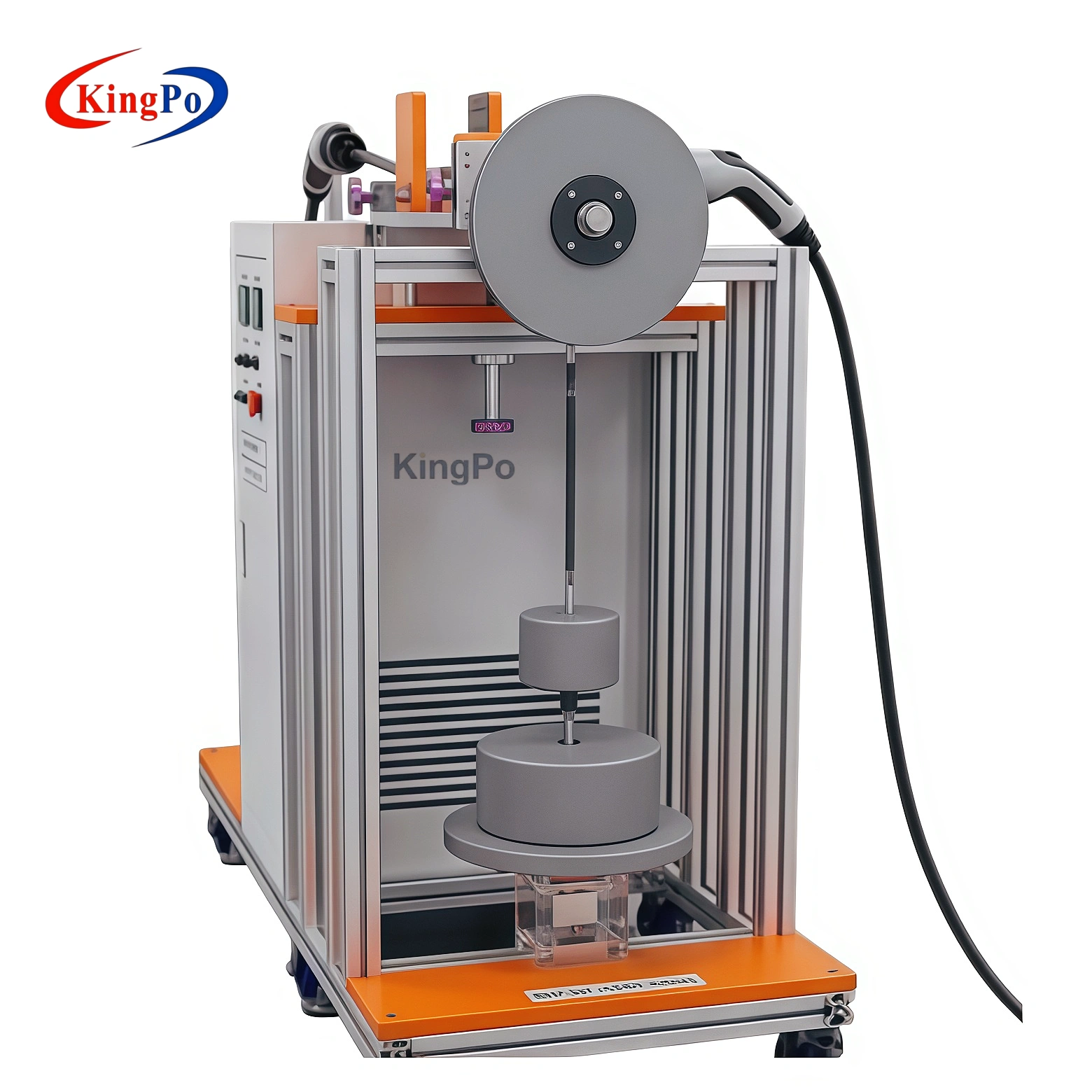
- Weight-based torque loading via calibrated torque wheel (R100mm ±0.5mm) for precise torsional stress
- PLC control with touch screen interface for easy programming of cycles and timing
- Power-off memory function to preserve test data and settings
- Universal fixture compatible with various EV charging cable assemblies
- Automatic stop upon reaching preset cycle count or torque duration
These elements ensure high accuracy, excellent repeatability, and reliable compliance with IEC 61851-23 requirements for EV charger cable testing.
Technical Parameters
| Parameter | Specification |
|---|---|
| Model Number | SNQC1007B EV Charger Cable Test Equipment |
| Applicable Standard | IEC 61851-23:2023 Figure 111 |
| Control Operation Mode | PLC automatic control with touch screen |
| Drive Mode | Electric (pull force) + weight-based (torque) |
| Pull Force Values | 160N, 200N, 240N, 250N, 500N (weight superposition) |
| Torque Values | 0.6N·m, 0.7N·m, 1.4N·m, 2.7N·m, 5.4N·m, 11.0N·m, 16.3N·m (weight superposition) |
| Torque Wheel | R100mm (Φ200mm) ±0.5mm |
| Tensile Frequency | 1 time/s (actual pull time detected by electrical signal) |
| Pull Cycles | 1–999999 cycles, preset (default 100±1 cycles) |
| Torque Application Time | 0–99H59M59S, preset |
| Power Failure Protection | With power-off data storage memory function |
| Fixture | Universal clamp, one set |
| Power Supply | AC 220V ±10%, 50/60Hz, 1kW |
| Dimensions (W×D×H) | Approx. 1600 × 600 × 1450 mm |
| Weight | Approx. 180 kg |
The EV charger cable test equipment supports key stages:
- Product Development – Validate mechanical robustness of new EV charging cable designs
- Certification Testing – Generate data for IEC 61851-23 compliance of Side B cable assemblies
- Quality Control – Batch verification of anchorage pull and torque resistance in production
- Failure Analysis – Identify risks of connector displacement or rotational failure under stress
It improves product reliability, reduces field failures, and accelerates certification for EV charging infrastructure.
Procurement Benefits
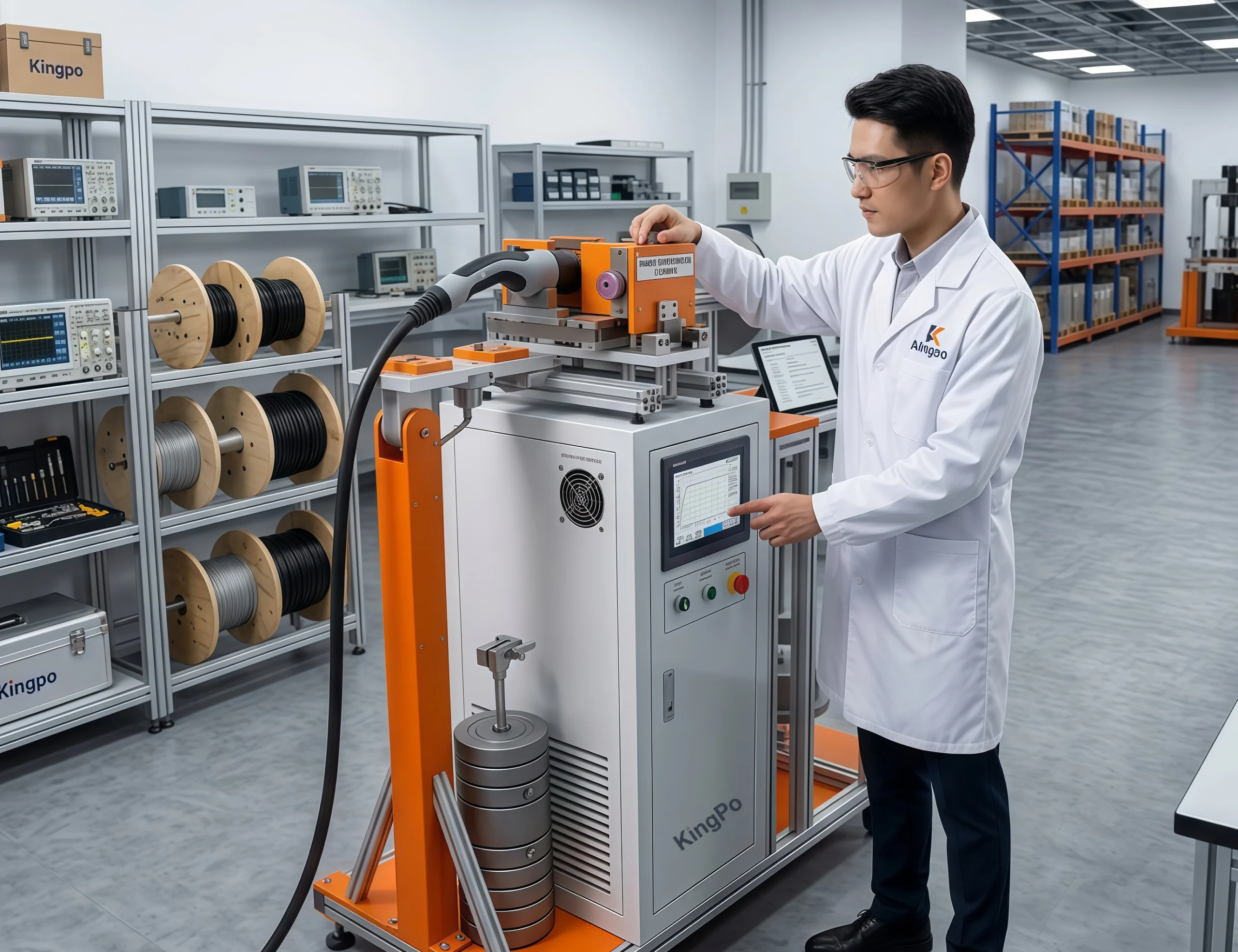
Electric drive combined with precise weight loading delivers consistent, repeatable results with minimal operator intervention. Programmable cycles and power-off memory enhance testing efficiency. Robust construction and universal fixtures provide excellent flexibility. This EV charger cable test equipment strengthens mechanical validation of charging cable assemblies, supports IEC 61851-23 compliance, and minimizes quality risks. Contact us today for your quote – we will respond within 24 hours with detailed technical specifications and pricing.
EV Charger Cable Test Equipment Applications
- Side B Cable Assemblies for EV Charging Stations – Pull force and torque resistance testing per IEC 61851-23
- EV Charger Plug and Cable Connections – Anchorage strength and rotational durability evaluation
- Production Quality Assurance – Batch mechanical testing of charging cable assemblies
- Certification Laboratories – Compliance verification for EVSE manufacturers
- R&D Validation – Optimization of cable retention and torque resistance