CUSTOMER CASE | UNITED STATES
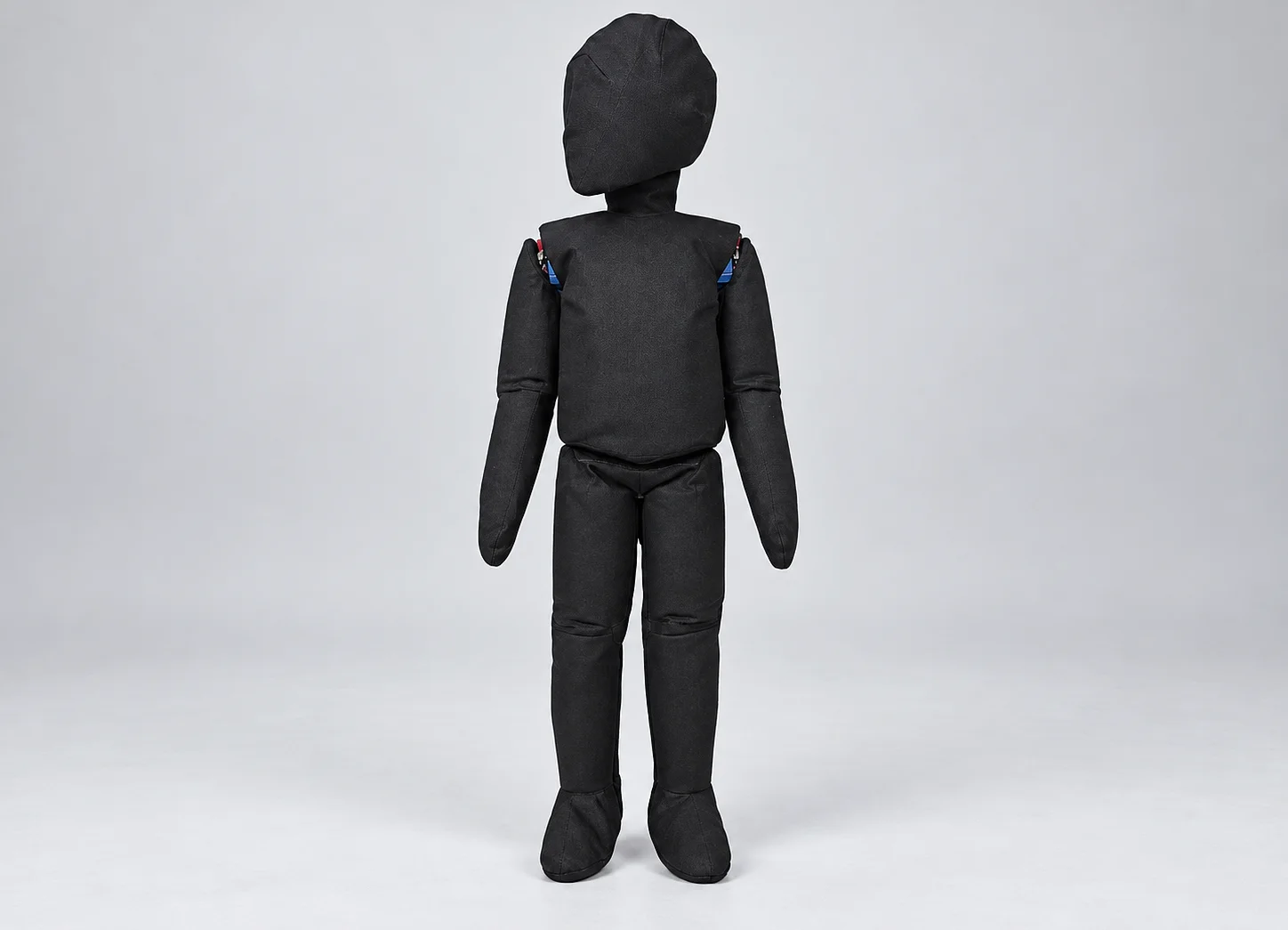
KingPo recently shipped a UL 3300 Child’s Body Manikin to a testing company in the United States. The equipment is intended for robot safety testing, helping engineers evaluate how mobile robots detect and respond to child-sized obstacles.
As service robots become more common in commercial buildings, public spaces, and other shared environments, their ability to navigate safely around people is receiving greater attention. For testing laboratories, realistic and repeatable obstacle tests are an important part of assessing robot safety.
Project Overview
| Customer | U.S. testing company |
|---|---|
| Equipment | Child’s Body Manikin |
| Models | KP-3300A / KP-3300B |
| Application | Robot obstacle detection and avoidance testing |
| Related Standard | UL 3300, Clause 7.2.5 |
| Destination | United States |
Supporting Robot Safety Testing
Robots operating around people must be able to recognize obstacles and respond appropriately. This becomes particularly important when children are present, as their smaller body size and different postures can present additional challenges for obstacle detection systems.
To evaluate these situations, laboratories use specially designed test targets representing different body sizes and shapes.
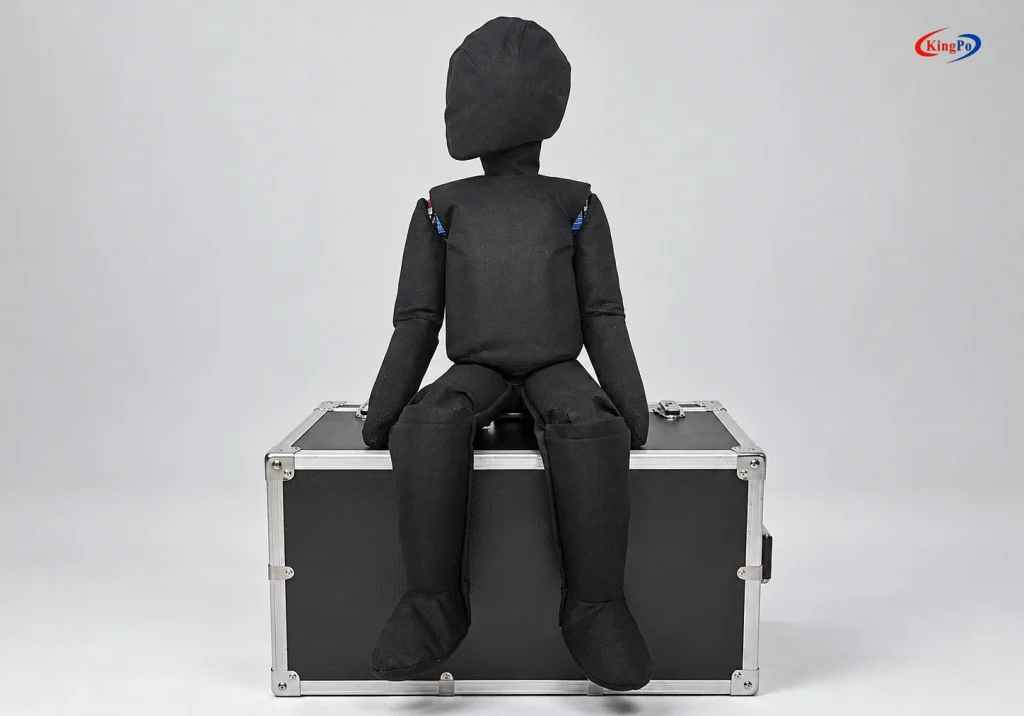
KingPo’s Child’s Body Manikin provides a child-shaped physical obstacle for controlled laboratory testing. Its defined body structure and mass allow engineers to assess robot behavior under repeatable test conditions without involving human participants.
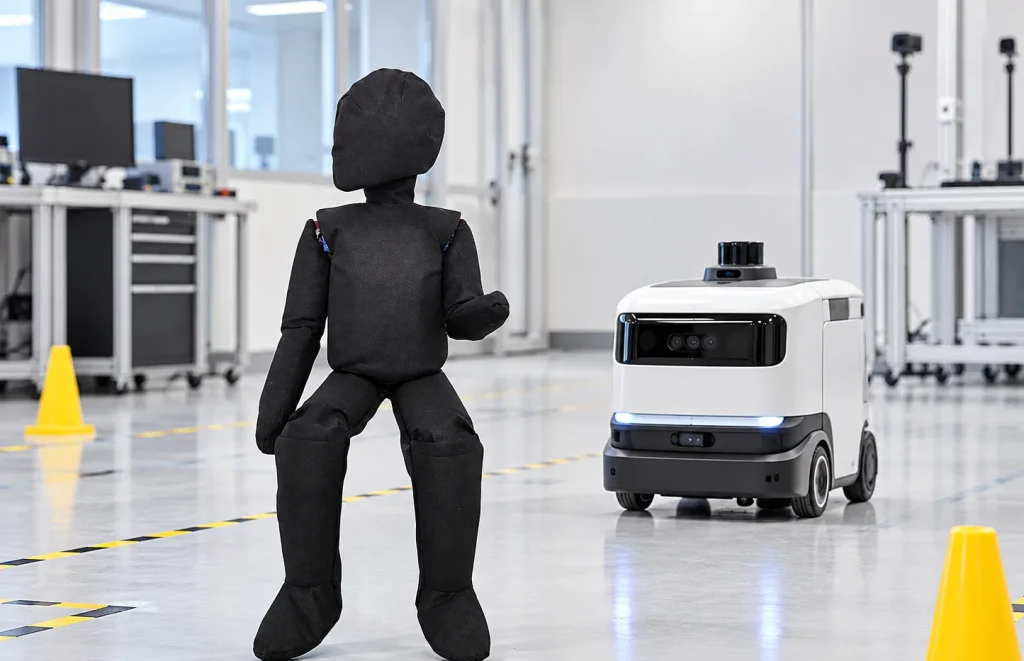
During testing, engineers can observe how a robot reacts when approaching a child-sized obstacle, including whether it detects the object, adjusts its movement, or stops before contact, as required by the applicable test procedure.
Understanding UL 3300 Obstacle Testing
UL 3300 establishes safety requirements for service, communication, information, education, and entertainment robots (SCIEE Robots) intended to operate in environments where people may be present.
Clause 7.2.5 – Obstacle Test
Clause 7.2.5 addresses obstacle testing, in which specified objects are placed in a robot’s path to evaluate its response during operation.
Depending on the applicable requirements, the assessment may consider obstacle detection, stopping behavior, collision avoidance, and contact-force limits. The purpose is to evaluate how the robot responds to an obstacle, rather than simply whether its sensors can identify an object.
Why Use a Child’s Body Manikin?
Children differ from adults in height, body proportions, and posture. These differences can affect how a robot’s sensors identify an obstacle and how its navigation system responds.
A child-shaped manikin provides a physical test target that can be positioned consistently in a laboratory. Compared with a simple wall or cylindrical obstacle, its human-like structure allows engineers to evaluate robot responses to a more representative child-sized target.
The August 2026 revision of UL 3300 updated the obstacle testing provisions to better align with ISO 18646-2, which addresses navigation performance testing for mobile service robots, including obstacle detection and avoidance. The two standards serve different purposes, so laboratories should follow the applicable requirements when planning their test procedures.
KP-3300A and KP-3300B Child’s Body Manikins
KingPo offers two Child’s Body Manikin configurations for UL 3300-related testing applications.
| Model | Mass | Application |
|---|---|---|
| KP-3300A | 9.4 kg | Child-body obstacle testing |
| KP-3300B | 14.5 kg | Child-body obstacle testing |
Both configurations feature a human-like body structure, including a head, torso, arms, and legs, with a dark outer covering. The manikins can be positioned for different test arrangements, as illustrated in the project photographs.
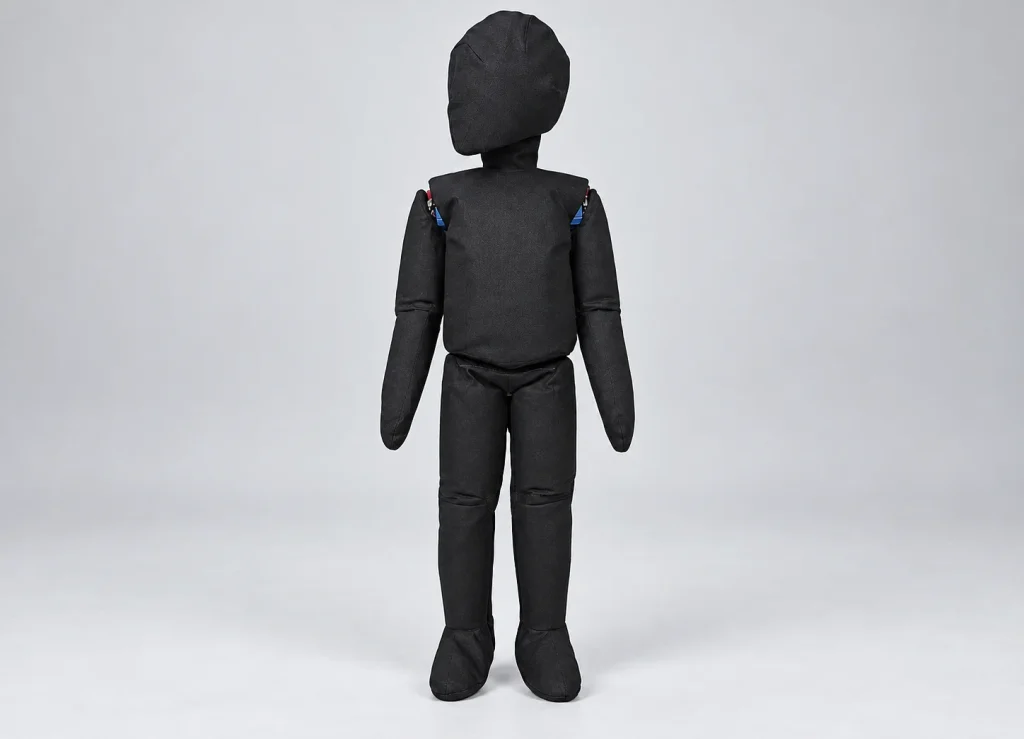
- The appropriate configuration depends on the required body representation, mass, and applicable test procedure. Laboratories should confirm the required configuration against the relevant edition of UL 3300 before testing.
Prepared for Shipment to the United States
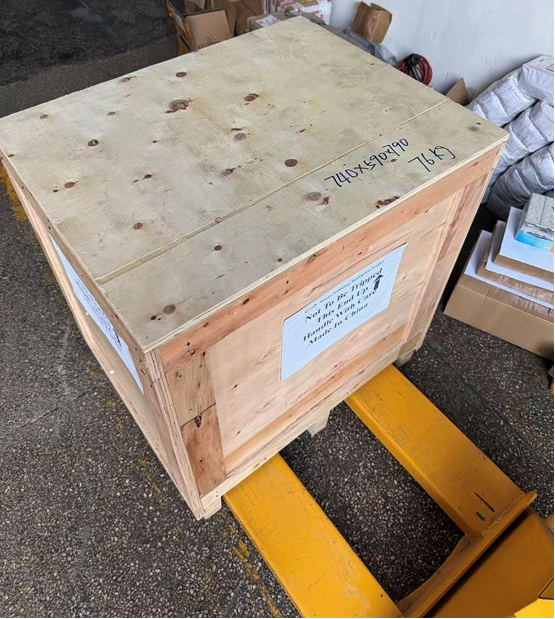
We’ve successfully delivered our Child’s Body Manikin to our customer in the United States.
The equipment was carefully packed in a wooden crate for safe transportation and is now ready for use in the customer’s robot safety testing work.
We’re pleased to have completed this delivery and appreciate our customer’s trust in KingPo. We look forward to supporting more testing projects with reliable equipment and practical solutions.
Supporting Robot Safety Evaluation
As mobile robots take on more tasks in environments shared with people, manufacturers and testing laboratories need reliable methods to evaluate their safety-related performance.
Child’s Body Manikins provide physical targets for repeatable obstacle testing, helping engineers examine how robots respond to child-sized objects under controlled conditions.
Through projects such as this shipment to the United States, KingPo continues to supply specialized testing equipment for laboratories and manufacturers working with international safety standards.
Looking for UL 3300 Robot Safety Testing Equipment?
KingPo supplies Child’s Body Manikins and other testing equipment for robot safety applications. Contact our team to discuss the appropriate configuration for your laboratory.