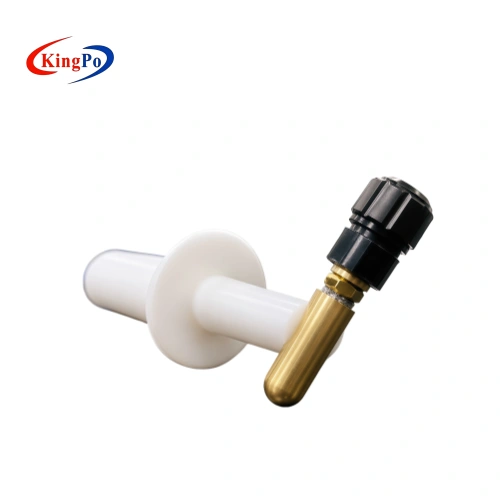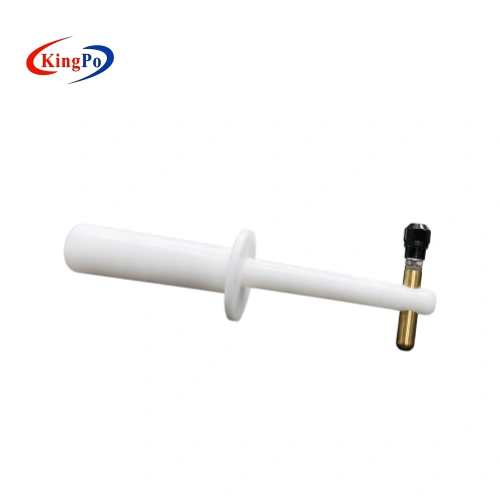
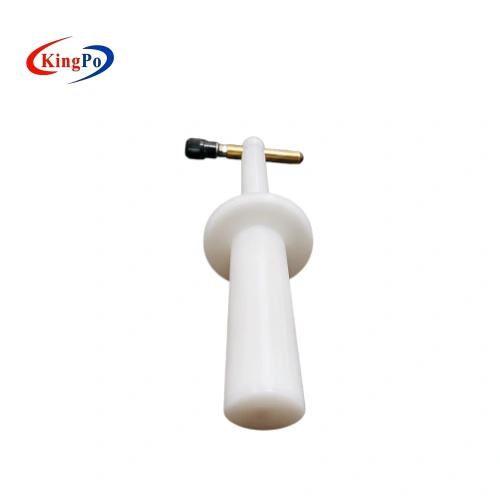
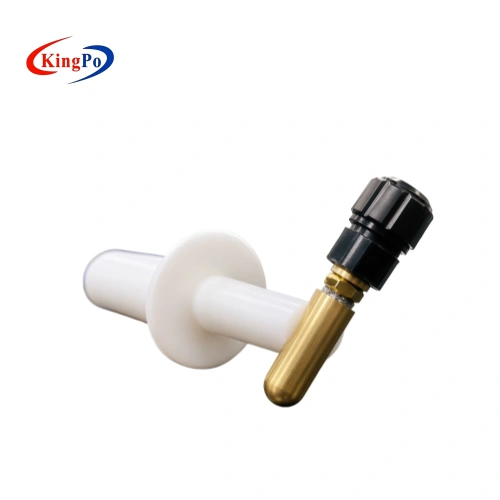
The IEC 60601-2-3 Figure 201.102 Test Probe provides a standardized contact method for dielectric strength testing of short-wave therapy equipment applicators. It is used when the test procedure requires a defined probe geometry instead of a general metal rod or improvised contact tool.
With its 8 mm metal probe and smooth hemispherical end, the probe helps reduce contact variation during high-voltage insulation testing. It supports consistent applicator surface contact, repeatable test setup and clearer documentation for IEC 60601-2-3 related verification.
This test probe is suitable for medical device manufacturers, R&D teams, quality control departments and third-party laboratories performing applicator insulation checks, pre-compliance testing or routine production inspection.
Technical Parameters
Standard and Application Information
| Item | Specification | Remark or Notes |
|---|---|---|
| Product name | IEC 60601-2-3 Figure 201.102 Test Probe | Standard contact probe for applicator dielectric strength testing |
| Applicable standard | IEC 60601-2-3 Figure 201.102 | Main standard reference |
| Related clause | IEC 60601-2-3 Clause 201.8.8.3 | For short-wave therapy equipment applicator insulation verification |
| Product type | Dielectric strength test probe | Mechanical contact accessory |
| Test object | Short-wave therapy equipment applicators | Used on applicator surfaces according to the test procedure |
| Applicable applicators | Capacitive and inductive applicators | Confirm applicator structure before testing |
| Test purpose | Dielectric strength and insulation performance verification | Used with dielectric strength test equipment |
| Supporting equipment | Dielectric strength tester or high-voltage test system | The probe itself does not generate voltage |
Probe Geometry and Configuration
| Item | Specification | Remark or Notes |
| Probe diameter | 8 mm | Defined metal contact diameter |
| Probe end | Smooth hemispherical metal end | Helps maintain controlled surface contact |
| Total length | 100 mm | Standard probe length |
| Insulated handle diameter | Ø30 mm | Supports safer manual handling during test setup |
| Insulated handle length | 100 mm | For stable positioning and grip |
| Structure | Metal contact probe with insulated handle | Compact mechanical test accessory |
| Documentation | Product specification and dimensional information available | According to customer order requirement |
| Typical use stage | R&D verification, pre-compliance testing, production inspection and laboratory testing | Suitable for manufacturer and laboratory use |
Testing Principle and Standard Method
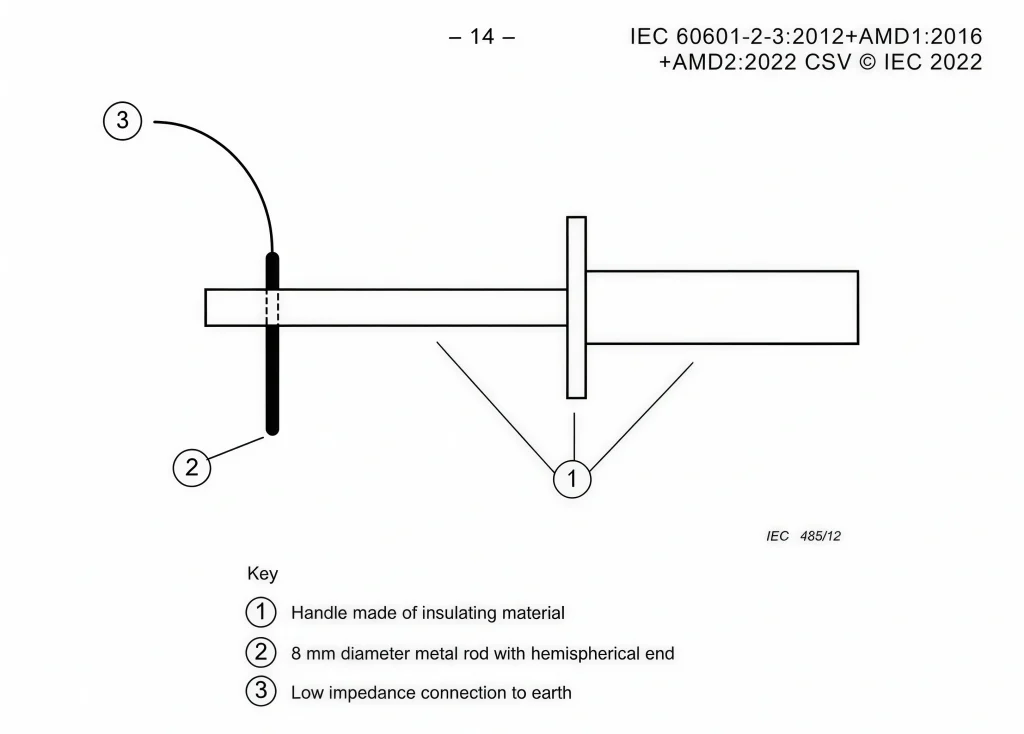
During testing, the IEC 60601-2-3 Figure 201.102 Test Probe is applied to the specified surface of the short-wave therapy equipment applicator. The dielectric strength test voltage is then applied between the probe and the relevant internal conductive part, electrode or connection point according to the selected test method.
The test verifies whether the applicator insulation can withstand the required voltage stress without dielectric breakdown. Final voltage, test duration, ramping method, connection position, breakdown judgment and post-test inspection should follow the applicable IEC 60601-2-3 edition and laboratory quality procedure.
The probe itself does not determine the pass or fail result. Test reliability depends on the complete setup, including dielectric strength tester performance, sample condition, probe position, contact surface condition, voltage setting and acceptance criteria.
Applications and Use Cases
The IEC 60601-2-3 Figure 201.102 Test Probe is used for short-wave therapy equipment safety evaluation, applicator insulation design validation, IEC 60601-2-3 pre-compliance testing, production quality inspection and third-party laboratory verification.
Typical users include medical device manufacturers, R&D teams, QA departments, inspection institutions, certification support teams and testing laboratories preparing for IEC 60601-2-3 related compliance testing.
This probe is especially useful when the test method requires a defined 8 mm contact probe rather than an improvised metal contact tool.
Operation and Test Notes
Before testing, operators should confirm the applicable IEC 60601-2-3 edition, test clause, applicator type, test voltage, test duration, connection method and acceptance criteria. The probe should be applied only to the specified test position defined by the laboratory procedure.
Because dielectric strength testing involves high voltage, the probe should only be used by trained personnel. The test area should be controlled, and users should follow the safety instructions of the dielectric strength tester and the laboratory high-voltage procedure.
Dimensional Verification and Maintenance
For formal compliance testing or routine quality control, periodic dimensional verification is recommended. The 8 mm probe diameter, smooth hemispherical end, total length and insulated handle condition should be checked according to the laboratory quality system.
The metal probe end should remain clean, smooth and free from corrosion, oil, dust or residue. After use, the probe should be cleaned and stored in a dry protective condition.
If deformation, tip damage, surface scratching, corrosion or insulation damage is found, the probe should not be used for formal dielectric strength testing until its condition has been confirmed.