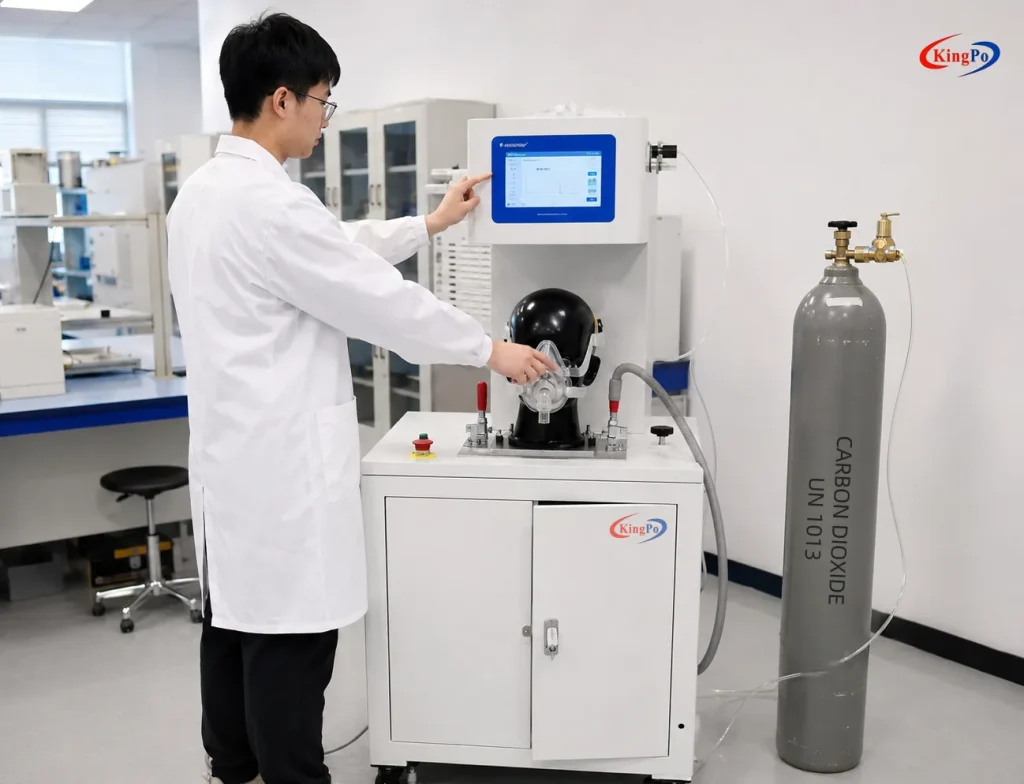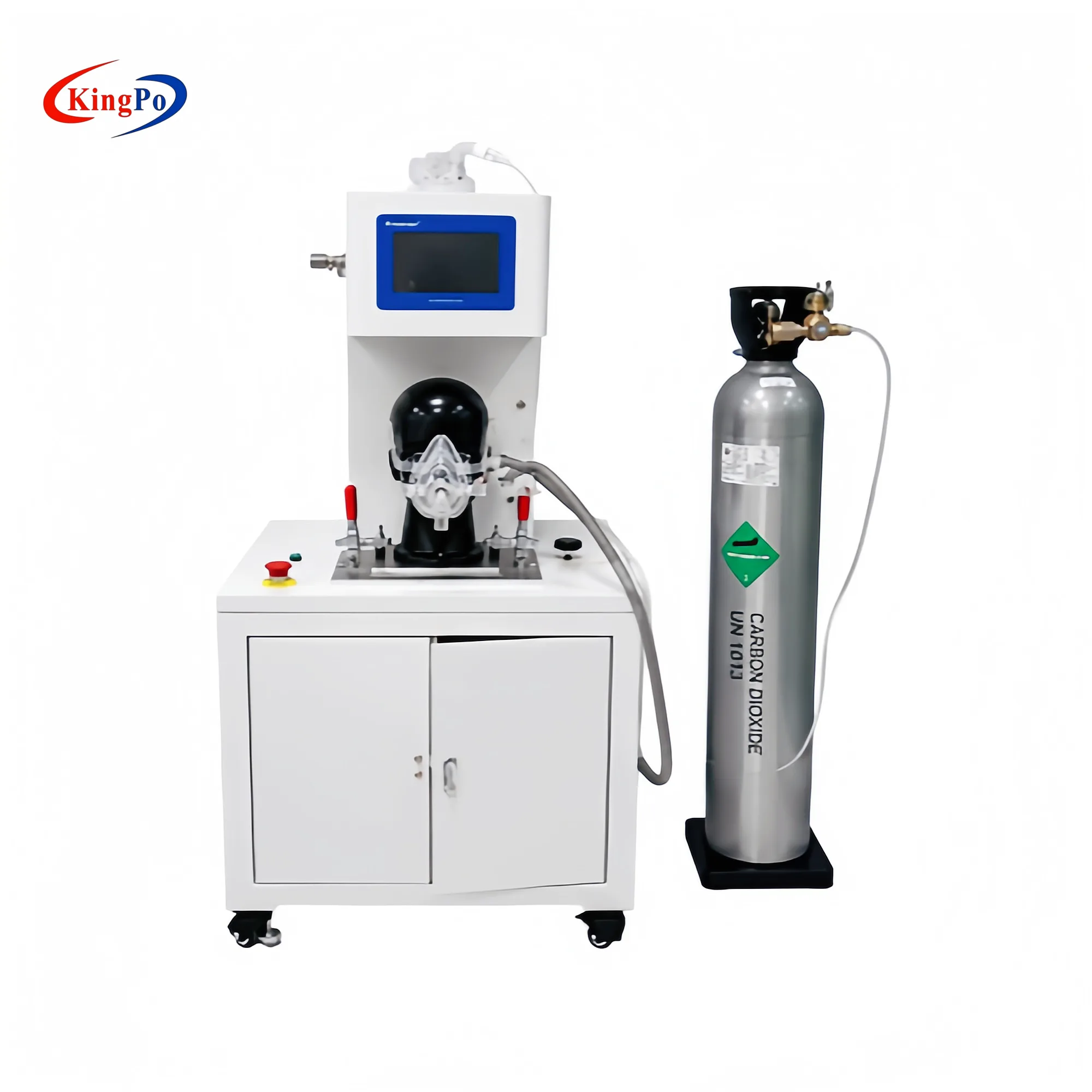
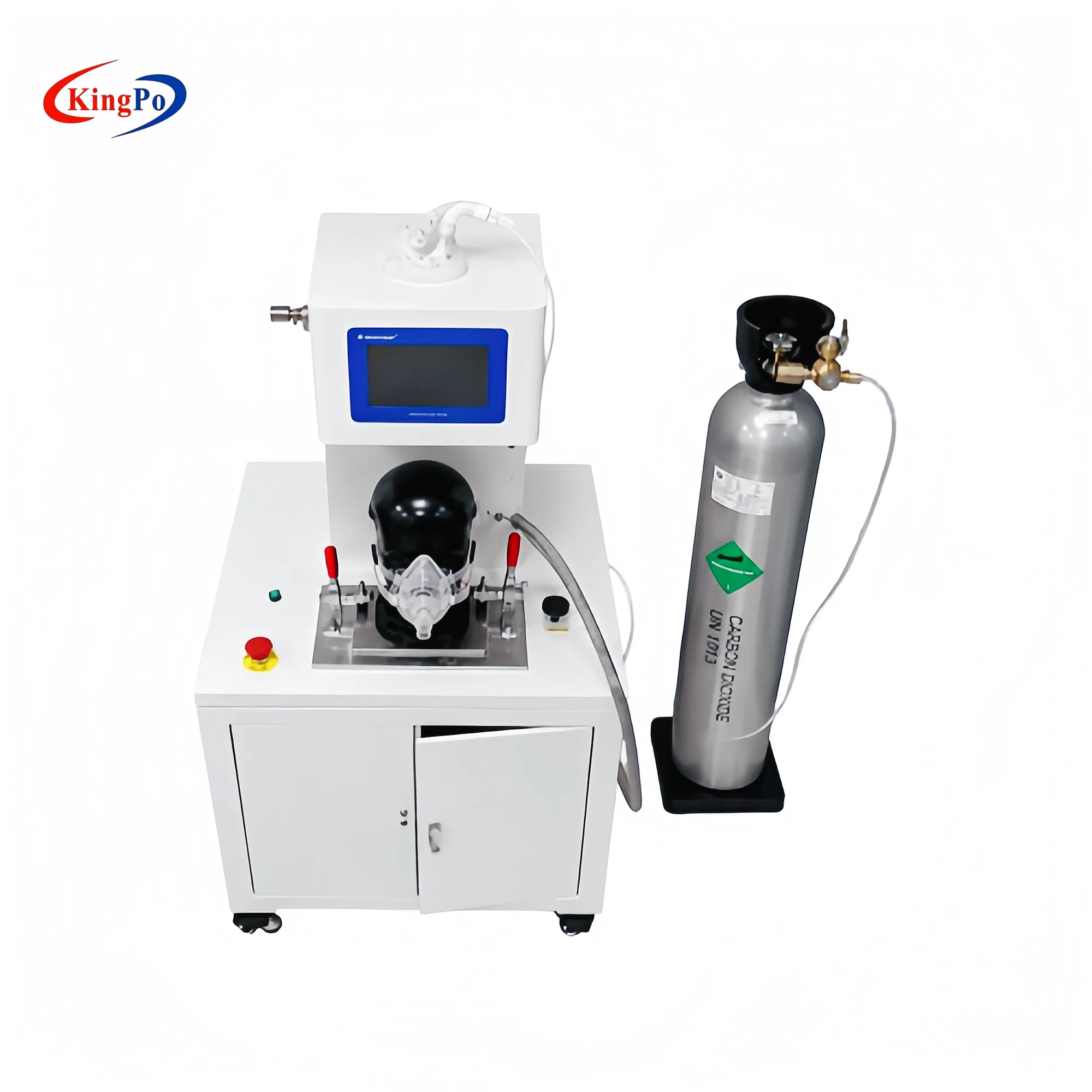
ISO 17510:2015 Carbon Dioxide Rebreathing Tester Overall View โ€“ CO2 Rebreathing Tester for Sleep Apnoea Masks
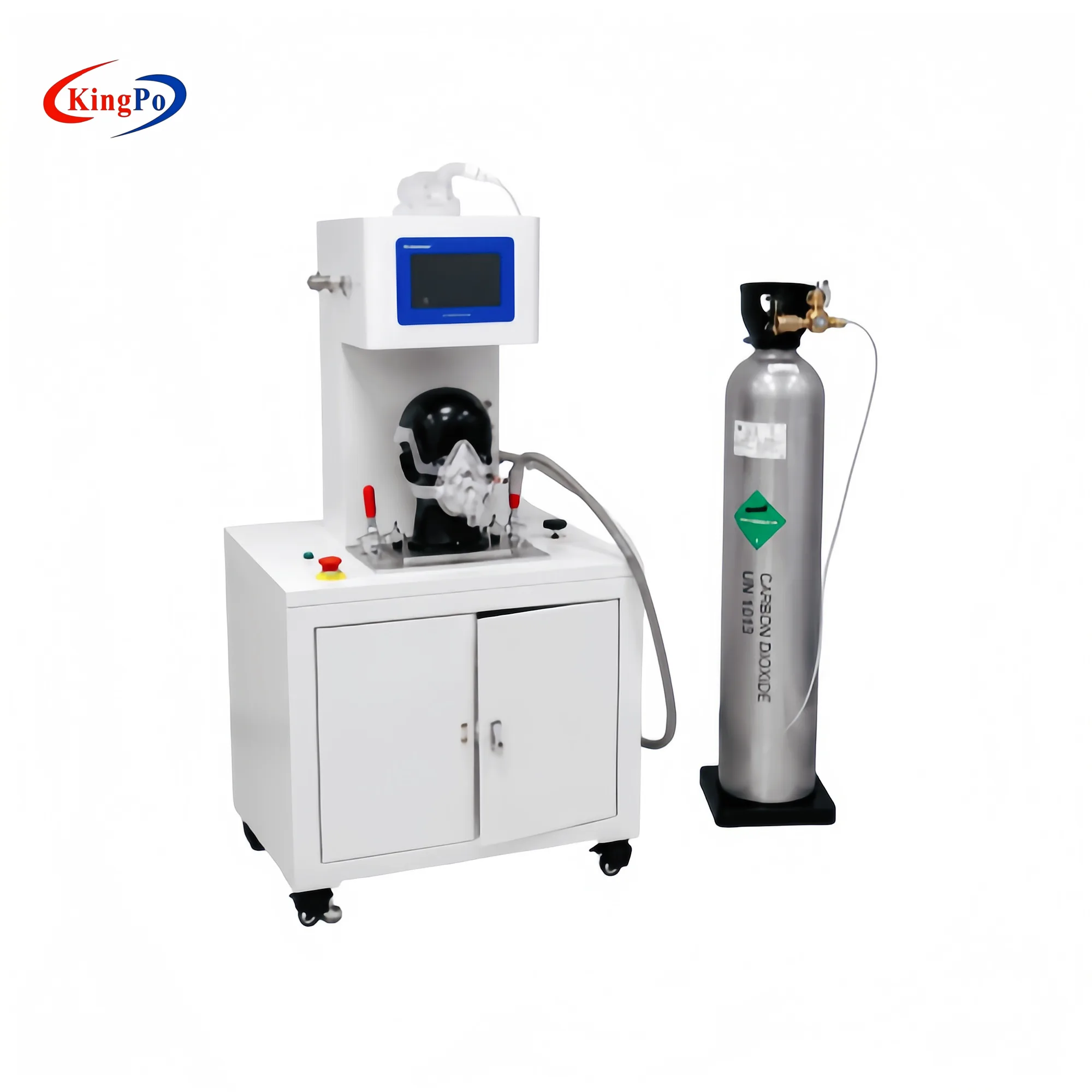
Breathing Simulator and Test Setup โ€“ ISO 17510:2015 CO2 Rebreathing Tester Sleep Apnoea Mask Testing
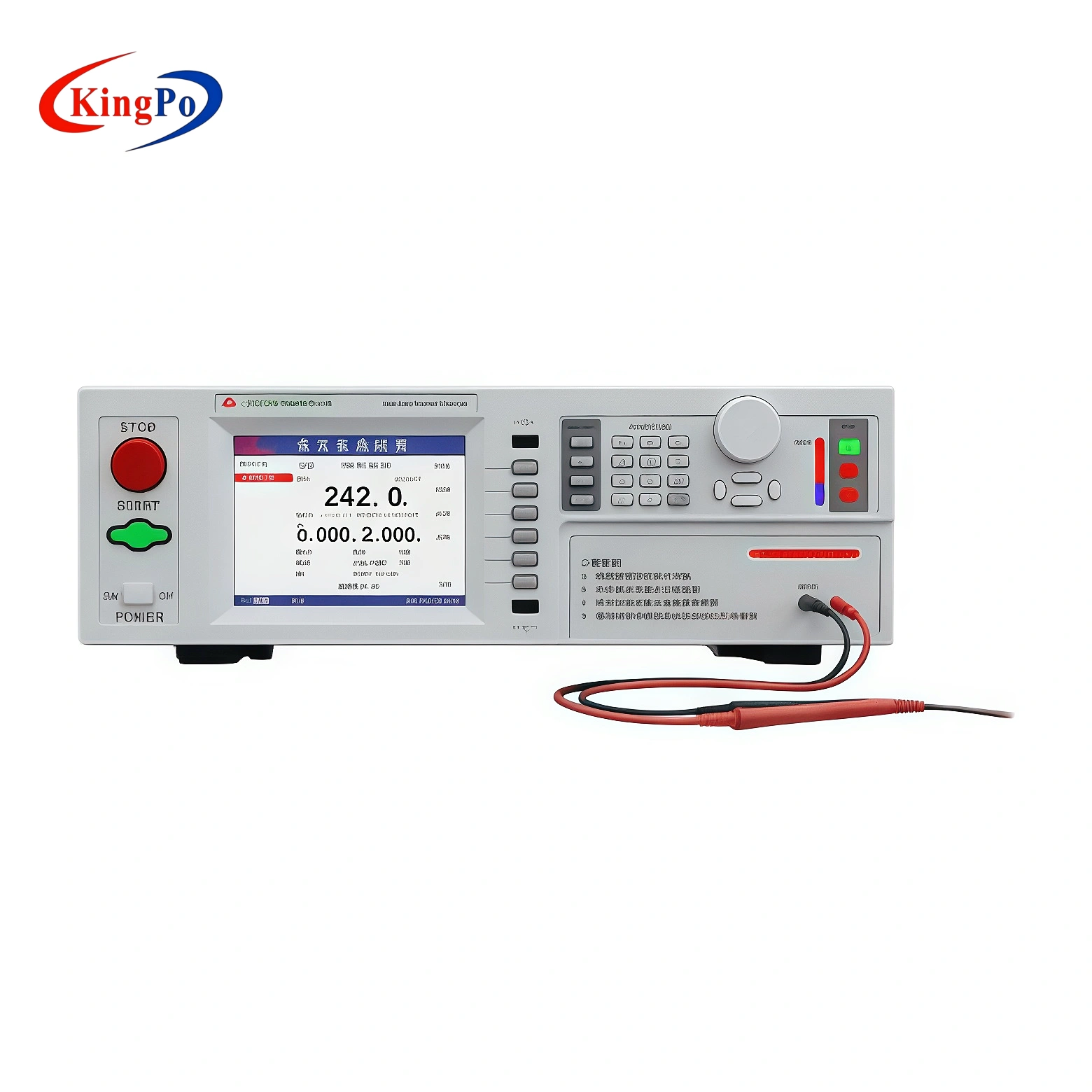
Infrared CO2 Analyzer Close-Up โ€“ ISO 17510:2015 Carbon Dioxide Rebreathing Tester for Respirator Masks
ISO 17510:2015 Carbon Dioxide Rebreathing Tester Overall View โ€“ CO2 Rebreathing Tester for Sleep Apnoea Masks
Breathing Simulator and Test Setup โ€“ ISO 17510:2015 CO2 Rebreathing Tester Sleep Apnoea Mask Testing
Infrared CO2 Analyzer Close-Up โ€“ ISO 17510:2015 Carbon Dioxide Rebreathing Tester for Respirator Masks

CO2 Rebreathing Tester | ISO 17510:2015 Carbon Dioxide Rebreathing Tester

The CO2 Rebreathing Tester enables medical device manufacturers and certification laboratories to perform precise carbon dioxide rebreathing evaluation of sleep apnoea masks and patient interfaces per ISO 17510:2015 Annex F with excellent repeatability and operational convenience.

  • Standard Compliance: Fully compliant with ISO 17510:2015 Annex F and YYT0671-2021 for carbon dioxide rebreathing testing
  • Control System: Advanced PLC with 7-inch color touchscreen (Weintek) for intuitive operation and real-time monitoring
  • Breathing Simulator: Sinusoidal waveform, 15 breaths/min, 0.5 L tidal volume, 1:2 breathing ratio
  • Head Mold: PVC headform with quick-install breathing pipe and 200 mL built-in dead space
  • CO2 Analysis: High-precision infrared CO2 analyzer with built-in sampling pump (1โ€“100 L/min)
  • Pressure Control: 0โ€“30 kPa adjustable positive airway pressure with differential pressure measurement (0โ€“2000 Pa)
  • Gas Supply: High-purity CO2 cylinder included + compressed air interface (300 L/min @ 0.6 MPa)
  • Construction: Robust laboratory-grade design for long-term reliability in medical device testing
  • MOQ: 1 set
  • Delivery Time: 40 working days

ISO 17510 CO2 Rebreathing Tester Description

ISO 17510:2015 Compliant Carbon Dioxide Rebreathing Tester with 7-inch Color Touch Screen and 15 Breaths/Minute Rate

The CO2 Rebreathing Tester (also known as Carbon Dioxide Rebreathing Tester) is a specialized medical testing system designed to evaluate the effectiveness of exhaust ports in sleep apnoea breathing therapy masks and patient interfaces. It accurately simulates realistic breathing conditions to measure carbon dioxide rebreathing levels under both normal and single-fault conditions in accordance with ISO 17510:2015 Annex F. This tester provides manufacturers, quality assurance teams, and third-party laboratories with a reliable, repeatable solution to verify patient safety by ensuring minimal CO2 rebreathing, thereby reducing the risk of hypercapnia during CPAP/BiPAP therapy.

Technical Parameters

Item Specification Remark / Notes
Applicable Standard ISO 17510:2015 Annex F, YYT0671-2021 Carbon dioxide rebreathing test
Model KP-Y671F ISO 17510:2015 compliant CO2 Rebreathing Tester
Control System PLC + 7-inch color touchscreen (Weintek) Intuitive operation and data logging
Breathing Rate 15 breaths/min Adjustable sinusoidal waveform
Tidal Volume 0.5 L Standard breathing simulation
Breathing Ratio 1:2 (I:E) Inspiratory:Expiratory ratio
Head Mold PVC with quick-install breathing pipe 200 mL built-in dead space
CO2 Analyzer Infrared detection High accuracy with built-in sampling pump
Sampling Flow Rate 1โ€“100 L/min Adjustable
Differential Pressure Range 0โ€“2000 Pa (ยฑ1% F.S.) Real-time monitoring
Positive Airway Pressure 0โ€“30 kPa Adjustable for normal and fault condition testing
Test Time 0โ€“99,999 seconds Programmable
Power Supply AC 220 V, 50 Hz, 1.5 kW Standard laboratory power
Compressed Air Requirement 300 L/min @ 0.6 MPa Required for operation
Gas Supply High-purity CO2 cylinder included For accurate rebreathing simulation


Professional Construction & Technical Precision

The CO2 Rebreathing Tester is built with premium laboratory-grade components and a high-performance PLC control system integrated with a 7-inch color touchscreen, delivering precise parameter control and intuitive real-time monitoring for operators of all experience levels. The anatomically accurate PVC head mold features a quick-install breathing pipe and a built-in 200 mL dead space that faithfully replicates human respiratory physiology, while the high-precision infrared CO2 analyzerโ€”paired with an integrated sampling pumpโ€”provides fast, stable, and highly repeatable gas concentration readings.

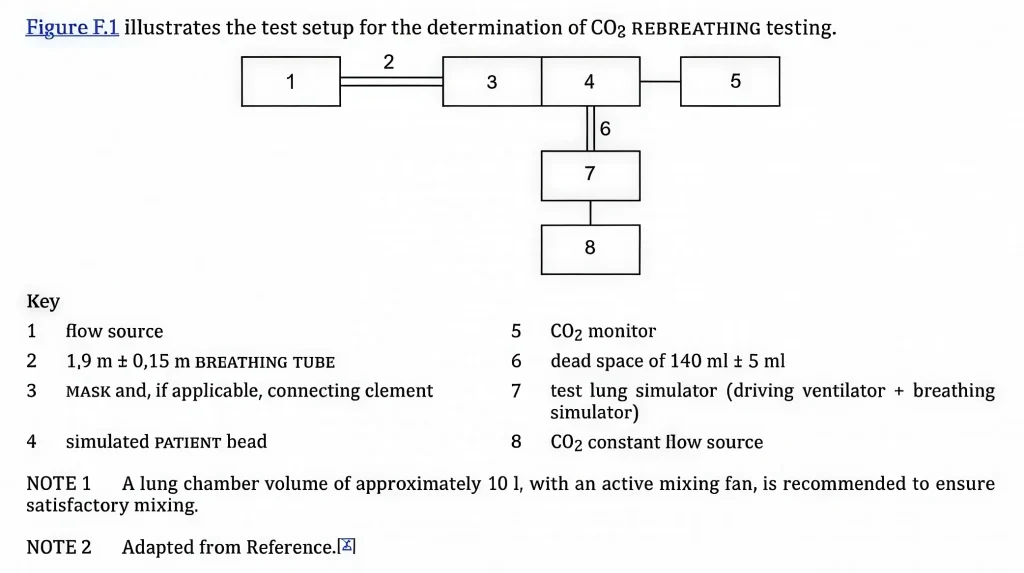
  • Figure F.1-Test setup for COz REBREATHING testing
    Figure F.1-Test setup for COz REBREATHING testing

A fully programmable breathing simulator generates realistic sinusoidal waveforms at 15 breaths per minute with a 0.5 L tidal volume and 1:2 inspiratory-to-expiratory ratio. Combined with differential pressure sensors (0โ€“2000 Pa) and adjustable positive airway pressure up to 30 kPa, the system ensures comprehensive and repeatable testing across the exact conditions defined in ISO 17510:2015 Annex F.

Testing Principle

The CO2 Rebreathing Tester quantifies the effectiveness of exhaust ports in sleep apnoea masks and patient interfaces by simulating realistic breathing conditions and measuring the amount of exhaled carbon dioxide that is re-inhaled. A breathing simulator delivers a controlled mixture of CO2-enriched gas through the PVC head mold and test mask under regulated positive airway pressure. The infrared analyzer continuously samples and records CO2 levels inside the mask during both normal operation and defined single-fault conditions, such as a blocked breathing tube.

According to ISO 17510:2015 Annex F, the relative COโ‚‚ increase must remain below 20 % under normal conditions (tested at the minimum rated pressure, 5 hPa, and 10 hPa) and must not exceed 60 % under single-fault conditions. This precise, quantitative evaluation confirms that the mask design effectively vents exhaled gases, safeguarding patients against the risks of hypercapnia and ensuring compliance with international patient-safety requirements.

Common Error Mitigation

To achieve consistently accurate, repeatable, and fully ISO 17510:2015-compliant results with the CO2 Rebreathing Tester, the following best practices are strongly recommended:

  • Calibrate the infrared CO2 analyzer and differential pressure sensors immediately before each test series using certified reference standards.
  • Verify that the test mask is securely and leak-free fitted onto the PVC head mold with the breathing circuit properly connected.
  • Confirm that all breathing simulation parameters (rate, tidal volume, waveform, and pressure settings) exactly match the requirements of ISO 17510:2015 Annex F.
  • Always use clean, dry compressed air and the supplied high-purity CO2 source to prevent contamination or measurement drift.
  • Log complete test dataโ€”including full CO2 concentration curves, pressure profiles, fault conditions, and timestampsโ€”for complete traceability and regulatory audit readiness.

Primary Use Cases & Business Value

The CO2 Rebreathing Tester serves as a critical validation tool for medical device manufacturers developing CPAP, BiPAP, and other sleep apnoea therapy masks. It enables early detection of exhaust-port design flaws during the development phase, streamlines regulatory submission processes, and significantly reduces the likelihood of costly post-market safety issues or patient complaints. By delivering reliable, repeatable test data, the system helps companies accelerate product certification, enhance overall device performance, and build stronger confidence among clinicians and patients worldwide.

  • Breathing Simulator and Test Setup โ€“ ISO 17510:2015 CO2 Rebreathing Tester Sleep Apnoea Mask Testing
    Breathing Simulator and Test Setup โ€“ ISO 17510:2015 CO2 Rebreathing Tester Sleep Apnoea Mask Testing

Industrial Applications & Lab Scenarios

  • Sleep Apnoea Mask Manufacturers โ€” Comprehensive CO2 rebreathing validation for nasal, full-face, hybrid, and pediatric masks
  • Positive Airway Pressure Device Producers โ€” Full interface compatibility and performance testing per ISO 17510:2015
  • Medical Device Certification Laboratories โ€” Independent type approval and regulatory compliance verification
  • R&D and Product Development Teams โ€” Rapid iteration and performance benchmarking of new mask designs

Strategic Procurement Advantages & Global Support

  • Complete ISO 17510:2015 Annex F compliance with a single, ready-to-use testing platform
  • Intuitive 7-inch touchscreen PLC interface that dramatically reduces operator training time and testing cycle duration
  • Fully integrated systemโ€”including head mold, breathing simulator, CO2 supply, and calibration documentationโ€”for immediate laboratory deployment
  • Robust, long-term reliability backed by traceable factory calibration and premium component selection
  • Manufactured under ISO 9001 and ISO 17025 certified quality management with responsive global technical support
Compliance & Regulatory Assurance

The CO2 Rebreathing Tester is engineered and manufactured in strict accordance with the ISO 17510:2015 Annex F standard for carbon dioxide rebreathing evaluation of sleep apnoea masks and application accessories. It supplies medical device manufacturers and accredited testing laboratories with a standardized, repeatable, and traceable platform that fully satisfies the most stringent global regulatory requirements for patient safety in respiratory therapy equipment.

Metrological Integrity & Validation

  • Complimentary Factory Calibration: Each unit ships with a comprehensive traceable calibration certificate as standard.
  • Third-party ISO 17025 Accreditation: Available upon request to satisfy the requirements of notified bodies and regulatory authorities.
  • Performance Verification: Regular verification of CO2 analyzer accuracy, breathing waveform fidelity, and pressure sensor performance is recommended to maintain long-term testing integrity.

Download Product Documentation

Technical Inquiry & Expert Support

Contact our engineering team for custom head molds, specialized breathing simulation profiles, or integration with other ISO 17510 test systems. Professional technical recommendations and detailed quotations are provided within 24 hours.

The Core Value We Deliver

  • Accurate and repeatable ISO 17510:2015 Annex F carbon dioxide rebreathing testing
  • High-precision infrared analysis combined with realistic human breathing simulation
  • User-friendly 7-inch touchscreen PLC operation optimized for busy medical laboratories
  • Professional solution that accelerates sleep apnoea mask safety validation and global regulatory compliance
  • Dedicated technical support, calibration services, and long-term partnership commitment

| ISO 17510 CO2 Rebreathing Tester Detail Display

ISO 17510 CO2 Rebreathing Tester FAQs

What is the purpose of the ISO 17510:2015 CO2 Rebreathing Tester?
The ISO 17510:2015 CO2 Rebreathing Tester quantifies the amount of exhaled carbon dioxide that a sleep apnoea mask or patient interface allows to be re-inhaled, ensuring the exhaust port design effectively vents COโ‚‚ and protects patients from hypercapnia. (See Testing Principle section for full details.)
How does the CO2 Rebreathing Tester work?
The tester uses a programmable breathing simulator to deliver a controlled sinusoidal waveform (15 breaths/min, 0.5 L tidal volume) of COโ‚‚-enriched gas through a PVC head mold and the test mask under positive airway pressure. An infrared COโ‚‚ analyzer continuously measures concentration inside the mask during both normal and single-fault conditions. (Refer to carousel image #3 for the complete testing process.)
What are the acceptance criteria for COโ‚‚ rebreathing according to ISO 17510:2015?
Under normal conditions, the relative COโ‚‚ increase must not exceed 20 % when tested at the minimum rated pressure, 5 hPa, and 10 hPa. Under single-fault conditions (e.g., blocked breathing tube), the increase must not exceed 60 %. The ISO 17510:2015 CO2 Rebreathing Tester automatically verifies compliance with these exact limits. (See Testing Principle for pressure-specific requirements.)
What is the difference between normal and single-fault conditions in CO2 rebreathing testing?
Normal conditions simulate standard mask operation with all exhaust ports functioning, while single-fault conditions test worst-case scenarios such as a blocked breathing tube or open equipment-end connection. The ISO 17510:2015 CO2 Rebreathing Tester evaluates both to ensure patient safety even if one component fails. (See carousel image #4 for fault-condition testing example.)
Which types of sleep apnoea masks can be tested with the CO2 Rebreathing Tester?
The tester is suitable for nasal, full-face, hybrid, and pediatric masks used with CPAP/BiPAP equipment. It accommodates any mask that connects to the patient port of sleep apnoea breathing therapy devices per ISO 17510:2015. (Refer to Industrial Applications section for mask-specific examples.)
How often should the CO2 Rebreathing Tester be calibrated?
For optimal accuracy, calibrate the infrared COโ‚‚ analyzer and differential pressure sensors before each test series and perform full traceable verification every 6โ€“12 months or after 5,000 test cycles. The unit ships with a factory calibration certificate; ISO 17025 accreditation is available upon request. (See Metrological Integrity & Validation section.)
Why is CO2 rebreathing testing important for sleep apnoea masks?
Excessive COโ‚‚ rebreathing can lead to hypercapnia, headaches, and reduced therapy effectiveness. The ISO 17510:2015 CO2 Rebreathing Tester ensures masks meet strict safety limits, helping manufacturers prevent patient safety issues and achieve regulatory approval for global markets.
What breathing parameters does the CO2 Rebreathing Tester simulate?
It generates a realistic sinusoidal waveform at 15 breaths per minute with 0.5 L tidal volume and a 1:2 inspiratory-to-expiratory ratio, exactly matching the simulation requirements in ISO 17510:2015 Annex F. (See Professional Construction & Technical Precision for detailed simulator specifications.)
Can the CO2 Rebreathing Tester test under different positive airway pressure levels?
Yes. Positive airway pressure is fully adjustable from 0โ€“30 kPa, allowing testing at the minimum rated pressure, 5 hPa, and 10 hPa as required by ISO 17510:2015 Annex F for both normal and single-fault conditions.
Does the CO2 Rebreathing Tester include everything needed for ISO 17510:2015 compliance testing?
Yes. The complete system includes the PVC head mold, breathing simulator, high-precision infrared COโ‚‚ analyzer, 7-inch touchscreen PLC controller, high-purity COโ‚‚ supply, and traceable calibration certificateโ€”ready for immediate ISO 17510:2015 Annex F testing. (See carousel image #1 for the full laboratory setup.)

Related Products

Related News

KINGPO ISO 5356-1 Gauge delivers precise, repeatable testing for medical connectors, ensuring safety, compliance, and ease of use in device quality assurance.
KINGPOโ€™s Electrosurgical Unit analyzer ensures ESU safety and IEC 60601-2-2 compliance with precise testing, supporting patient protection and regulatory needs.
Surface roughness in ISO 5356 medical device connector standards impacts safety by reducing leaks, contamination, and ensuring reliable connections.
Ensure ISO 14117 compliance for AIMDs by using a Defibrillation Test Pulse Generator to meet safety standards and document reliable defibrillation immunity testing.
Ensure IEC 60601 compliance in 2026 with Defib-proof and Energy Reduction Tester for safer, faster medical device approval and reliable patient protection.
IP Testing Equipment simulates dust and water exposure, ensuring products resist harsh environments and avoid failures by meeting global standards.

The Defibrillation Immunity Testing Requirements for Active Implantable Medical Devices (AIMDs): Standards Breakdown, Visual Insights, and Recommendation for the KP-1050S […]

Abstract Thermage, a non-invasive radiofrequency (RF) skin tightening technology, is widely used in medical aesthetics. With operating frequencies increasing to […]

Scroll to Top

Get A Free Quote Now !

Contact Form
If you have any questions, please do not hesitate to contact us.