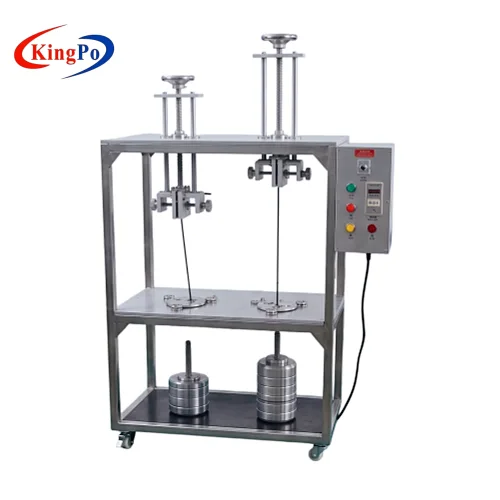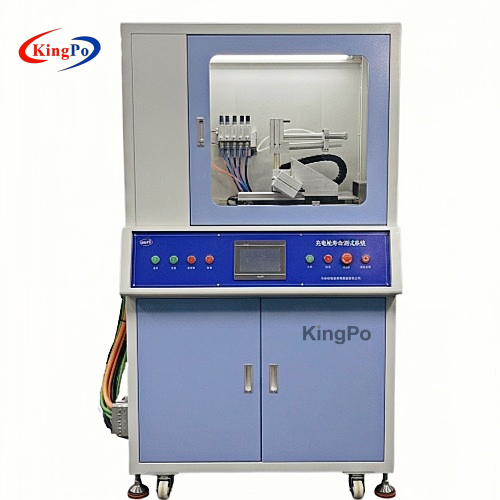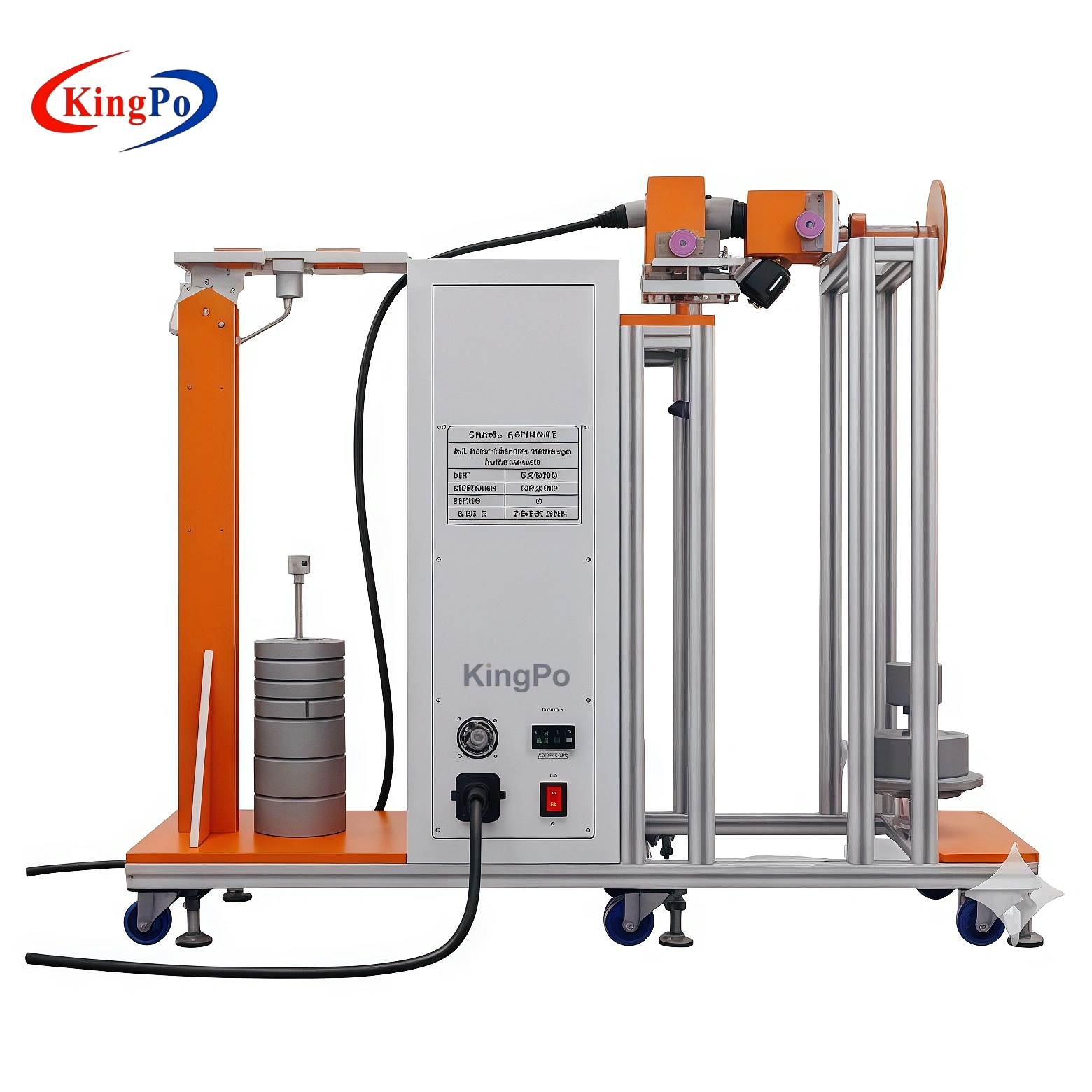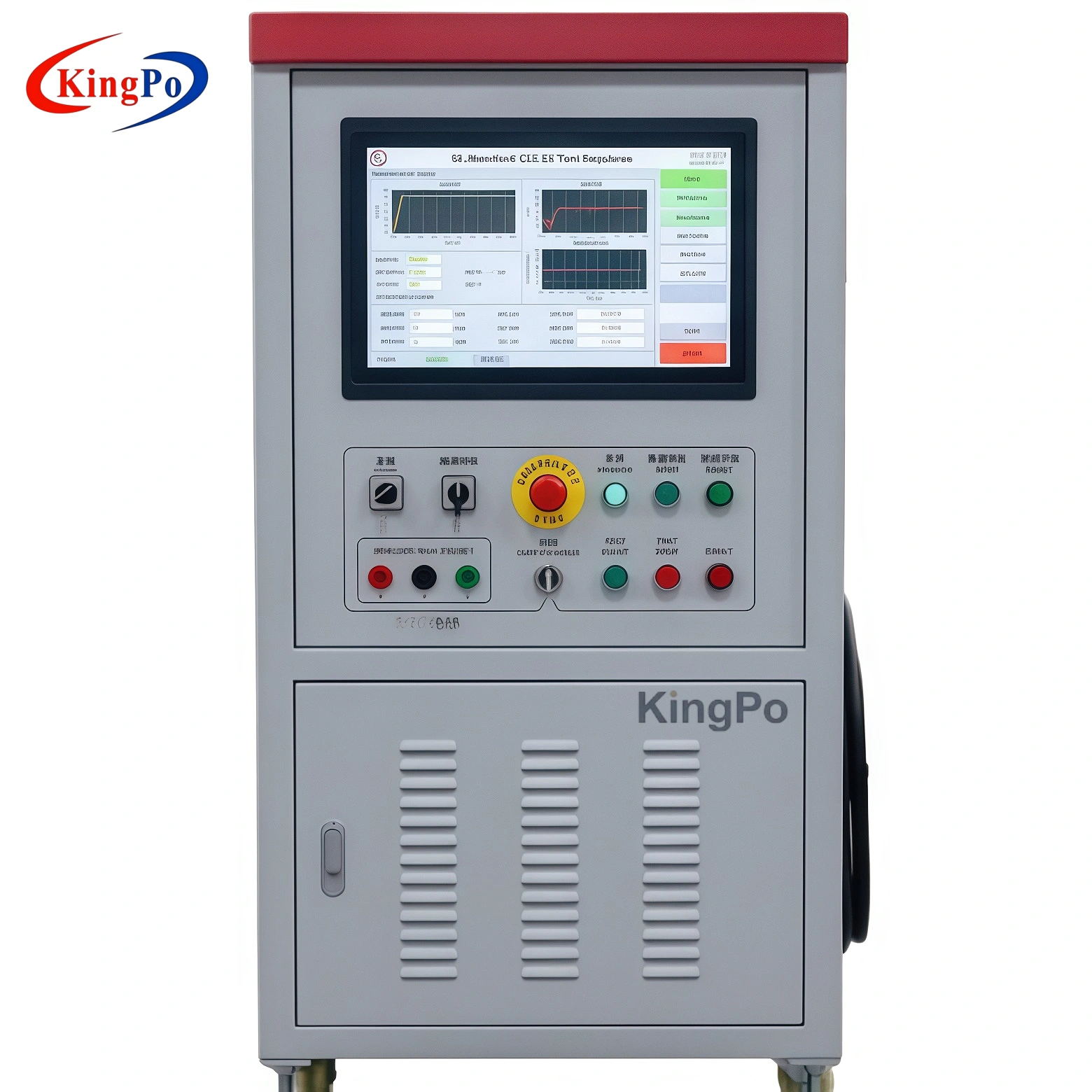
IEC 60998-1 Temperature Rise Tester | Multi-Station Current Heating Test Apparatus for Plugs Sockets and Connectors
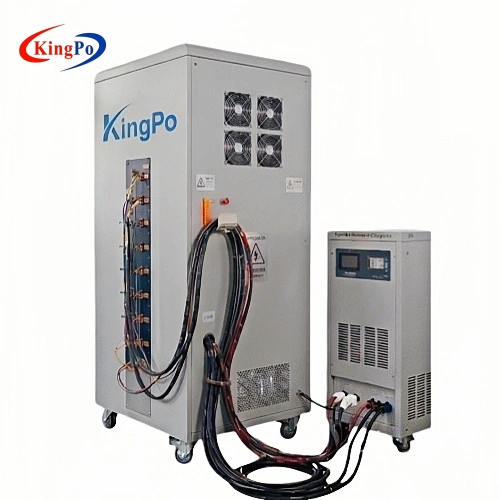
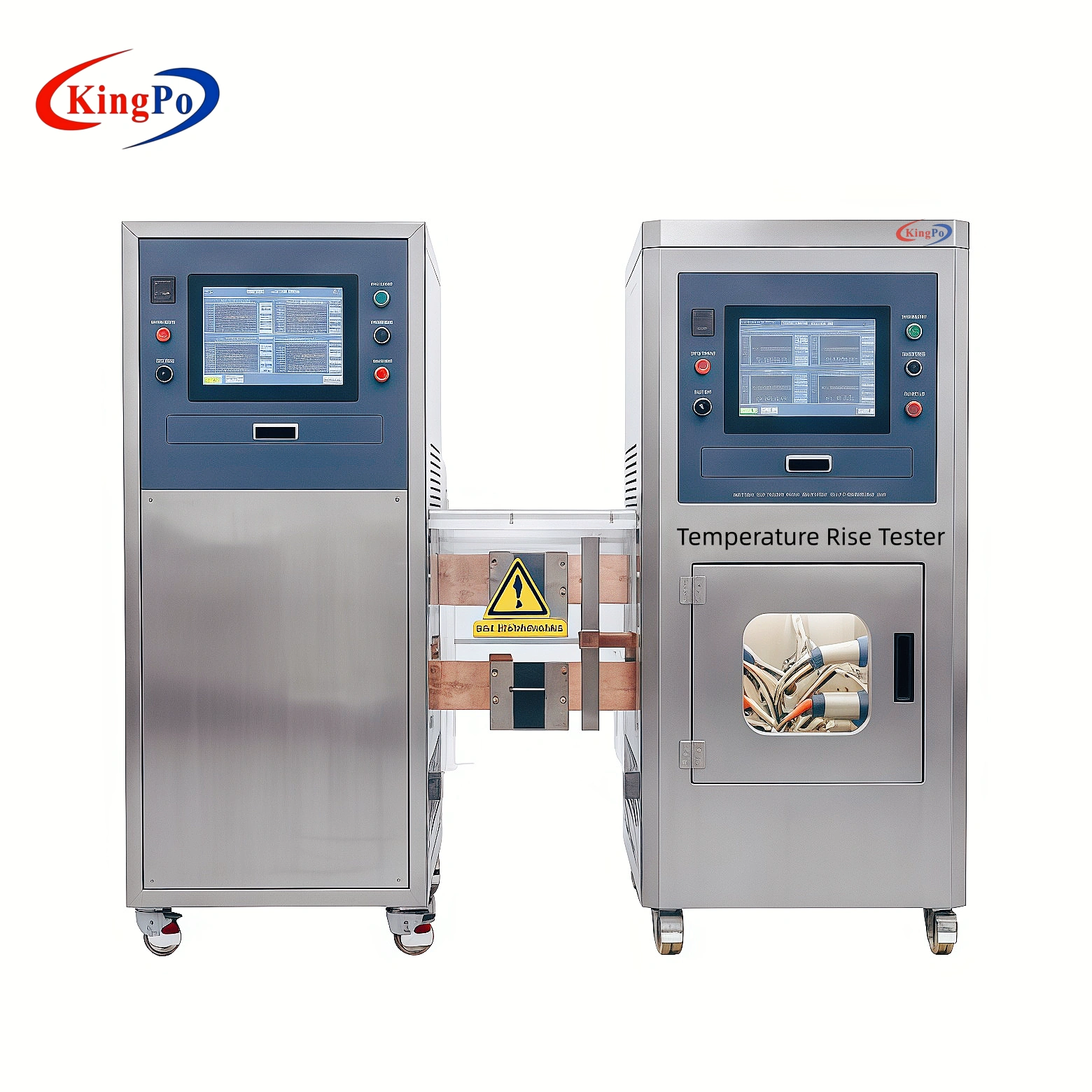
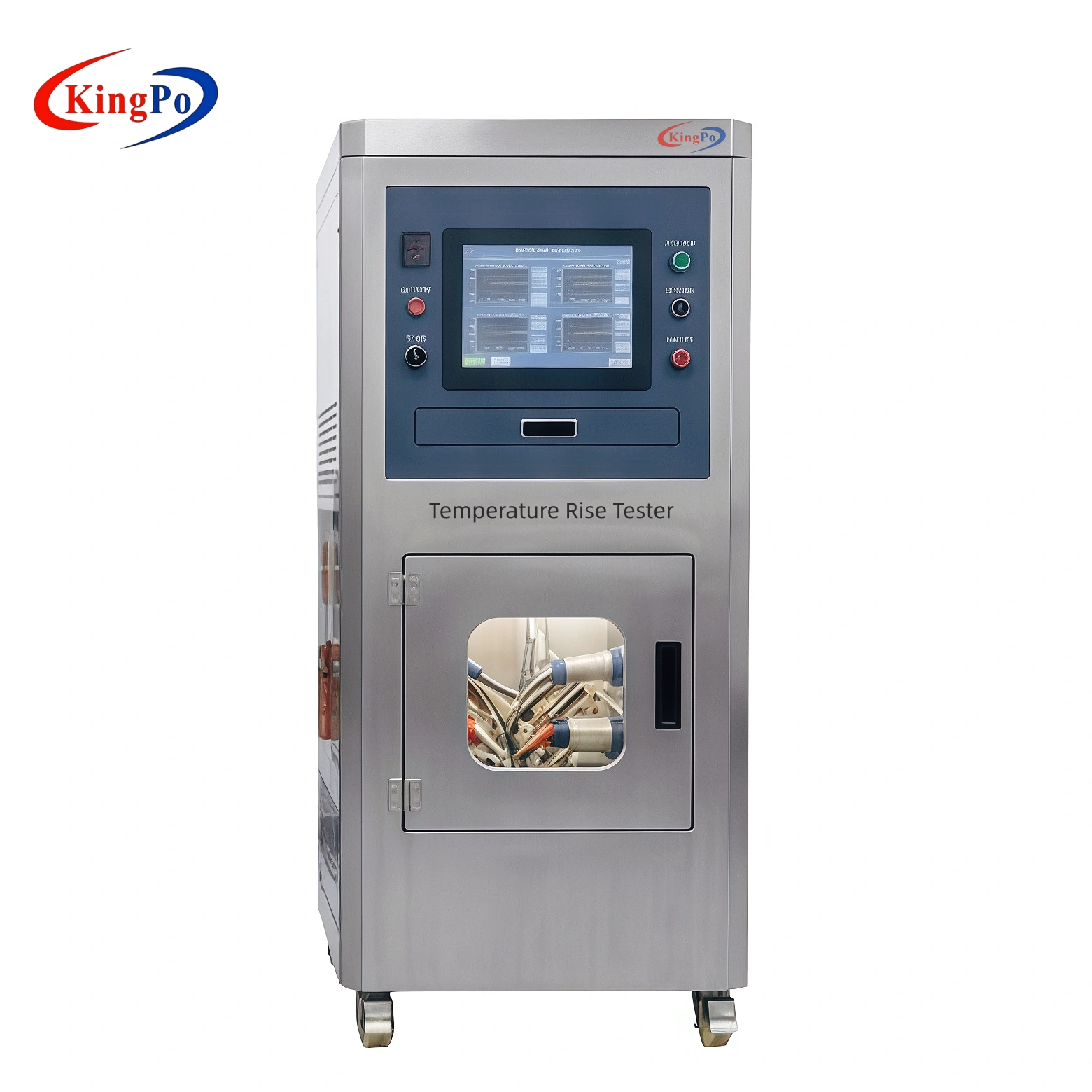
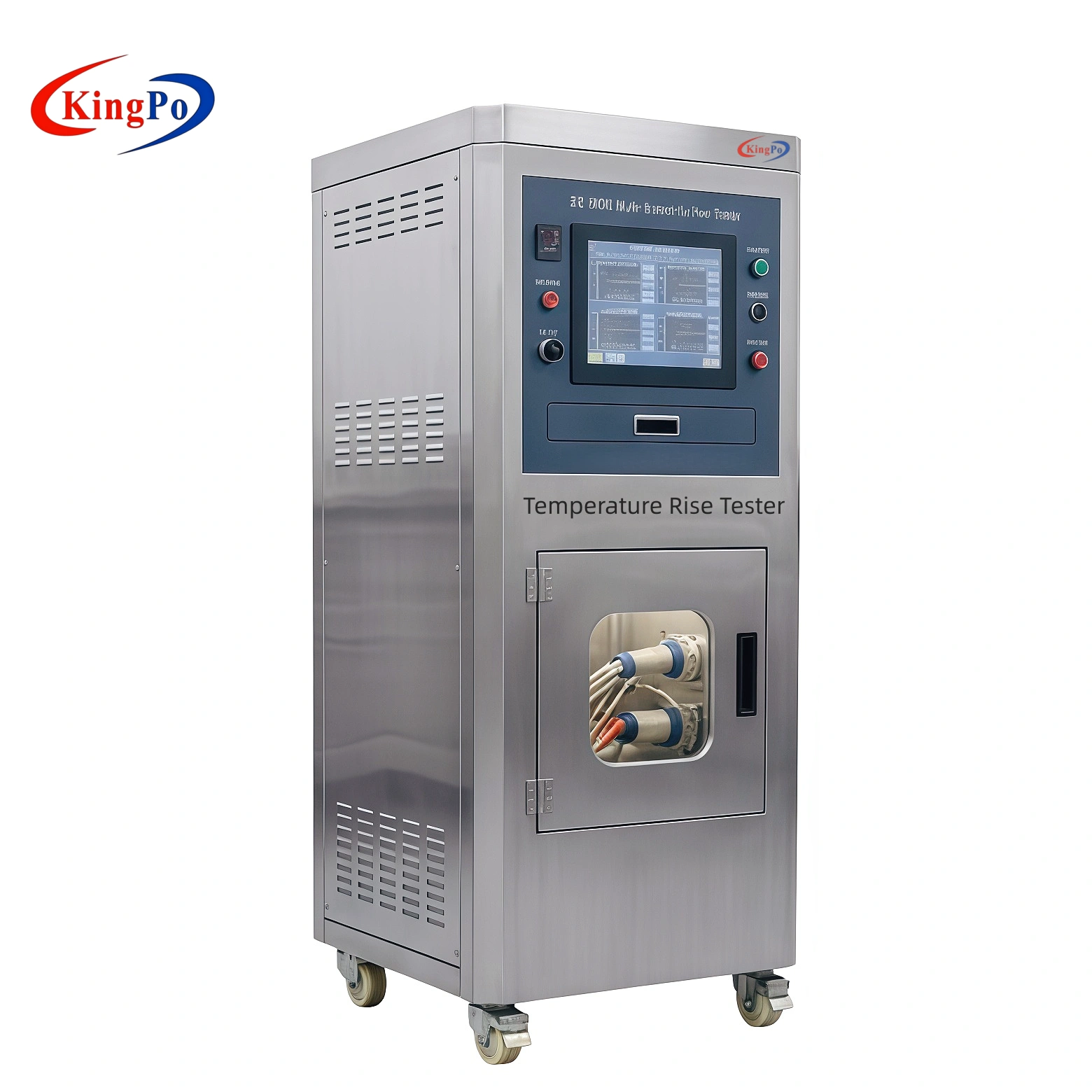
The IEC 60998-1 Temperature Rise Tester is a high-precision, programmable constant-current thermal test system developed by KingPo for comprehensive evaluation of temperature rise characteristics in current-carrying electrical accessories. It is specifically engineered to simulate sustained load current conditions and accurately quantify the resulting steady-state temperature rise at critical contact points, terminals, and insulating surfaces of plugs, sockets, switches, connectors, busbars, charging guns, and other electrical components. The system operates in full compliance with IEC 60998-1 Clause 15, IEC 60884-1 Clause 19, GB/T 2099.1, GB 16915.1, and a broad range of related GB, UL, and IEC standards, delivering traceable, repeatable test data essential for product safety validation, design optimization, and regulatory certification.
Technical Parameters
Current & Power Parameters
| Parameter | Specification | Remark / Notes |
|---|---|---|
| Standard | IEC 60998-1 Clause 15, IEC 60884-1 Clause 19, GB/T 2099 etc. | Temperature rise test for plugs, sockets and connectors |
| Output Current (typical models) | 0–50 A / 0–200 A / 0–300 A (up to 8000 A customizable) | Constant current, multi-segment programmable |
| Current Accuracy | ±(1% reading + 5 words) | High stability 1% FS |
| Maximum Load Voltage | DC 6 V | Low voltage high current output |
| Test Stations | 8 stations (standard) | Expandable multi-station configuration |
| Parameter | Specification | Remark / Notes |
|---|---|---|
| Temperature Range | 0–200°C (up to 1000°C optional) | ±1% reading +1°C accuracy |
| Temperature Channels | 16 channels (incl. 1 ambient) | T-type 30AWG fine wire thermocouples |
| Scanning Speed | 1 s for all channels | Real-time data acquisition |
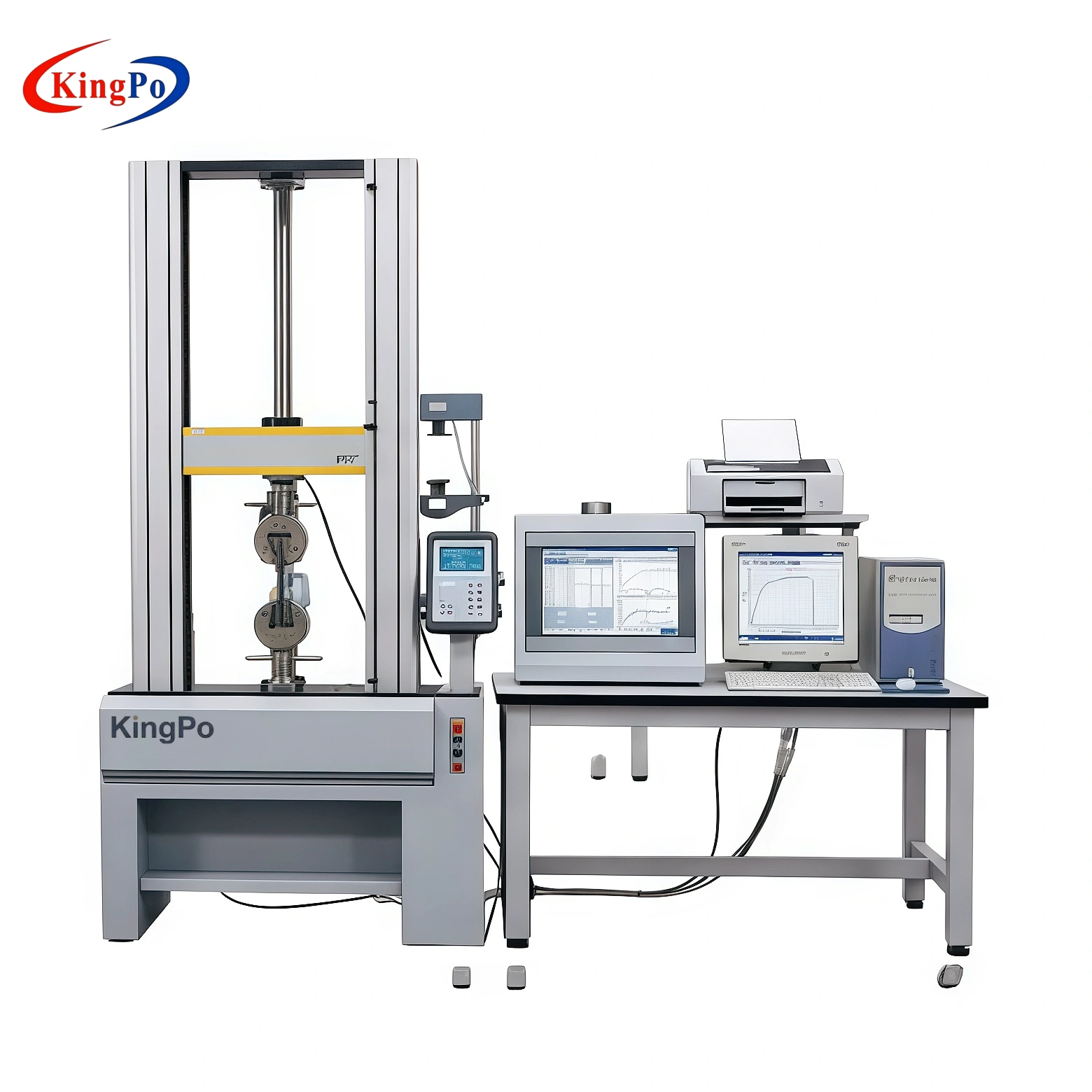
| Data Recording | Computer software with curve export | Temperature-time / current-time curves |
| Power Supply | AC 220 V ±10%, 50 Hz, 15 kVA | Three-phase for high current models |
Professional Construction & Technical Precision
The IEC 60998-1 Temperature Rise Tester integrates a high-stability programmable DC constant current source featuring closed-loop digital feedback control, precision current transformers, and industrial-grade sensors to deliver output current up to 8000 A with long-term stability better than 1% FS. This design effectively compensates for power supply voltage fluctuations, wiring impedance variations, and dynamic changes in sample contact resistance, ensuring highly repeatable test conditions.
The temperature acquisition subsystem utilizes 16 independent channels equipped with American Omega T-type 30AWG fine-wire thermocouples, paired with a high-speed, low-noise multi-channel data logger supporting full-channel scanning in 1 second and automatic cold-junction compensation. Electromagnetic shielding and advanced signal conditioning circuits minimize external interference, achieving measurement accuracy of ±1% reading +1°C across the full range.
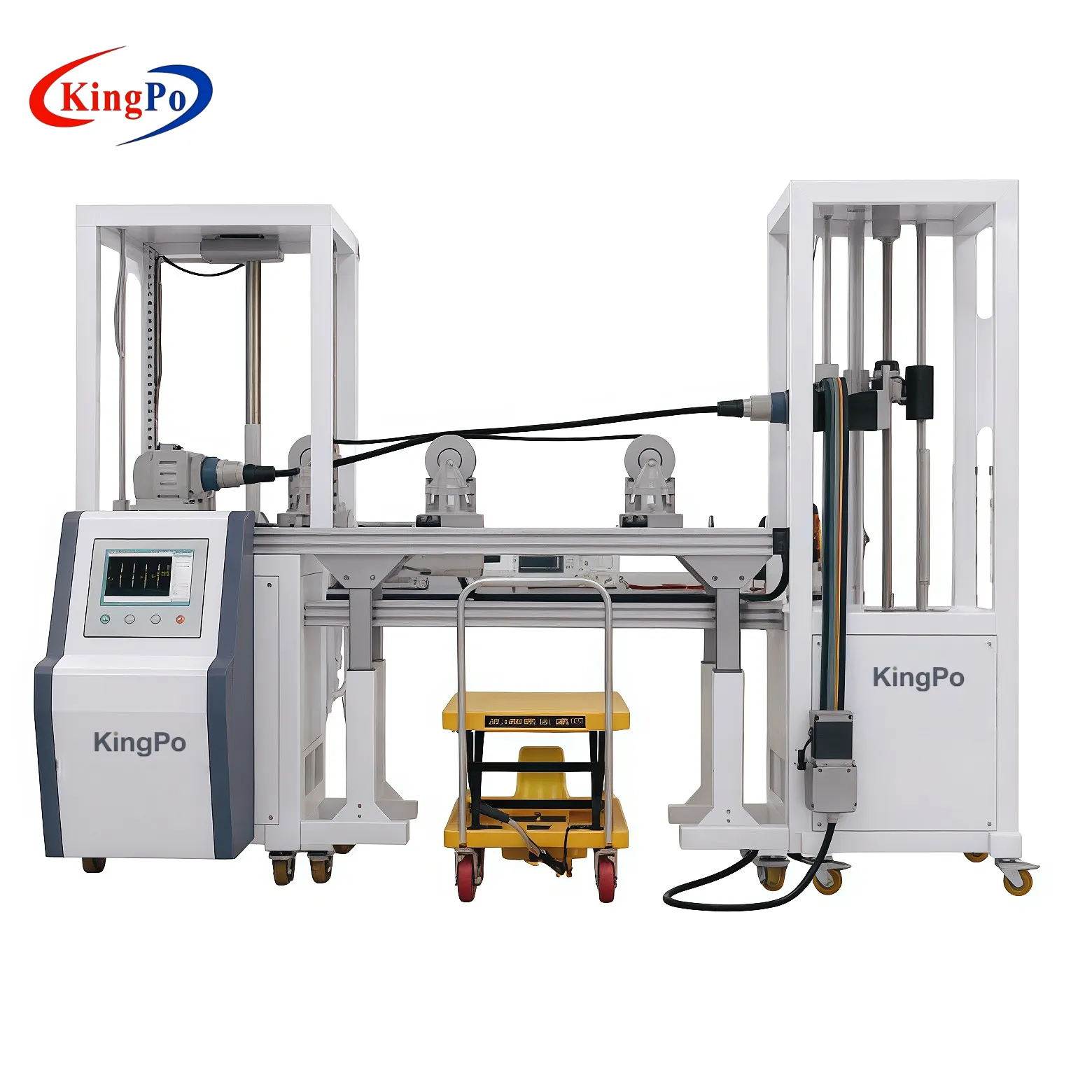
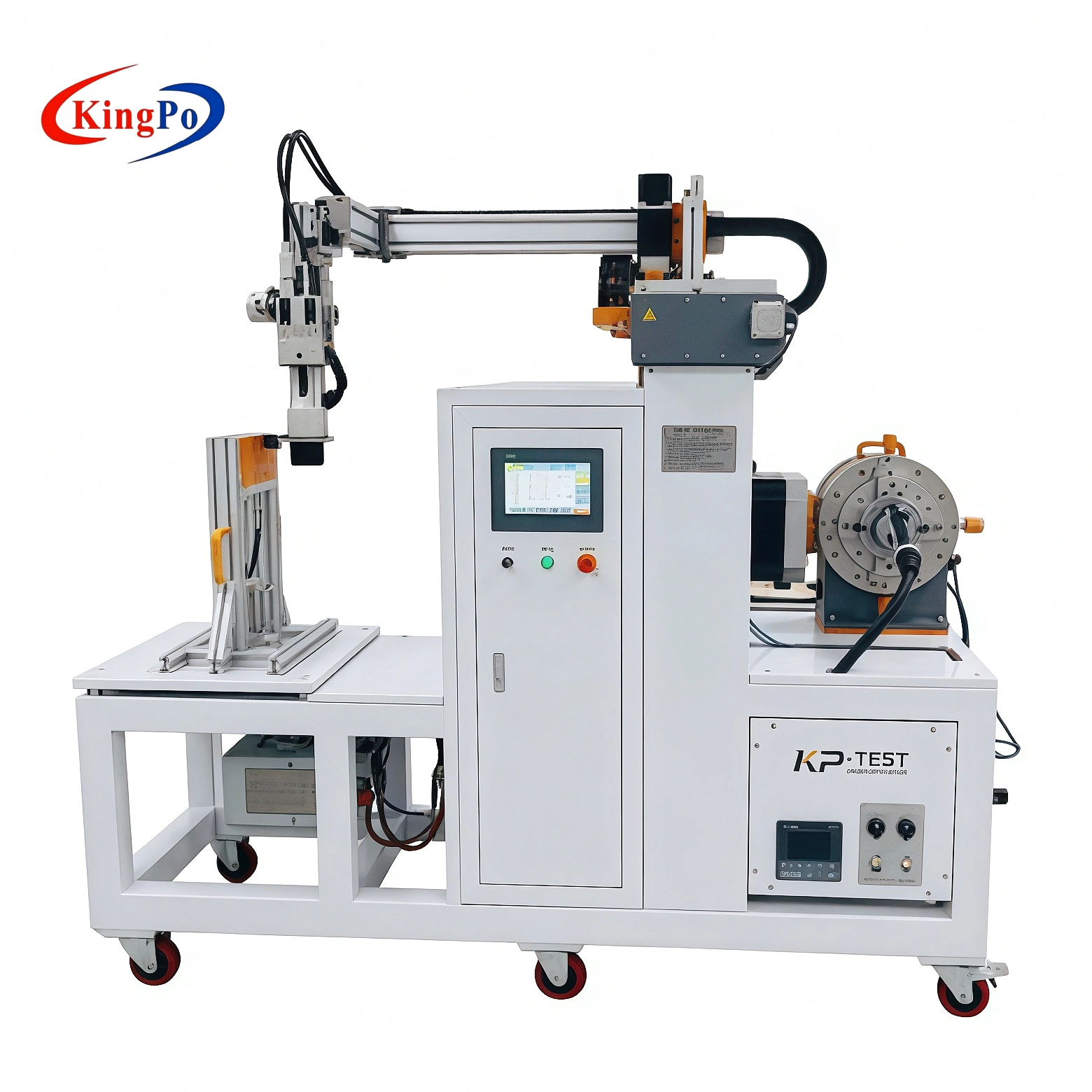
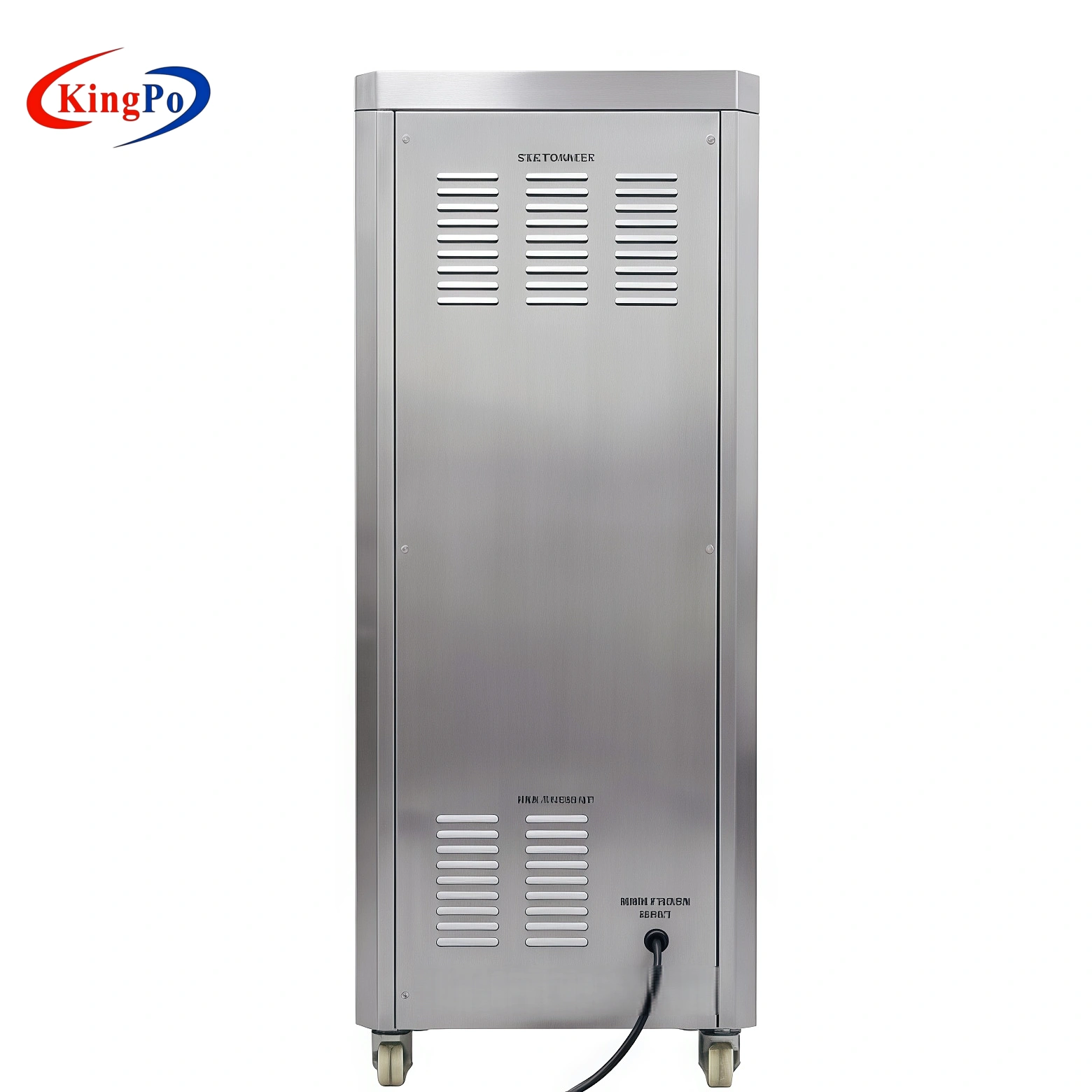
The mechanical platform consists of a robust mobile chassis incorporating low-impedance high-current copper busbars, integrated current booster transformer, leakage protection circuit breaker, and multiple safety interlocks. All core components are sourced from internationally renowned brands, while the PLC-based control system with industrial touchscreen provides multi-segment programmable current profiles (up to 30 segments), power-off memory, real-time data logging, and automatic generation of temperature-time and current-time curves with full export capability. This combination delivers laboratory-grade precision, operational reliability, and long-term stability required for both R&D validation and high-volume production quality assurance.
-
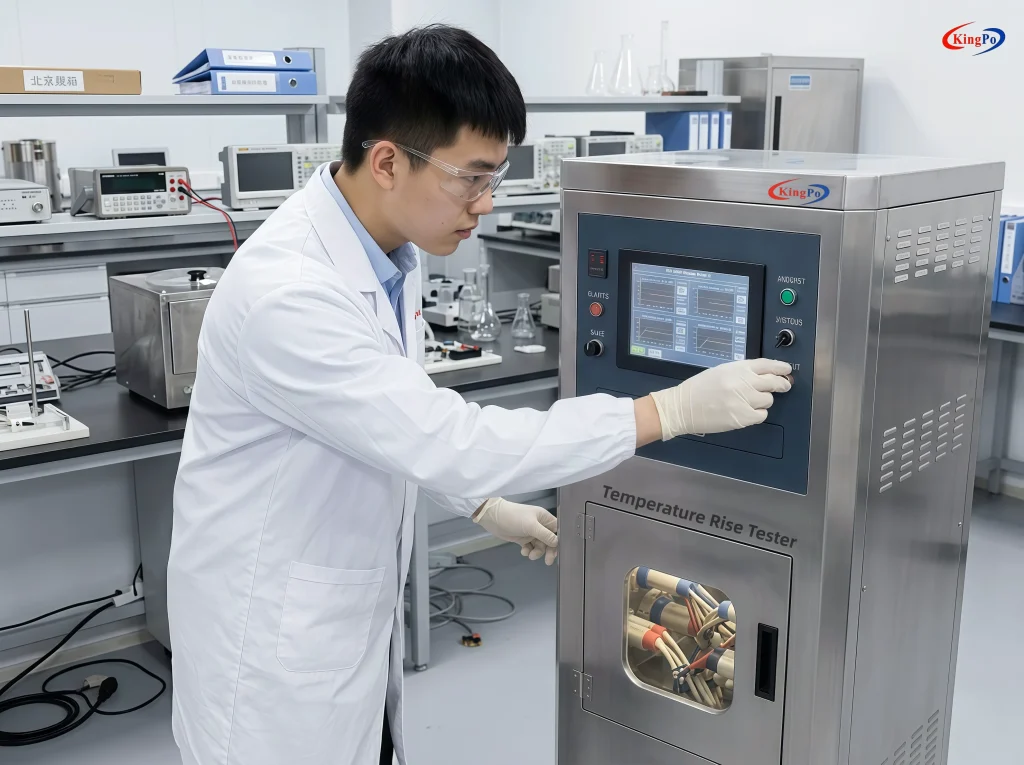
High Voltage Current Carrying Test System – Application in Implantable Device Lab
Testing Principle
The tester drives a precisely regulated constant DC current through the test specimen (plug pins, socket sleeves, switch contacts, busbar joints, or charging gun terminals) to replicate real-world rated or overload operating conditions as defined in the standards. Multiple thermocouples are affixed to standardized hot-spot locations on current-carrying parts and adjacent insulating materials. The system continuously acquires temperature data with automatic ambient compensation, records the dynamic temperature rise curve, and determines the steady-state temperature rise once thermal equilibrium is achieved or the preset test duration is completed. By comparing the measured values against the maximum allowable limits specified in IEC 60998-1, IEC 60884-1 and related standards, the tester objectively verifies the thermal safety, contact quality, heat dissipation design, and overall structural integrity of the electrical accessory under sustained load.
Common Error Mitigation
To ensure highest measurement repeatability and data integrity:
- Securely bond thermocouples to precisely defined measuring points using thermally conductive adhesive or specialized fixing methods, and verify intimate thermal contact with a low-resistance check.
- Perform pre-test calibration of the current source using an external high-precision reference shunt or clamp meter to confirm output accuracy and stability.
- Conduct tests in a controlled environment (ambient 5–35°C, relative humidity <85% RH) with minimal air circulation around specimens to eliminate convective cooling effects.
- Always enable the software’s ambient temperature compensation channel and allow sufficient thermal stabilization time (typically until dT/dt < 1°C/h) before recording final values.
- Schedule periodic calibration of both the current generation system and thermocouple channels in accordance with ISO 17025 requirements, and routinely inspect high-current contacts for oxidation or loosening.
Primary Use Cases & Business Value
The IEC 60998-1 Temperature Rise Tester serves as a core validation instrument for electrical accessory manufacturers and independent certification laboratories. It provides accurate, repeatable quantification of temperature rise under controlled load currents, enabling early detection of thermal design deficiencies, validation of contact materials and geometries, and confirmation that products maintain safe operating temperatures. This directly supports product optimization, risk reduction, compliance with international safety requirements, and successful market access while minimizing the likelihood of field failures due to overheating.
Industrial Applications & Lab Scenarios
- Plug, Socket and Connector Manufacturers — Systematic temperature rise verification of household, industrial, and EV charging products in accordance with IEC 60884-1 and GB 20234.1.
- Switch and Controlgear Producers — Detailed assessment of electrode and terminal heating in switches, circuit breakers, and distribution equipment per IEC 60998-1 and IEC 60439.
- EV Charging System Developers — Thermal performance evaluation of high-current charging guns, liquid-cooled connectors, and associated terminals under GB 20234 and IEC standards.
- Third-Party Certification Laboratories — Reproducible compliance testing and generation of official reports across multiple IEC, GB, and UL standards.
- R&D and Quality Assurance Teams — Iterative design optimization, material selection validation, batch consistency verification, and type approval testing of current-carrying components.
Strategic Procurement Advantages & Global Support
- High-Efficiency Testing: Programmable multi-segment current with automatic data recording and curve generation.
- Certified Manufacturing: ISO 9001/14001/45001 and CE certified production with traceable calibration.
- Reliability & Support: Each unit undergoes rigorous factory calibration in our Dongguan facility and is backed by a full one-year warranty, on-site installation guidance, and lifetime technical engineering support.