

Product Overview
Automotive electrical and electronic components can experience sudden temperature changes when cold water comes into contact with surfaces heated by vehicle operation. Such exposure can generate thermal stress in component housings, seals, connectors and internal assemblies, potentially affecting their mechanical integrity and electrical functionality.
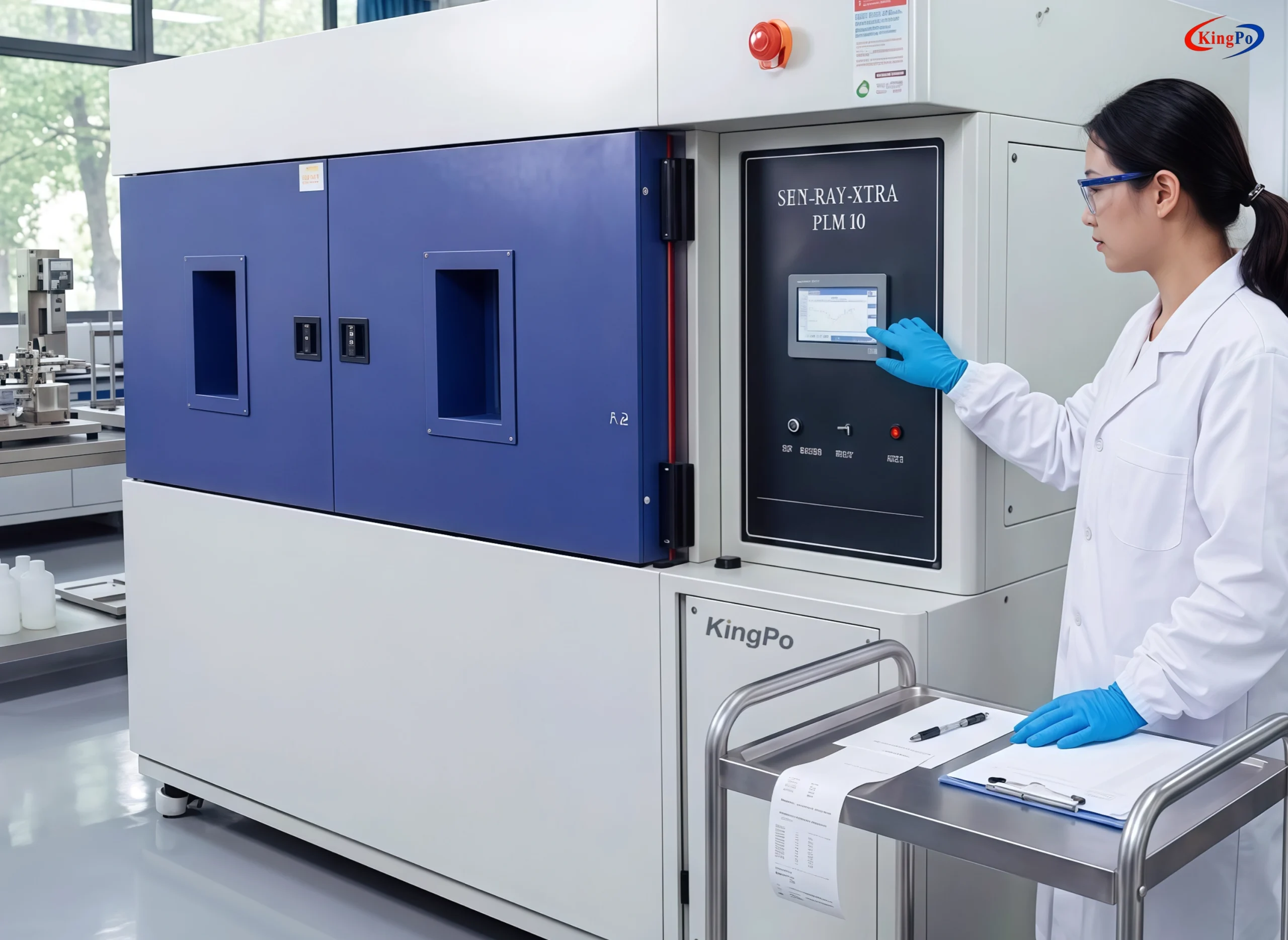
The KingPo LV 124 K-12 Ice Water Splash Thermal Shock Test Chamber reproduces this environmental condition through controlled heating followed by cold-water splash exposure. The system supports automotive thermal shock testing according to the relevant requirements of LV 124 K-12 and MBN LV 124-2.
The equipment integrates an insulated heating chamber, ice water preparation and spray delivery system, adjustable DUT test bench and PLC-based control system. Programmable exposure cycles support component development, environmental validation and quality evaluation under repeatable test conditions.
Technical Specifications
Test Conditions and Performance
| Parameter | Specification |
|---|---|
| Primary Test Method | Thermal shock with splash water (K-12) |
| Applicable Test References | LV 124 K-12; MBN LV 124-2 |
| Standard Test Cycles | 100 cycles |
| Programmable Cycle Range | 0–9999 cycles |
| Holding Time at Tmax | 1 h or until DUT temperature is stable |
| Conversion Duration | <20 s (manual conversion) |
| Test Liquid | Tap water containing 3% fine Arizona dust by weight |
| Splash Water Temperature | 0°C to +4°C |
| Splash Duration | 3 s |
| Water Discharge | 3–4 L per splash/nozzle |
| Nozzle-to-DUT Distance | 300–350 mm |
| Spray Coverage | Across the full DUT width |
Chamber Construction and Control
| Parameter | Specification |
|---|---|
| Internal Chamber Dimensions | 1000 × 1000 × 1000 mm (D × W × H) |
| External Dimensions | Approx. 1200 × 1500 × 1950 mm |
| Heating Temperature Range | RT +10°C to +160°C |
| Chamber Interior Material | SUS304 stainless steel |
| DUT Test Bench Diameter | Ø600 mm |
| Maximum Test Bench Load | 50 kg |
| Test Bench Height Adjustment | 200 mm |
| Control System | PLC |
| Operation Interface | 7-inch color touchscreen |
| Safety Protection | Leakage, overload, short-circuit and grounding protection |
| Power Supply | AC 380 V, 50/60 Hz |
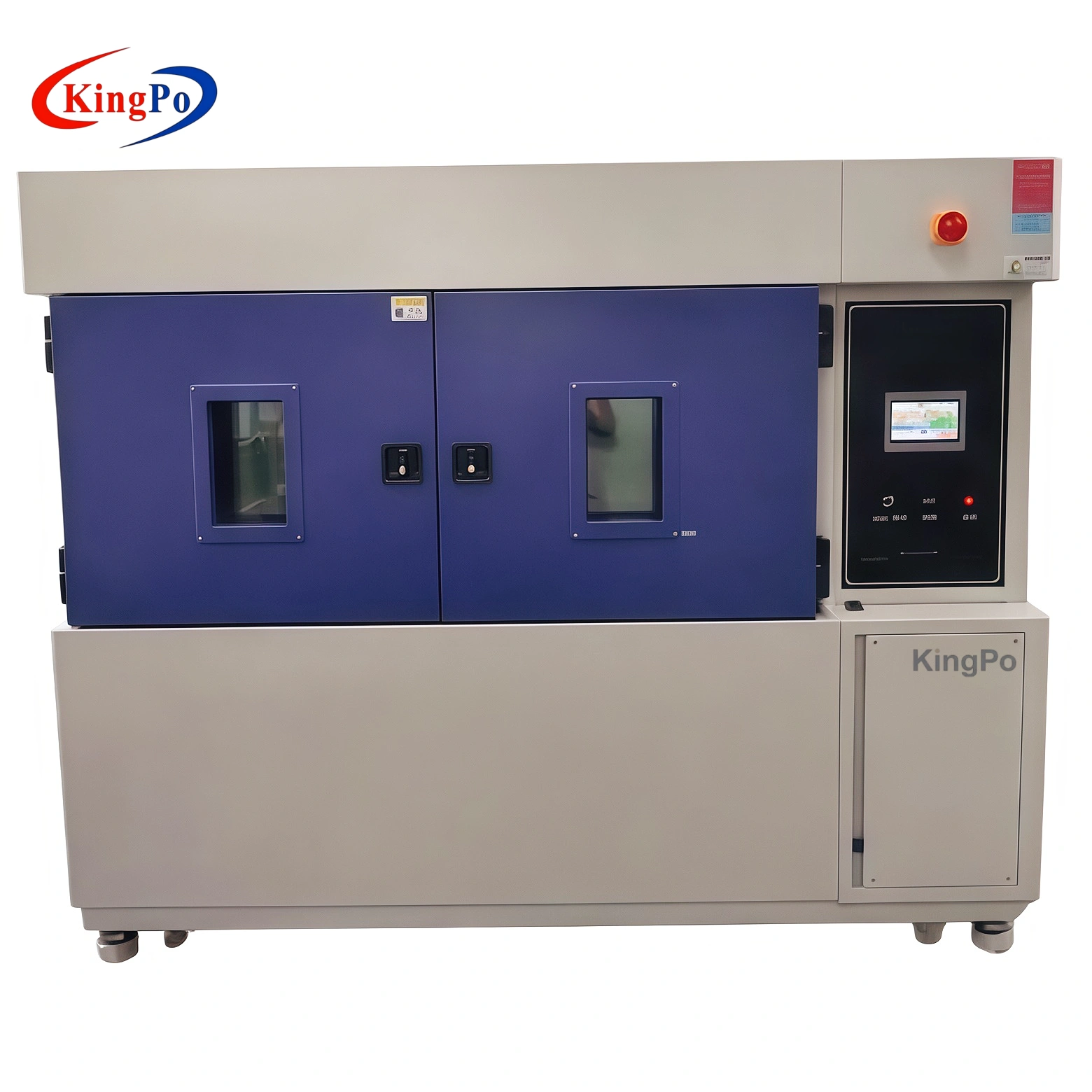
 LV 124 K-12 thermal shock test chamber and ice water cooling system.
Test Principle and Procedure
Ice Water Splash Thermal Shock
The K-12 thermal shock test simulates the rapid cooling of heated automotive components when exposed to splash water, such as during driving through puddles.
The temperature difference between the heated component and cold water produces thermal expansion and contraction within the DUT. Repeated exposure can reveal weaknesses associated with material interfaces, housing structures, seals and electrical connections.
The test evaluates the ability of the component to maintain its required functionality after sudden cooling.
Test Procedure
DUT Operating Conditions
The operating state of the DUT depends on whether the component normally operates under electrical load during vehicle driving conditions.
- Operating Mode II.a: Applied throughout the test when the component is not operated under load during the relevant driving condition.
- Operating Modes II.a and II.c: Alternated according to the applicable test sequence for components operated under load during driving.
The required operating sequence and switching intervals are determined by the applicable automotive test specification.
DUT temperature may differ from chamber air temperature because of component thermal mass, mounting conditions and internal heat generation. Temperature stabilization should be evaluated at the relevant DUT measurement location.
System Architecture and Components
Heating Chamber
The heating chamber provides the elevated-temperature environment required before the DUT is exposed to cold water.
The chamber has a 1000 × 1000 × 1000 mm internal workspace, a heating temperature range of RT +10°C to +160°C and a SUS304 stainless steel interior. The insulated structure helps maintain the required thermal environment during the heating stage.

Ice Water Cooling and Spray Delivery
The water cooling system prepares the liquid for the cold-water splash stage. The spray system directs water toward the heated DUT under controlled temperature, volume and exposure conditions.
The nozzle arrangement provides a spray width greater than the DUT width, with the distance between the nozzle and specimen set within 300–350 mm.
For test programs using Arizona dust, the liquid preparation and mixing arrangement must maintain the specified medium composition throughout splash exposure.
Adjustable DUT Test Bench
The chamber incorporates a circular DUT support platform with a diameter of 600 mm, a load capacity of 50 kg and a height adjustment range of 200 mm.
The adjustable platform facilitates specimen positioning relative to the spray nozzle and allows fixtures to be arranged for the required exposure direction.

PLC Control and Test Data Monitoring
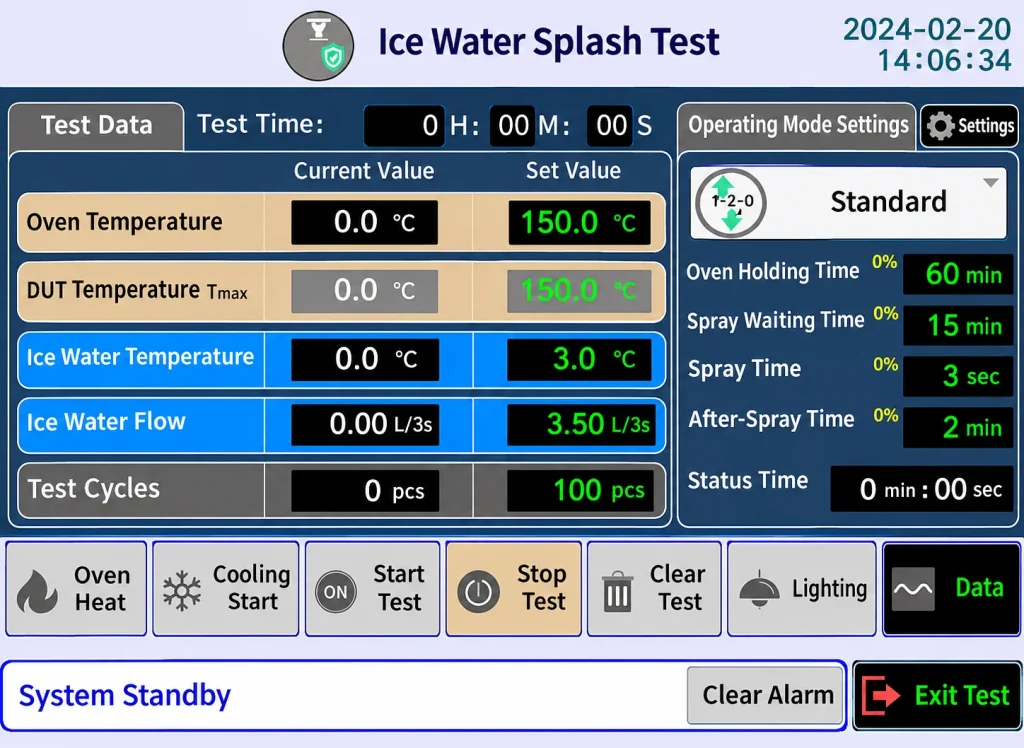
The chamber uses a PLC control system with a 7-inch color touchscreen for test parameter configuration, operating sequence control and monitoring.
Test Parameter Settings
The control interface provides access to the main temperature, splash and timing parameters:
- Temperature Control: Heating chamber temperature, target temperature and ice water temperature.
- DUT Temperature Monitoring: Display of the DUT temperature measurement channel.
- Water Splash Settings: Splash flow, exposure duration and associated timing parameters.
- Cycle Programming: Preset cycle count and current test progress.
- Operating Commands: Heating, cooling, test start, test stop and alarm handling.
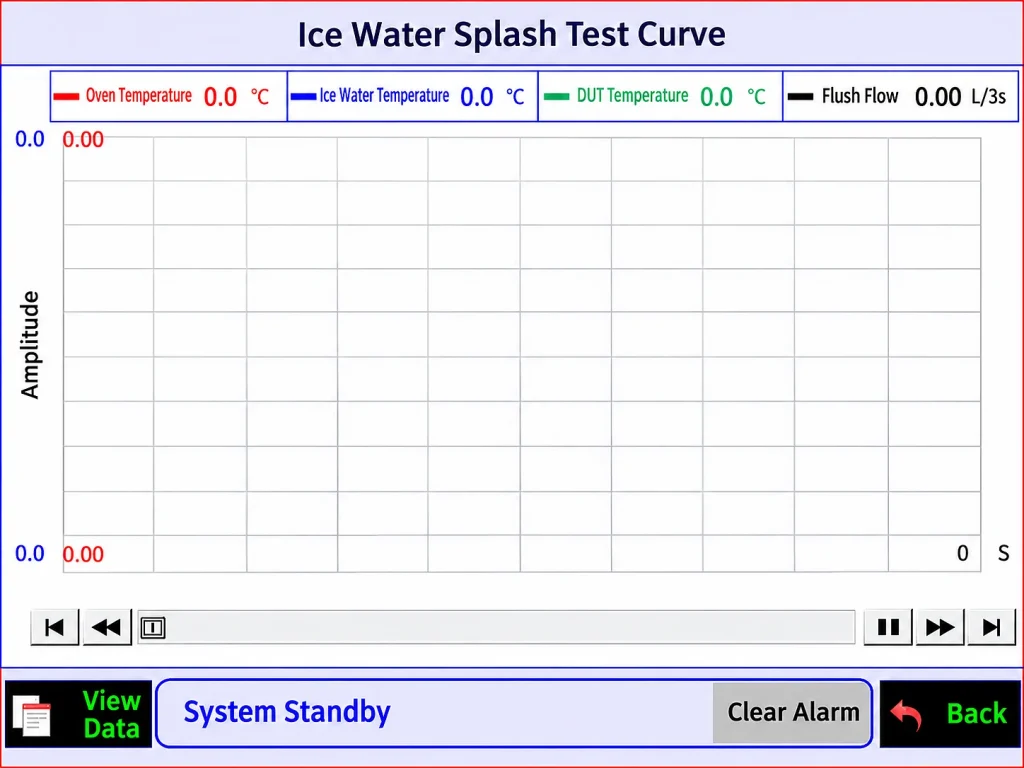
Temperature Curves and Test Monitoring
The graphical monitoring interface displays the principal environmental test parameters during the thermal shock sequence.
Available monitoring channels include:
- Heating chamber temperature
- Ice water temperature
- DUT temperature
- Splash water flow
Temperature and flow curves help operators observe test conditions and identify changes during heating and splash exposure.
Where the DUT requires powered functional testing, external electrical measurement or diagnostic equipment can be incorporated into the laboratory test setup.
Applicable Standards and Test Scope
The chamber supports splash water thermal shock testing of automotive electrical and electronic components according to the applicable vehicle manufacturer and component qualification requirements.
| Test Reference | Test Method | Application |
|---|---|---|
| LV 124 K-12 | Thermal Shock With Splash Water | Functional evaluation of heated automotive electrical and electronic components after rapid cooling by water splash. |
| MBN LV 124-2 | Automotive splash water thermal shock testing | Environmental exposure testing of vehicle components under defined heating, splash and DUT operating conditions. |
K-12 Splash Water Test Conditions
The K-12 procedure involves heating the DUT to Tmax, followed by cyclic cold-water splash exposure. The splash must cover the required width of the component.
For the K-12 test using fine Arizona dust, the liquid consists of tap water with a 3% dust concentration by weight, with continuous mixing during testing.
The relevant test program defines the DUT operating modes, heating conditions, spray arrangement and functional evaluation requirements. The installation position should reproduce the component’s intended vehicle mounting configuration.
Other environmental tests, including thermal shock immersion (K-13), require different test arrangements and are outside the splash-only K-12 procedure.
For further technical information, see the LV 124 K-12 thermal shock testing guide.
Test Setup and DUT Compatibility
DUT Dimensions and Mounting
The available workspace must accommodate the specimen, mounting fixtures and the required splash nozzle clearance.
The chamber has internal dimensions of 1000 × 1000 × 1000 mm and a circular DUT support platform measuring 600 mm in diameter. The maximum test bench load is 50 kg.
DUT mounting should reproduce the relevant vehicle installation position, including covers, protective structures and the orientation of surfaces exposed to water splash.
Spray Direction and Coverage
The splash nozzle is positioned 300–350 mm from the DUT. The spray arrangement must cover the specified exposure area without interference from the fixture or surrounding structures.
For large or irregularly shaped components, fixture design and nozzle positioning are important to achieving the required splash distribution.
Electrical Connections and DUT Monitoring
Some automotive components must operate during all or part of the thermal shock sequence. These tests may require an external power supply, load simulation, communication connection or functional measurement instrument.
The DUT electrical setup should support the required operating modes without obstructing the water splash path.
Environmental parameter monitoring and DUT functional evaluation are separate activities. Electrical measurements and acceptance limits are established according to the component’s test specification.
Typical Applications
Ice water splash thermal shock testing is used for automotive components exposed to rapid changes in surface temperature during vehicle operation.