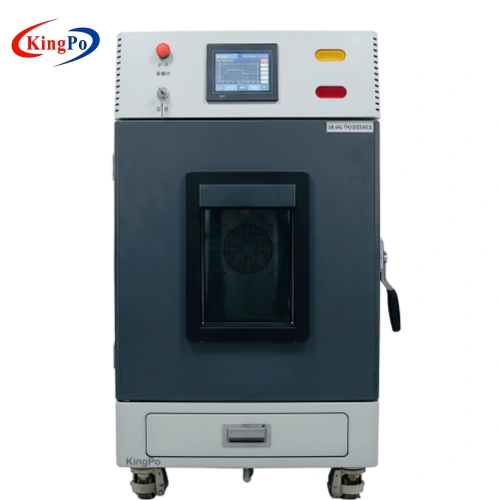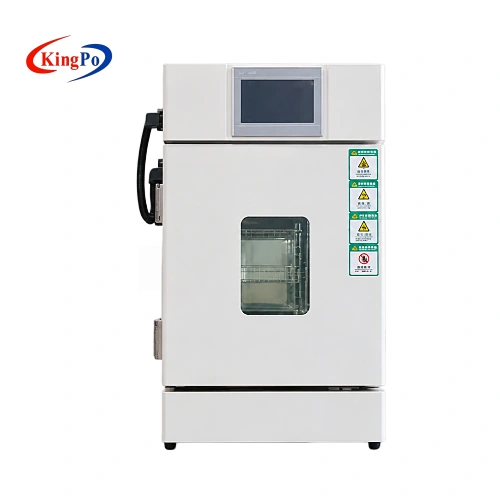
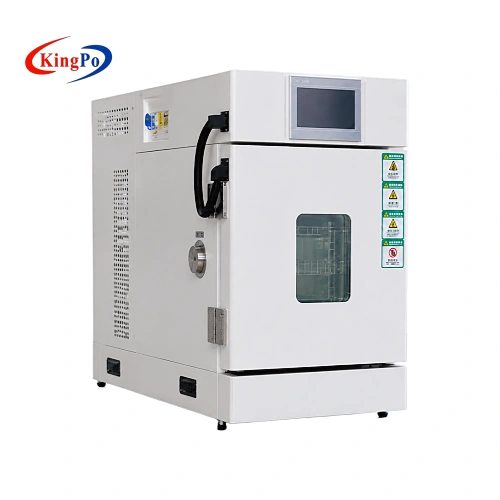
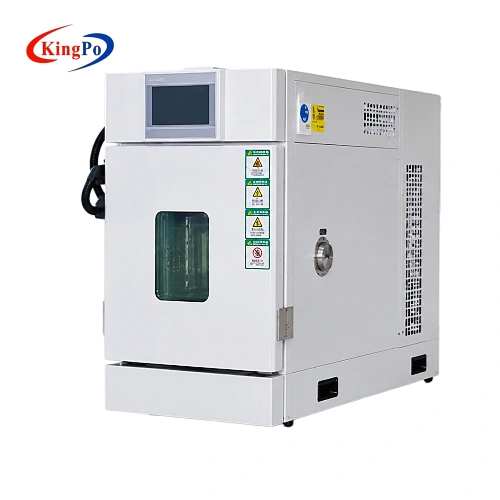
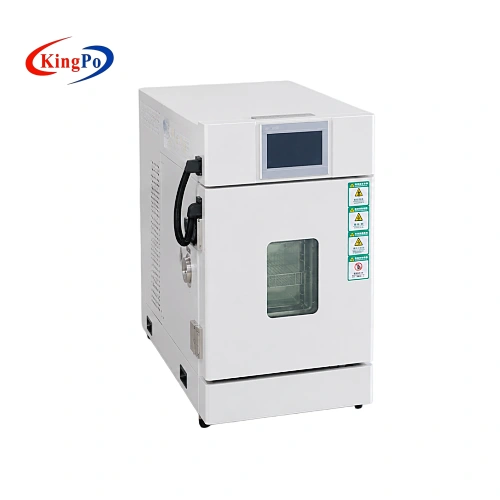
The temperature humidity test chamber for electronics is designed for controlled climatic exposure of electronic products and components during environmental testing.
By combining temperature, humidity and programmable control functions, the chamber supports product development, component evaluation and quality verification. Working volumes from 100 L to 1000 L allow laboratories to select a configuration according to specimen size, loading quantity and required temperature range.
Technical Specifications and Available Models
The specifications below help laboratories review the required temperature humidity test chamber for electronics configuration by chamber volume, temperature range and environmental performance.
| Parameter | QTH-100 | QTH-150 | QTH-225 | QTH-416 | QTH-1000 |
|---|---|---|---|---|---|
| Internal Volume | 100 L | 150 L | 225 L | 416 L | 1000 L |
| Internal Dimensions W × H × D |
500 × 500 × 400 mm | 500 × 600 × 500 mm | 500 × 750 × 600 mm | 700 × 850 × 700 mm | 1000 × 1000 × 1000 mm |
Environmental Performance
| Temperature Range | B: -20°C to +150°C; C: -40°C to +150°C; D: -70°C to +150°C |
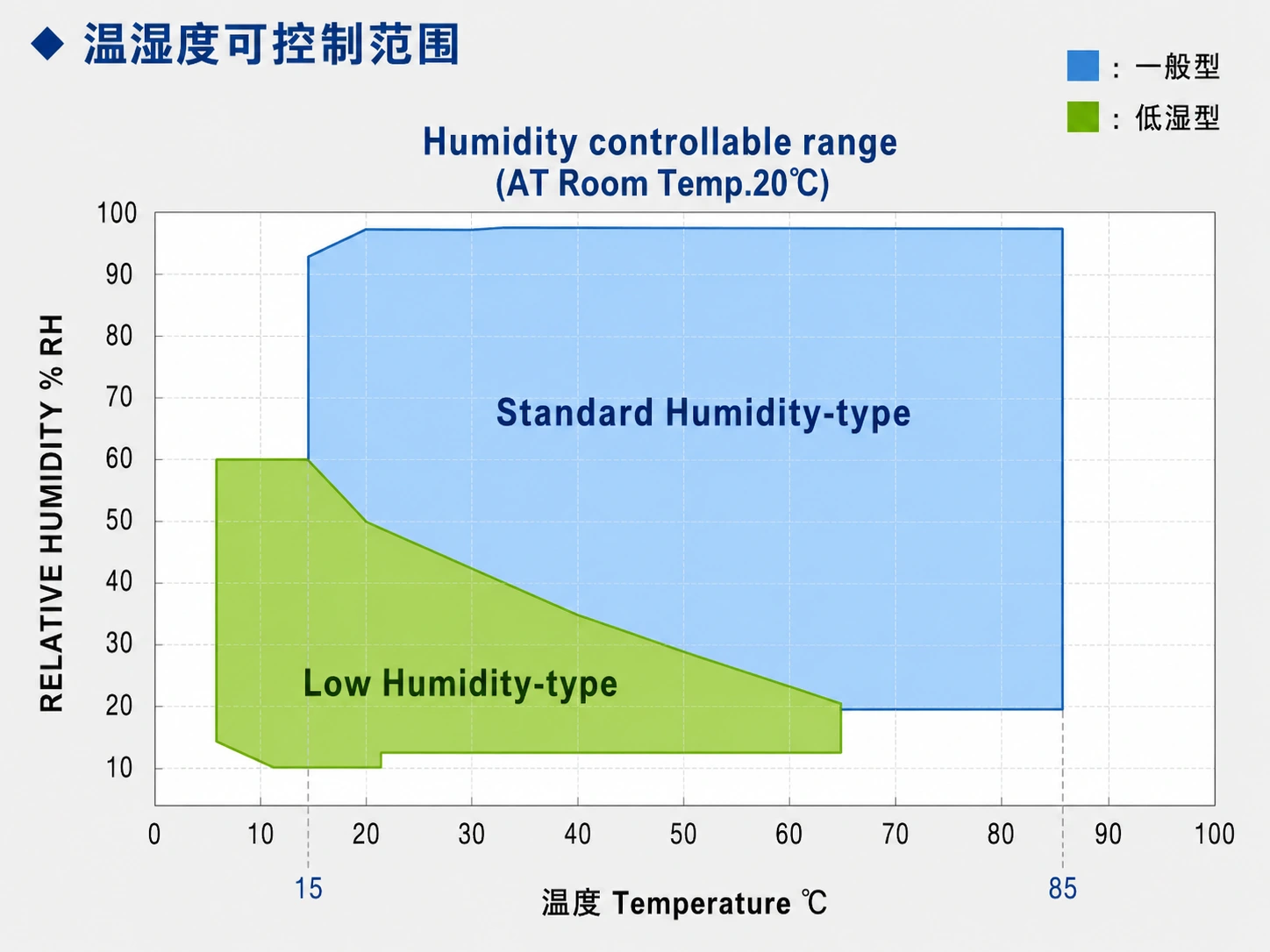
| Humidity Range | 10% to 98% RH |
| Optional Low-Humidity Range | 5% to 98% RH; customization to be confirmed |
| Temperature Fluctuation | ±0.5°C |
| Temperature Uniformity | ±1°C |
| Humidity Uniformity | 5% RH |
| Temperature Stability | 0.2°C |
| Humidity Stability | 2% RH |
| Temperature Deviation | ±2.0°C |
| Humidity Deviation | 3% RH |
| Approx. Heating Rate | 3°C/min; customization stated as available |
| Approx. Cooling Rate | 1°C/min; customization stated as available |
Note:
Performance values are based on the published product information. Final performance conditions, specimen loading and verification requirements should be confirmed for the selected chamber configuration.
Chamber Construction
| Exterior Material | Cold-rolled steel plate with baked paint finish |
| Optional Exterior Material | SUS 304 stainless steel |
| Interior Material | SUS 304 stainless steel |
| Thermal Insulation | Rigid polyurethane foam |
| Refrigeration System | Compressor refrigeration system; compressor brand depends on selected configuration |
| Power Supply | AC 220 V / 380 V, 50/60 Hz; exact electrical requirements to be confirmed |
| Standard Test Port | 1 |
| Standard Shelves | 2 |
Electronic and Component Test Samples
The temperature humidity chamber for electronic components supports controlled environmental exposure of common electronic and electrical samples. The temperature humidity test chamber for electronics can be selected according to specimen type, loading arrangement and required climatic profile.
PCB Assemblies and Electronic Modules
PCB assemblies, control boards and electronic modules can be conditioned under specified temperature and humidity environments before functional inspection, design verification or further electrical testing.
Sensors, Connectors and Terminals
The temperature humidity test chamber for electronics provides a repeatable environment for exposing sensors, connectors and terminals to defined temperature and moisture conditions before performance evaluation.
Optoelectronic and Semiconductor-Related Components
Chamber volume, specimen dimensions, loading arrangement and heat dissipation should be reviewed when these components are tested under specified climatic conditions.
Small Automotive Electronic Parts
Automotive sensors, connectors and small control-related components can be exposed to high temperature, low temperature or humidity conditions according to the applicable test procedure.
Environmental Reliability Test Purpose
Electronic components and assemblies can experience different climatic conditions during storage, transportation and operation. Controlled environmental testing allows laboratories to expose samples to defined temperatures and humidity levels under repeatable conditions.
The environmental test chamber for electronics establishes the required climatic environment. The specimen is then inspected, measured or functionally evaluated according to the relevant product standard, laboratory procedure or internal verification method.
For electronics laboratories, a temperature humidity test chamber can support cold exposure, dry heat, damp heat and other defined climatic conditioning procedures. Pass or fail criteria remain dependent on the applicable product standard or test specification.
Temperature and Humidity Control Principle
The temperature humidity test chamber for electronics combines refrigeration, heating, humidification, dehumidification and internal air circulation to establish the programmed chamber environment.
Set the Profile
Operators enter the required chamber conditions through the touchscreen controller.
Monitor Conditions
Temperature and humidity sensors monitor the test-space environment.
Automatic Regulation
The controller adjusts heating, refrigeration, humidification or dehumidification as required.
Circulate Conditioned Air
Internal airflow distributes conditioned air through the working space.
According to the published product information, LAN or USB connectivity and data acquisition functions are available. Exact communication interfaces, software and remote-control functions should be confirmed for the selected controller configuration.
Key Features for Laboratory Testing
The temperature humidity test chamber for electronics combines configurable environmental ranges with practical controls for routine laboratory use.
Three Temperature Range Configurations
The temperature humidity test chamber for electronics is available with -20°C, -40°C and -70°C low-temperature configurations, each extending to +150°C.
100 L to 1000 L Chamber Volumes
As a temperature humidity chamber for electronic components, the series can be selected according to specimen dimensions, test quantity and internal loading arrangement.
Programmable Touchscreen Control
A color LCD touchscreen allows operators to set and monitor chamber conditions for repeated environmental test procedures.
Observation Window and Lighting
The observation window and internal lighting help personnel check specimens and the test space without routinely opening the chamber door.
Test Data and Connectivity
Published configuration information includes LAN or USB connectivity together with graphical and Excel-format data output functions.
Independent Temperature Protection
An independent temperature limit alarm provides additional protection when chamber temperature exceeds the defined protection setting.
Chamber Safety and Protection Functions
A temperature humidity test chamber for electronics may operate for extended test periods and across wide temperature ranges. The published chamber configuration includes multiple equipment protection functions.
Standards and Environmental Test Method Compatibility
The temperature humidity test chamber for electronics provides controlled climatic conditions for environmental reliability testing. Depending on the selected temperature range, humidity capability and required test profile, the chamber may support environmental conditions associated with the following IEC 60068 test methods.
Test A: Cold
Used to evaluate components, equipment or other articles under specified low-temperature conditions.
Test B: Dry Heat
Used for environmental testing under specified high-temperature conditions.
Test Db: Damp Heat, Cyclic
Covers high humidity combined with cyclic temperature changes and conditions where condensation may occur on the specimen.
Test Cab: Damp Heat, Steady State
Covers high-humidity exposure at constant temperature without condensation over a specified test period.
The temperature humidity chamber for electronic components should not be considered automatically compliant with every IEC 60068 test method solely because it can generate temperature and humidity conditions. The applicable standard, edition, environmental profile and chamber performance requirements should be confirmed before equipment selection of the temperature humidity test chamber for electronics.
Chamber Configuration Selection Guide
Select the Chamber Volume According to Sample Loading
Review maximum specimen dimensions, test quantity, shelf arrangement and the free space required for internal air circulation.
Select the Required Low-Temperature Range
Choose -20°C, -40°C or -70°C according to the actual minimum temperature specified in the test procedure. Matching the refrigeration configuration to the test scope helps avoid unnecessary system complexity.
Review the Required Humidity Conditions
The published standard humidity range is 10% to 98% RH. For customized low-humidity requirements, exact temperature and humidity operating points should be provided for confirmation.
Consider Powered Sample Heat Load
Powered electronics may release heat inside the test space. The number of specimens and approximate heat load should be reviewed when selecting an environmental test chamber for electronics.
Confirm Test Ports and Cable Routing
Tests involving powered samples, communication cables, thermocouples or external measuring equipment may require additional cable-routing consideration.
Note: KINGPO can review the required test profile and determine whether the selected temperature humidity test chamber for electronics configuration is suitable for the intended environmental conditions.
Typical Laboratory Applications
The temperature humidity test chamber for electronics is intended for R&D, reliability, quality-control and independent laboratory environments.
Electronics R&D Laboratories
R&D laboratories can use the temperature humidity test chamber for electronics for climatic exposure of prototypes, PCB assemblies, modules and components before design or functional evaluation.
Component Reliability Laboratories
A temperature humidity chamber for electronic components can support controlled exposure of connectors, sensors, PCBs and modules under defined laboratory conditions.
Production Quality Control
Electronics manufacturers can include controlled temperature and humidity conditioning within product verification or internal quality-control procedures.
Automotive Electronics Testing
The environmental test chamber for electronics can support climatic testing of automotive sensors, connectors and small control-related components. Temperature range, loading and powered-specimen heat load should be reviewed for the specific project.
Third-Party Testing Laboratories
The multiple volume and temperature configurations of the temperature humidity test chamber for electronics allow independent laboratories to select equipment according to specimen types and planned environmental test scope.