Skip image slider
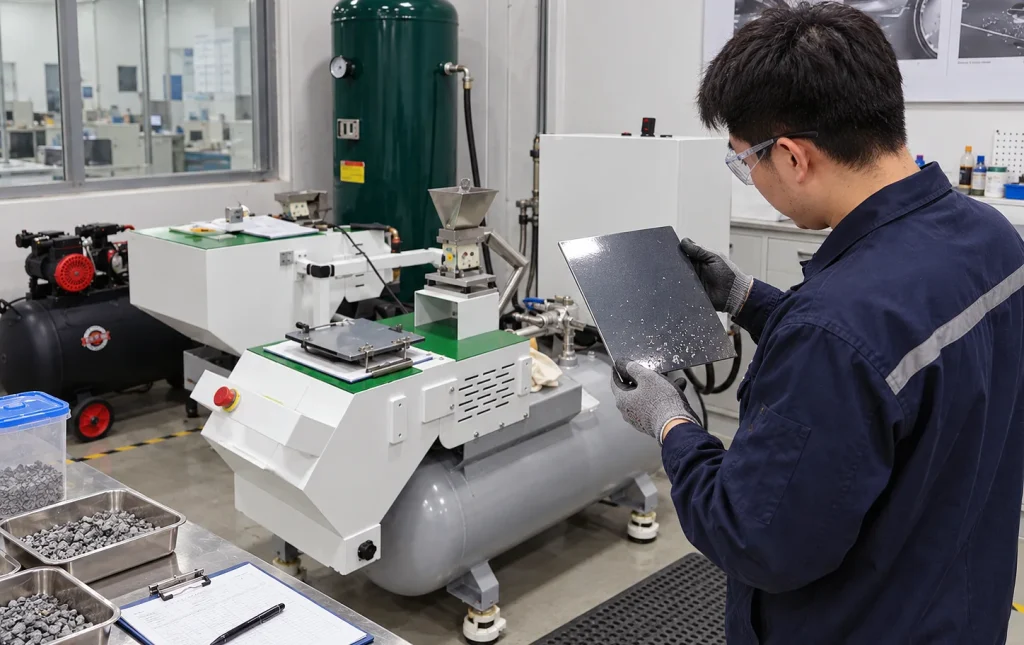
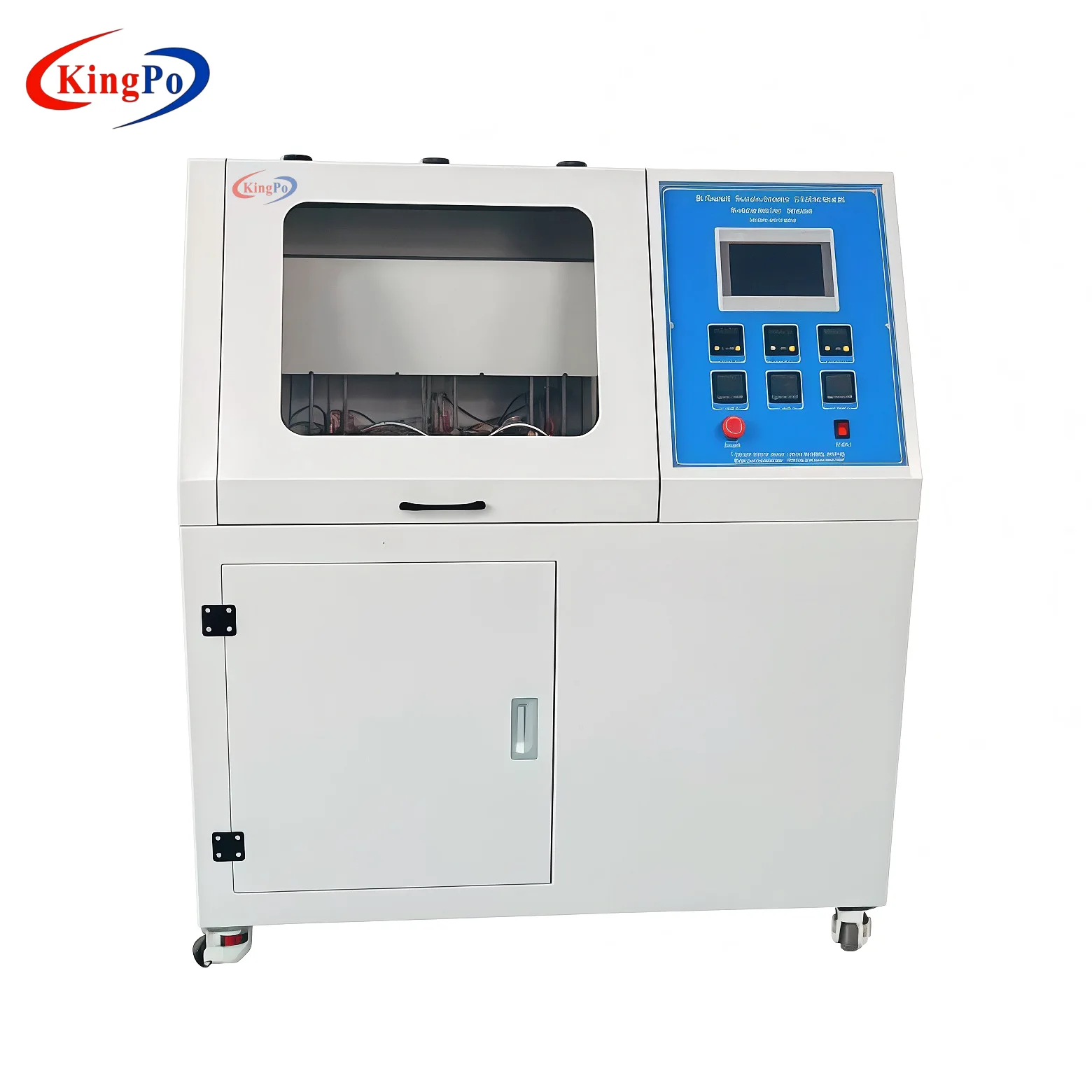
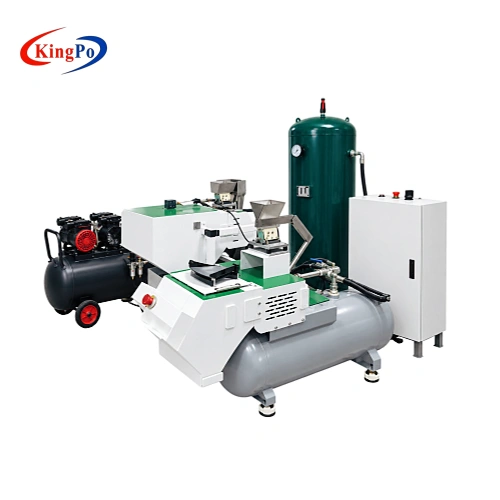
ISO 20567-1 Stone Chip Tester showing the media feeding mechanism and specimen testing assembly
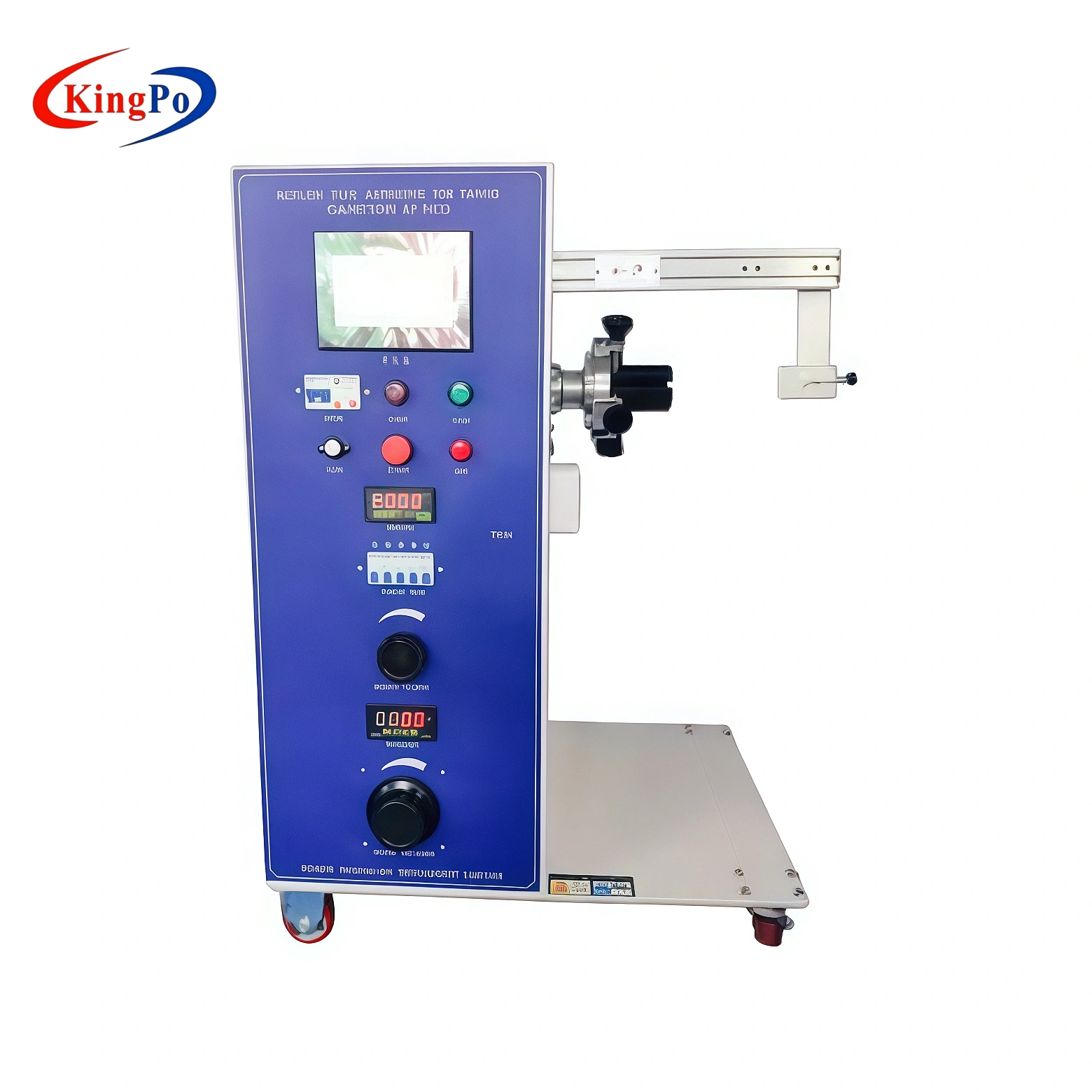
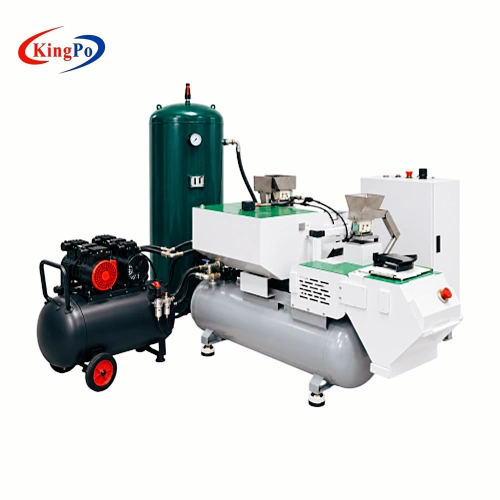
SAE J400 Gravelometer with compressed-air system and stone impact testing apparatus
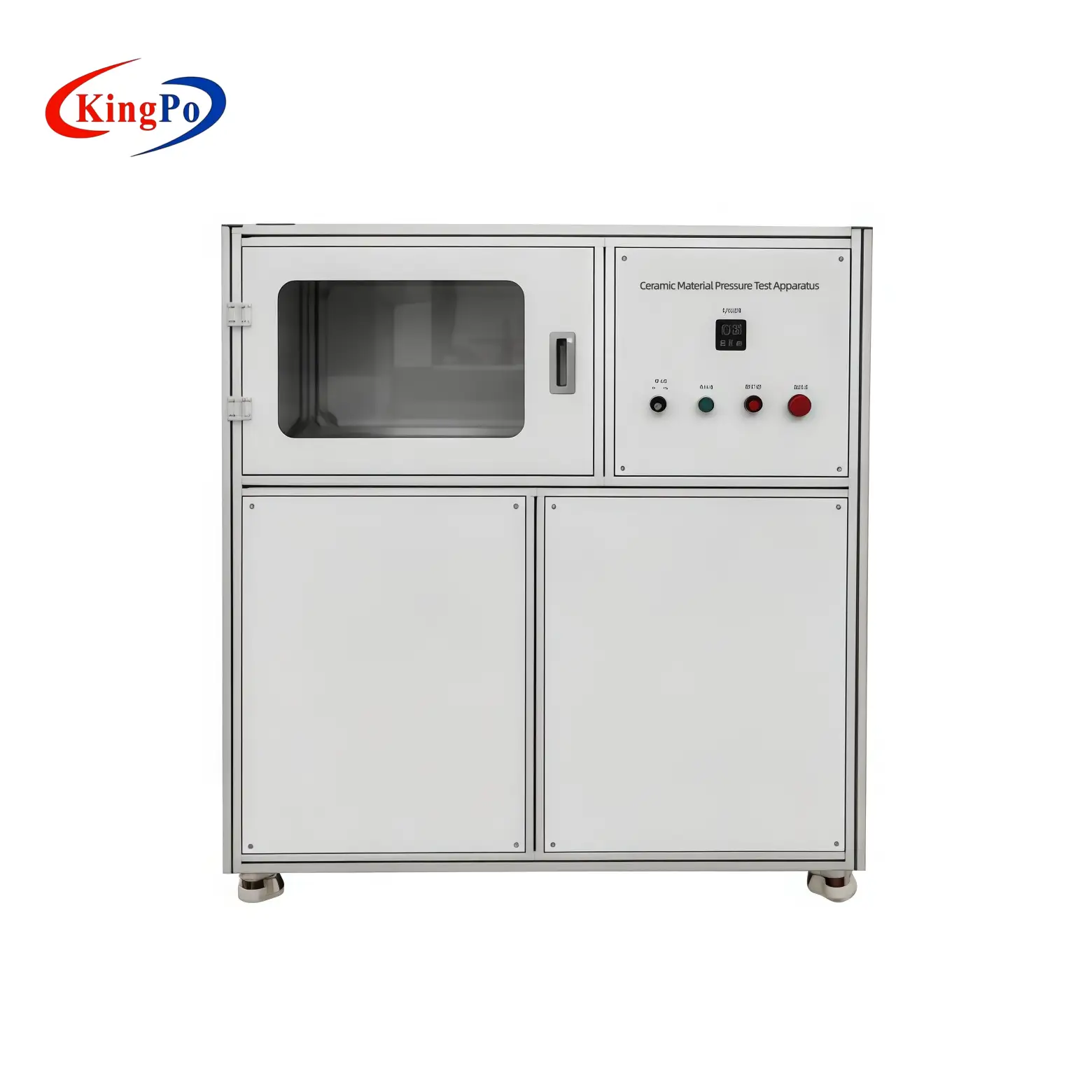
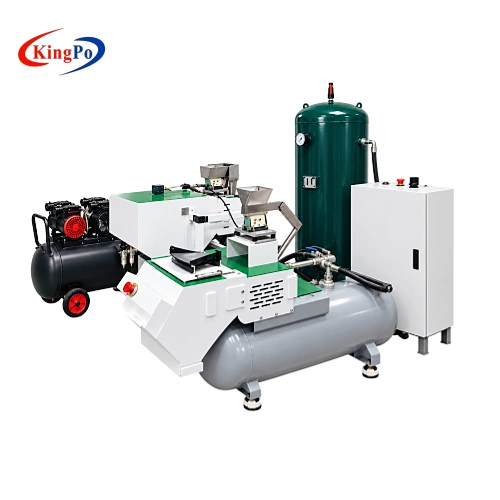
KINGPO Stone Chip Resistance Tester with pneumatic impact system for SAE J400 and ISO 20567-1 testing
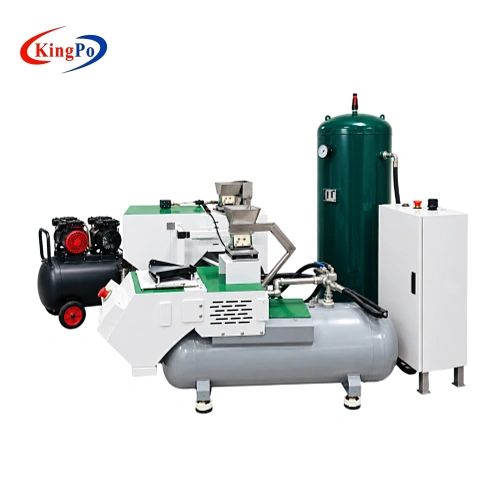
Automotive coating stone chip tester with gravel impact apparatus, air compressor and specimen fixture

Stone Chip Resistance Tester for SAE J400 and ISO 20567-1

The KINGPO Stone Chip Resistance Tester is a pneumatic impact test system for evaluating the resistance of automotive paints and protective coatings to damage caused by gravel or other impact media. The system supports different test arrangements for SAE J400 gravel-impact testing and ISO 20567-1 multi-impact testing, with adjustable air pressure, test duration, projectile feed rate and specimen orientation.

  • Product Type: Stone Chip Resistance Tester / Gravelometer
  • Primary Use: Evaluation of coating resistance to gravel and multi-impact stone-chip damage
  • Primary Standards: SAE J400, ISO 20567-1
  • Related Method: ASTM D3170/D3170M
  • Pressure Range: 0–0.6 MPa, adjustable
  • Test Time: 5–10 s, adjustable
  • Impact Media: Gravel and chilled-iron grit, depending on test method
  • Media Feeding: Automatic, adjustable feed rate
  • Specimen Capacity: Four small-specimen positions; larger parts can be accommodated after removing the small-specimen fixture
  • Typical Users: Automotive OEMs, paint and coating laboratories, component suppliers and third-party testing organizations

Stone Chip Resistance Tester

Product Overview

Stone chips on vehicle surfaces are caused by gravel and other road debris striking painted or coated components at speed. Even relatively small impacts can produce coating detachment, expose the substrate or create damage that later becomes a starting point for corrosion.
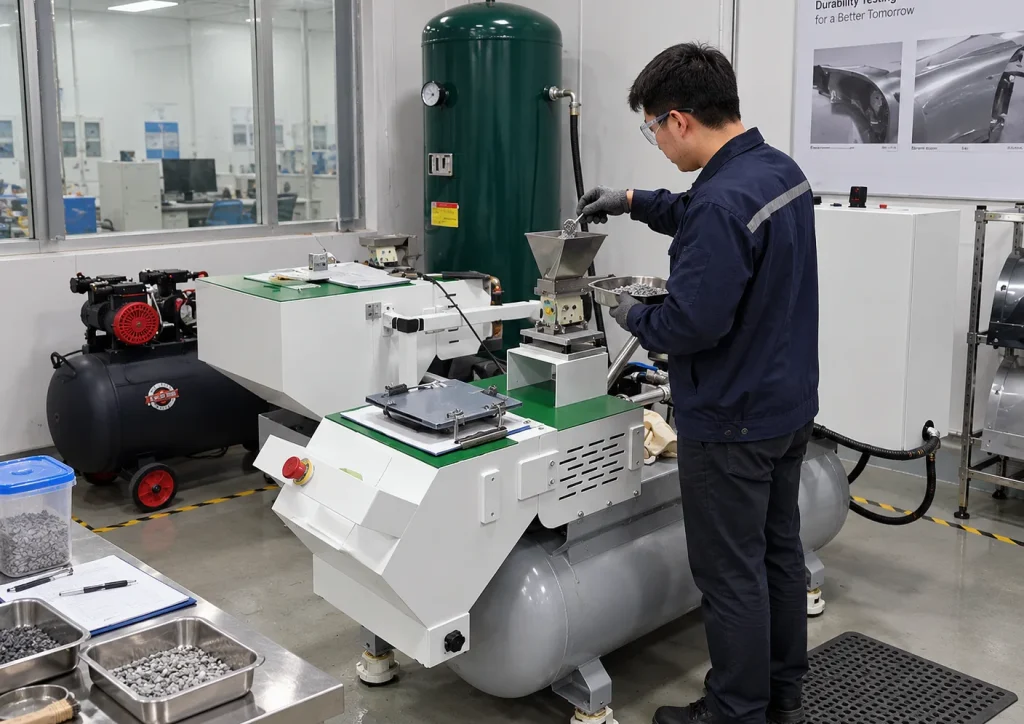
Laboratory technician loading stone impact media into the automatic feeder of a stone chip resistance testing system

The Stone Chip Resistance Tester reproduces this type of damage under controlled laboratory conditions by accelerating specified impact media toward a coated specimen using compressed air. Test pressure, impact medium, acceleration tube, specimen angle and exposure conditions are selected according to the applicable test method.

SAE J400 evaluates the resistance of automotive surface coatings to chipping caused by gravel impact, while ISO 20567-1 uses chilled-iron grit to simulate repeated small-stone impacts on automobile finishes and other coatings.

The KINGPO system is designed around these different test configurations rather than treating all stone-chip methods as a single interchangeable procedure.

Technical Specifications

Parameter Specification
Pressure Range 0–0.6 MPa, adjustable
Specified Working Points Includes 0.2 MPa and 0.483 ± 0.021 MPa
Test Time 5–10 s, adjustable
SAE J400 Acceleration Tube ID 52.6 ± 0.75 mm
Alternative / ISO-Type Tube ID 30 ± 0.2 mm
SAE Test Angles 90° and 45°
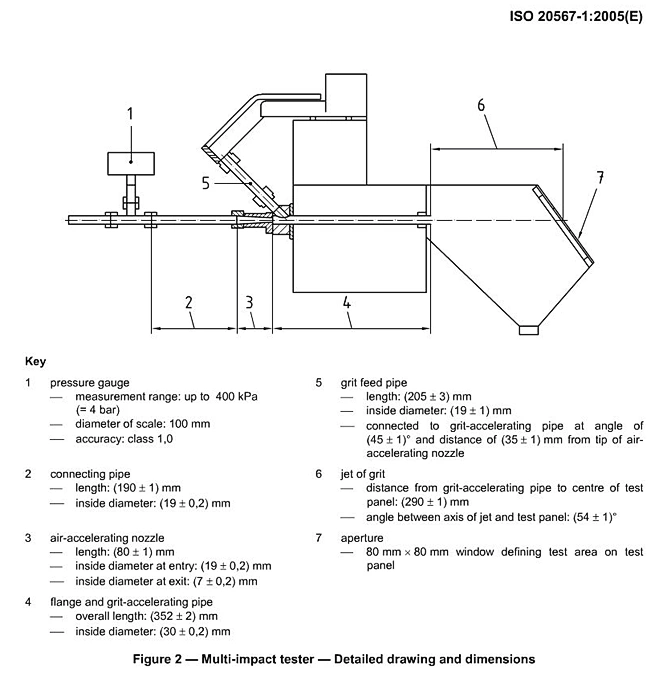
Alternative Test Angles 90° and 54°
Gravel Size 9.5–15.8 mm
Chilled-Iron Grit Size 3.55–5 mm
Media Feeding Automatic
Feed Rate Adjustable
Small-Specimen Positions 4
Small-Specimen Capacity Up to 250 × 250 × 50 mm
Large-Sample Arrangement Small-specimen fixture can be removed
Control Touchscreen
Equipment Structure Open configuration with tester and specimen area separated
Protection Leakage protection and load short-circuit protection
Power supply note:
The supplied document contains conflicting 220 V and 380 V power information. The final electrical configuration should therefore be confirmed according to the selected compressor and destination-country supply before quotation.

SAE J400 and ISO 20567-1 Test Configurations

Although both methods evaluate stone-chip resistance, their test arrangements are not identical.

Item SAE J400 ISO-Type Configuration
Impact Media Gravel Chilled-iron grit
Media Size 9.5–15.8 mm 3.55–5 mm
Tube ID 52.6 ± 0.75 mm 30 ± 0.2 mm
Test Angles 90° / 45° 90° / 54°

SAE J400 Gravel Impact Testing

  • SAE J400 gravelometer schematic showing gravel inlet, compressed-air supply, acceleration tube and coated test panel

SAE J400 is a laboratory procedure for evaluating the resistance of surface coatings to chipping by gravel impact. The method is intended primarily for automotive coatings on flat panels, although other finished parts and materials may also be evaluated when the limitations of the method are considered.

The supplied equipment specification identifies a working pressure of 0.483 ± 0.021 MPa within the available pressure range.

ISO 20567-1 Multi-Impact Testing

ISO 20567-1:2017 specifies multiple methods for evaluating the resistance of automobile finishes and other coatings to chilled-iron grit projected onto the test surface to simulate small-stone impact.

Because projectile material, tube geometry, pressure and specimen position vary between test methods, the required standard and edition should be confirmed before quotation.

What the Stone Chip Test Evaluates
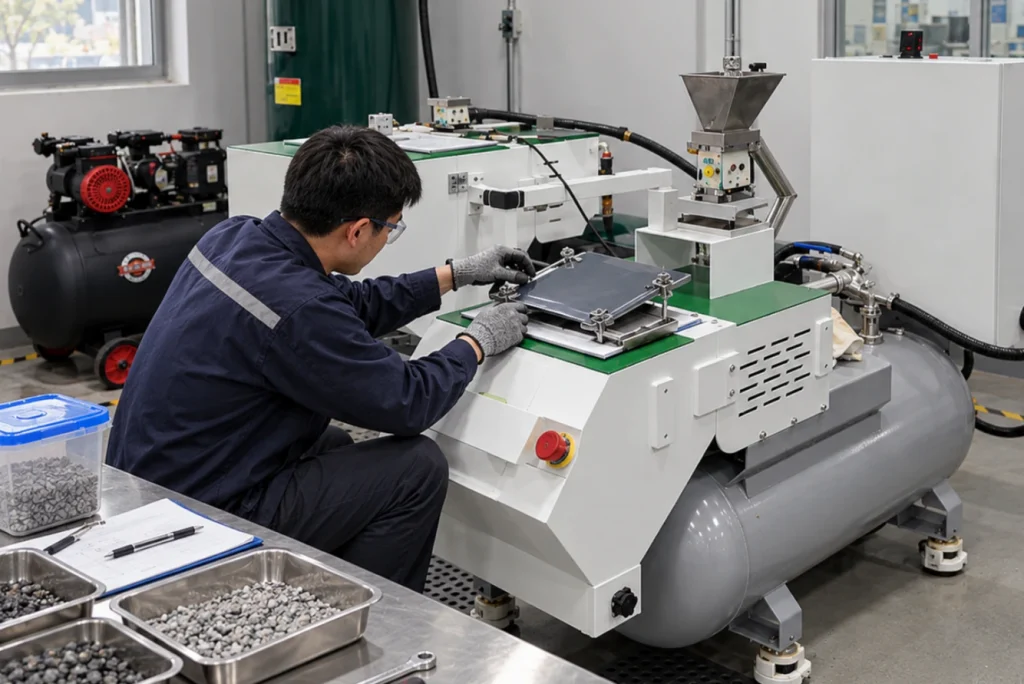
Technician positioning a coated metal specimen in the mounting fixture of a stone chip resistance tester

The test is intended to evaluate how well a paint or coating system resists localized impact damage.

  • Coating chips or flaking after impact
  • Number and distribution of damaged areas
  • Exposed substrate
  • Coating detachment around impact points
  • Relative stone-chip resistance between coating systems

The equipment produces the controlled impact exposure. Final coating assessment should be carried out according to the rating or evaluation procedure required by the selected standard.

This is different from abrasion testing, scratch testing or single-impact mechanical testing. The test is specifically intended to reproduce repeated damage caused by stones or other projectiles striking the coating surface.

Test Principle

The tester uses compressed air to accelerate a controlled quantity of impact media toward the coated specimen.

01
Select the acceleration tube and specimen arrangement for the required test method.
02
Load the specified gravel or chilled-iron grit into the feeding system.
03
Install the coated panel or finished component at the required impact angle.
04
Set the air pressure, test duration and media feed rate.
05
Start the automatic feeding system.
06
Compressed air accelerates the impact media through the tube toward the specimen.
07
Remove and evaluate the specimen using the rating procedure specified by the applicable standard.

Test Media and Pneumatic Delivery

The impact medium is a critical part of the selected stone-chip procedure.

Gravel

Larger gravel media are used for the SAE-type gravel impact configuration. The supplied equipment specification specifies 9.5–15.8 mm gravel.

Chilled-Iron Grit

The multi-impact configuration uses smaller 3.55–5 mm chilled-iron grit. ISO 20567-1 uses chilled-iron grit to reproduce repeated small-stone impact.

An automatic feeder introduces the selected medium into the air stream at an adjustable feed rate. The exact medium type, quantity and conditioning procedure should follow the applicable standard or OEM test method.

Sample Mounting and Impact Angle

Laboratory engineer inspecting stone-chip damage on a dark automotive coating test panel after impact testing

Different automotive coating methods require different relationships between the acceleration tube and the test surface.

  • 90° impact
  • 45° SAE-type arrangement
  • 54° alternative arrangement

For laboratory panels, the standard small-specimen fixture provides four specimen positions and accommodates samples up to 250 × 250 × 50 mm.

For larger finished components, the small-specimen fixture can be removed. The suitability of a finished part should be confirmed according to its dimensions, geometry and applicable test method.

Typical Automotive Applications

The Stone Chip Resistance Tester supports coating development, component validation and quality-control testing for automotive painted and coated surfaces.

Body & Panel Coatings
Automotive body paint systems
Coated steel and aluminium panels
Rocker-panel and wheel-arch coatings
Exterior Components
Bumper coatings
Exterior plastic trim
Plated or coated automotive components
R&D & OEM Validation
Coating development panels
OEM paint-system qualification specimens
Comparative coating performance testing

Compliance & Regulatory Assurance

The Stone Chip Resistance Tester is designed for coating chip-resistance testing according to SAE J400, ISO 20567-1 and ASTM D3170, with additional configurations for selected automotive OEM test methods. The system provides adjustable pressure, impact media, acceleration tubes and specimen angles to match different test procedures.

Because test media, pressure, tube dimensions and specimen arrangement can vary by standard and revision, the applicable method and edition should be confirmed before quotation to ensure the correct test configuration.

Technical Inquiry & Expert Support

To confirm the appropriate configuration for your stone-chip test, please provide the applicable standard, specimen details and required test method with your inquiry.

Standard & Test Method
Specify SAE J400, ISO 20567-1,
ASTM D3170 or the applicable automotive OEM method and revision.
Specimen Information
Provide the sample type, dimensions and whether the test will be performed on
flat panels or finished automotive components.
Impact Configuration
Confirm the required impact media, test angle and whether
gravel or chilled-iron grit testing is required.
Tube and media configurations vary by test method.
Laboratory Utilities
Advise the available compressed-air supply and local electrical supply
so the compressor and pneumatic configuration can be confirmed before quotation.

Providing the test method and specimen information helps us confirm the correct acceleration tube, impact media, fixture and pneumatic configuration before quotation.

Configuration Notes for Different Test Methods

Pressure range alone does not define the correct stone-chip test configuration.

SAE, ISO and automotive OEM methods may differ in impact media, pneumatic settings, specimen arrangement and evaluation procedures.

Impact Media Impact medium · Projectile size · Media quantity
Test Configuration Acceleration tube dimensions · Compressed-air pressure · Impact angle
Specimen & Evaluation Specimen position · Exposure time · Post-test evaluation procedure

Laboratories testing to SAE J400, ISO 20567-1 or automotive OEM methods may require different equipment configurations. KINGPO can assist with selecting the appropriate setup based on the specified test method and revision.

Stone Chip Resistance Tester

FAQ

Can the same tester be used for both SAE J400 and ISO 20567-1?
Yes. The supplied system includes different tube, impact-media and specimen-angle configurations for SAE-type and ISO/VDA-type testing. The exact setup should be selected according to the test method being used.
Do I need to change the acceleration tube when switching between test methods?
Yes. The supplied specification lists a 52.6 ± 0.75 mm tube for SAE J400 and a 30 ± 0.2 mm tube for the alternative VDA-type configuration. Stone Chipping Test Apparatus
What impact media can be used with the tester?
The equipment specification includes 9.5–15.8 mm gravel and 3.55–5 mm chilled-iron grit. The correct medium depends on the applicable test standard or OEM procedure.
Is the impact pressure adjustable?
Yes. The pressure range is 0–0.6 MPa adjustable. The supplied specification also identifies working conditions including 0.2 MPa and 0.483 ± 0.021 MPa. Stone Chipping Test Apparatus
Is the gravel or grit fed manually?
No. The system uses automatic media feeding, and the feed rate can be adjusted according to the required test setup.
What size samples can I install?
The small-sample fixture provides four specimen positions and accommodates samples up to 250 × 250 × 50 mm according to the supplied specification.
Can I test a larger automotive component instead of a flat panel?
The small-sample fixture can be removed to allow installation of larger samples. Because the current specification does not state a maximum large-part size, please provide the component dimensions before quotation so the installation arrangement can be confirmed.
Can the specimen angle be changed for different test methods?
Yes. The supplied specification lists 90° and 45° for the SAE configuration and 90° and 54° for the VDA-type configuration.
Is an air compressor included with the system?
The supplied technical specification includes one oil-free air compressor together with air-storage equipment. The exact compressor and receiver configuration should be confirmed in the quotation because the current source lists both 150 L and 600 L air-volume values without fully defining each vessel. Stone Chipping Test Apparatus
Can the tester be configured for GMW14700, GM9508P or FLTM BI 157-06?
These methods are listed in the supplied product documentation, but the exact standard revision and required test configuration should be provided before ordering. Different OEM procedures may require different media, pressure, tube or specimen arrangements.

Related Products

Related News

KingPo Eurofins IEC 60335 Test Equipment Delivered to Finland Espoo, Finland — Jun 2023 —A complete set of high-precision IEC 60335 […]

KingPo HCT IEC 60335 Test Equipment Delivered to Korea Seoul, Korea — Jun 2021 — High-precision KingPo HCT IEC 60335 test […]

KingPo Delivers IEC 60335 Test Equipment to Intertek Hong Kong and Korea   Hong Kong & Seoul, March 2023 — KingPo […]

KingPo UL Vietnam IEC 60335 Test Equipment Delivered for IEC 62368-1 Compliance   Hai Duong Province, Vietnam — KingPo is […]

IEC 60335 Safety Standards set strict rules for household appliances, protecting users from electric shock, fire, and mechanical hazards at home.
Water Heater Performance Tester checks IEC 60335 compliance by measuring safety, performance, and reliability for electric storage water heaters.

Essential equipment for residual voltage testing under IEC 60601-1, IEC 60335-1, IEC 61010-1, IEC 62368-1 and similar safety standards. 1. […]

As service robots (Service Robots) are increasingly deployed in commercial, public, and healthcare environments, human-robot interaction safety, mobility-related hazards, and […]

Scroll to Top

Get A Free Quote Now !

Contact Form
If you have any questions, please do not hesitate to contact us.