Thermal Evaluation of Implantable Wireless Energy Transmission Systems
A Transcutaneous Energy Transmission System (TETS) transfers electrical energy from an external transmitter to an implanted device across intact skin, without requiring wires or tubes to penetrate the skin. This technology is used in certain active implantable medical devices, including circulatory support systems.
During TET operation, energy losses in the transmitting and receiving components may result in local heating. Temperature changes around these components and their surrounding test environment are therefore important considerations when evaluating the thermal performance of a TET system.
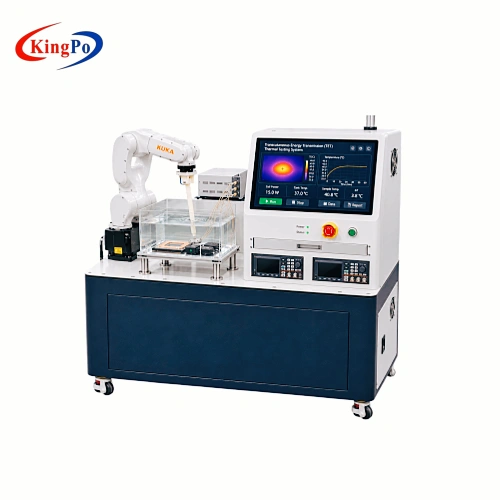
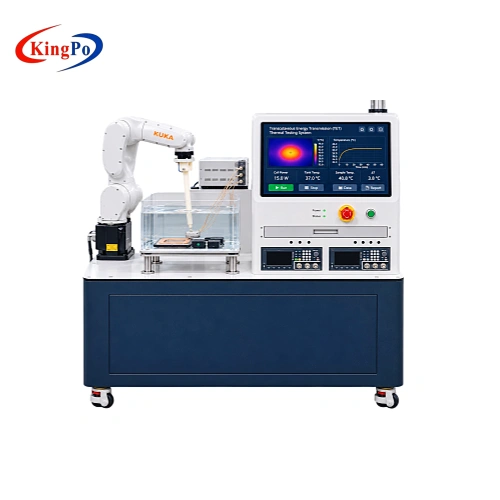
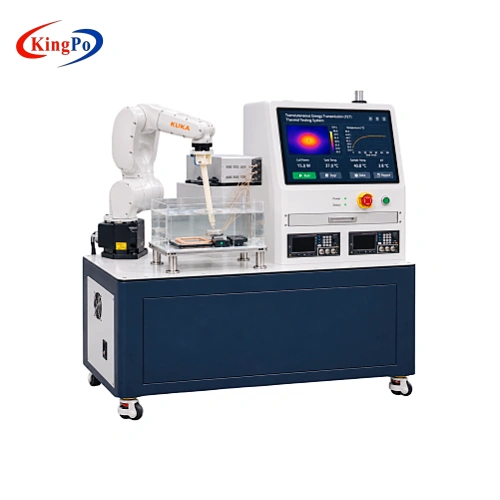
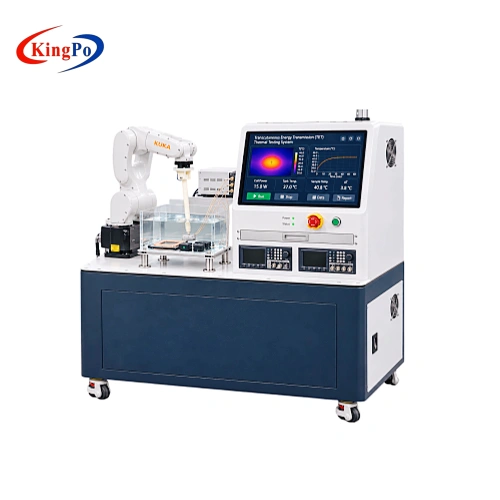
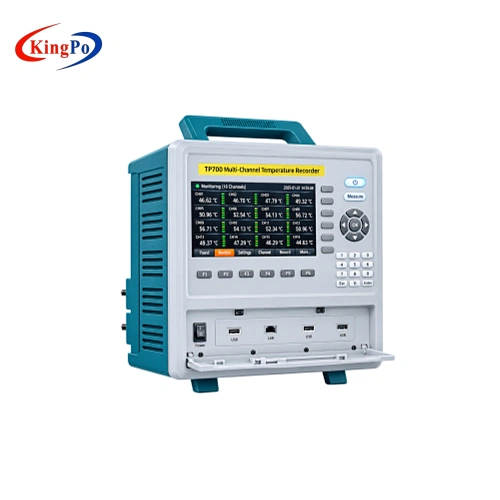
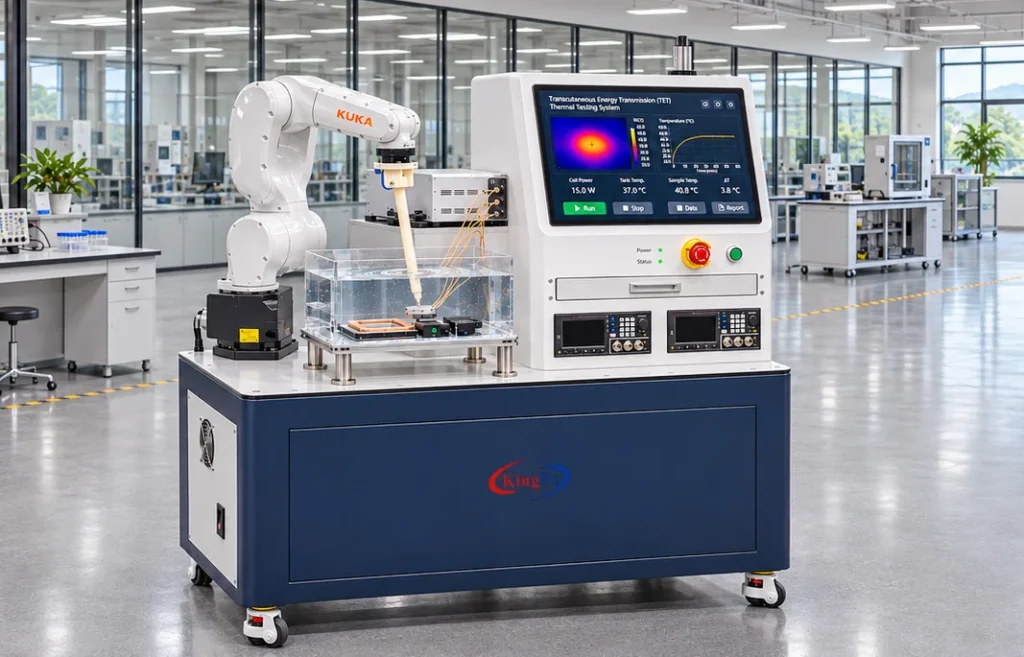
The KingPo KP3100 TET Thermal Testing System provides an integrated laboratory platform for this evaluation. A KUKA KR 4 R500-3 six-axis robotic arm establishes the required mechanical positioning of the test assembly, while a TP700 multi-channel temperature acquisition instrument records temperature changes at designated measurement locations.
PT1000 or NTC temperature probes can be arranged at selected positions to monitor temperature variations during TET operation. The integrated water bath provides a controlled test environment, while customized fixtures made from low-dielectric-constant materials support sample positioning.
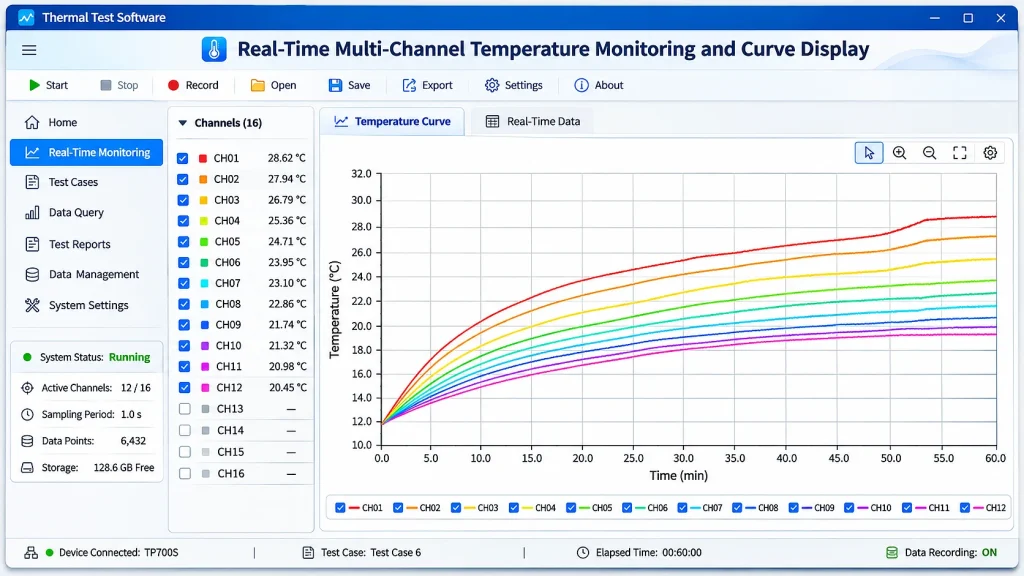
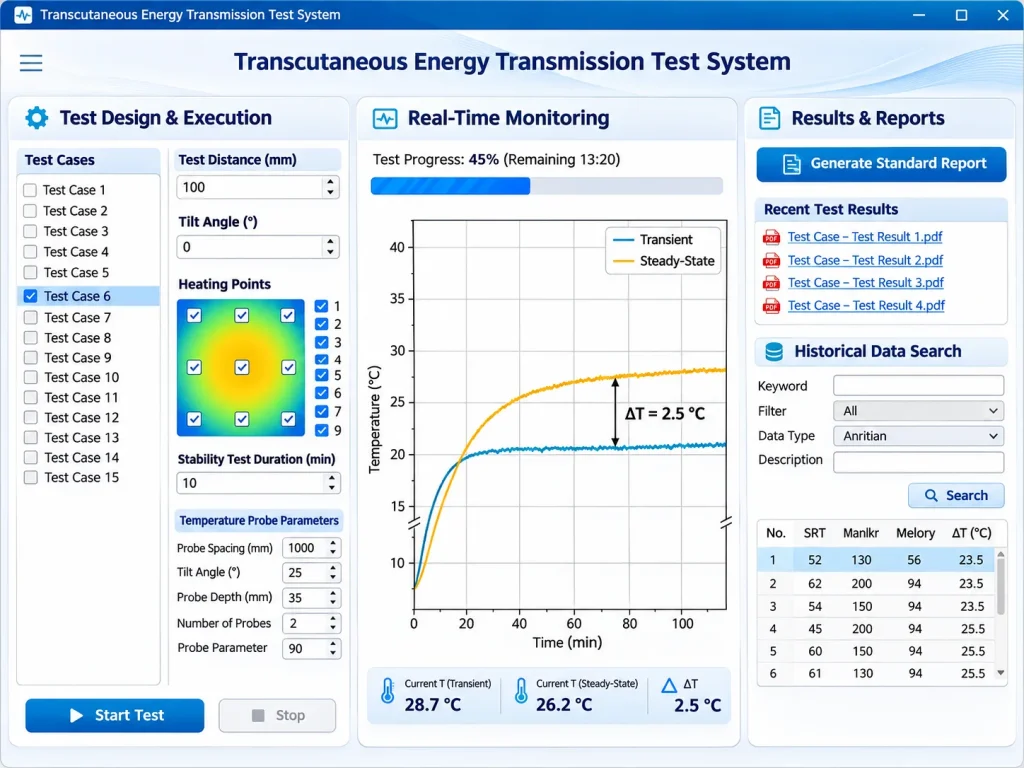
The dedicated software supports test case configuration, temperature data acquisition, transient and steady-state curve display, temperature-rise calculation (ΔT), historical data review and test report generation.
The system is primarily intended for TET thermal evaluation, engineering research, product development and design verification associated with active implantable circulatory support devices. It focuses on local temperature measurement and does not replace the other electrical and functional measurements required for a complete TET performance evaluation.
Technical Specifications
The KP3100 integrates a six-axis robotic arm, multi-channel temperature acquisition equipment, a temperature-controlled water bath, customized test fixtures and dedicated software.
Robotic Positioning System
| Parameter | Specification |
|---|---|
| Robot Manufacturer | KUKA |
| Robot Model | KR 4 R500-3 |
| Robot Configuration | Six-axis articulated robot |
| Degrees of Freedom | 6 |
| Rated Payload | 4 kg |
| Arm Reach | 500 mm |
| Repeatability | ±0.02 mm |
| Protection Rating | IP54 |
| Robot Body Weight | 25 kg |
Temperature Measurement System
| Parameter | Specification |
|---|---|
| Temperature Acquisition Instrument | TP700 Multi-Channel Temperature Acquisition Instrument |
| Instrument Channel Capacity | 1–200 channels |
| Channel Refresh Interval | 1 s |
| Temperature Sensor Types | PT1000 / NTC |
| Sensor Connection | Three-wire or four-wire configuration |
| Specified Temperature Accuracy | ±0.3°C |
Water Bath and Test Fixtures
| Parameter | Specification |
|---|---|
| Water Bath | Integrated temperature-controlled water bath |
| Temperature Stability | ±1°C |
| Test Fixtures | Customized fixtures |
| Fixture Material | Low-dielectric-constant material |
Test Software and Computer Requirements
| Parameter | Specification |
|---|---|
| Test Software | Dedicated TET thermal testing software |
| Test Case Configuration | Customizable according to test requirements |
| Data Processing | Real-time monitoring, temperature curves and ΔT calculation |
| Report Generation | Test report generation based on configured test cases |
| Operating System | Windows 10 / 11 |
| Processor | Intel Core i5 or higher |
| RAM | 8 GB or higher |
| Storage | 100 GB or higher |
| Network Interface | Gigabit Ethernet |
Configuration Notes
The TP700 instrument specification supports 1–200 channels. The actual installed acquisition channels and temperature probes depend on the ordered configuration. The stated ±0.3°C temperature accuracy should be confirmed against the selected sensor and complete measurement chain.
System Components and Operation
The KP3100 combines mechanical positioning, temperature measurement, sample support and data processing in one laboratory platform. Each subsystem performs a specific function during TET thermal evaluation.
| System Component | Main Function | Role in Testing |
|---|---|---|
| KUKA Six-Axis Robot | Provides multi-axis mechanical positioning. | Establishes the required DUT or test-assembly position within the configured working area. |
| Temperature-Controlled Water Bath | Provides a controlled thermal environment for sample placement. | Helps maintain the specified test environment during temperature-rise evaluation. |
| Customized Test Fixtures | Secure and position the DUT and related components. | Provide mechanical support while considering the dielectric properties of fixture materials. |
| PT1000 / NTC Probes | Measure temperature at selected locations. | Monitor local temperature variations around designated test positions. |
| TP700 Acquisition Instrument | Collect multi-channel temperature signals. | Transfers temperature measurement data to the test software for display and analysis. |
| Test Software and Computer | Manage test cases and thermal measurement data. | Displays temperature curves, calculates ΔT, stores historical records and generates reports. |
System Operation
The DUT and its TET components are installed in customized fixtures and positioned within the test environment. The robotic arm establishes the required mechanical arrangement, while temperature probes are placed at designated measurement locations.
During operation of the TET system under test, the TP700 acquisition instrument collects temperature data from the configured channels. The dedicated software processes the recorded data, displays temperature variations over time and calculates temperature rise for subsequent engineering review.
The TET transmitter, implanted receiver and their operating power or control equipment are components of the DUT test setup. Their inclusion in the equipment supply scope should be confirmed separately.
Key Features
Six-Axis Robotic Positioning
The KUKA KR 4 R500-3 provides six-axis positioning for the TET test assembly. With a rated payload of 4 kg, an arm reach of 500 mm and specified repeatability of ±0.02 mm, it supports controlled positioning within the robot’s working area.
Multi-Point Temperature Measurement
The TP700 acquisition instrument supports PT1000 and NTC temperature probes with three-wire or four-wire connections. Multiple measurement points allow temperature changes to be monitored at selected locations around the TET components.
Customized Test Fixtures
Low-dielectric-constant fixture materials are used for DUT support and positioning. Fixture dimensions and mounting arrangements can be designed according to the transmitter, receiver and measurement requirements.
Temperature-Controlled Water Bath
The integrated water bath provides a controlled thermal environment for sample placement, with a specified temperature stability of ±1°C. The operating temperature range and test medium are determined by the test requirements.
Test Software and Data Analysis
The software supports test configuration, real-time temperature monitoring, temperature curve display, ΔT calculation, historical data review and test report generation.
Software Functions
The dedicated software provides a structured interface for configuring thermal test cases and reviewing temperature measurement results.
| Software Function | Description |
|---|---|
| Test Case Configuration | Create and configure test cases according to the DUT and selected thermal evaluation procedure. |
| Position Parameter Settings | Provides test distance and tilt-angle setting fields for defining the test arrangement. |
| Temperature Measurement Setup | Configure temperature measurement points and related probe parameters for the test case. |
| Real-Time Monitoring | Display acquired temperature data during test operation for monitoring and review. |
| Temperature Curve Analysis | Display transient and steady-state temperature curves to show temperature changes over time. |
| Temperature Rise Calculation | Calculate temperature rise (ΔT) using the configured reference and measurement data. |
| Historical Data Review | Search and review previously recorded test results. |
| Test Report Generation | Generate test reports based on configured test cases and customer requirements. |
Test Method and Workflow
Test Principle
The system evaluates the thermal behavior of a TET assembly by monitoring temperature changes at designated locations while the DUT operates under defined test conditions.
Temperature probes collect data from selected measurement positions. The TP700 acquisition instrument records the temperature signals, and the dedicated software displays the temperature response over time. Temperature rise (ΔT) is then calculated using the configured reference temperature and measurement data.
This approach enables engineers to review both the transient heating process and the subsequent steady-state temperature behavior of the TET assembly.
Typical Test Workflow
- Test Requirement Definition
Determine the applicable test protocol, DUT configuration, operating conditions, required measurement positions and temperature evaluation criteria.
- DUT Installation
Install the external transmitter, implanted receiver or relevant TET test components in the customized fixtures according to the planned test arrangement.
- Robotic Positioning
Use the KUKA six-axis robotic arm to establish the required mechanical position. Set the relevant test distance and tilt angle according to the test plan and confirmed system configuration.
- Temperature Probe Arrangement
Install PT1000 or NTC probes at the designated measurement locations and connect them to the configured TP700 acquisition channels.
- Test Environment Preparation
Prepare the water bath and establish the required initial environmental conditions in accordance with the selected test procedure.
- TET Operation and Data Acquisition
Operate the DUT using its specified TET power and control equipment. The system records temperature changes throughout the defined test period.
- Temperature Analysis
Review transient and steady-state temperature curves, calculate ΔT and assess the results against the acceptance criteria defined in the applicable test protocol.
- Data Storage and Reporting
Save the measurement data, review historical results and generate the corresponding test report.
Test Method Note
The actual test positions, sensor locations, test duration, DUT operating modes and acceptance criteria must be established by the applicable standard, device specifications and test protocol. Normal-operation or fault-condition testing must be configured through the DUT’s own operating setup where required.
Applicable Standards
ISO 14708-5:2020 – Circulatory Support Devices
Implants for surgery – Active implantable medical devices – Part 5: Circulatory support devices.
ISO 14708-5:2020 specifies requirements for the safety and performance of active implantable circulatory support devices, including ventricular assist devices (VADs), total artificial hearts (TAHs) and biventricular assist devices (biVADs).
This clause addresses TET systems that transfer electrical energy across intact skin to an implanted system without penetrating wires or tubes. It identifies technical characteristics that need to be specified and verified through appropriate analysis and testing.
Relevant TET evaluation parameters include:
- Input power range
- Output power range
- Maximum power range
- Energy transfer efficiency
- Local temperature rise
- Operational voltage range
The clause also addresses other TET-related performance and safety considerations. The KP3100 is specifically configured to support local temperature-rise evaluation through robotic positioning and multi-channel temperature measurement.
ISO 14708-1:2014 – General Requirements
Implants for surgery – Active implantable medical devices – Part 1: General requirements for safety, marking and for information to be provided by the manufacturer.
ISO 14708-1 establishes general safety requirements for active implantable medical devices. It provides the broader evaluation framework to be considered together with the particular requirements of ISO 14708-5 for circulatory support devices.
YY/T 0989.5-2022 – Chinese Medical Industry Standard
Implants for surgery – Active implantable medical devices – Part 5: Circulatory support devices.
This Chinese medical industry standard covers active implantable circulatory support devices, including ventricular assist devices, total artificial hearts and biventricular assist devices. It is relevant to TET-related thermal evaluation where the applicable Chinese test requirements and device-specific protocol call for such assessment.
Applications
VAD and LVAD Development
Thermal evaluation of transcutaneous energy transmission systems used in implantable ventricular assist devices, with temperature monitoring at designated locations during operation.
TET Subsystem Evaluation
Assessment of local temperature changes associated with external transmitters, implanted receivers and their relative positioning under defined operating conditions.
Medical Device Research and Testing
Support for thermal investigations, prototype evaluation and design verification in medical device R&D laboratories and third-party testing facilities.
Medical Device Manufacturing
Laboratory assessment of TET thermal performance during product development, engineering evaluation and design verification.
Application Note
For total artificial hearts (TAH), biventricular assist devices (biVAD) and other active implantable circulatory support devices, suitability depends on the use of a TET arrangement and compatibility with the configured test setup.