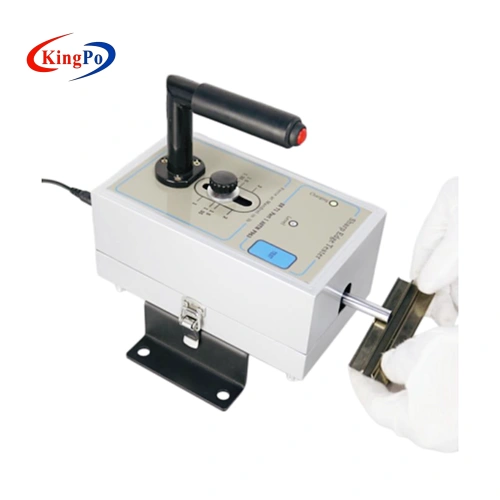
KINGPO Sharp Edge Tester for ISO 8124-1 robot safety testing with accessories
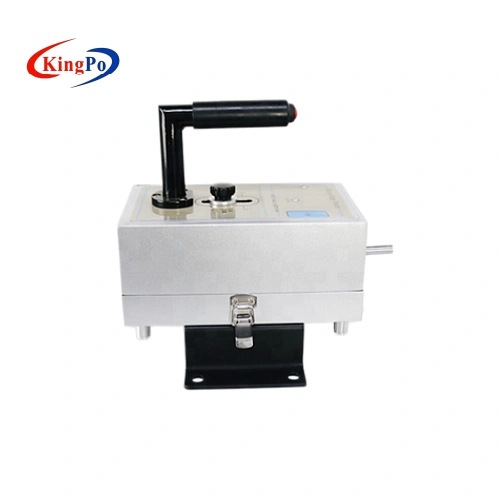
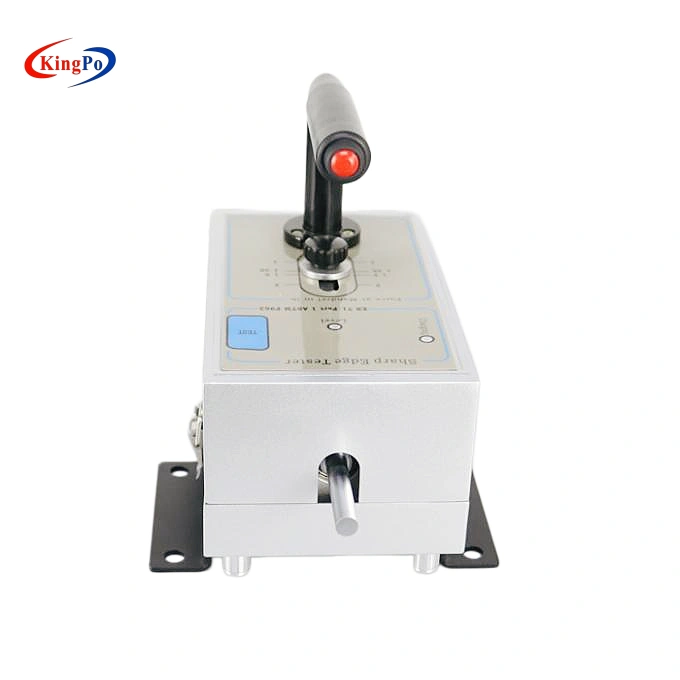
KINGPO Sharp Edge Tester front view for UL 3300 robot safety testing
KINGPO Sharp Edge Tester during UL 3300 robot safety edge testing
Front structure view of KINGPO Sharp Edge Tester for UL 3300 robot safety testing
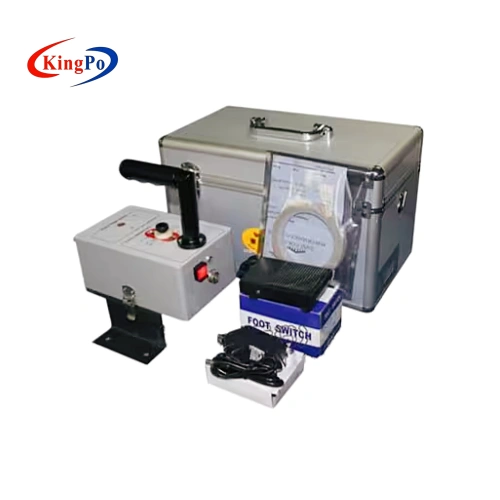
KINGPO Sharp Edge Tester for ISO 8124-1 robot safety testing with accessories
KINGPO Sharp Edge Tester front view for UL 3300 robot safety testing
KINGPO Sharp Edge Tester during UL 3300 robot safety edge testing
Front structure view of KINGPO Sharp Edge Tester for UL 3300 robot safety testing

ISO 8124-1 Sharp Edge Tester for Toy Safety Testing

The KINGPO Sharp Edge Tester is a compact laboratory instrument for evaluating accessible edges that may present a cutting or laceration hazard. It uses a rotating cylindrical mandrel covered with pressure-sensitive TFE tape to provide a controlled and repeatable sharp-edge assessment.

  • Primary Application: UL 3300 SCIEE robot sharp-edge evaluation
  • Related Public Test Method: 16 CFR 1500.49
  • Additional Referenced Application: ISO 8124-1 toy safety testing
  • Test Principle: Rotating cylindrical mandrel with pressure-sensitive TFE tape
  • Main Test Purpose: Evaluation of accessible edges for potential cutting hazards
  • Typical Test Objects: Robot enclosures, panels, brackets, structural parts and other accessible edges
  • Instrument Format: Portable electric tabletop tester
  • Configuration: Standard edition, applicable clause and required mandrel configuration should be confirmed before quotation

ISO 8124-1 Sharp Edge Tester for Toy Safety Testing

Product Overview

Sharp edges can become accessible during normal use, assembly or reasonably foreseeable abuse of a toy. A controlled sharp-edge test provides a repeatable method for determining whether an accessible edge presents an unacceptable cutting hazard under the applicable product-safety standard.

The KingPo Sharp Edge Tester applies a PTFE-tape-covered cylindrical mandrel to the edge under evaluation. The mandrel rotates through the prescribed test movement while the operator maintains the required contact condition. After testing, the PTFE tape is inspected according to the acceptance criteria of the applicable standard.

The tester incorporates force indication and external force adjustment, allowing the operator to establish the required test force before performing the test. The original KingPo product data also specify a 1.35 lb force verification device for checking and adjusting the force indication.

Standard Selection Note:
Although ISO 8124-1 is used as the primary product keyword and application standard on this page, the same general type of sharp-edge apparatus is referenced by several toy and consumer-product safety systems. The exact mandrel specification, tape requirement, test force and pass/fail criterion should therefore be checked against the controlled edition of the standard used for the test project.
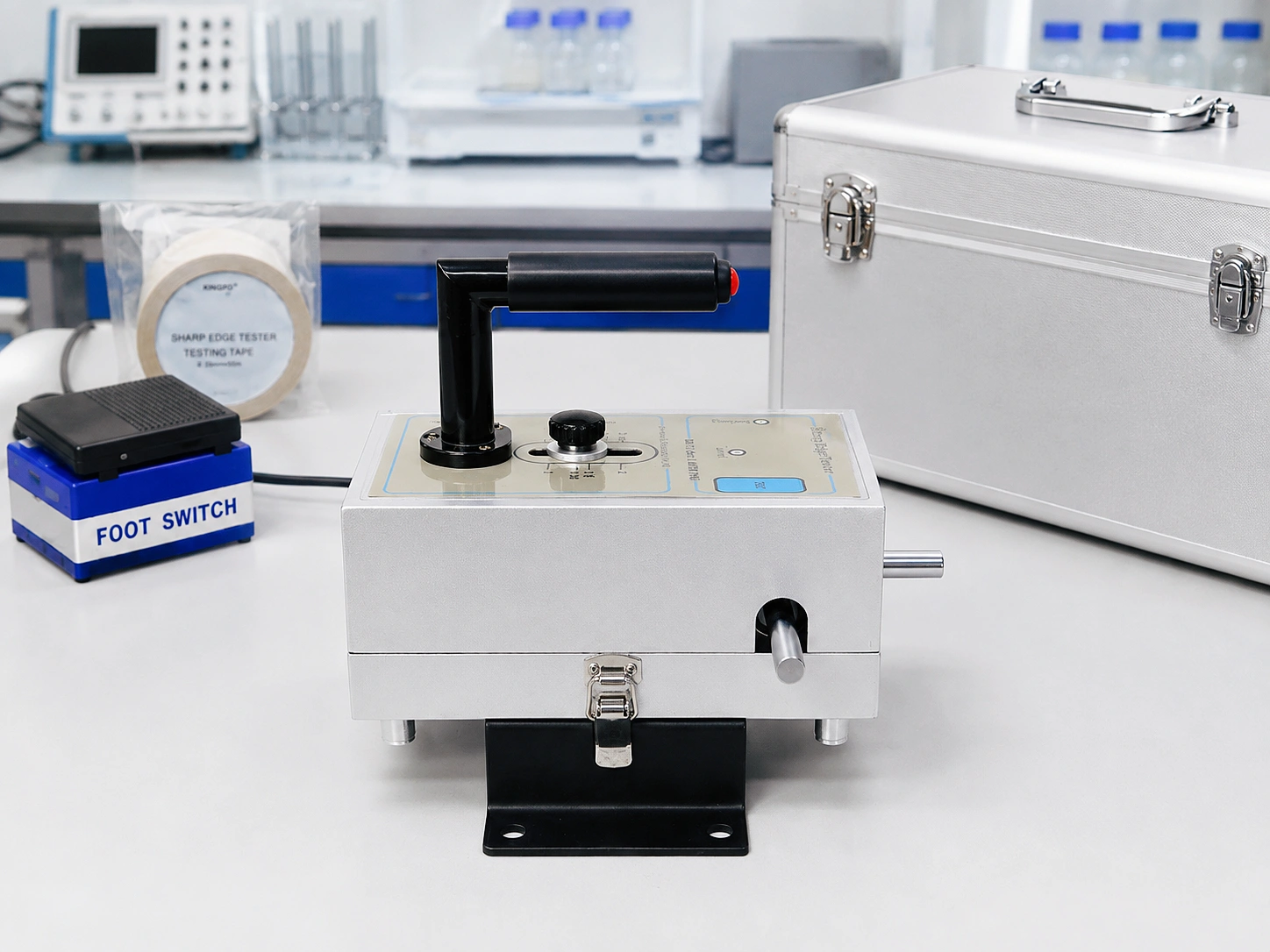
KINGPO Sharp Edge Tester front view for UL 3300 robot safety testing

What Does the Sharp Edge Tester Evaluate?


The tester is used to assess whether an accessible edge on a toy or applicable product can cut the specified test tape under controlled test conditions.

The test is particularly relevant to edges that can be contacted during:

01  Normal use of the product
02  Assembly or handling
03  Reasonably foreseeable abuse
04  Mechanical testing that exposes previously inaccessible edges
05  Inspection of metal or glass components where sharp-edge evaluation is required

For the U.S. regulatory method in 16 CFR 1500.49, the test specifically applies to accessible metal or glass edges on toys and other articles intended for children under eight years of age. The regulation evaluates whether such an edge presents a potential laceration or avulsion hazard.

Important:
The tester itself does not determine whether an edge is accessible. Accessibility must first be established according to the applicable product standard or regulation.

Technical Specifications

The specifications below separate KingPo product configuration from test parameters defined by the referenced 16 CFR method. This distinction is important when the tester is used for different standards.

Product Configuration

Item Specification
Product Name ISO 8124-1 Sharp Edge Tester
Brand KingPo
Product Type Rotating-mandrel sharp edge test equipment
Primary Application Toy and consumer-product sharp-edge testing
Force Indication Photoelectric indication
Force Adjustment External adjustment provided
Force Verification 1.35 lb verification device stated in original product configuration
Nominal Mandrel Diameter 9.53 mm; required tolerance should be confirmed against the applicable standard edition
Operation Handle switch / foot-switch operation
Dimensions 290 × 190 × 100 mm (L × W × H)
Weight Approx. 4 kg
Installation Portable benchtop use

Reference Test Parameters – 16 CFR 1500.49

Test Parameter Requirement
Normal Test Force 1.35 lb / 6.00 N
Mandrel Material Hardened steel
Mandrel Hardness ≥40 HRC
Tangential Velocity 1.00 ± 0.08 in/s during the center 75% of rotation
Test Medium Pressure-sensitive PTFE tape
PTFE Tape Width Not less than 6 mm
PTFE Tape Specification:
PTFE tape thickness is intentionally not stated as a universal product parameter. The original product page lists 0.066–0.099 mm, while the referenced 16 CFR 1500.49 method specifies a PTFE backing thickness of 0.066–0.089 mm. The required tape specification should therefore be selected according to the actual standard and edition used for testing.

Sharp Edge Test Principle

The sharp-edge test converts an otherwise subjective judgement about edge sharpness into a controlled mechanical test.

A cylindrical steel mandrel is wrapped around its full circumference with the specified pressure-sensitive PTFE tape. The taped mandrel is then pressed against the edge under evaluation and rotated under the conditions specified by the applicable test method.

If the edge cuts through the PTFE tape to the extent defined by the applicable standard, the edge is evaluated accordingly.

Reference Force
1.35 lb / 6.00 N
Mandrel Movement
1 Revolution
16 CFR Cut Criterion
≥ 1/2 in (13 mm)

For the reference method in 16 CFR 1500.49, the mandrel is applied with a normal force of 1.35 lb (6.00 N) and rotated through one complete revolution while linear movement along the edge is prevented. The regulation identifies an edge as sharp when the tape is completely cut through for a length of not less than 1/2 in (13 mm).

This criterion should not automatically be transferred to ISO, EN, ASTM, GB or UL testing without checking the applicable edition of those documents.

Reference Test Method – 16 CFR 1500.49

The 16 CFR method provides a particularly clear description of the operating principle of this type of sharp-edge tester.

01

Prepare the Mandrel

Wrap one layer of the specified PTFE tape around the full circumference of the mandrel without stretching the tape.

For the 16 CFR method, the tape ends may be butted or overlapped by no more than 0.10 in (2.5 mm).

02

Position the Test Edge

Secure the test sample so that the edge does not move during testing.

The mandrel axis is positioned at 90° ±5° to a straight test edge, or at the same angle to the tangent at the contact point of a curved edge.

03

Apply the Test Force

Apply the taped mandrel to the approximate center of the test edge using the prescribed force.

Under 16 CFR 1500.49, the normal force is 1.35 lb (6.00 N). If the full force causes the edge itself to bend, the regulation permits a reduced force.

04

Rotate the Mandrel

Maintain contact with the edge and rotate the mandrel through one complete revolution without allowing linear movement along the edge.

The specified tangential velocity is 1.00 ± 0.08 in/s (25.4 ± 2.0 mm/s) during the center 75% of the rotation, with smooth starting and stopping.

05

Inspect the PTFE Tape

Remove the tape carefully without enlarging a cut or turning a score mark into a cut.

For 16 CFR 1500.49, a complete cut through the tape measuring not less than 1/2 in (13 mm) identifies the tested edge as sharp.

For ISO 8124-1 or another standard:
use the procedure and evaluation criteria specified by that particular standard edition.

Test Mandrel and PTFE Tape

Hardened Steel Mandrel

The test mandrel is the mechanical interface between the sharp edge tester and the PTFE tape.

The KingPo product uses a hardened steel shaft. For 16 CFR testing, the mandrel test surface must be free from scratches, nicks and burrs, with a Rockwell C hardness of at least 40 HRC.

The original KingPo product data give a nominal cylindrical shaft diameter of 9.53 mm. Because mandrel dimensions can be standard- and edition-dependent, especially for UL 3300 projects, the applicable dimension and tolerance should be confirmed before quotation.

PTFE Test Tape

The test uses pressure-sensitive polytetrafluoroethylene (PTFE/TFE) tape wrapped around the rotating mandrel.

Under 16 CFR 1500.49:

  • Thickness: 0.0026–0.0035 in (0.066–0.089 mm)
  • Tape width: at least 1/4 in (6 mm)
  • Pressure-sensitive silicone adhesive
  • Tape temperature: 70–80 °F (21.1–26.6 °C)

Laboratories working to ISO 8124-1, ASTM F963, EN 71-1, GB 6675.2 or UL 3300 should verify the tape specification against the edition actually used for conformity assessment.

Applicable Standards and Test Scope
KINGPO UL 3300 Sharp Edge Tester complete laboratory kit with accessories

ISO 8124-1

ISO 8124-1:2022 – Safety of toys — Part 1: Safety aspects related to mechanical and physical properties is the primary standard associated with this product page.

The standard applies to toys intended for children from birth to 14 years and includes safety requirements related to structural characteristics such as small parts, sharp points and sharp edges.

The Sharp Edge Tester supports the laboratory evaluation of relevant accessible edges; it does not by itself cover all mechanical and physical tests required by ISO 8124-1.

16 CFR 1500.49

16 CFR 1500.49 defines a detailed sharp metal or glass edge test for toys and other articles intended for use by children under eight years old.

1.35 lb / 6.00 N force
Rotating cylindrical mandrel
PTFE tape
Mandrel velocity
Mandrel material & hardness
Test orientation
Tape inspection
Sharp-edge evaluation criterion

This makes 16 CFR 1500.49 particularly useful when confirming the technical configuration of a sharp-edge tester intended for U.S. children’s-product testing.

UL 3300

The original KingPo product information also references UL 3300. UL’s current published information confirms that Clause 7.2.12.3 contains a sharp-edge test and that the April 2025 revision corrected the mandrel diameter used in that test.

UL 3300 concerns service, communication, information, education and entertainment robots rather than general toy safety. Robots identified as toys and intended only for children’s play are addressed by other toy-safety standards such as ASTM F963 and/or UL 696.

For this reason, a customer requesting the tester for UL 3300 should provide the standard edition and Clause 7.2.12.3 requirement before the mandrel configuration is confirmed.

Other Referenced Toy Safety Standards
EN 71-1
ASTM F963
GB 6675.2

Because test apparatus details and acceptance criteria can differ between standards and editions, these references should be treated as supported test applications subject to configuration confirmation, rather than as a claim that one fixed configuration automatically satisfies every listed standard.

Product Features

Photoelectric Force Indication

The tester uses a photoelectric indication function to help the operator identify when the required test-force condition has been reached. This reduces dependence on reading a mechanical indicator from a particular viewing angle and helps maintain a consistent force condition during testing.

External Force Adjustment

An external adjustment mechanism allows the indicated force to be checked and adjusted against the reference load. This is useful for routine laboratory verification before performing a series of sharp-edge tests.

1.35 lb Force Verification Device

The original configuration includes a 1.35 lb verification device for checking the tester’s force setting. This device supports routine force checking but should not be confused with an accredited calibration certificate or ISO/IEC 17025 laboratory calibration.

Portable Benchtop Configuration

With published dimensions of 290 × 190 × 100 mm and a weight of approximately 4 kg, the tester is suitable for benchtop use and can be moved between test stations when required.

Handle and Foot-Switch Operation

The original operating instructions identify both handle-switch and foot-switch control, allowing the operator to control mandrel rotation while positioning the DUT at the required test edge.

Typical Test Objects

Depending on the applicable standard and product design, the Sharp Edge Tester can be used for evaluation of accessible edges on:

Toys and toy components
Metal toy housings and brackets
Stamped or formed sheet-metal parts
Accessible metal fasteners or structural components
Applicable glass components
Battery-operated and electronic toys
Wheeled toys and activity products
Components exposed after normal-use or foreseeable-abuse testing
Other children’s products where the specified method applies
For 16 CFR 1500.49 testing, the regulatory scope specifically concerns accessible metal or glass edges on relevant toys and children’s articles.

Typical Laboratory Users

Third-party toy testing laboratories
Certification and conformity-assessment organizations
Toy manufacturers
Children’s-product manufacturers
Product safety laboratories
R&D departments
QA and QC laboratories
Inspection organizations
Robot manufacturers requiring confirmed UL 3300 sharp-edge testing

Compliance & Regulatory Assurance

The Sharp Edge Tester can be configured for applicable sharp-edge evaluations under standards such as UL 3300, 16 CFR 1500.49 and related product-safety methods.

Because test parameters and acceptance criteria may differ by standard and edition, compliance should always be confirmed against the exact requirement used by the laboratory. KINGPO reviews the requested standard and test application before confirming the final equipment configuration, helping reduce the risk of incorrect mandrel, tape or test-force selection.

Sharp Edge Tester Product Datasheet
Download the KINGPO Sharp Edge Tester technical datasheet for UL 3300 robot safety, 16 CFR 1500.49 test information, specifications and configuration guidance.

Technical Inquiry & Expert Support

To confirm the appropriate Sharp Edge Tester configuration, please provide:

  • Applicable standard / regulation
  • Applicable clause, if known
  • Destination market
  • DUT / toy type
  • Material of the edge to be evaluated
  • Required mandrel specification, if stated by your laboratory
  • Required PTFE tape specification
  • Calibration or traceability requirement

For projects involving multiple standards, KingPo can review the requested test methods before quotation so that any differences in mandrel, test force, consumables or documentation can be identified in advance.

FAQ

What is the Sharp Edge Tester used for?
The Sharp Edge Tester is used to evaluate accessible edges that may present a cutting or laceration hazard. It applies a controlled force while a TFE-tape-covered steel mandrel rotates against the test edge. The tape condition is then evaluated according to the applicable product safety standard and its specified acceptance criteria.
Can this Sharp Edge Tester be used for UL 3300 robot safety testing?
Yes. The tester can support sharp-edge evaluation for applicable UL 3300 SCIEE robot projects. UL 3300 covers Service, Communication, Information, Education and Entertainment robots. Because the standard has specific sharp-edge requirements and its mandrel details have been revised, the applicable UL 3300 edition and clause should be confirmed before the final equipment configuration is ordered.
What test force is used for 16 CFR 1500.49?
For 16 CFR 1500.49, the specified normal test force is 1.35 lbf, equivalent to 6.00 N. The force is maintained while the cylindrical mandrel completes one revolution against the edge. This force value belongs to the CFR method and should not automatically be assumed for UL 3300, ISO 8124-1 or another standard.
How does the TFE tape sharp-edge test work?
A single layer of pressure-sensitive TFE tape is wrapped around the cylindrical steel mandrel. The mandrel is pressed against the accessible edge and rotated under the required force. For the 16 CFR 1500.49 method, an edge is identified as sharp when the tape is completely cut through for at least 1/2 inch (13 mm) under the specified test conditions.
What mandrel diameter should be used with the tester?
The required mandrel depends on the applicable standard and edition. For 16 CFR 1500.49, the datasheet specifies a mandrel diameter of 9.35 ± 0.12 mm. UL 3300 should be treated separately because the 2025 revision included a correction to the mandrel diameter used for its sharp-edge test. The required configuration should therefore be confirmed before ordering.
Can the same Sharp Edge Tester be used for ISO 8124-1 toy testing?
The tester can support applicable sharp-edge testing associated with ISO 8124-1, but the exact test requirement must be checked against the edition used by the laboratory. ISO 8124-1 addresses mechanical and physical toy safety, including sharp-edge hazards. Customers should not assume that every 16 CFR 1500.49 parameter or acceptance criterion applies unchanged to ISO testing.
What types of products and edges can be evaluated?
Typical applications include accessible edges on robot enclosures, structural components, sheet-metal parts, prototype housings and applicable toy or children's-product components. The tester can also support R&D and quality-control checks for accessible burrs and fabricated edges. Before testing, the laboratory should first determine whether the edge is considered accessible under the applicable product safety standard.
Does the tester include a force-checking device and accessories?
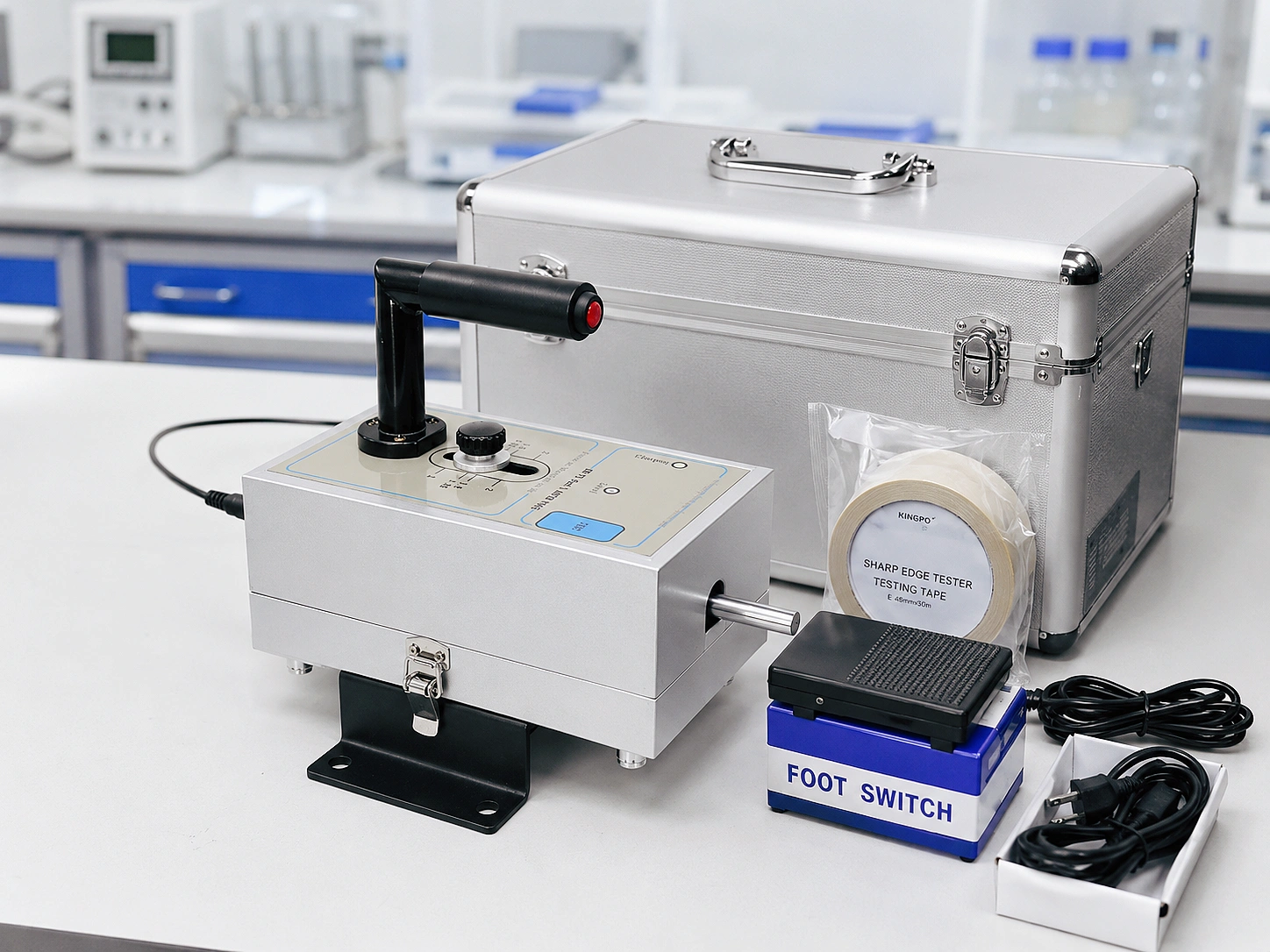
The current KINGPO configuration lists a 1.35 lbf force-checking / adjustment device. Product images also show a carrying case, foot switch, TFE tape or consumable pack and connecting accessories. However, the exact standard supply and packing scope should be confirmed in the quotation, especially when a project requires specific mandrels, consumables or documentation.
Do I need to specify the standard edition before ordering?
Yes. This is particularly important for a Sharp Edge Tester because mandrel dimensions, tape requirements and acceptance criteria can differ between standards or editions. For quotation, provide the applicable standard, edition, relevant clause, product or sample type and intended test application. This helps KINGPO confirm the correct mandrel, TFE tape, force arrangement and accessories.
What information should I provide when requesting a quotation?
Please provide the standard number and edition, applicable clause, sample description, product type, required mandrel and TFE tape specification, documentation requirements and destination power supply. For UL 3300 projects, also identify the robot application. If your laboratory uses a specific fixture or internal procedure, provide that information so the required configuration can be reviewed before quotation.

Related Products

Related News

Medical Electrical Safety · Technical Delivery Case KP-DFT201 Defibrillation Effect and Energy Tester Delivered to DEKRA Guangzhou Laboratory KingPo delivered […]

PROJECT CASE · AIMD DEFIBRILLATION IMMUNITY TESTING KP-1050S Defibrillation Test Pulse Generator Delivered to SGS Shanghai Laboratory KingPo delivered one […]

IEC Standards and Definitions ensure global safety, reliability, and compatibility for electrical and electronic products across industries.
Vacuum Cleaner Air Performance Testing System automates IEC 60312 compliance, delivering accurate, repeatable results for faster certification and market entry.
A Video Signal Generator creates test patterns to check display quality, color accuracy, and compliance, ensuring reliable video system performance.
KINGPO leads in testing gear with certified quality, advanced technology, and expert support, making it the trusted choice for global compliance needs.

In the world of medical device manufacturing, ensuring electrical safety is paramount. Standards like IEC 60601-1 set the benchmark for […]

1000 Hz as Reference Signal According to ITU-R 468-4 (Measurement of audio noise levels in sound broadcasting), the frequency response […]

Scroll to Top

Get A Free Quote Now !

Contact Form
If you have any questions, please do not hesitate to contact us.