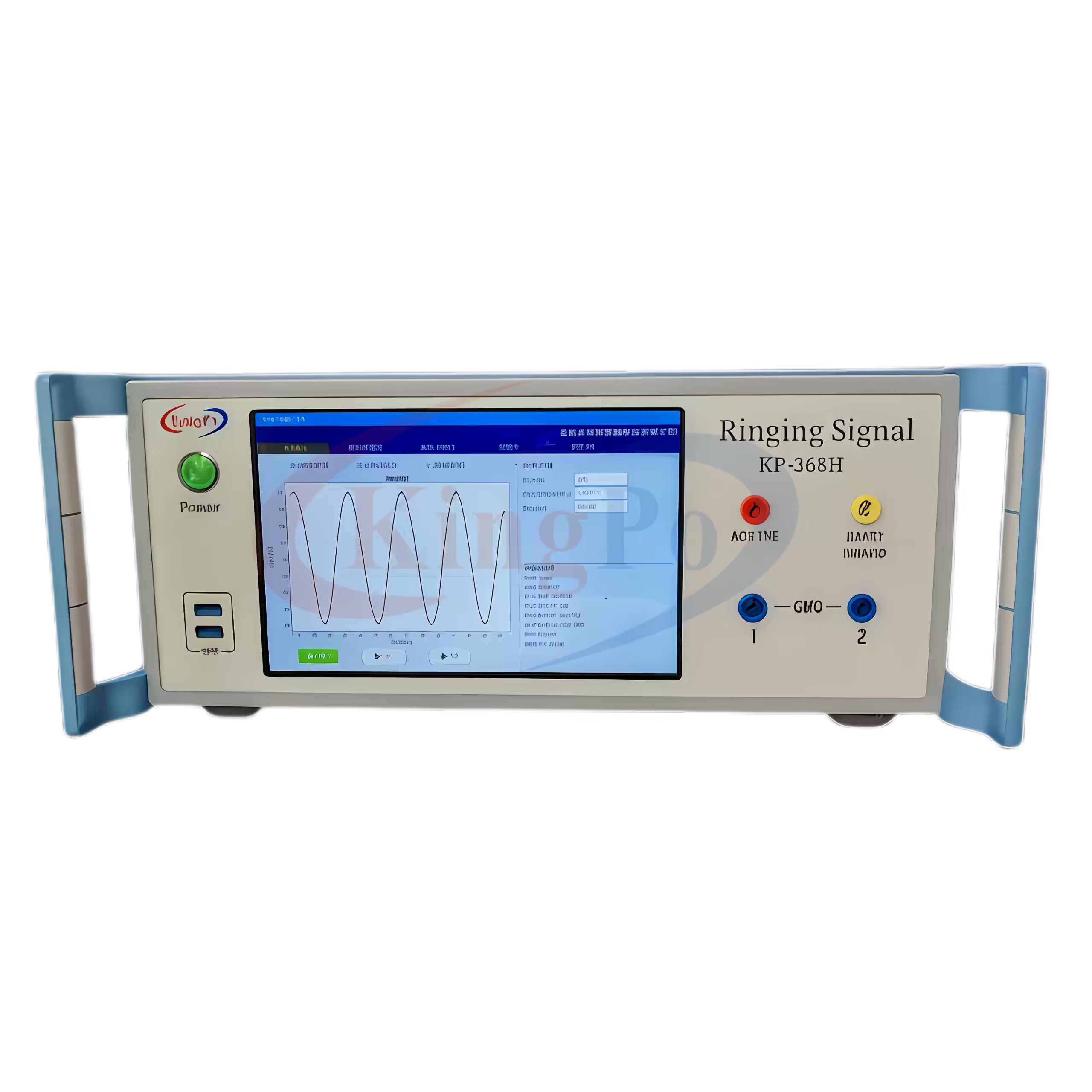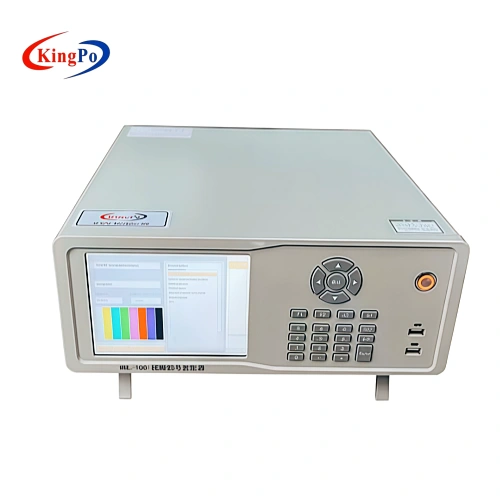
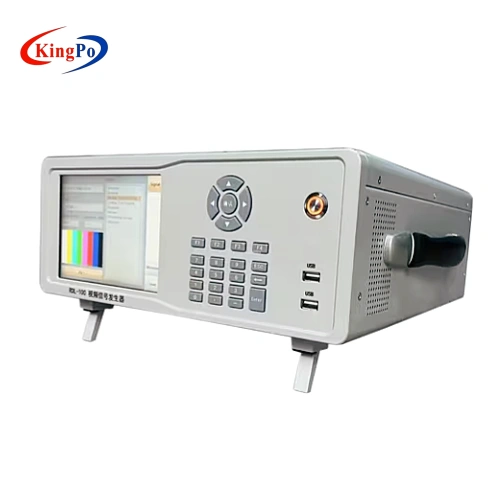
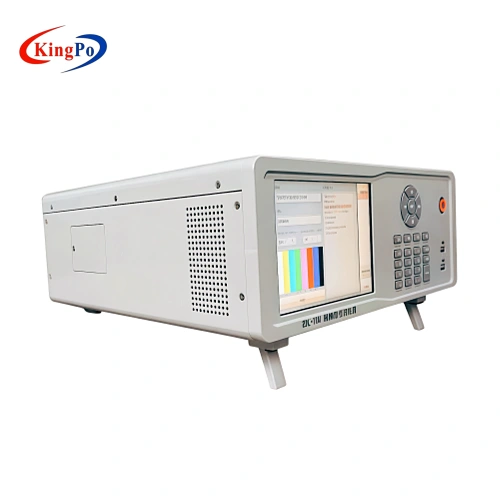
Product Overview
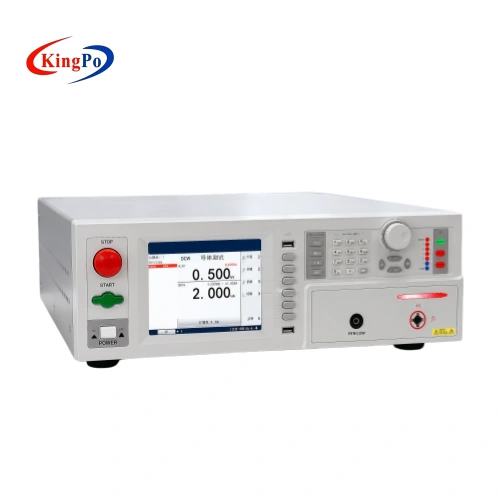
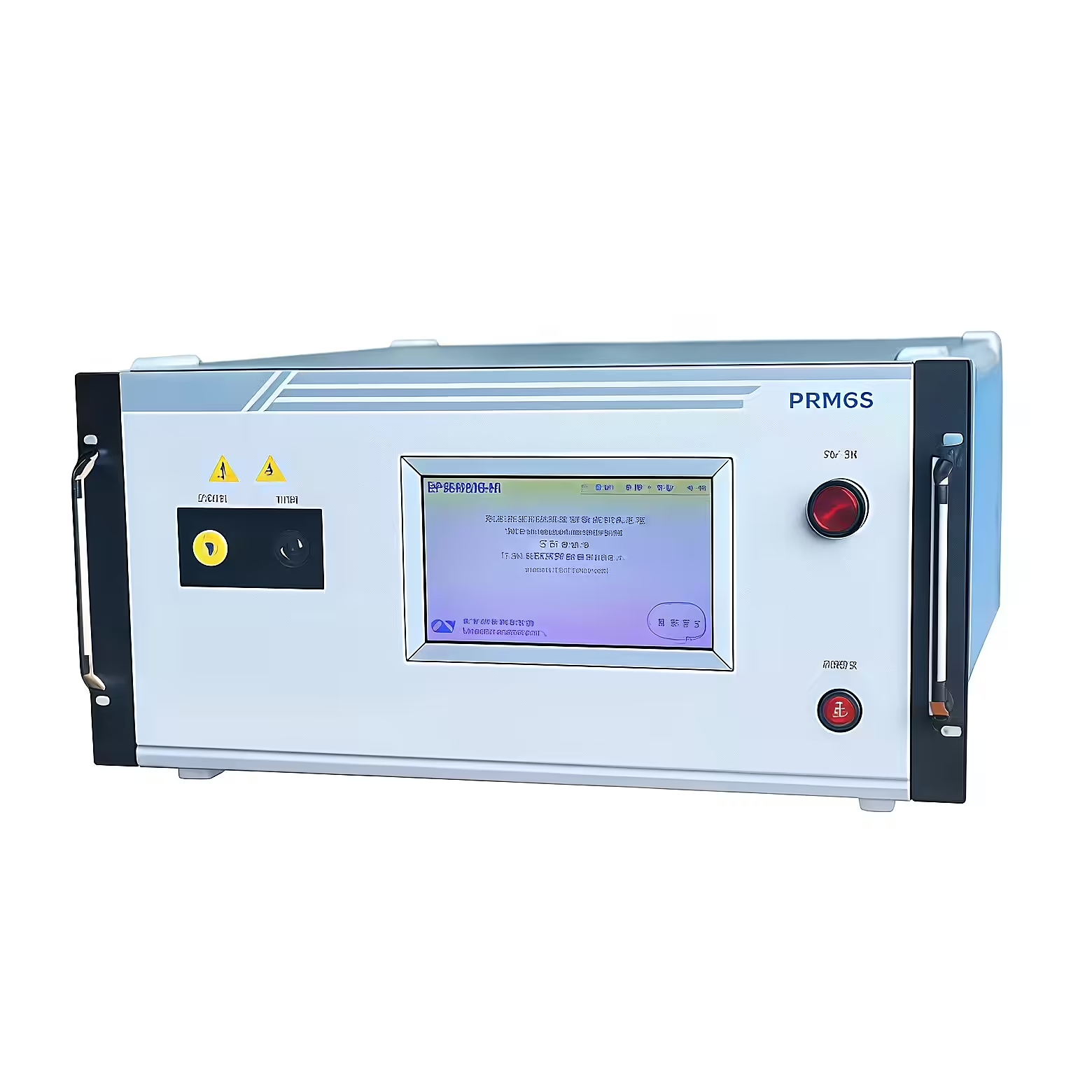
The KP-6215 is a dedicated video signal generator for three vertical bar testing, providing a stable and reproducible video source for televisions and other equipment incorporating moving-image displays.
Instead of relying on a laptop, media player or manually created test video, the KP-6215 provides controlled video outputs through commonly used analog and digital interfaces. The operator can select the required signal format and apply the three vertical bar image directly to the equipment under test.
The unit is particularly suited to laboratories carrying out IEC 62368-1 evaluations where the DUT must operate with a defined moving-image video signal during electrical, thermal or other safety-related measurements.
The KP-6215 supports both legacy analog television interfaces and modern HDMI connections, making it suitable for a wide range of television and display products.
Technical Specifications
| Parameter | Specification |
|---|---|
| Product Name | Three Vertical Bar Video Signal Generator |
| Model | KP-6215 |
| Application Standard | IEC 62368-1 |
| Test Signal Reference | IEC 60107-1:1997, Clause 3.2.1.3 |
| Test Pattern | Three vertical white bars on black background |
| Video Interfaces | CVBS, YPbPr, HDMI |
| Analog Video Terminals | Y/CVBS, Pb, Pr |
| Audio Outputs | L / R |
| Standard-Definition Formats | PAL / NTSC |
| HD Support | Up to 1920 × 1080p, 60 Hz |
| 4K Support | 3840 × 2160, 30p |
| User Interface | Touch screen |
| Physical Controls | Navigation, numerical and function keys |
| Peripheral Interface | USB |
| Typical DUT | Television / equipment with moving-image display |
| Manufacturer | KingPo Technology Development Limited |
Analog Video Output Performance
| Interface | Parameter | Output Range | Accuracy |
|---|---|---|---|
| CVBS | Luminance level | 0–700 mV | ±(2% × X + 6 mV) |
| CVBS | Chrominance level | 0–885.1 mV | ±(2% × X + 6 mV) |
| CVBS | Chrominance phase | 0–360° | ±2° |
| YPbPr | Y luminance output | 0–700 mV | ±(2% × X + 6 mV) |
| YPbPr | Pb / Pr color-difference output | -350 to +350 mV | ±(2% × X + 6 mV) |
Note: X represents the set or measured signal level applicable to the specified accuracy expression.
Applicable Standards
IEC 62368-1
IEC 62368-1 – Audio/video, information and communication technology equipment – Part 1: Safety requirements
IEC 62368-1 is the primary application standard for the KP-6215 when the generator is used as part of an AV/ICT equipment safety test setup.
The signal generator provides the video operating condition required by applicable laboratory procedures for televisions and equipment incorporating moving-image displays.
IEC 60107-1:1997
IEC 60107-1:1997 – Methods of measurement on receivers for television broadcast transmissions – Part 1: General considerations – Measurements at radio and video frequencies
The specific three vertical bar image is defined in:
Clause 3.2.1.3 – Three vertical bar signal
The KP-6215 therefore should not be described simply as an “IEC 60107-1 tester.” IEC 60107-1 defines the test signal, while IEC 62368-1 is the principal safety-testing application for this equipment.
What Is the Three Vertical Bar Signal?
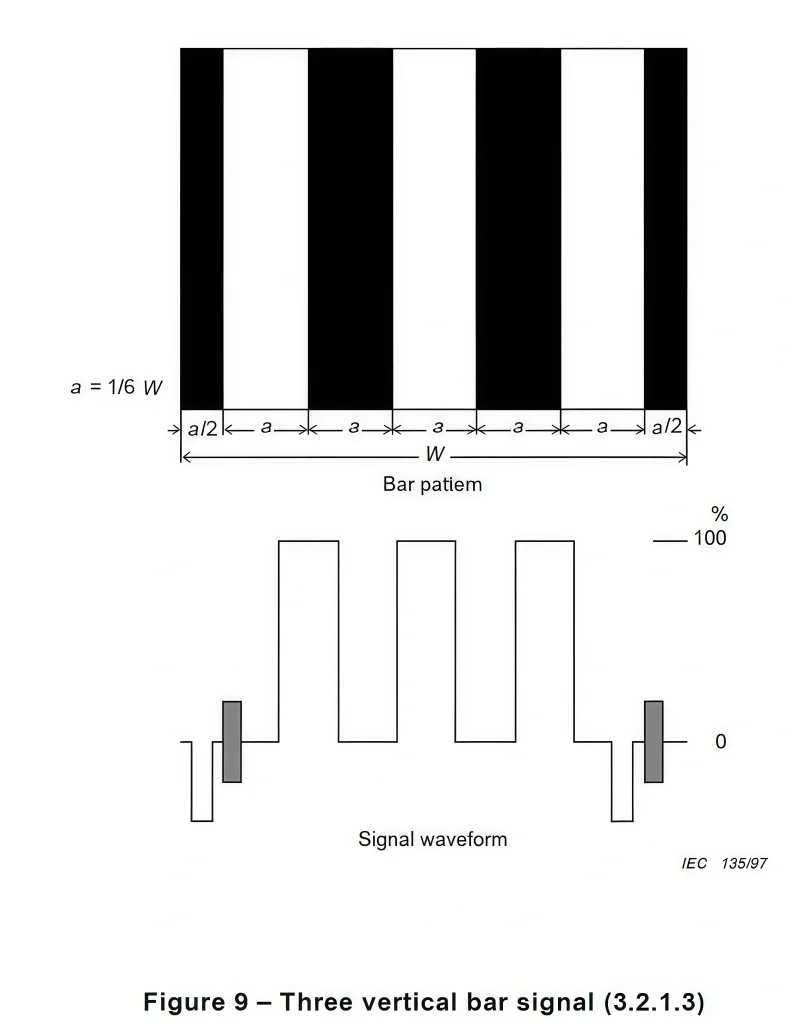
The IEC 60107-1 three vertical bar signal consists of:
- Three vertical white bars
- Black background
- Equal spacing between the bars
- Bar width equal to 1/6 of the nominal horizontal picture width, W
- Average Picture Level (APL) of 50%
- Reference white level included
- Applicability to standard and wide-aspect-ratio pictures
This pattern is fundamentally different from RGB color bars or SMPTE color-bar test patterns.
The three bars are white, not red, green and blue.
For this reason, descriptions such as “RGB three-bar pattern,” “RGB color accuracy test” or “three-color-bar generator” should not be used for the KP-6215.
Why Is a Three Vertical Bar Video Signal Generator Needed?
A television or display can behave differently depending on the video content being displayed. Screen luminance, signal processing activity, power consumption and internal temperature can all vary with the input signal.
For standardized laboratory testing, arbitrary video content is therefore undesirable.
The KP-6215 provides a defined and repeatable video input condition so that different DUTs, operators and laboratories can reproduce the same basic test setup.
Typical advantages include:
- Repeatable video operating conditions
- Consistent DUT loading
- Reduced dependence on consumer video players
- Easy switching between video interfaces
- Support for older and newer TV input formats
- Easier reproduction of certification-laboratory setups
- Improved consistency between development and formal compliance testing
Test Principle
The basic setup is:
The signal generator creates the required video format and outputs the three vertical bar image through CVBS, YPbPr or HDMI.
The DUT displays the signal while the laboratory establishes the operating conditions required by the applicable IEC 62368-1 test procedure.
Depending on the test, additional equipment may be used to measure:
The KP-6215 functions as the controlled video source within this wider test setup.
Main Features
Standard Three Vertical Bar Signal
Generates the three vertical white bar image referenced to IEC 60107-1:1997 Clause 3.2.1.3.
CVBS Video Output
Supports composite analog video for PAL and NTSC television equipment.
YPbPr Component Video Output
Provides Y, Pb and Pr analog component-video outputs for compatible television and display inputs.
HDMI Digital Video Output
Provides HDMI digital video for modern televisions and displays, including HD and 4K formats.
PAL and NTSC Support
Suitable for television products designed for different regional video systems.
HD and 4K Output
Supports high-definition video formats and listed output up to 3840 × 2160 at 30p.
L/R Audio Output
Independent left- and right-channel audio outputs are provided for test setups that require an external audio signal.
Touch-Screen Operation
An integrated touch-screen interface allows signal and video parameters to be selected from the control system.
Physical Navigation and Function Keys
Navigation, numerical and function keys provide direct control during repetitive laboratory operation.
USB Connectivity
USB interfaces support connection of compatible external peripherals such as a mouse, keyboard or USB storage device.
Video Interfaces
Y / CVBS
The Y/CVBS connector provides different signals according to the selected video format.
For PAL and NTSC operation, it provides the composite video signal, CVBS.
For applicable component-video formats, the connector provides the Y luminance component.
Pb / Pr
Pb and Pr connectors provide the analog color-difference components used together with the Y output for YPbPr video.
HDMI
The HDMI interface provides digital video output for televisions and displays equipped with HDMI inputs.
The listed configuration supports HD formats and 3840 × 2160 30p output.
L / R Audio
The L and R connectors provide independent left- and right-channel audio outputs for test conditions requiring an external audio source.
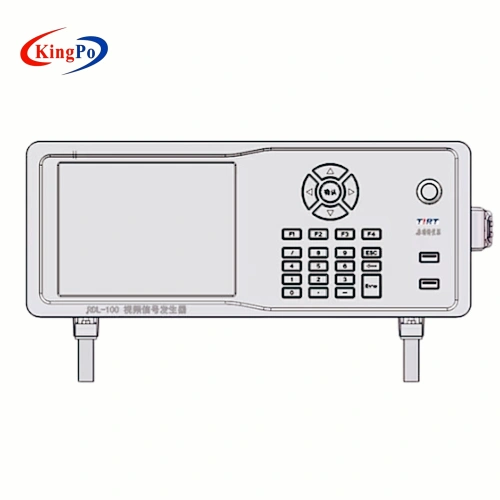
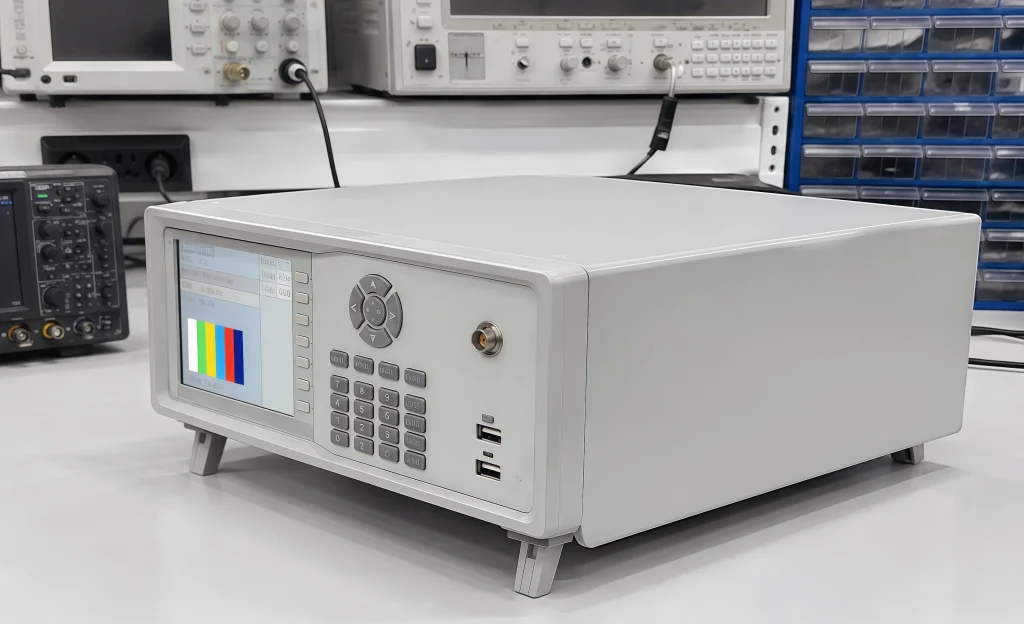
Front Panel
The front panel is designed for direct laboratory operation.
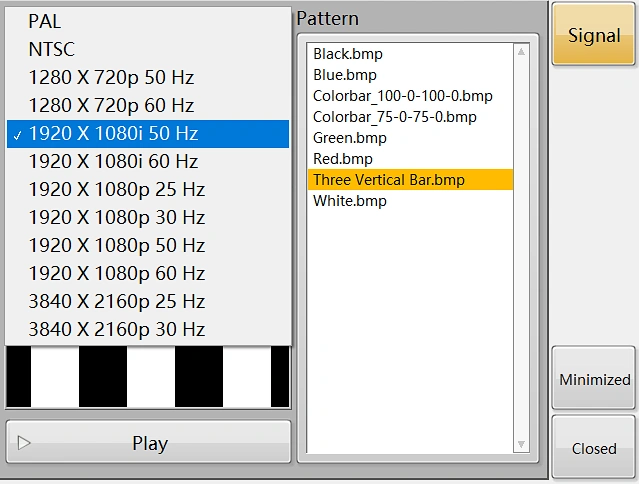
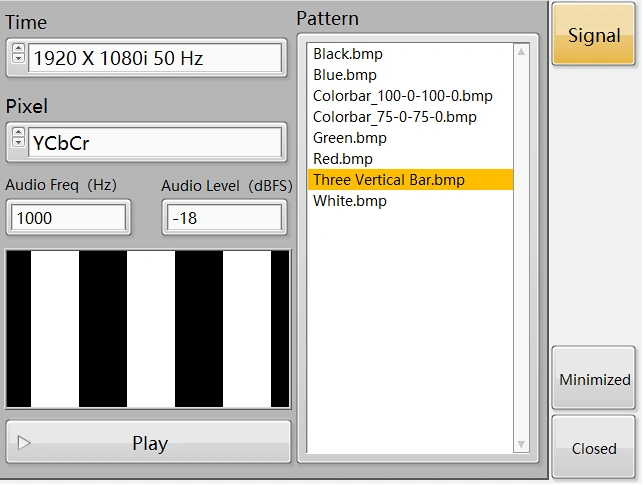
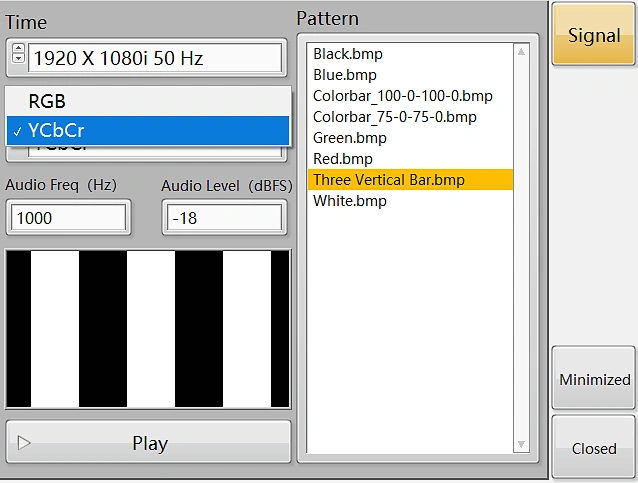
1. System Display
The integrated touch-screen display provides access to the control software and allows the operator to select:
- Test signal
- Video format
- Output configuration
- Applicable video parameters
- Preview and signal operation functions
2. Navigation and Function Keys
Physical controls include navigation keys, a numerical keypad and function keys for convenient operation.
3. USB Interface
USB ports allow compatible peripherals such as a mouse, keyboard or USB storage device to be connected.
4. Power Control
The front-panel power key controls system startup and shutdown.
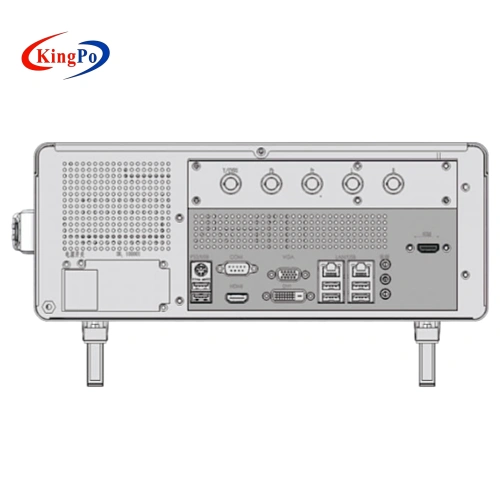
Rear Panel
Typical rear-panel connections include:
- Y / CVBS
- Pb
- Pr
- Audio L
- Audio R
- HDMI
- System peripheral connections
- System power input
- Main power control
This combination allows the KP-6215 to support both legacy analog-video DUTs and modern HDMI-equipped televisions.
Typical Test Setup
A typical IEC 62368-1 television test configuration may include:
↓
CVBS / YPbPr / HDMI
↓
Equipment Under Test
↓
Electrical / Thermal / EMC Measurement Equipment
Basic Operating Procedure
- Connect the KP-6215 to the appropriate video input of the DUT.
- Select CVBS, YPbPr or HDMI.
- Select the required video format.
- Select the three vertical bar test signal.
- Confirm that three white vertical bars appear correctly on a black background.
- Configure the DUT according to the applicable test procedure.
- Connect audio outputs or other loading equipment where required.
- Allow the DUT to reach the required operating condition.
- Perform the required electrical, thermal or other compliance measurements.
- Record the selected generator format and DUT settings in the laboratory test record.
The complete test condition should always follow the applicable edition of IEC 62368-1 and the laboratory’s approved test procedure.
Applications
IEC 62368-1 Television Safety Testing
Provides a controlled moving-image test signal during applicable safety evaluations of television equipment.
Certification and Third-Party Laboratories
Suitable for laboratories requiring repeatable video operating conditions during AV/ICT equipment testing.
TV Manufacturer R&D
Allows engineers to reproduce standardized laboratory input conditions before formal certification testing.
Pre-Compliance Testing
Useful for identifying DUT behavior under controlled video operating conditions during product development.
Quality-Control Laboratories
Provides a repeatable video source for comparative or batch verification where a defined display condition is required.
EMC Test Support
Can provide a stable video operating condition when the DUT needs to remain active and displaying defined content during applicable EMC testing.
Why Use a Dedicated Generator Instead of a PC or Media Player?
A computer or consumer media player may appear to provide the same image, but it can introduce additional variables, including:
- Automatic scaling
- Graphics-driver processing
- HDMI negotiation
- Resolution changes
- Color-space conversion
- Operating-system updates
- Playback software differences
- Automatic screen or power settings
For occasional development work this may be acceptable.
For repetitive laboratory or certification testing, however, a dedicated signal generator provides a more controlled and reproducible source.
Three Vertical Bar Signal vs. Color Bars
These two patterns should not be confused.
| Three Vertical Bar Signal | Color Bar Pattern |
|---|---|
| Three white vertical bars | Multiple colored bars |
| Black background | Multiple color regions |
| IEC 60107-1 Clause 3.2.1.3 | Used for other video measurements |
| APL 50% | Depends on pattern |
| Used as a defined display condition | Often used for color/video system checks |
| Not an RGB three-bar pattern | May contain RGB or other colors |
For IEC 62368-1 testing using the IEC 60107-1 three vertical bar signal, the white-bar pattern is the relevant signal.