Product Overview
Ceramic components can form part of the insulation system in household and similar electrical appliances. Where the applicable construction requirement depends on the ceramic material being tightly sintered, a visual surface inspection alone is not sufficient to evaluate whether the material contains connected pores or internal paths through which liquid can penetrate.
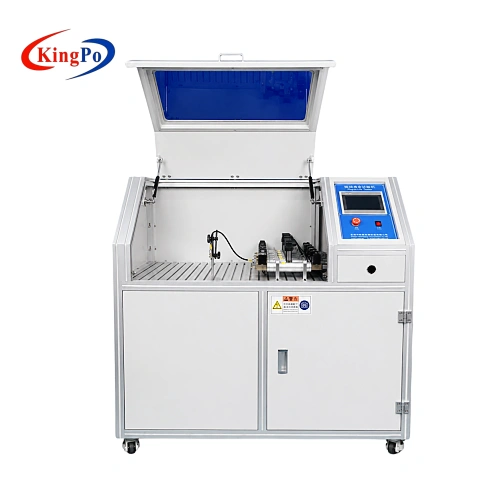
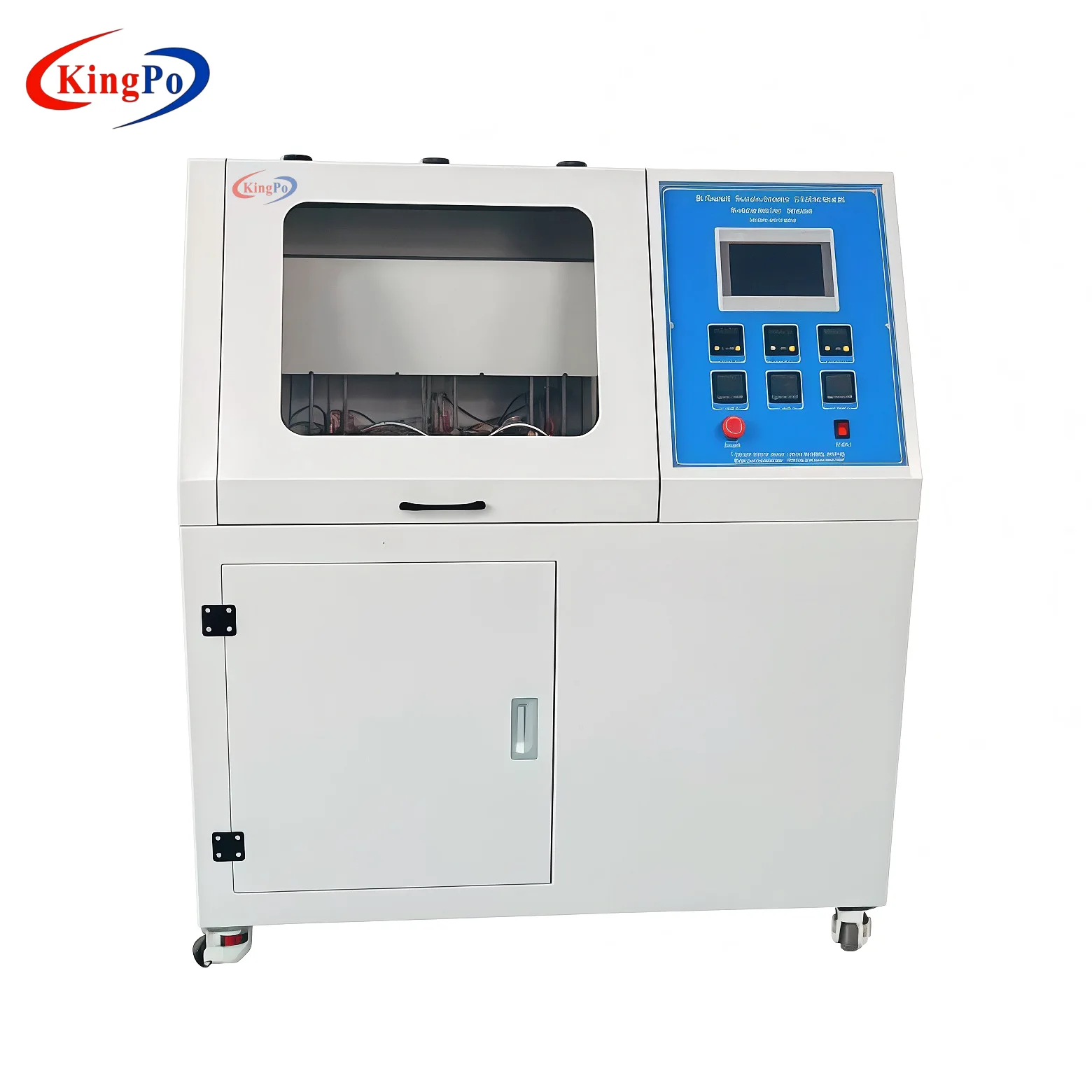
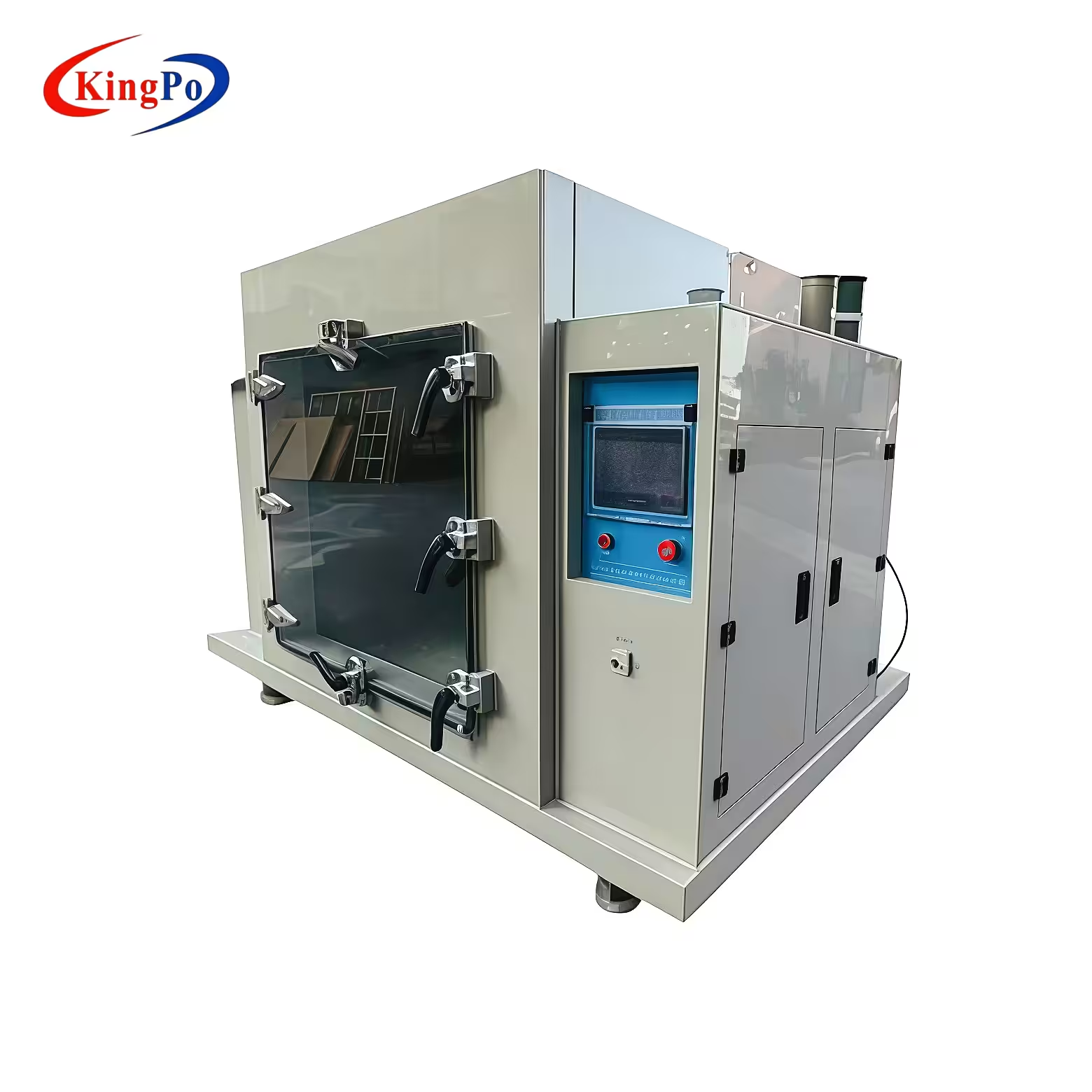
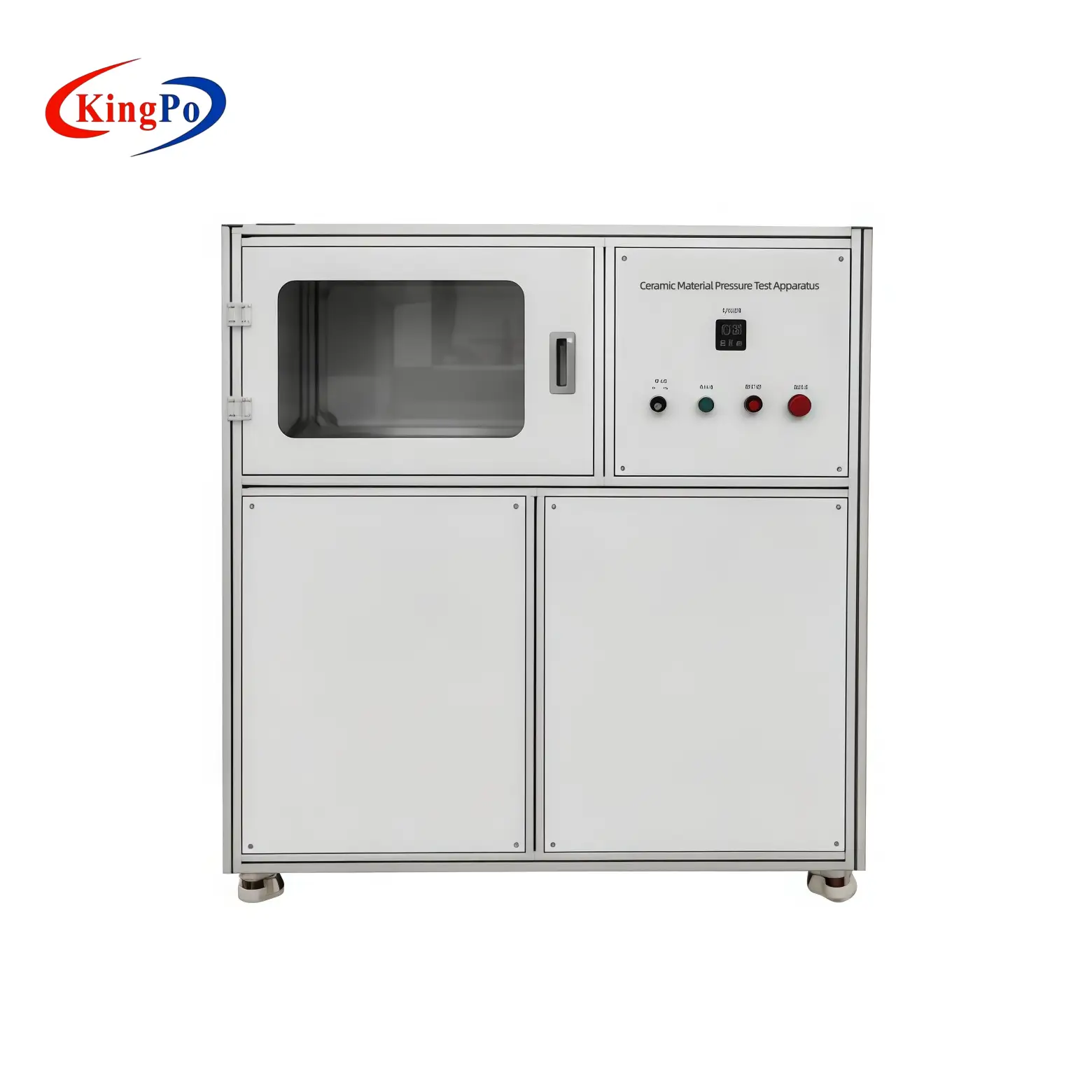
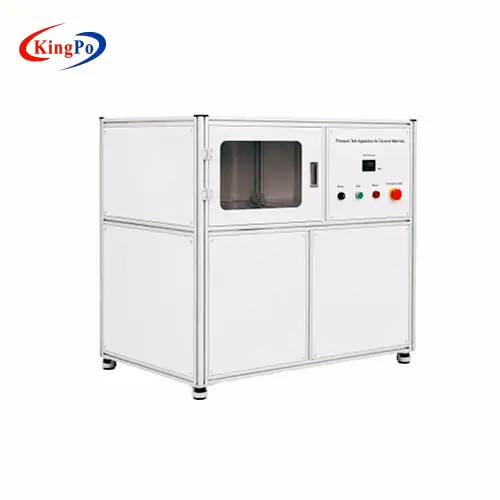
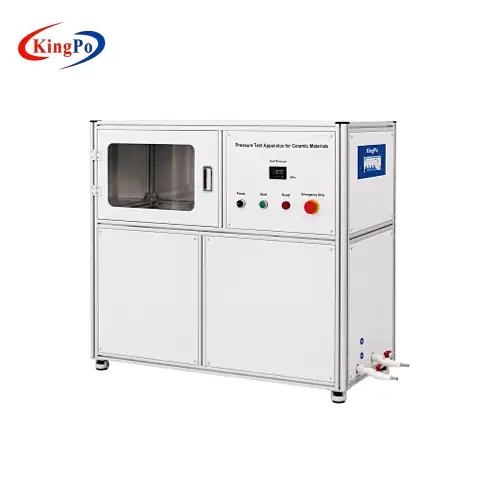
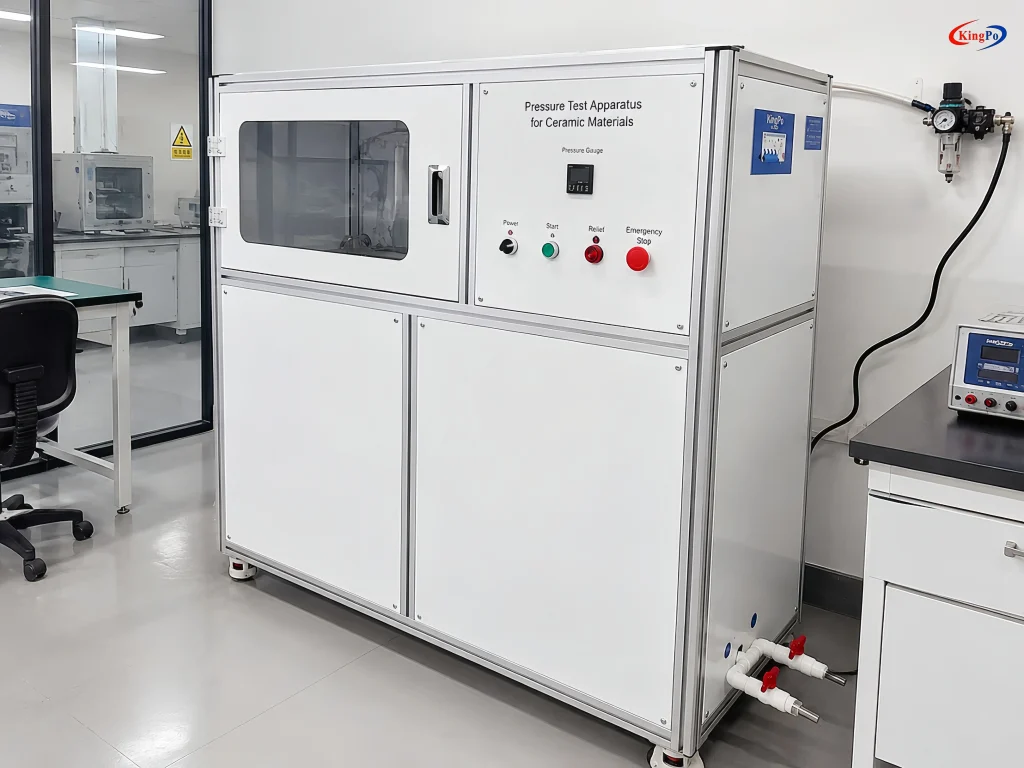
The KP-Y3501 creates a controlled high-pressure environment for this evaluation.
The ceramic specimen is immersed in a fuchsine-containing test solution inside the pressure vessel. The apparatus automatically raises the vessel to the preset pressure and maintains the pressure for the programmed test period. At the end of the test, the system automatically releases the pressure and provides a completion indication.
After the vessel has been fully depressurized, the ceramic specimen is removed, cleaned and broken. The newly exposed internal surfaces are then examined for evidence of fuchsine penetration.
The KP-Y3501 performs a pressure-assisted dye penetration test. It is not a ceramic compressive-strength tester, burst-pressure tester or conventional mechanical strength testing machine.
Technical Specifications
The main test parameters and equipment configuration of the KingPo KP-Y3501 are listed below.
Test & Pressure Parameters
| Item | Specification |
|---|---|
| Product Name | Pressure Test Apparatus for Ceramic Materials |
| Brand / Model | KingPo / KP-Y3501 |
| Standard Reference | IEC 60335-1 Clause 22.32 |
| Test Application | Tightly sintered ceramic material evaluation |
| Test Method | Fuchsine solution pressure penetration test |
| Pressure Capability | Above 15 MPa, adjustable up to 20 MPa |
| Test Time | 1–99 h adjustable |
| Pressure Vessel Volume | 450 mL |
System & Installation
| Item | Specification |
|---|---|
| Pressurization | Automatic electric pressurization |
| Pressure Holding | Automatic holding after the preset pressure is reached |
| Pressure Relief | Automatic pressure relief after test completion |
| Completion Indication | Audible reminder |
| Completion Reminder Time | 3 min, as stated in the original product data |
| Power Supply | AC 380 V, 50 Hz |
| Rated Power | 4 kW |
| Overall Dimensions | Approx. 1200 × 500 × 1360 mm (L × W × H) |
AC 380 V / 50 Hz is the documented KP-Y3501 configuration. For laboratories using a different supply voltage or frequency, the required electrical configuration should be confirmed before quotation.
What Does This Equipment Test?
The KP-Y3501 evaluates whether applicable ceramic material remains sufficiently dense to prevent the specified dye solution from penetrating into its internal structure during high-pressure exposure.
The test focuses on four elements:
A specimen that permits dye to enter the internal material can be identified after the ceramic is broken and the fresh fracture surfaces are examined.
This test is fundamentally different from ceramic mechanical-strength testing. The applied pressure is used to promote liquid penetration into possible connected pores, rather than to determine how much mechanical compression the specimen can withstand.
IEC 60335-1 Clause 22.32 Test Application
IEC 60335-1 covers general safety requirements for household and similar electrical appliances. Clause 22 addresses construction requirements, and the relevant Clause 22.32 test includes evaluation of ceramic material where the safety requirement depends on the material being tightly sintered.
The KP-Y3501 is designed to provide the high-pressure liquid-penetration function required for this specific type of ceramic-material assessment.
Test Principle
The test uses a colored fuchsine solution as a penetration indicator.
According to the original KingPo procedure, the test solution is prepared using:
The ceramic specimen is immersed in this solution inside the pressure vessel.
During the pressure-holding stage, the high external liquid pressure promotes penetration into any connected pores or insufficiently dense regions in the ceramic structure. Because the solution contains a visible dye, penetration can subsequently be detected by breaking the ceramic and examining its internal surfaces.
Automatic Test Sequence
Prepare the Ceramic Specimen
Select the ceramic component or material specimen specified by the applicable product standard or laboratory procedure and place it in the pressure vessel.
Add the Test Solution
Add the required fuchsine-containing solution so that the specimen is exposed according to the applicable test method. The original KP-Y3501 procedure uses 1 g of basic fuchsine in 100 g of methylated spirit.
Set the Test Pressure
Set the required pressure using the pressure-control system. The equipment provides an adjustable high-pressure capability above 15 MPa up to 20 MPa.
Set the Test Duration
Program the required pressure-holding time. The KP-Y3501 timer can be set from 1 to 99 hours.
Reset the Pressure-Relief Mechanism
Before starting the test, return the automatic pressure-relief mechanism and pressure-holding valve to the required test position.
Start Automatic Pressurization
Start the test cycle. The electric pressure-boosting system automatically raises the pressure inside the vessel. When the preset pressure is reached, the pressurization system stops and the vessel enters the pressure-holding stage.
Maintain the Preset Pressure
The ceramic specimen remains exposed to the pressurized test solution for the programmed duration. Automatic pressurization and holding reduce the need for continuous manual intervention during long-duration testing.
Automatic Pressure Relief
When the programmed test time expires, the pressure-relief mechanism automatically opens and releases system pressure. An audible reminder indicates completion of the programmed test cycle.
Remove and Examine the Specimen
Open the pressure vessel only after complete depressurization has been confirmed. Remove and clean the specimen, then break it to expose fresh internal surfaces and inspect for evidence of fuchsine penetration.
Pressure and Control System
The KP-Y3501 is designed around a long-duration high-pressure penetration test rather than a manually operated pressure vessel.
Automatic Electric Pressurization
An electrically driven boosting system raises the vessel pressure automatically after the test is started, reducing the need for continuous manual pressure generation.
Preset Pressure Control
The required pressure is set before the test cycle. When the preset value is reached, the pressure-boosting system stops and the apparatus enters the holding stage.
Long-Duration Pressure Holding
The programmable timer supports test periods from 1 to 99 hours, allowing long-duration pressure exposure without continuous operator intervention.
Automatic Pressure Relief
At the end of the programmed test period, the apparatus automatically initiates pressure release, which is particularly relevant for extended tests at pressures in the 15 MPa class.
450 mL Pressure Vessel
The documented pressure vessel capacity is 450 mL. Sample dimensions and quantity should be confirmed before quotation to verify vessel suitability.
Test Solution and Result Evaluation
The fuchsine solution functions as a visual penetration indicator.
The test does not simply check whether the outer surface of the ceramic becomes stained. The critical observation is made after the tested specimen has been cleaned and broken.
- Complete the specified pressure exposure.
- Fully depressurize the vessel.
- Remove the ceramic specimen.
- Clean residual solution from the external surface.
- Break the specimen.
- Inspect the newly exposed internal ceramic surfaces.
- Evaluate visible fuchsine penetration according to the applicable standard.
Typical Test Objects
The KP-Y3501 is intended for ceramic materials and ceramic components for which the applicable product-safety standard requires a tightly sintered material evaluation.
Typical Laboratory Applications
The KP-Y3501 is primarily intended for laboratories involved in household-appliance safety and ceramic insulation material assessment, including:
For these users, the key purchasing considerations are normally the applicable standard edition, test pressure, holding time, specimen dimensions, pressure-vessel capacity, electrical supply and calibration/documentation requirements.
Safety and Operating Considerations