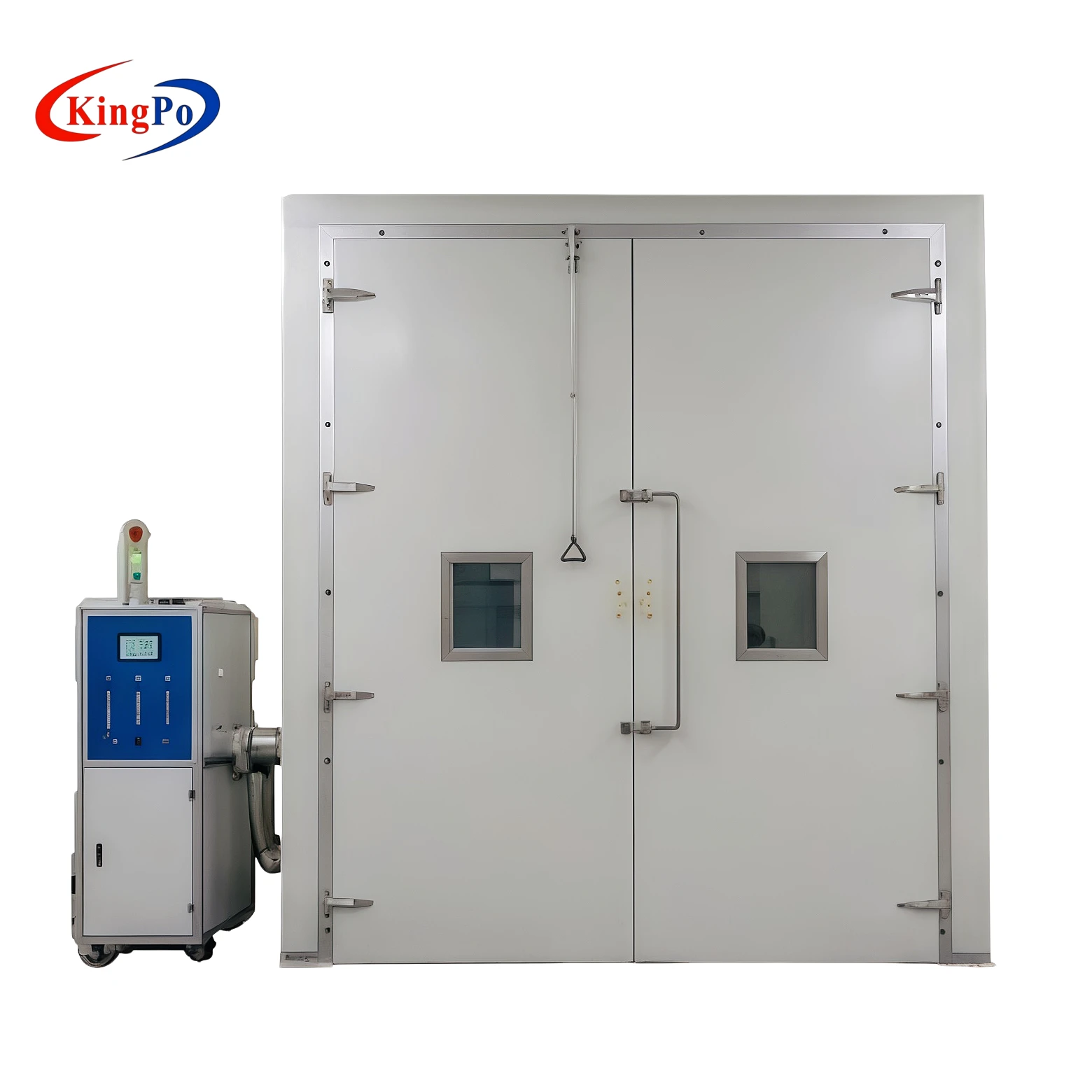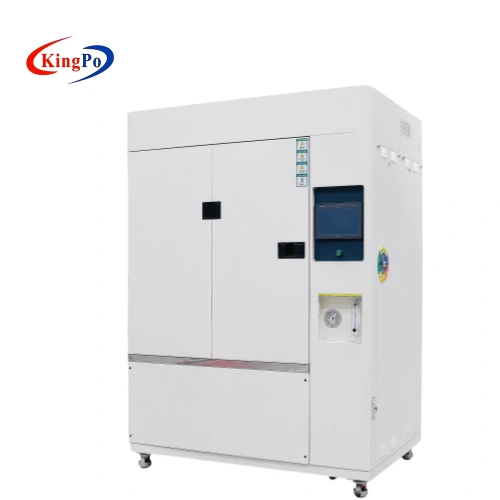

Front view of Carbon Arc Test Chamber with double doors and integrated touchscreen control panel for ASTM G23 accelerated weathering testing.
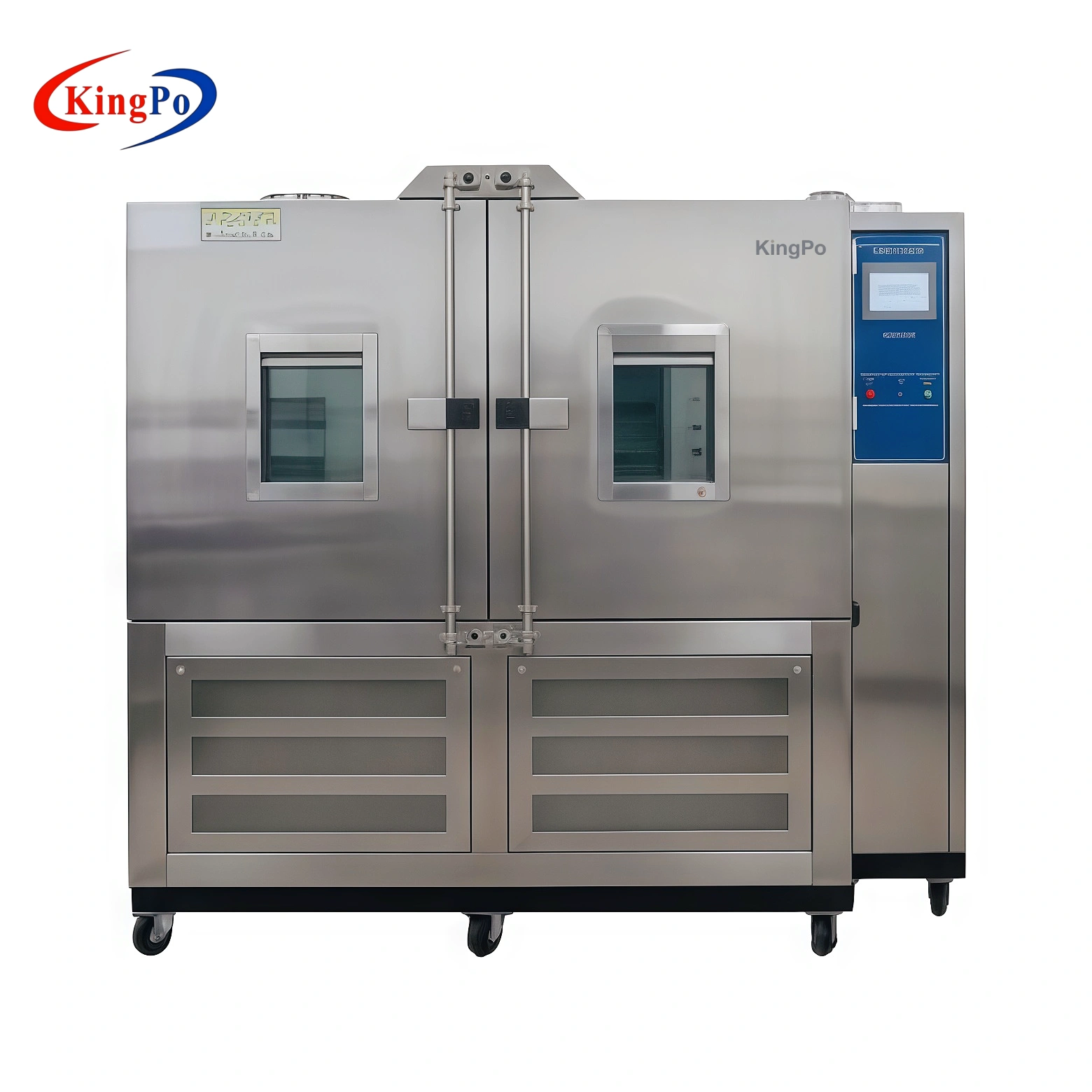
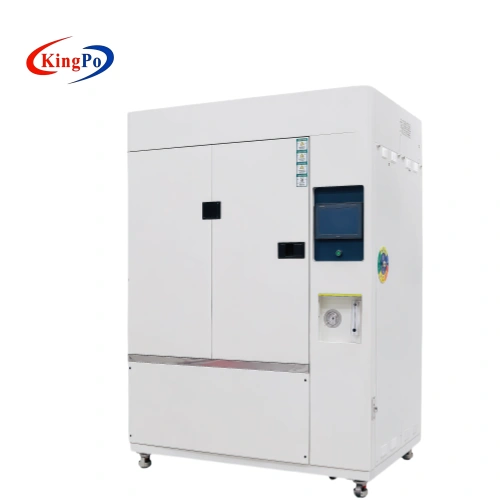
Overall front view of Carbon Arc Test Chamber designed for ASTM G23 material aging and weathering resistance testing in laboratory environments.
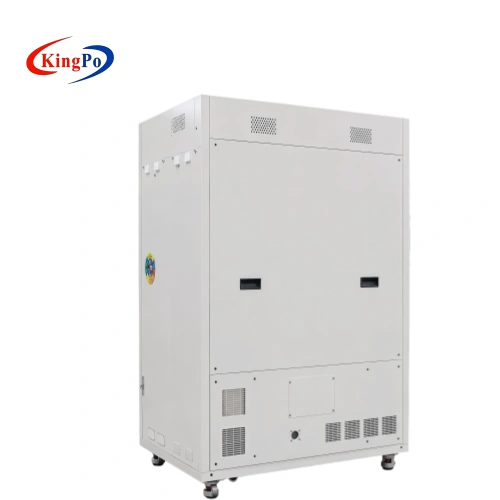
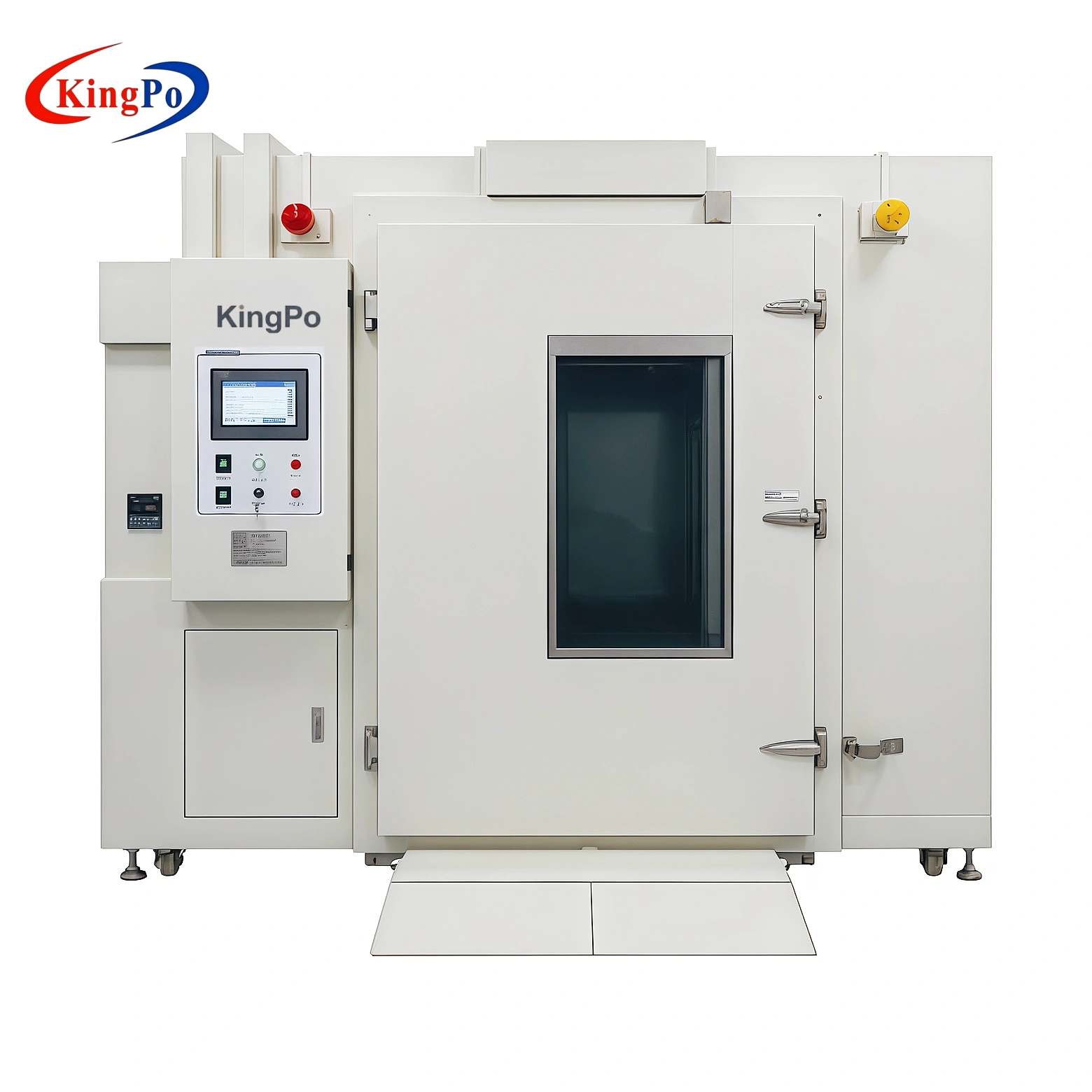
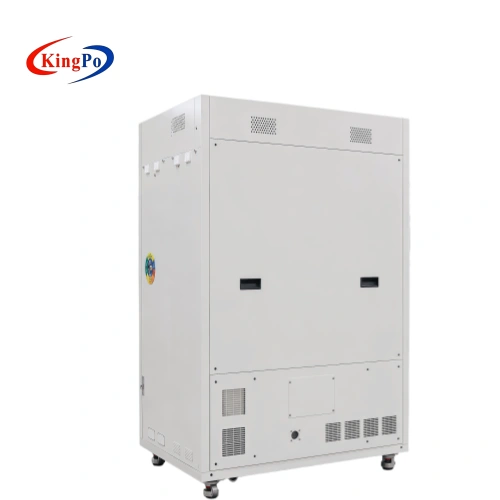
Rear view of Carbon Arc Test Chamber showing ventilation grilles and structural design for ASTM G23 accelerated weathering tests.
Front view of Carbon Arc Test Chamber with double doors and integrated touchscreen control panel for ASTM G23 accelerated weathering testing.
Overall front view of Carbon Arc Test Chamber designed for ASTM G23 material aging and weathering resistance testing in laboratory environments.
Rear view of Carbon Arc Test Chamber showing ventilation grilles and structural design for ASTM G23 accelerated weathering tests.

Carbon Arc Weathering Test Chamber | ASTM G152 & G23 Material Aging Tester

The Carbon Arc Weathering Test Chamber is used for accelerated weathering and material aging tests of plastics, rubber, coatings, paints, textiles and other non-metallic materials. It combines sunshine carbon arc light, controlled temperature, humidity and programmable water spray to simulate sunlight, heat, moisture and rain exposure under laboratory conditions.

  • Light source: Sunshine carbon arc lamp, open flame carbon arc type
  • Applicable methods: ASTM G152 and legacy ASTM G23-type carbon arc weathering methods
  • Test object: Plastics, rubber, coatings, paints, textiles and other non-metallic materials
  • Test purpose: Accelerated weathering, material aging, fading, cracking, chalking and durability evaluation
  • Main test conditions: Carbon arc light, black panel temperature, chamber temperature, humidity and water spray
  • Control system: PLC touchscreen with closed-loop automatic control
  • Inner chamber material: SUS304 stainless steel
  • Typical users: Material testing laboratories, plastics manufacturers, rubber product factories, coating suppliers, textile laboratories, automotive material testing centers and R&D institutes

Carbon Arc Weathering Test Chamber Overview

The Carbon Arc Weathering Test Chamber is designed to evaluate how non-metallic materials perform under simulated outdoor weathering conditions. By combining carbon arc light exposure with temperature, humidity and water spray control, the chamber helps reproduce common aging factors such as sunlight, heat, moisture and rain in a repeatable laboratory process.

The chamber can be configured for carbon arc weathering procedures related to ASTM G152 and legacy ASTM G23-type exposure methods, depending on the required material standard and laboratory test procedure. It is suitable for routine quality control, material comparison, product development and accelerated durability verification.

Typical aging effects evaluated with this equipment include color fading, yellowing, surface cracking, chalking, gloss reduction, embrittlement and coating adhesion loss. These results help users compare material durability, screen formulations and verify whether a product is suitable for long-term outdoor or high-exposure applications.

With integrated environmental control, programmable exposure cycles and durable chamber construction, the Carbon Arc Weathering Test Chamber provides a practical solution for laboratories and manufacturers that need stable and repeatable carbon arc weathering tests.

Applicable Standards and Test Method

The Carbon Arc Weathering Test Chamber is designed for sunshine carbon arc lamp exposure tests used in accelerated weathering evaluation of non-metallic materials. It can be configured according to the customer’s applicable material standard, exposure cycle, black panel temperature, humidity condition, spray mode and evaluation criteria.

ASTM G23 was traditionally used for carbon arc light-exposure apparatus. For current carbon arc exposure equipment, ASTM G152 covers open flame carbon arc light apparatus, while ASTM G153 covers enclosed carbon arc light apparatus. This chamber uses a sunshine carbon arc lamp and open flame carbon arc configuration, so ASTM G152 and legacy ASTM G23-type methods should be considered during test configuration.

Final test settings should always follow the customer’s required standard version, product specification and laboratory procedure. Before testing, users should confirm the exposure cycle, specimen preparation method, evaluation criteria and any special requirements for material comparison or quality control.

Technical Specifications

Core Test Conditions

Item Specification
Light source Sunshine carbon arc lamp
Carbon arc type Open flame carbon arc type
Chamber temperature 40–70°C
Black panel temperature 63±3°C or 83±3°C
Humidity condition 50±5% RH at 63±3°C black panel temperature
Spray cycle Programmable dry, general rain and heavy rain cycles
Spray volume 2.10±0.10 L/min at 1.0 kgf/cm² nozzle pressure
Test cycle duration Up to 60 hours, using 4 sets of carbon rods per cycle

Chamber Structure and Control

Item Specification
Inner chamber material SUS304 stainless steel
Insulation material PU foam insulation
Control system PLC touchscreen
Control mode Closed-loop automatic control
Temperature regulation Electric control gate for intake and exhaust adjustment
Safety design UV protection window and power failure memory function
Typical applications Plastics, rubber, coatings, paints, textiles and other non-metallic materials

Testing Principle

The Carbon Arc Weathering Test Chamber accelerates material aging by exposing specimens to ultraviolet and visible light generated by sunshine carbon arc lamps. The test environment combines light exposure, elevated temperature, controlled humidity and periodic water spray to reproduce common outdoor weathering factors inside a laboratory chamber.

During operation, specimens are exposed to carbon arc light and heat while the chamber maintains the required black panel temperature and humidity condition. Programmable spray cycles can be used to simulate rain or moisture exposure, helping accelerate photochemical degradation, surface oxidation, color change and physical property deterioration.

After testing, users can observe and compare material changes such as fading, yellowing, surface cracking, chalking, embrittlement, gloss reduction, adhesion loss and mechanical strength decrease. The results help manufacturers evaluate weathering resistance, compare material formulations and verify product durability before outdoor use.

Applications and Materials

The Carbon Arc Weathering Test Chamber is used to evaluate the weathering resistance and long-term durability of non-metallic materials exposed to simulated sunlight, heat, humidity and rain. It is suitable for plastics, rubber, coatings, paints, textiles, synthetic leather, automotive materials, outdoor consumer products, construction materials and electrical or electronic product housings.
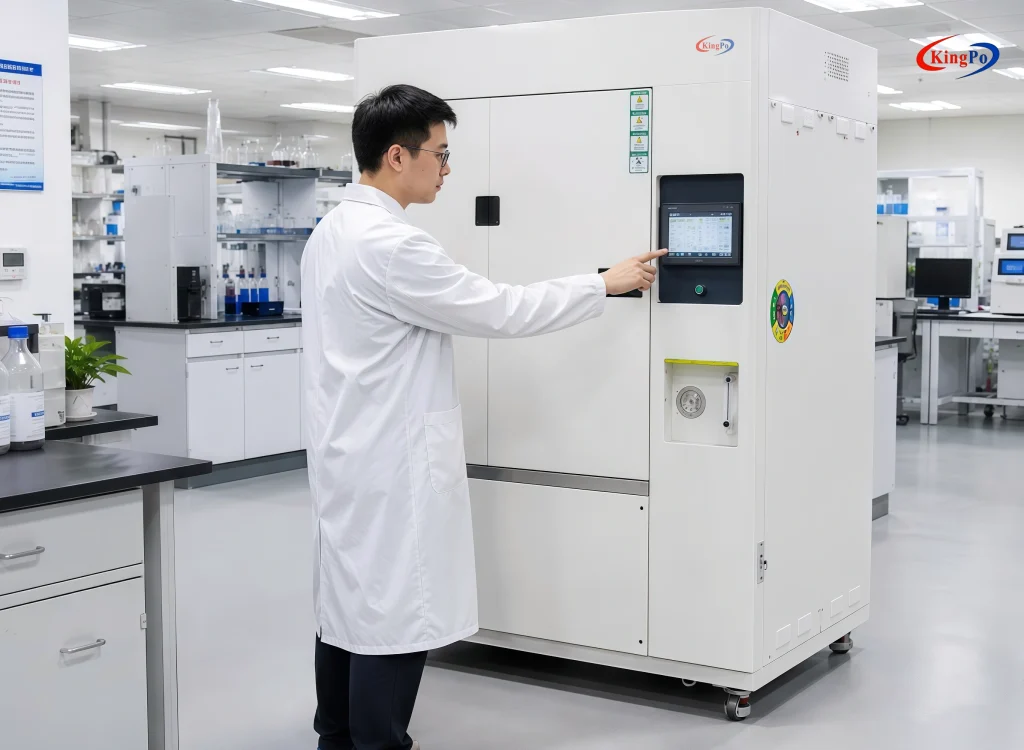
Laboratory technician operating Carbon Arc Test Chamber during ASTM G23 accelerated weathering testing.

During testing, users can observe and compare typical aging effects such as color fading, yellowing, surface cracking, chalking, gloss reduction, coating adhesion loss, embrittlement, mechanical property degradation and overall weathering resistance. These results help manufacturers and laboratories screen materials, compare formulations, verify product durability and support routine quality control before outdoor application.

Typical applications include material aging evaluation, weathering resistance comparison, R&D formulation screening, incoming material inspection, product durability verification and laboratory quality control for outdoor-use materials.

Key Features

The Carbon Arc Weathering Test Chamber integrates sunshine carbon arc exposure, temperature control, humidity regulation and programmable water spray in one system. Its open flame carbon arc configuration supports ASTM G152 and legacy ASTM G23-type weathering methods, while the PLC touchscreen control, closed-loop operation, durable stainless steel chamber, UV protection window and power failure memory help improve test stability, operation convenience, safety and long-term laboratory reliability.

Operation and Maintenance Notes

Proper operation and maintenance are important for stable and repeatable carbon arc weathering results. Operators should select the correct test procedure, confirm the required black panel temperature, humidity and spray cycle, and prepare specimens according to the applicable material standard.

Carbon rods should be replaced according to the specified test cycle to maintain stable light output. The specimen rack, inner chamber and spray nozzles should be cleaned regularly to prevent contamination and uneven spray distribution. The black panel thermometer, temperature sensor and humidity sensor should also be checked and calibrated periodically according to the laboratory quality system.

Water quality and spray pressure should be controlled during operation. Poor water quality, blocked nozzles or incorrect spray pressure may affect the repeatability of weathering results. Overloading the specimen rack should be avoided to ensure uniform exposure to light, heat and moisture.

Maintenance Checklist

Replace carbon rods according to the specified test cycle
Clean the inner chamber, specimen rack and spray nozzles regularly
Check spray pressure, water flow and water quality before testing
Verify black panel thermometer position and calibration
Calibrate temperature and humidity sensors periodically
Avoid overloading the specimen rack to maintain uniform exposure

Factory Verification and Delivery Support

  • To help confirm the correct chamber configuration, please provide the applicable test standard or internal test method, material type, specimen size, required black panel temperature, chamber temperature, humidity condition, spray cycle, spray volume requirement, total test duration or exposure cycle, power supply, sample rack or fixture requirements, and any documentation or calibration requirements.
  • Our engineering team can review your aging test method and sample information to confirm whether the Carbon Arc Weathering Test Chamber is suitable for your application, and provide configuration suggestions for routine quality control, material screening, R&D verification and accelerated durability evaluation.

Technical Inquiry and Configuration Support

To confirm the correct chamber configuration, please send us your test requirements and sample information. Our engineering team will review your aging test method and help determine whether the Carbon Arc Weathering Test Chamber is suitable for your application.

Please Provide the Following Information

  • Test method: Applicable standard or internal test procedure
  • Sample details: Material type and specimen size
  • Test conditions: Black panel temperature, chamber temperature, humidity condition, spray cycle and spray volume requirement
  • Test duration: Total exposure time or required test cycle
  • Power supply: Voltage and frequency requirements
  • Fixture needs: Sample rack, holder or special fixture requirements
  • Documentation: Calibration, inspection report or other documentation requirements

Based on this information, KingPo can provide configuration suggestions for routine quality control, material screening, R&D verification and accelerated durability evaluation.

Carbon Arc Test Chamber

Carbon Arc Test Chamber FAQs

What is the main purpose of the Carbon Arc Test Chamber?
The Carbon Arc Test Chamber is used to perform accelerated weathering tests on materials by exposing them to intense light from carbon arc lamps, along with controlled temperature, humidity, and periodic water spray. It helps evaluate the long-term aging resistance, color stability, and mechanical durability of plastics, rubber, coatings, and textiles under simulated outdoor conditions according to ASTM G23.
Which standard does this Carbon Arc Test Chamber follow?
This chamber is designed based on the ASTM G23 test method for carbon arc lamp weathering. It is commonly used to support accelerated aging tests for materials that need to withstand prolonged exposure to light, heat, and moisture in outdoor environments.
What materials are typically tested in the Carbon Arc Test Chamber?
It is suitable for testing plastics, engineering polymers, rubber, elastomers, coatings, paints, textiles, and other non-metallic materials. The chamber helps assess how these materials perform when exposed to prolonged light, heat, and humidity conditions.
What is the difference between Carbon Arc and Xenon Arc weathering tests?
Carbon arc lamps produce a spectrum with strong ultraviolet output and are traditionally used for accelerated weathering. Xenon arc lamps provide a spectrum closer to natural sunlight. Carbon arc testing is often more aggressive and cost-effective for routine screening, while xenon arc is preferred for more precise simulation of outdoor conditions.
How long does a typical test take in the Carbon Arc Test Chamber?
Test duration varies depending on the material and standard requirements. A common cycle can run up to 60 hours, but many tests require hundreds or even thousands of hours of exposure to properly evaluate long-term aging performance.
How often do the carbon rods need to be replaced?
Carbon rods typically need to be replaced after each 60-hour test cycle. Using fresh rods helps maintain consistent light intensity and ensures reliable, repeatable test results throughout the weathering evaluation.
Can the Carbon Arc Test Chamber control both temperature and humidity?
Yes. The chamber can control temperature between 40~70℃ and maintain relative humidity at 50±5% under standard black panel temperature conditions. It also features programmable spray cycles to simulate rainfall during testing.
Is this chamber suitable for testing automotive or outdoor materials?
Yes. The Carbon Arc Test Chamber is widely used for evaluating the weather resistance of materials used in automotive parts, outdoor products, construction materials, and consumer goods that are exposed to sunlight, heat, and moisture over time.
What are the advantages of using a Carbon Arc Test Chamber?
It offers a cost-effective and established method for accelerated weathering testing. The equipment provides good repeatability, relatively simple operation, and is suitable for routine quality control and material screening when compared to more complex xenon arc systems.
How should the Carbon Arc Test Chamber be maintained?
Regular replacement of carbon rods, cleaning of the spray nozzles and inner chamber, and periodic calibration of temperature and humidity sensors are recommended. Proper maintenance helps ensure consistent light output and reliable test results over time.

Related Products

Related News

Abstract The IEC 60068-2-1 cold test is one of the most critical environmental reliability tests for electronic components, batteries, and […]

What exactly is an isolation transformer and how does it differ from a regular transformer? Get clear answers on safety, function, and key differences here.
Compare KINGPO Salt Spray Test Chamber Economy Model with leading brands for corrosion testing accuracy, reliability, standards compliance, and value.

Key Takeaways A professional water splash test chamber accurately simulates rain, splashing water, and ice-water thermal shock, ensuring products meet […]

In the field of environmental reliability testing for electrical, electronic, and electromechanical products, the IEC 60068 series of standards provides […]

(March 21, 2026) — According to the official purchase order (PO No.: PO-4301238698, issued May 22, 2023) of Contemporary Amperex […]

An Environmental Test Chamber simulates temperature, humidity, and other conditions to test product durability, safety, and performance before market release.

ZwickRoell, the globally renowned German manufacturer of tensile testing machines and leader in materials testing automation, recently concluded in-depth negotiations […]

Scroll to Top

Get A Free Quote Now !

Contact Form
If you have any questions, please do not hesitate to contact us.