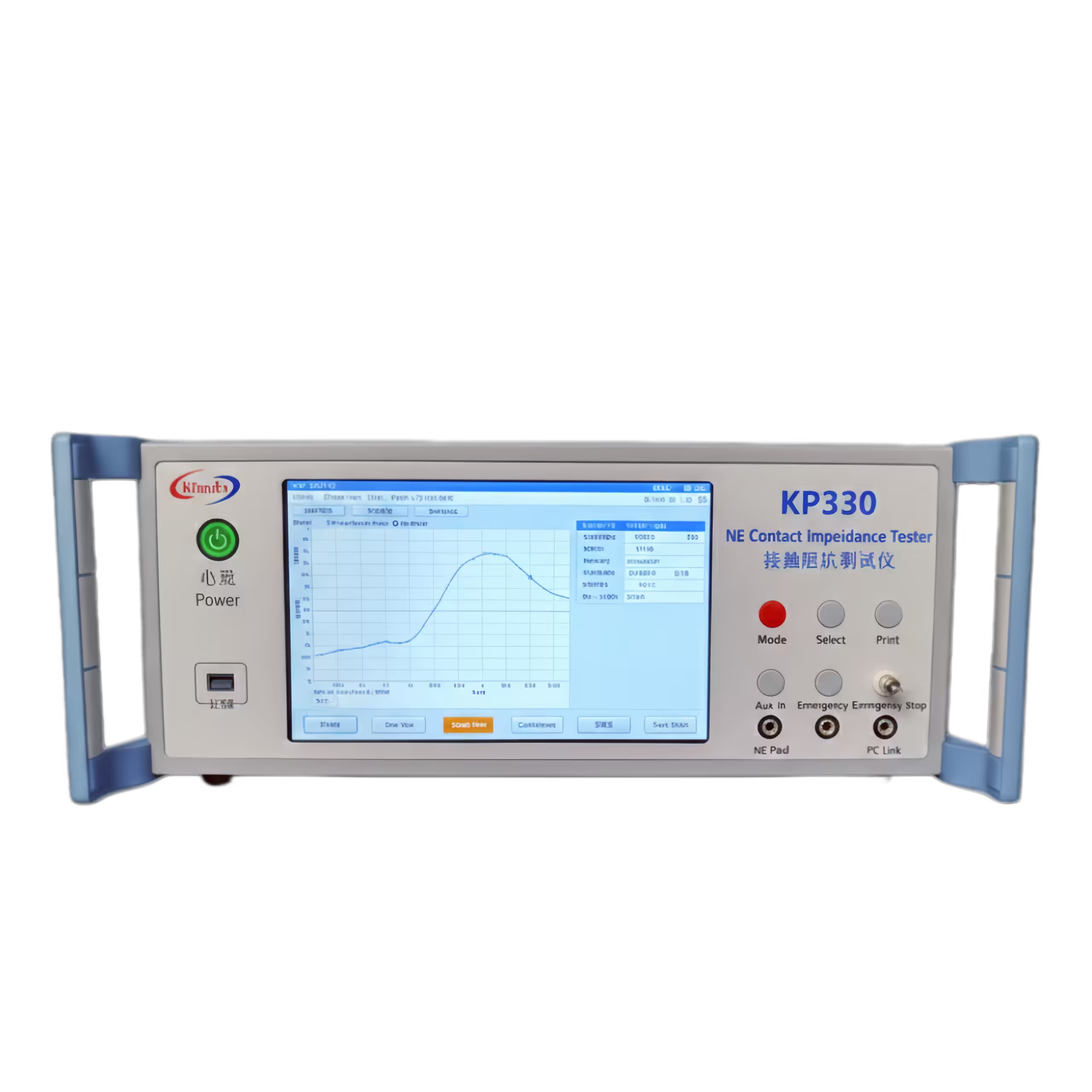
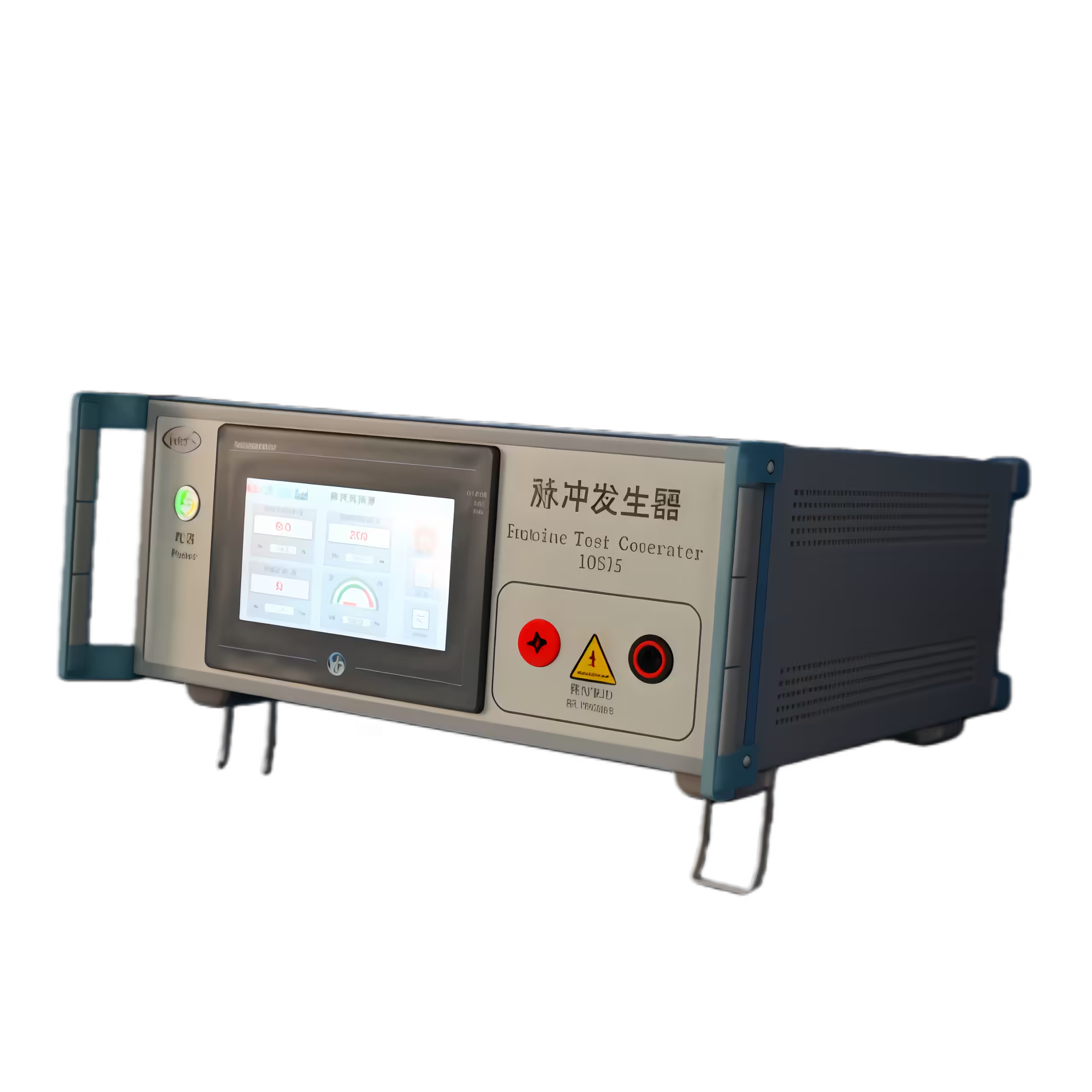
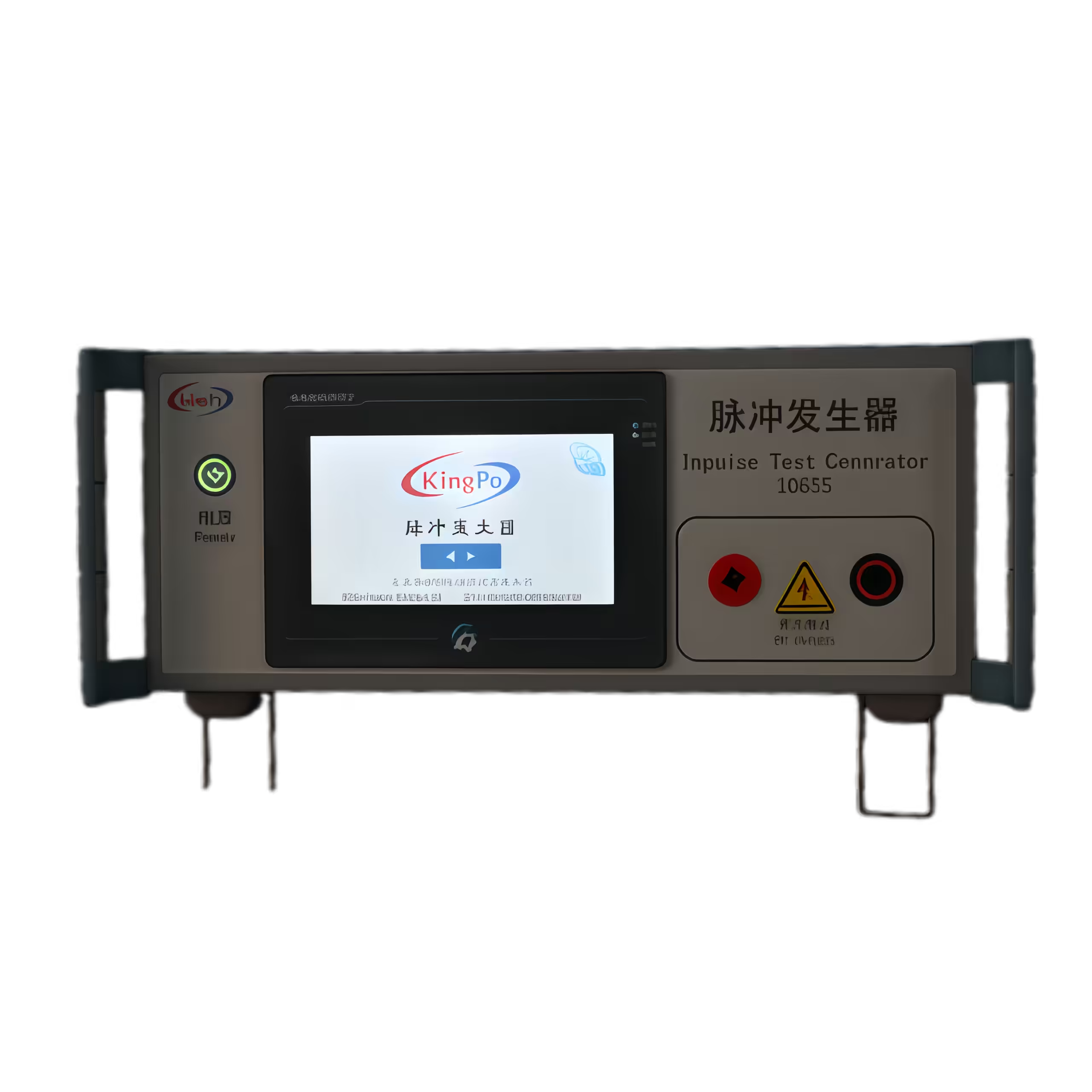
Essential equipment for residual voltage testing under IEC 60601-1, IEC 60335-1, IEC 61010-1, IEC 62368-1 and similar safety standards.
1. Product Background & Application Knowledge
A Capacitor Discharge Tester (also called Residual Voltage Tester) simulates the exact moment a plug is pulled out at the voltage peak, then measures how quickly the internal capacitors discharge. Core purpose: Ensure that 1 s (or 10 s) after disconnection, the accessible parts are ≤ 60 V (or 34 V) to prevent electric shock. Typical use scenarios:
- Medical devices (patient monitors, ultrasound, ventilators)
- Household appliances (vacuum cleaners, coffee machines, power tools)
- IT/AV equipment, laboratory instruments
- Certification labs, production line final inspection, R&D verification
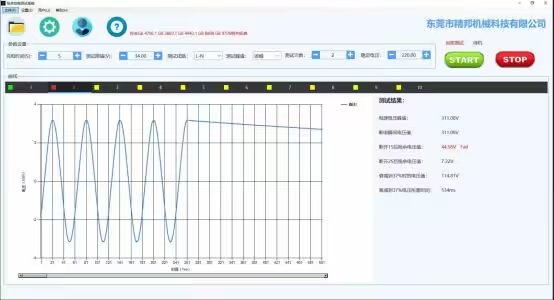
Capacitor Discharge Tester 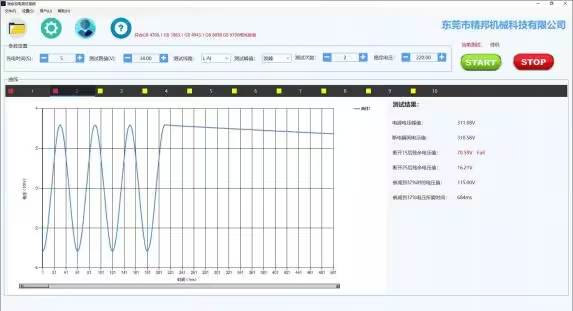
Capacitor Discharge Tester 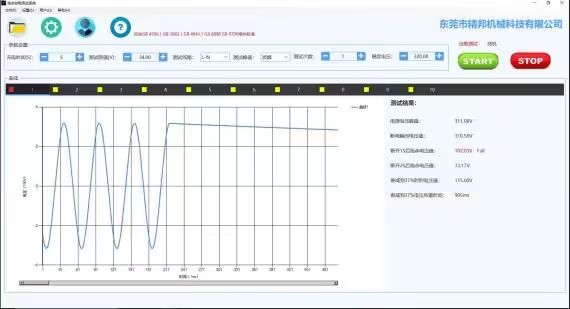
Capacitor Discharge Tester
2. Key Specifications Comparison Table
| Item | Compliance West CDT-240 | KingPo KP-1060 | Winner |
|---|---|---|---|
| Max test current | 8 A (optional 15 A) | 10 A | KP-1060 |
| Test voltage range | 90–270 Vrms | 0–300 V (0.1 V resolution) | KP-1060 |
| Disconnection timing | Peak ±5 % | Peak ±5 % | Tie |
| Sampling rate | Not disclosed (analog scope output) | 48 kS/s (FPGA solution) | KP-1060 |
| Display | Basic LCD + BNC scope output | Industrial touchscreen + scope output port (simultaneous monitoring) | KP-1060 |
| Test modes | Manual single shot only | Manual + Fully automatic (10 cycles per polarity combination) | KP-1060 |
| Alarm function | None | Automatic over-limit alarm + peak hold | KP-1060 |
| Standard accessories | CBX functional check box, calibration cert. | Three standard samples (for daily verification) + calibration cert. | KP-1060 |
| Brand positioning | US original manufacturer, ultra-reliable | Professional Chinese test-equipment maker, best value | – |
| Size / weight | Portable, 6 ft drop-proof | 3U rackmount, heavier but more capable | CDT-240 |
3. Similarities
- Both disconnect exactly at the voltage peak per IEC requirements
- High-impedance probes (>100 MΩ, <25 pF)
- Support L-N, L-G, N-G residual voltage tests
- Fully compliant with IEC 60601-1, 60335-1, 61010-1 etc.
- Come with traceable calibration certificates
4. Differences & Pros/Cons Analysis
CDT-240 Advantages
- American original brand, proven long-term stability, 6 ft drop-proof
- Built-in CBX self-check box – instant functional verification on power-up
- Simple one-button operation, very fast for experienced users
CDT-240 Disadvantages
- Manual mode only, no automatic multi-cycle testing
- Maximum test duration only 10 s
- Sampling rate not published – relies entirely on external oscilloscope
KP-1060 Standout Advantages (Why most labs choose it)
- 48 kS/s sampling rate with FPGA architecture → extremely clear waveform detail, captures microsecond-level discharge accurately
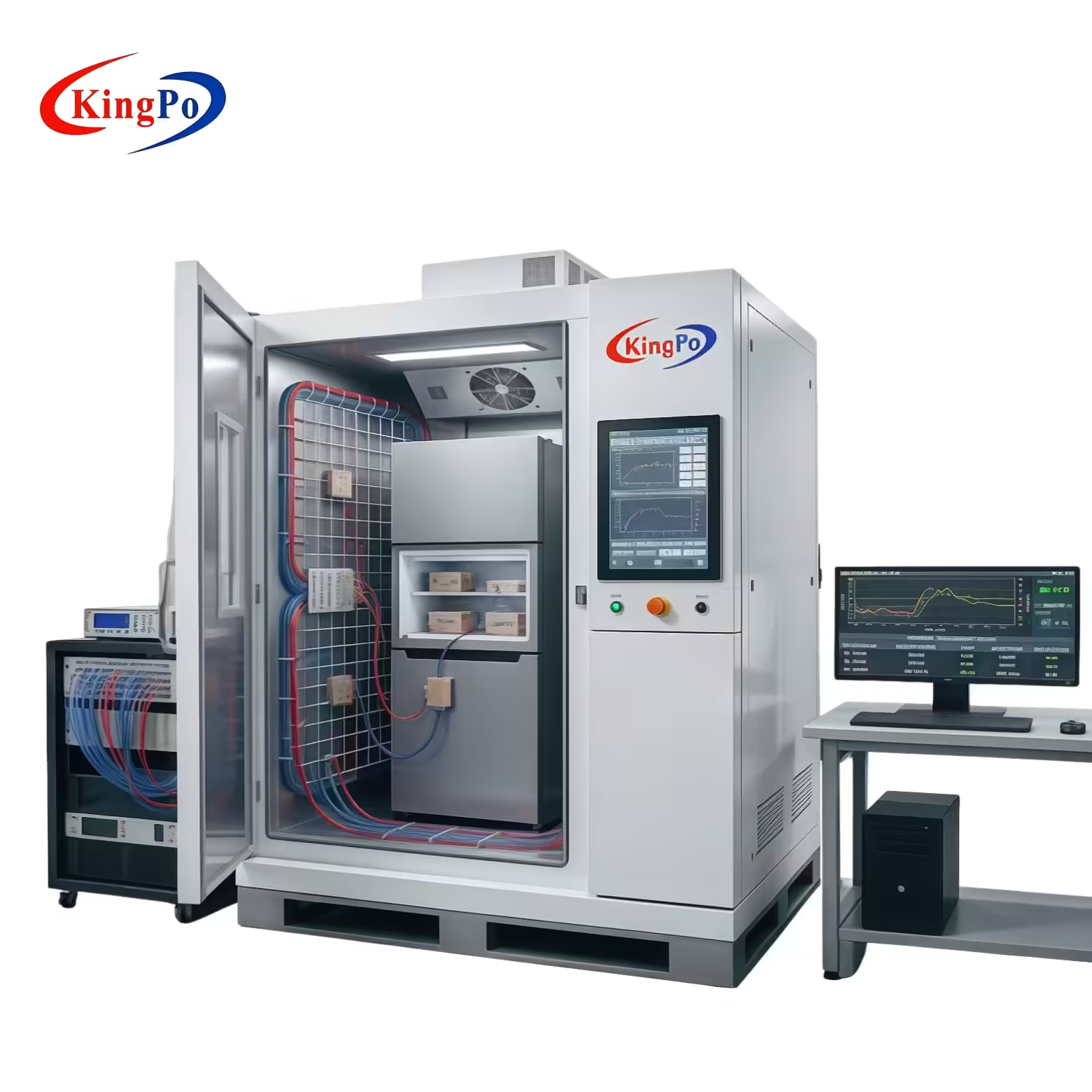
- Industrial touchscreen + real-time curve display → see the complete exponential decay curve, peak value and time constant instantly – no external scope needed
- Dedicated oscilloscope output port → can connect an external scope at the same time for dual-channel verification
- Comes with three standard samples (≈102 V / 70 V / 44 V) → perfect for daily verification, no extra purchase required
- Fully automatic mode: cycles through all polarity combinations automatically – 3–5× faster on production lines
- Over-limit alarm + peak hold – virtually eliminates operator error
- Wider voltage range (0–300 V) and longer timing (1–99 s) – covers future stricter standards
KP-1060 Minor Disadvantages
- Chinese brand (lower name recognition than Compliance West)
- Slightly heavier (3U enclosure) – less portable
5. Buying Decision Guide
Choose KP-1060 if you want (recommended for 90 % of users):
- Real-time discharge curve on the built-in screen
- Production-line efficiency (auto mode + alarm + daily verification samples)
- Touchscreen + scope output for double verification
- Future-proof performance at excellent value
Choose CDT-240 only if:
- You absolutely need a US-made, ultra-portable, drop-proof unit
- You already have an oscilloscope and prefer external waveform viewing
- You only do occasional manual tests
Final Verdict 2026: The KingPo KP-1060 is the clear overall winner. 48 kS/s FPGA sampling + touchscreen real-time curve + scope sync output + built-in daily verification samples give it superior waveform analysis, test efficiency and daily convenience. Most certification labs and production lines have already switched.
6. FAQ
Q1: Must the tester disconnect exactly at the voltage peak?
A: Yes. IEC standards explicitly require disconnection at the peak; otherwise the result is artificially low and will fail certification.
Q2: Is 48 kS/s sampling really necessary?
A: Absolutely. Basic testers only show the final voltage; 48 kS/s captures the full exponential curve so you can analyze time constant and verify genuine discharge.
Q3: Does the KP-1060 have an English interface?
A: Yes, full bilingual Chinese/English touchscreen interface.
Q4: How often should it be calibrated?
A: Recommended once per year; both brands offer traceable calibration services.
Q5: Which one is better for medical devices?
A: Both meet IEC 60601-1, but KP-1060 is increasingly preferred by test labs because of automatic testing, curve recording, built-in verification samples and dual monitoring.