KP6128 Hearing Aid Test Systemwith KP8583 Anechoic Box and 2CC Artificial Ear
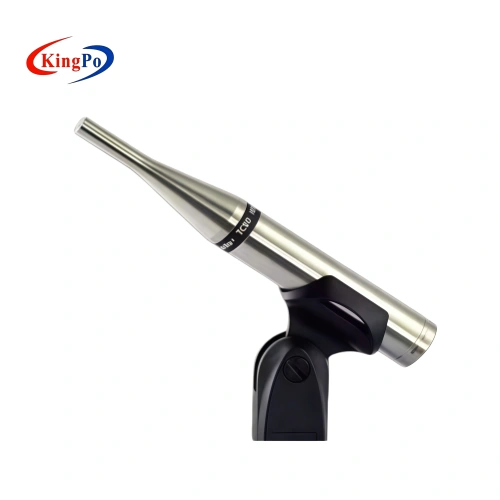
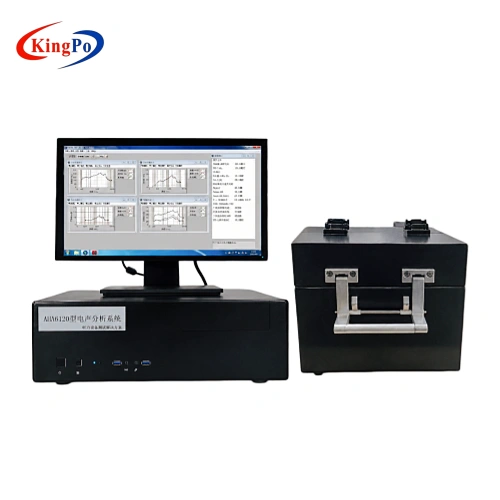
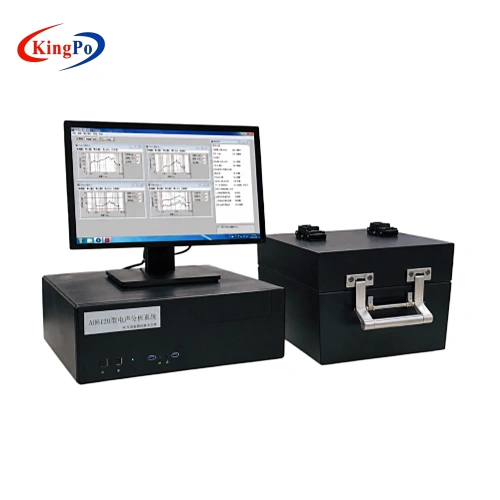
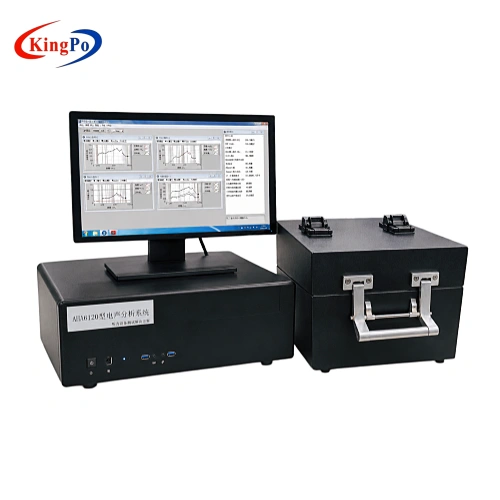
The KP6128 Hearing Aid Test System provides a complete solution for measuring the electroacoustic performance of hearing aids. The system combines a precision main unit, an anechoic test box (KP8583), and a 2CC artificial ear / coupler assembly to create a stable and repeatable measurement environment.
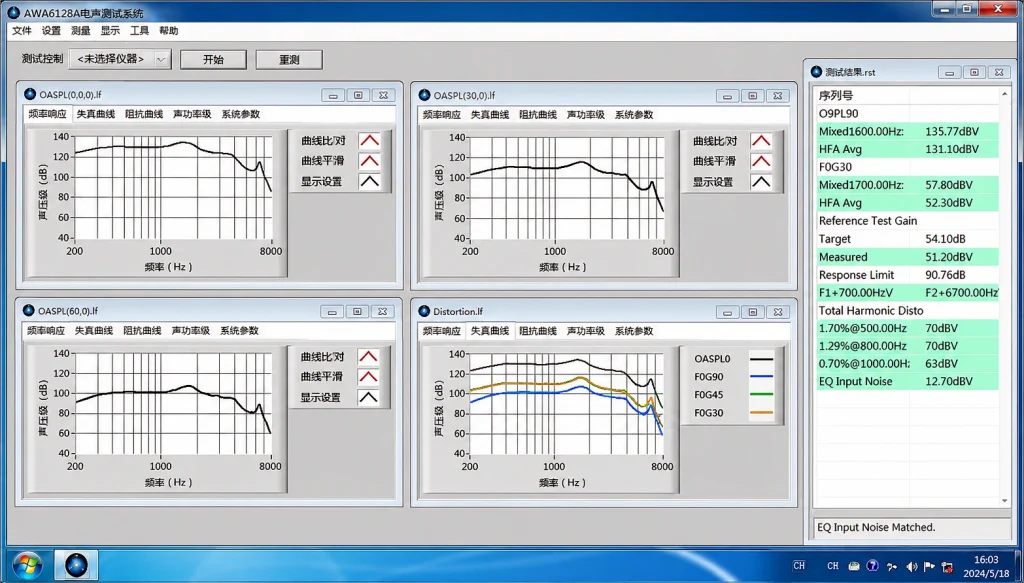
During testing, the sound source inside the anechoic box is calibrated to deliver specified sound pressure levels. The hearing aid microphone picks up the sound, amplifies it, and drives the receiver. The microphone inside the artificial ear captures the acoustic output, allowing the software to calculate key parameters such as OSPL90, FOG50, frequency response, distortion, and noise levels.
This system is suitable for production line sampling, incoming inspection, outgoing quality verification, and test reporting and electroacoustic documentation before delivery.
Technical Parameters
Acoustic Input – Test Microphone
| Item | Specification | Remark or Notes |
|---|---|---|
| Frequency Range | 200 Hz – 8000 Hz | – |
| Measurement Range | 30 dBSPL – 130 dBSPL (Z-weighted) | Microphone reference sensitivity -26 dBV/Pa |
| Resolution | 0.1 dB | – |
| Amplitude Error | ≤ ±1.0 dB (200 Hz–3 kHz); ≤ ±2.0 dB (3 kHz–8 kHz) | Relative to 1 kHz |
Acoustic Output – Test Sound Source
| Item | Specification | Remark or Notes |
|---|---|---|
| Frequency Range | 200 Hz – 8000 Hz (100 Hz interval) | – |
| Frequency Error | Better than 0.5% | – |
| Output SPL | 50 dBSPL – 130 dBSPL | – |
| Amplitude Error | ≤ ±1.5 dB (200 Hz–3 kHz); ≤ ±2.5 dB (3 kHz–8 kHz) | By comparison method |
| Total Harmonic Distortion | ≤ 1.0% at 70 dBSPL; ≤ 2.0% above 70 dBSPL and ≤90 dBSPL | From 200 Hz to 8 kHz |
Dynamic, Telecoil and Battery Measurement
| Item | Specification | Remark or Notes |
|---|---|---|
| Attack / Release Time | 50 ms – 5 s; accuracy ±10% or ±2 ms | Whichever is greater |
| Telecoil Output | MASL: 10 mA/m; ETLS: 31.6 mA/m | Magnetic field strength |
| Battery Current | 0.00 – 10.00 mA; accuracy ±5% of reading | Available current > 10 mA |
| Battery Voltage | 0 – 10 V; voltage error ±0.2 V (open circuit) | – |
Physical & Environmental
| Item | Specification | Remark or Notes |
|---|---|---|
| Main Unit Dimensions | 440 × 325 × 151 mm (W × D × H) | Approx. 8 kg |
| Anechoic Box (KP8583) | 345 × 300 × 260 mm (W × D × H) | Approx. 20 kg |
| Operating Temperature | 0 °C – 40 °C | – |
| Operating Humidity | 20% – 90% RH, non-condensing | – |
| Transport / Storage Temperature | -20 °C to 60 °C | – |
| Transport / Storage Humidity | 5% – 95% RH, non-condensing | – |
Professional Construction & Technical Precision
The KP6128 system integrates a high-precision test microphone, calibrated sound source, and 2CC artificial ear / coupler assembly within a controlled anechoic environment (KP8583). The main unit provides stable signal generation and high-resolution measurement (0.1 dB) with defined amplitude error limits. The software automatically calculates key electroacoustic parameters according to the selected test sequence.
The system supports production quality control, incoming inspection, outgoing verification and electroacoustic documentation workflows, helping manufacturers maintain consistent hearing aid performance before delivery.
Measurement Principle
Inside the anechoic box, the test microphone calibrates the sound source to generate specified sound pressure levels at selected frequencies. The hearing aid microphone receives the acoustic signal, amplifies it, and drives the receiver. The microphone inside the 2CC artificial ear / coupler assembly measures the acoustic output. The software then processes the data to calculate parameters such as OSPL90, FOG50, frequency response, total harmonic distortion, equivalent input noise, attack/release time, and telecoil performance.
Applications & Use Cases
This system is used by hearing aid manufacturers, quality assurance teams, and testing laboratories for production line quality control, incoming inspection, outgoing product verification, and electroacoustic performance evaluation.
Typical Applications:
- Production sampling and process control
- Supply chain and delivery quality assurance
- Electroacoustic performance verification
- Test reporting and electroacoustic documentation
Key Advantages
- Integrated anechoic box and 2CC artificial ear / coupler assembly for stable, repeatable measurements
- Supports selected international and national hearing aid electroacoustic test standards
- Comprehensive test functions including acoustic, telecoil, and battery parameters
- Defined amplitude error limits and 0.1 dB measurement resolution
- User-friendly software with automatic curve display and result calculation
- Suitable for production quality control and delivery verification workflows