As EV charging power continues to increase toward 350–500 kW, connector reliability has become one of the most difficult challenges in the entire charging infrastructure.
In the lab, we repeatedly see the same situation: connectors that pass initial certification tests without issue later develop overheating, unstable contact resistance, or mechanical problems once they face the full combination of repeated mating cycles, high current, humidity, and vibration.
One Common Misconception
Many people still think IEC 62196-1 is primarily a dimensional or basic electrical rating standard. In reality, the standard’s greatest value lies in forcing connectors to prove long-term reliability under conditions that closely simulate real-world use — especially after mechanical wear and environmental stress have taken their toll.
One common misconception is that connectors only fail because of obvious design defects or insufficient current capacity. In practice, many failures develop gradually through small degradations that accumulate across multiple stages of testing.
What Really Matters in IEC 62196-1
The most demanding requirements usually revolve around the combination of:
- Mechanical endurance (Clause 22) followed by temperature rise testing (Clause 24)
- Corrosion and humidity preconditioning (Clause 30)
- Electronic lock durability and withdrawal force (Clauses 14 & 25)
For many connectors, the initial thermal test on a brand-new sample is straightforward. The real difficulties only surface after endurance cycling, humidity exposure, and repeated high-current loading are combined.
Common Failure Modes We Observe in Real Testing
Contact Resistance Drift
Fresh silver-plated contacts often start below 0.5 mΩ. After several thousand cycles, resistance slowly climbs. Even a seemingly small increase of 0.2–0.3 mΩ can push temperature rise beyond the 45 K limit when tested at 125 A or higher. This is currently the most frequent root cause we encounter during temperature rise failures.
In several Type 2 connector projects, samples remained stable through the first few thousand cycles before resistance began increasing rapidly between approximately 8,000 and 10,000 cycles, especially after humidity preconditioning.
Spring Force Relaxation
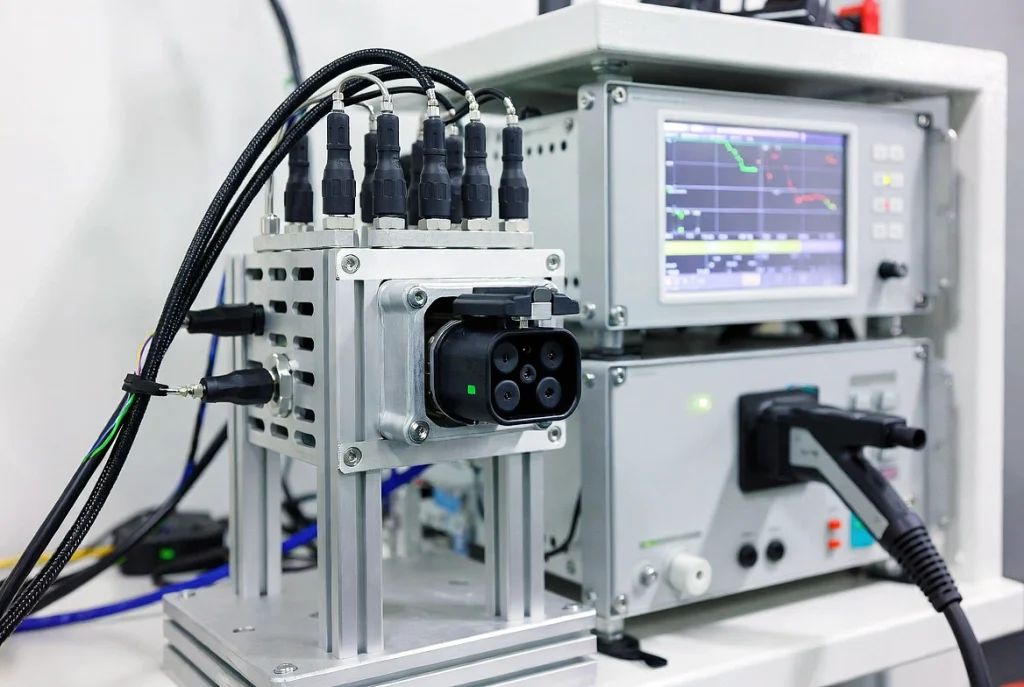
Increasing contact force improves initial thermal stability, but it also accelerates mechanical wear during repeated mating cycles. We often measure 25–40% force loss after 8,000–10,000 cycles, leading to reduced contact area and localized hot spots.
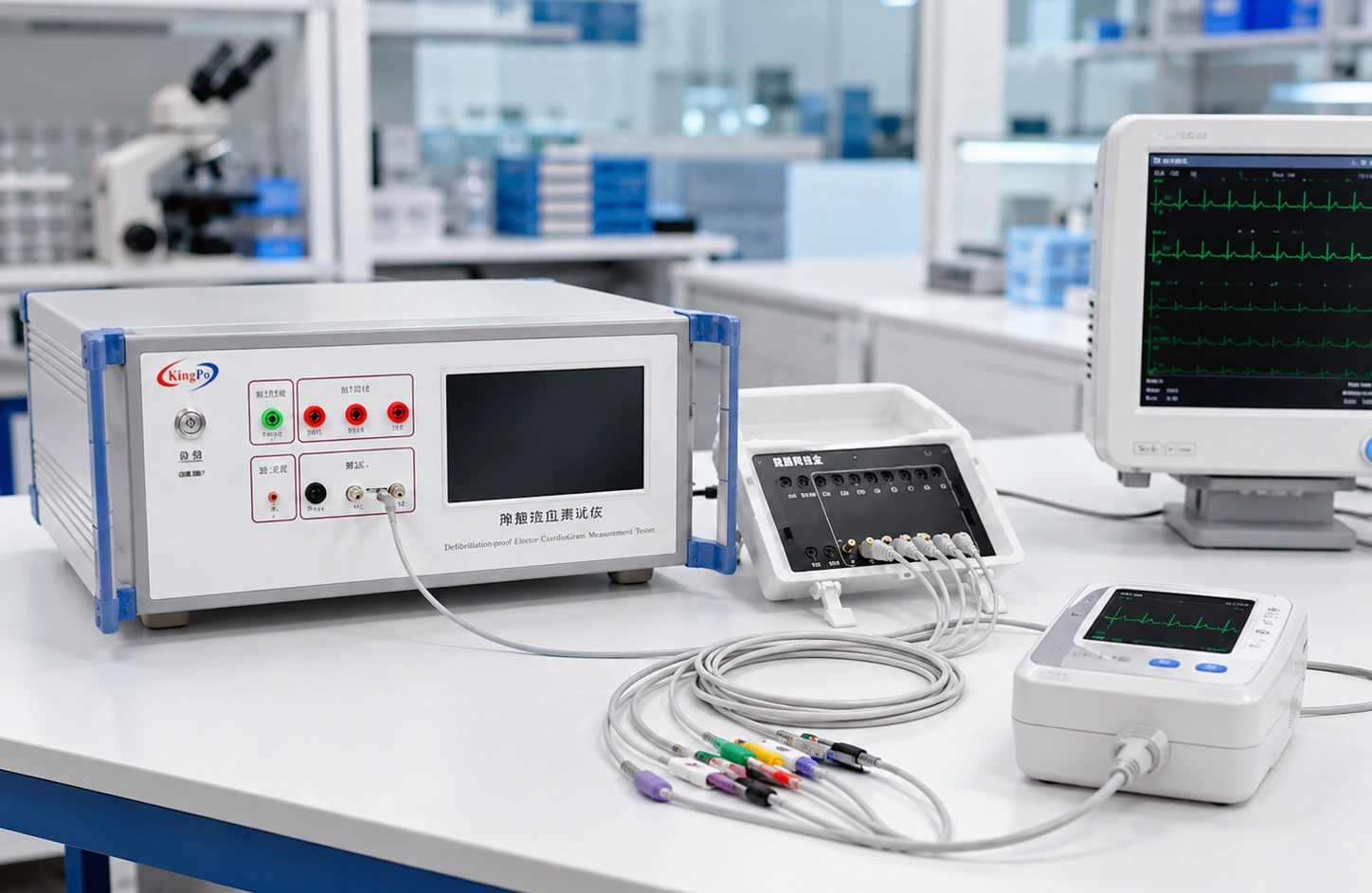
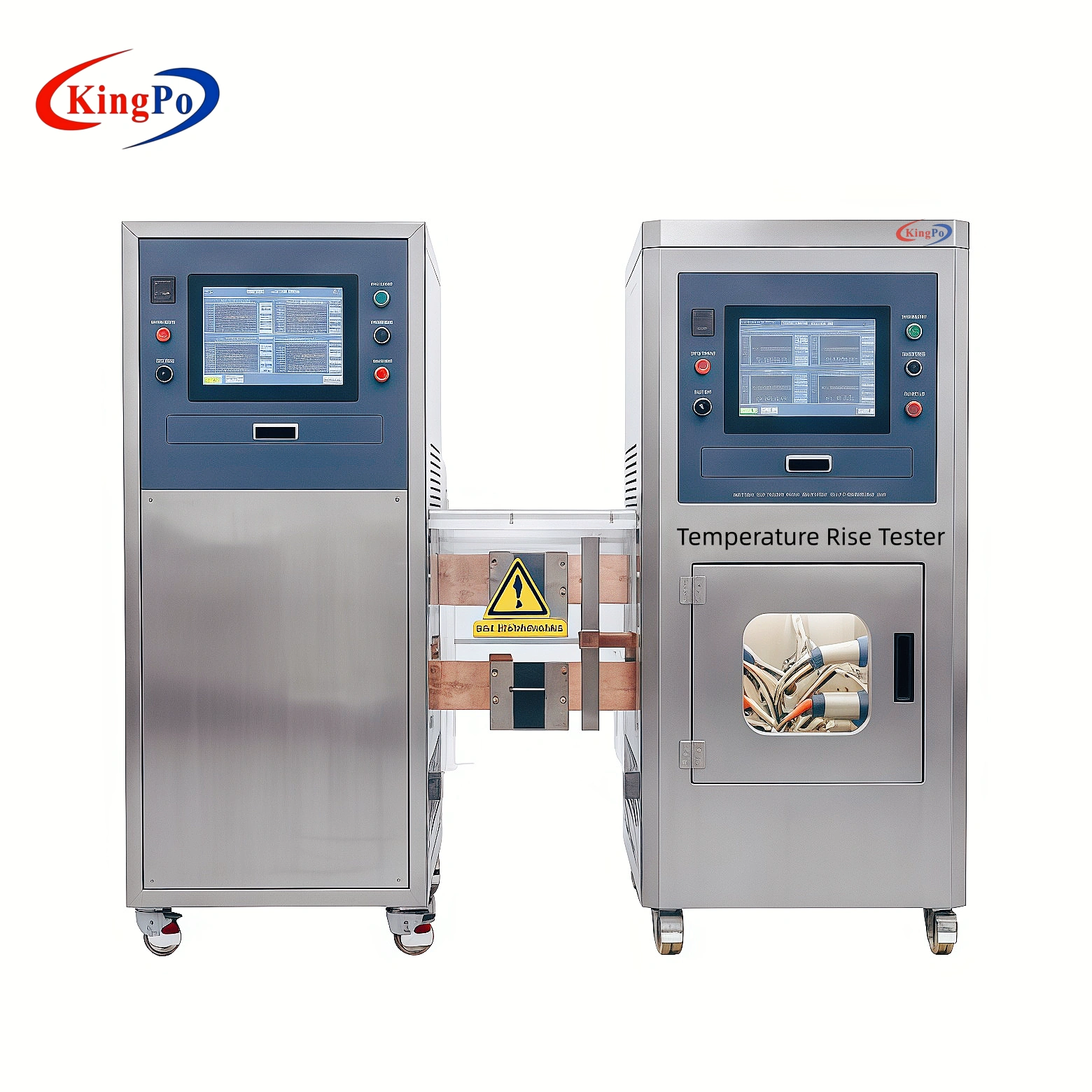
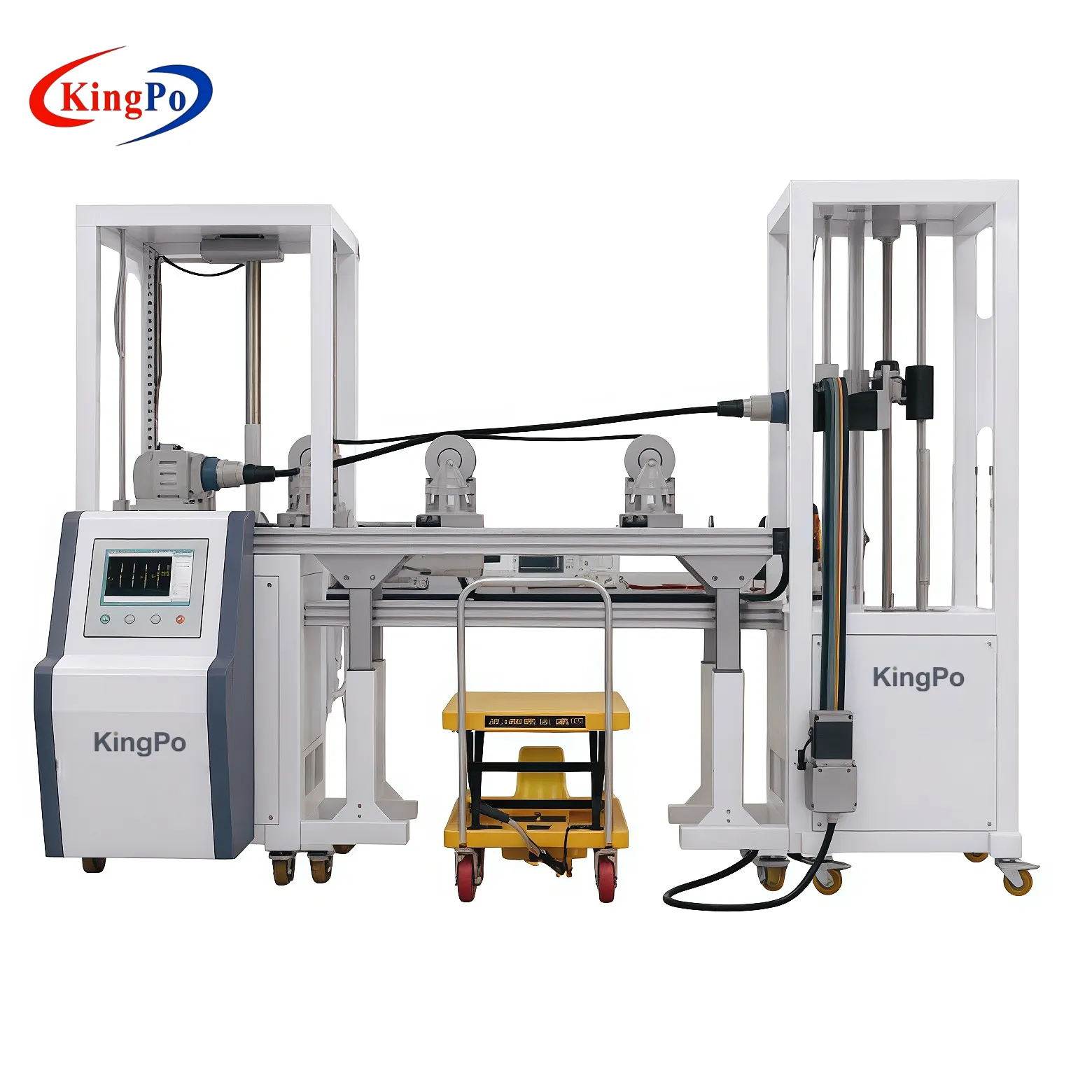
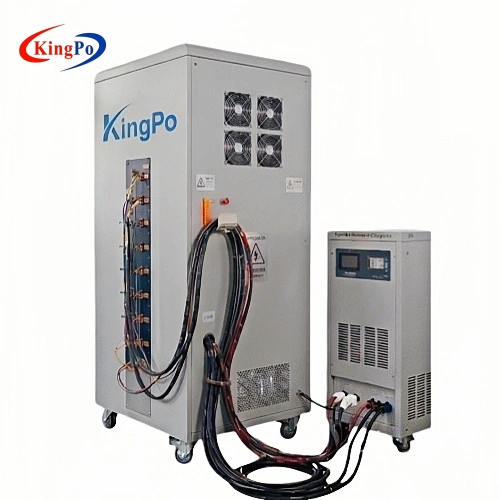
High-Stability EV Connector Temperature Rise Test System
Silver Plating Wear and Micro-Arcing
High mating cycles gradually damage the plating surface. Once base metal becomes partially exposed, oxidation accelerates. Interestingly, some connectors appear acceptable immediately after endurance cycling but show noticeably worse performance after sitting unused for 24–48 hours.
Cable Anchorage and Terminal Loosening
Repeated flexing and vibration can gradually loosen terminal connections. This is particularly common in flexible cable assemblies and often only becomes obvious after the full test sequence including Clause 30 humidity exposure.
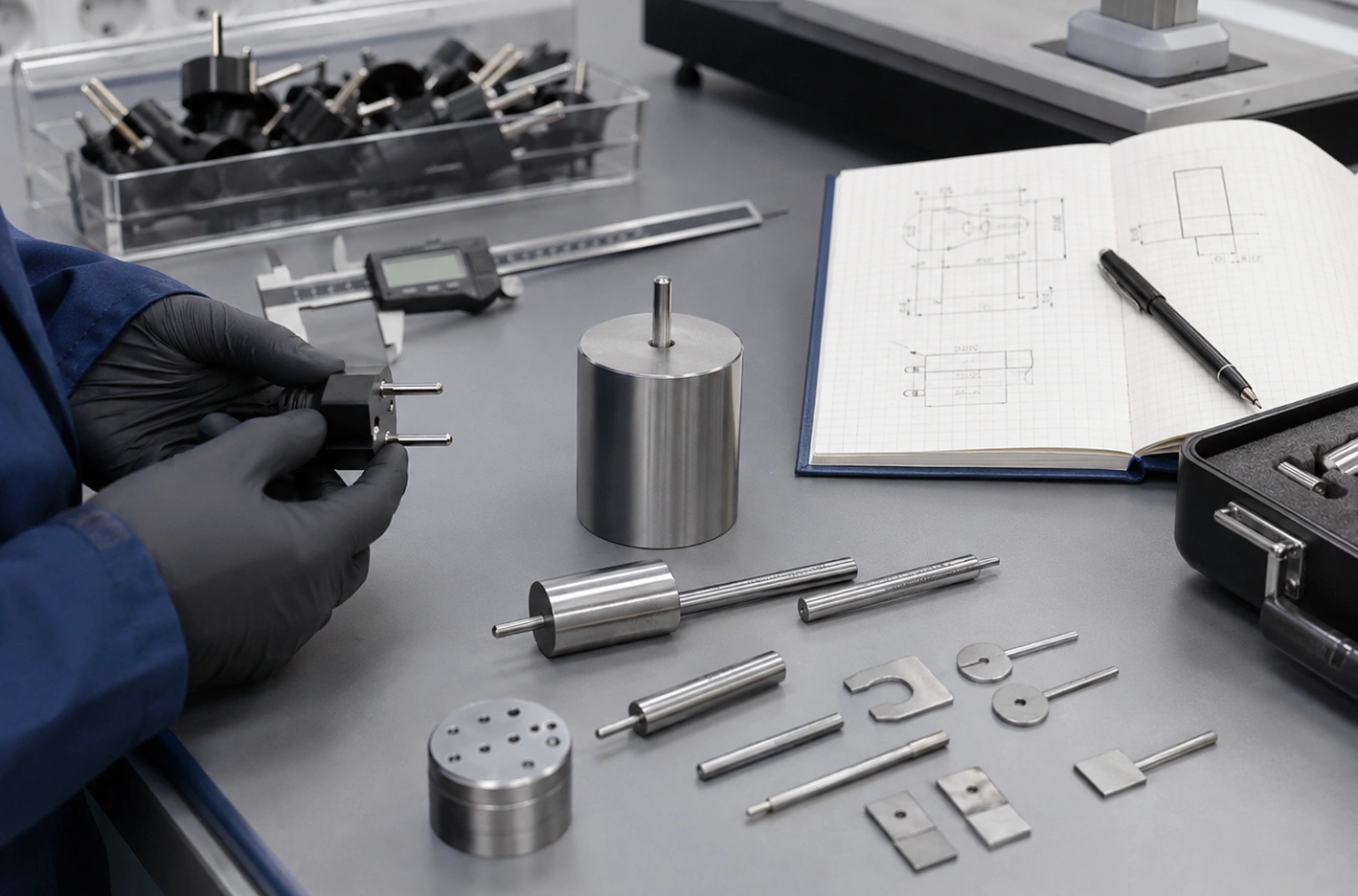
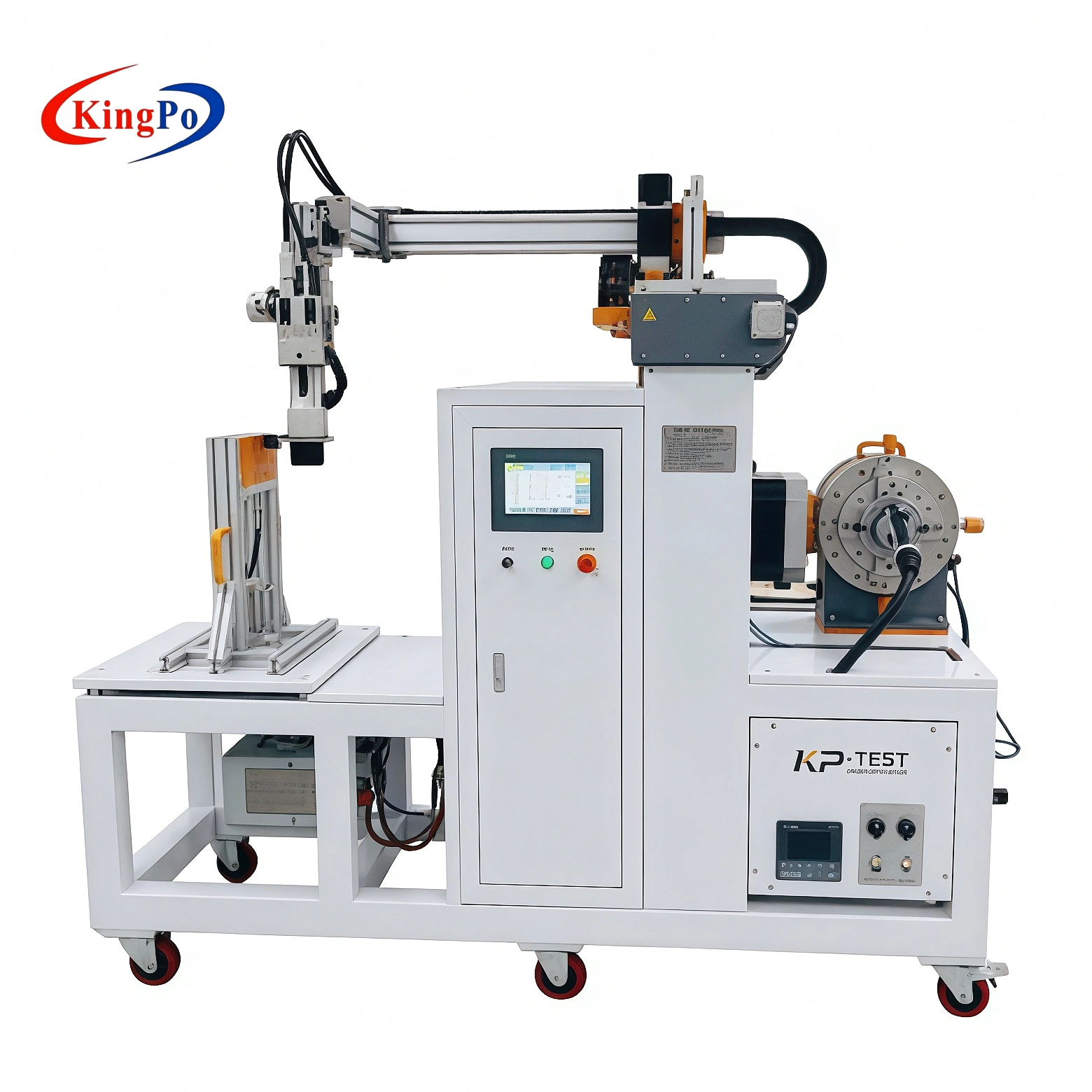
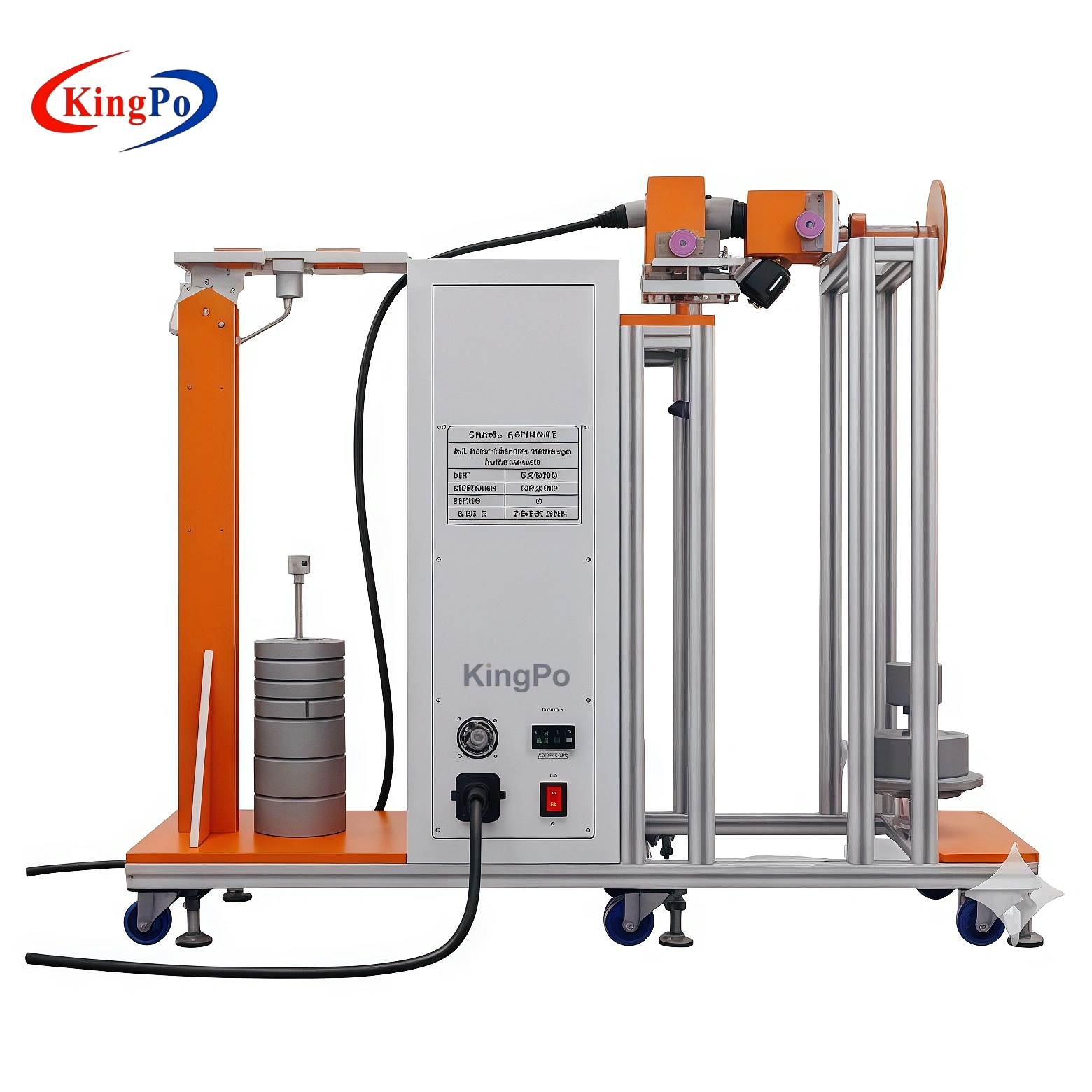
Vehicle Plug Pull Torque Tester IEC 62196-1
Electronic Lock Reliability
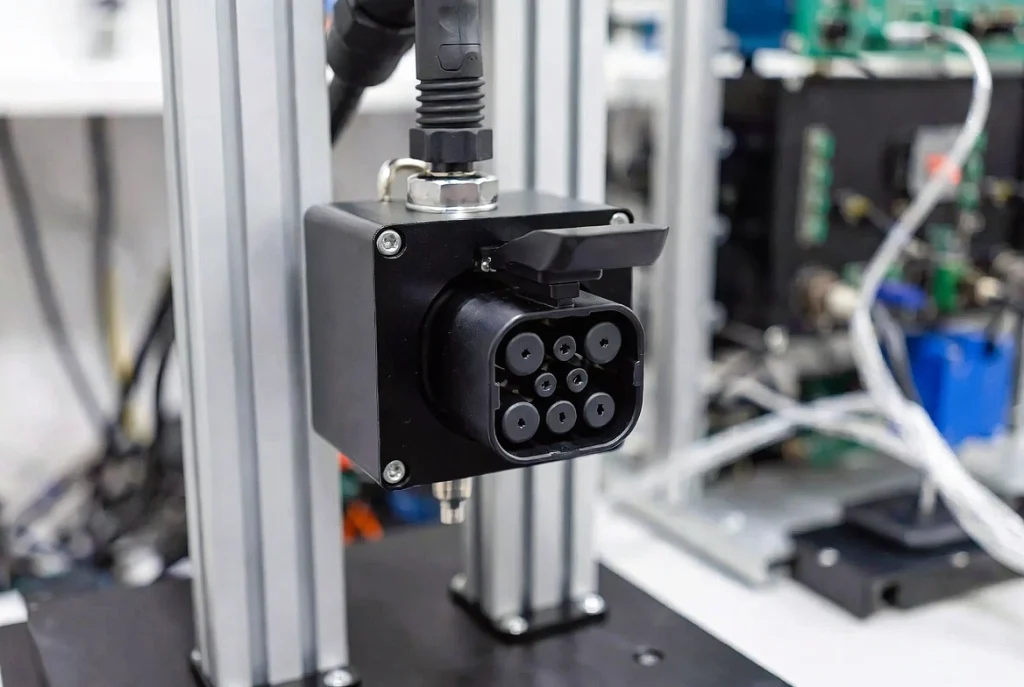
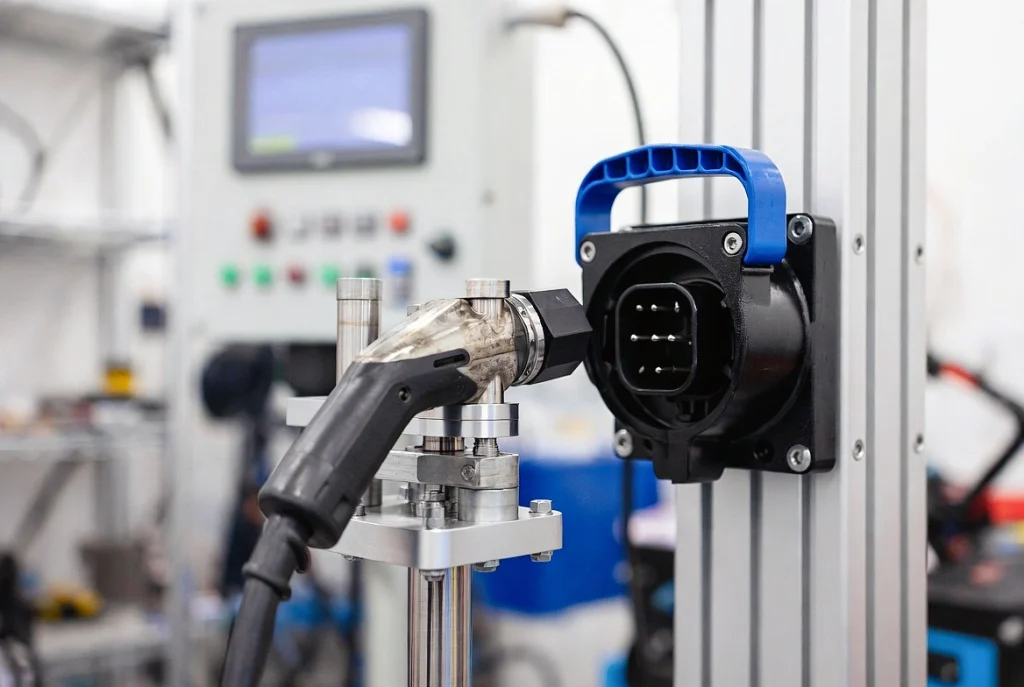
Locks that operate smoothly at the beginning can later develop sticking, incomplete engagement, or reduced holding force after endurance testing. As electronic locking mechanisms become more common in modern EV charging systems, this has become an increasingly important reliability concern — especially for outdoor charging applications exposed to dust, humidity, and temperature variation.
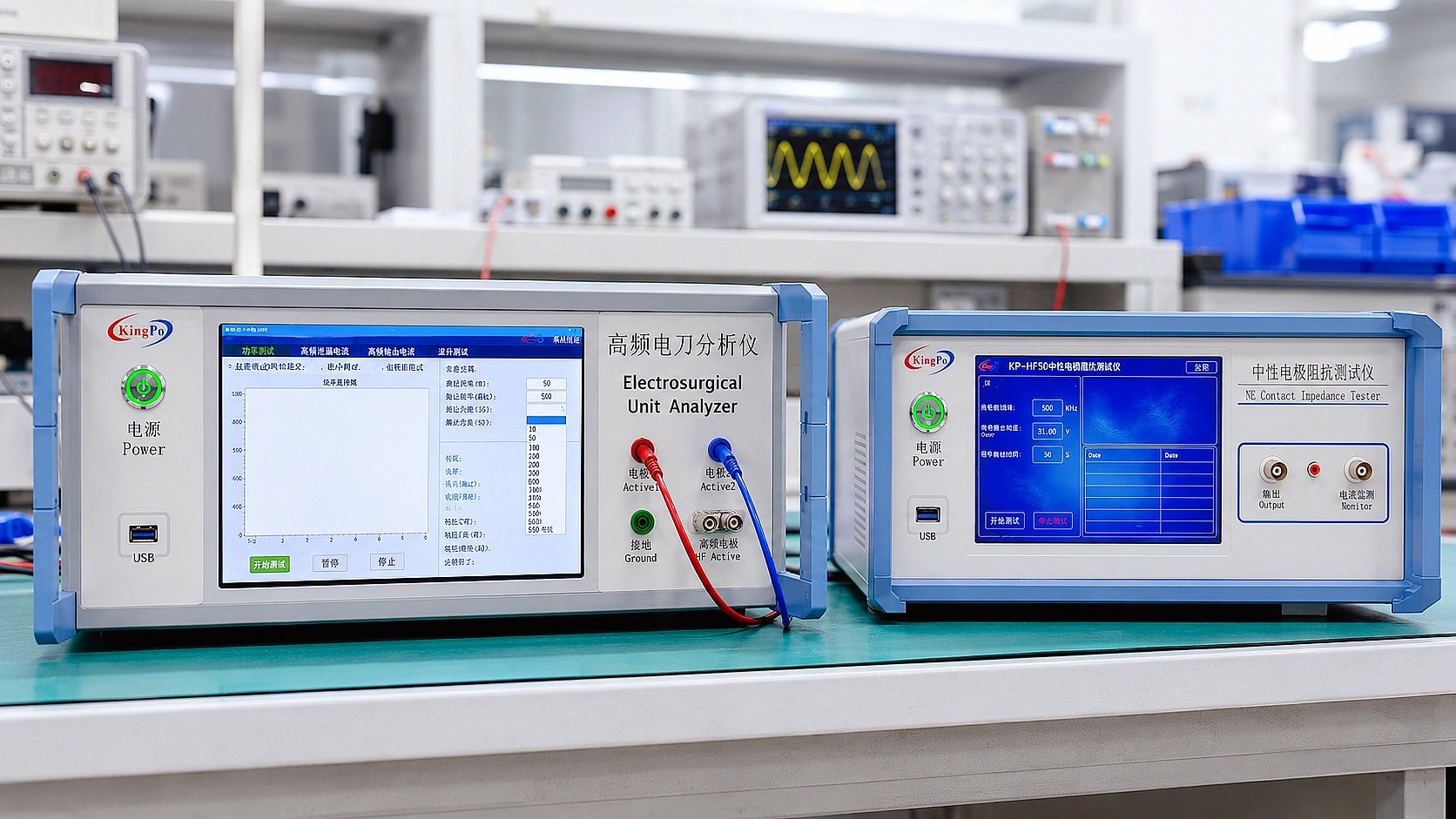
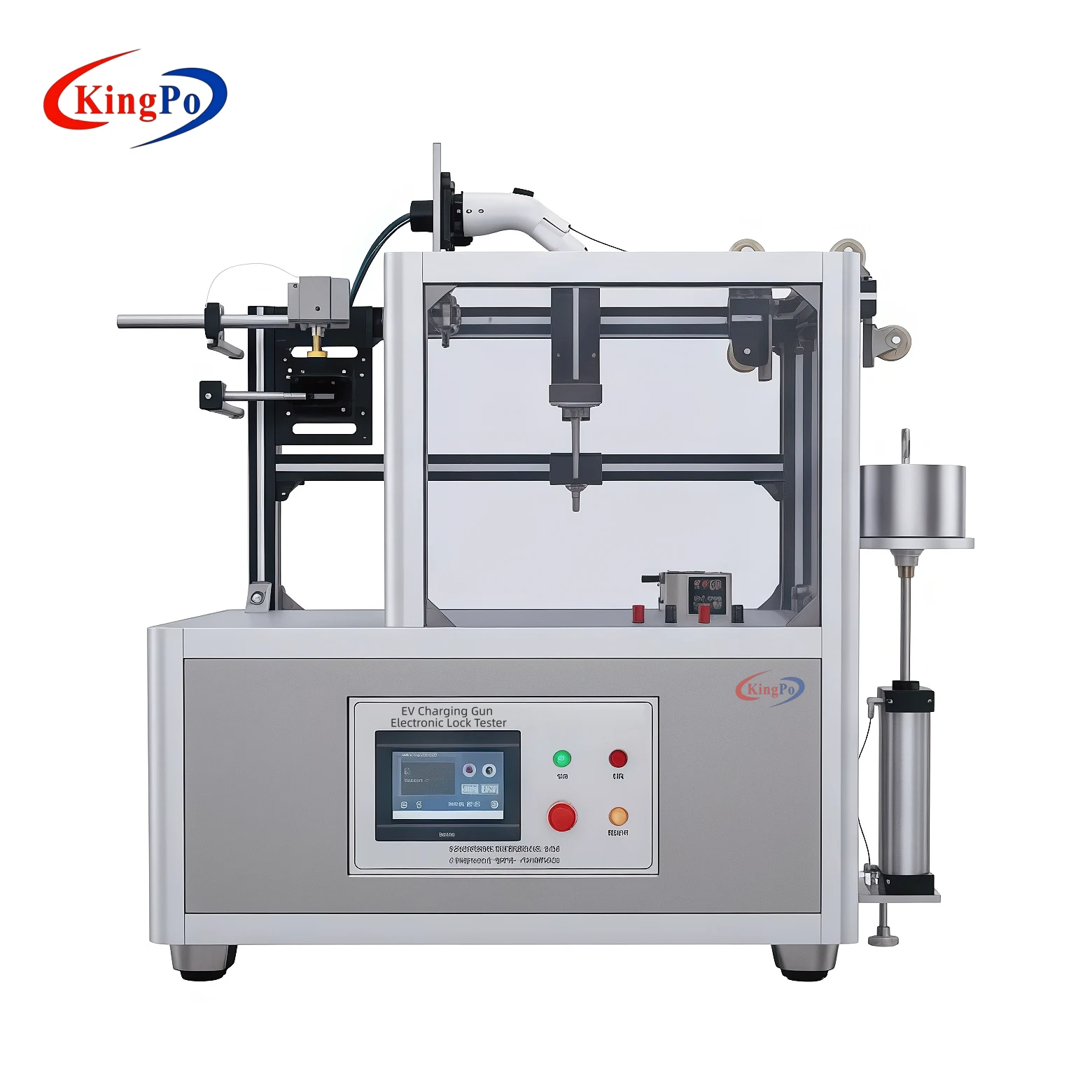
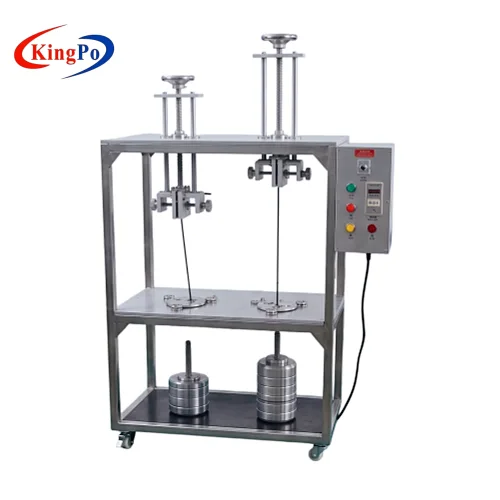
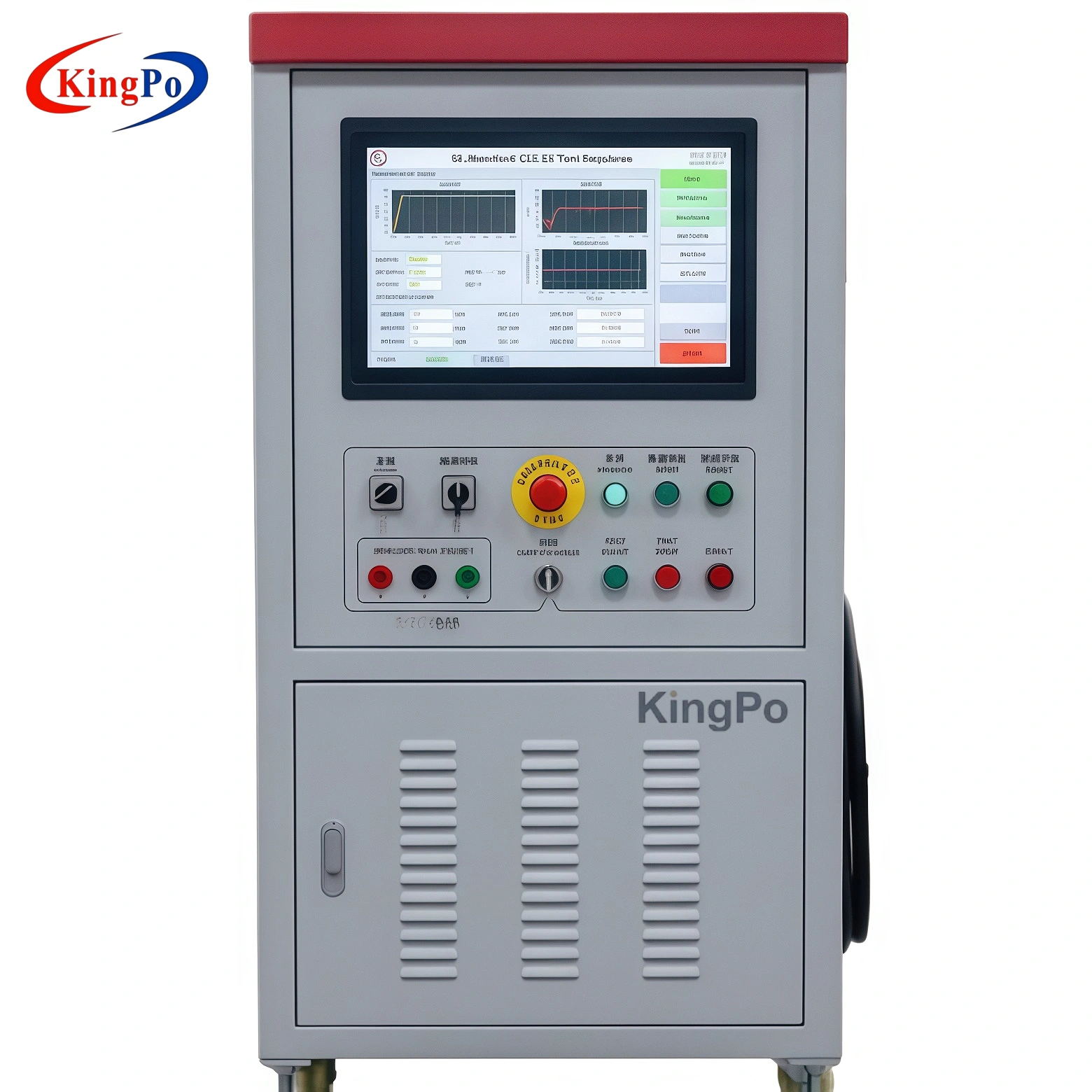
Electronic Lock Tester IEC 62196-1
Fixture and Measurement Effects
Surprisingly, small inconsistencies in sample mounting or thermocouple placement can easily create 5–12 K differences in measured temperature rise. This remains one of the most common causes of non-repeatable results between different laboratories.
Practical Insights from the Lab
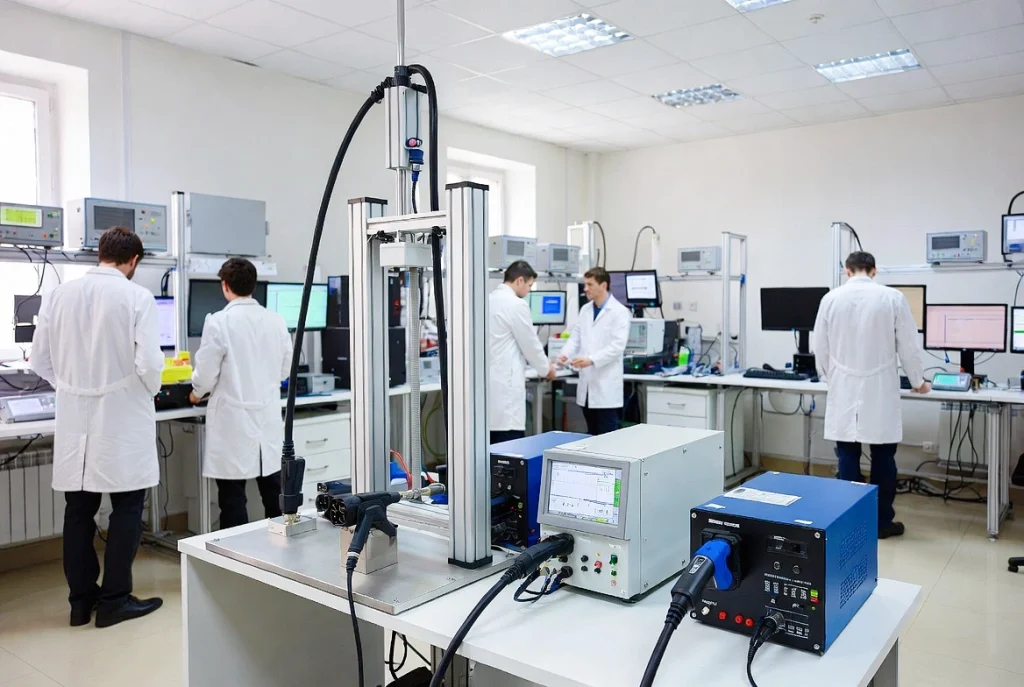
One recurring pattern is that connectors performing adequately at 32 A often become unstable at 125 A or higher once mechanical endurance and environmental preconditioning are completed. Failures are rarely caused by one major design flaw. More often, small degradations accumulate slowly across multiple test stages until thermal performance finally crosses the acceptable limit.
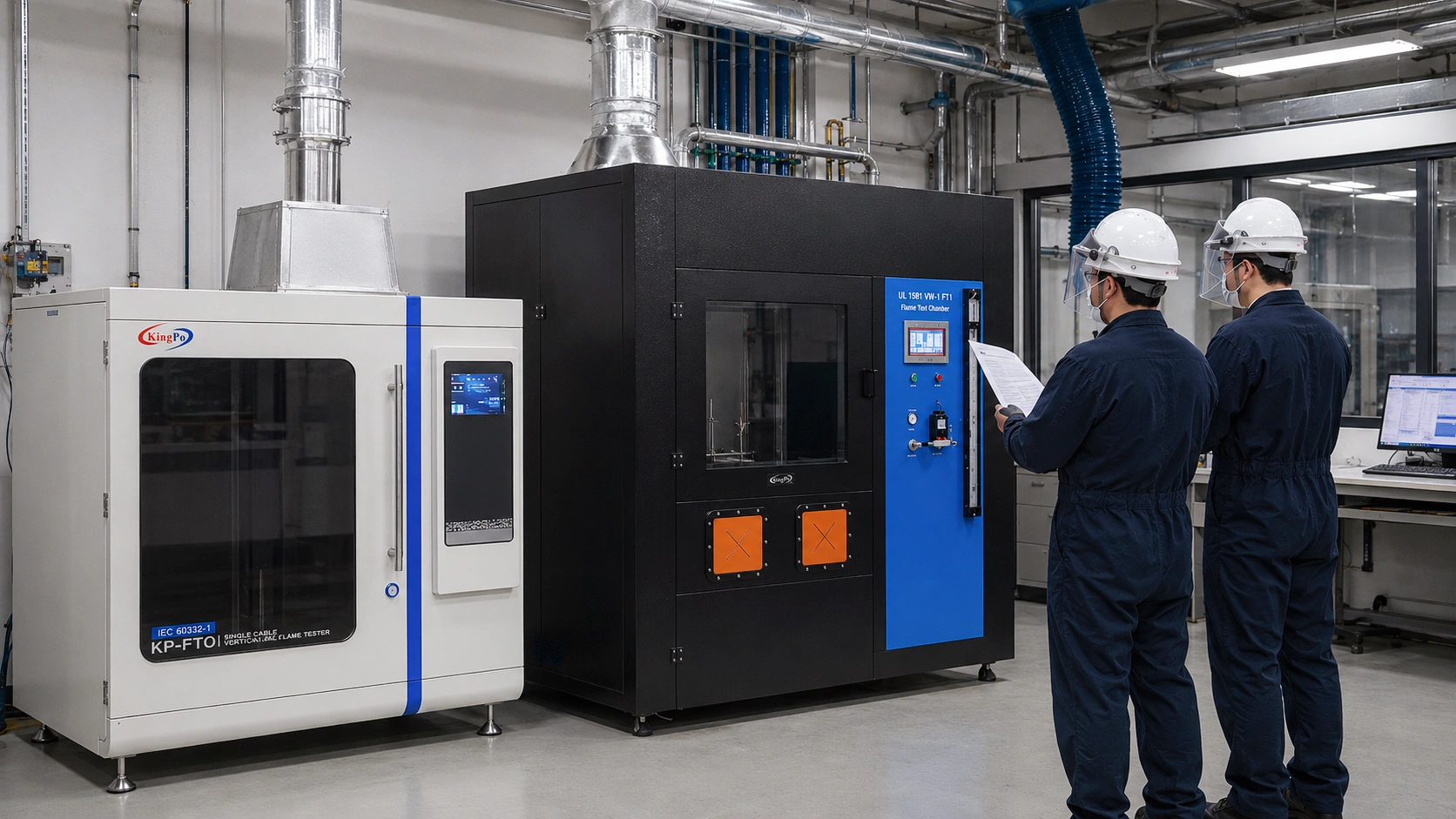
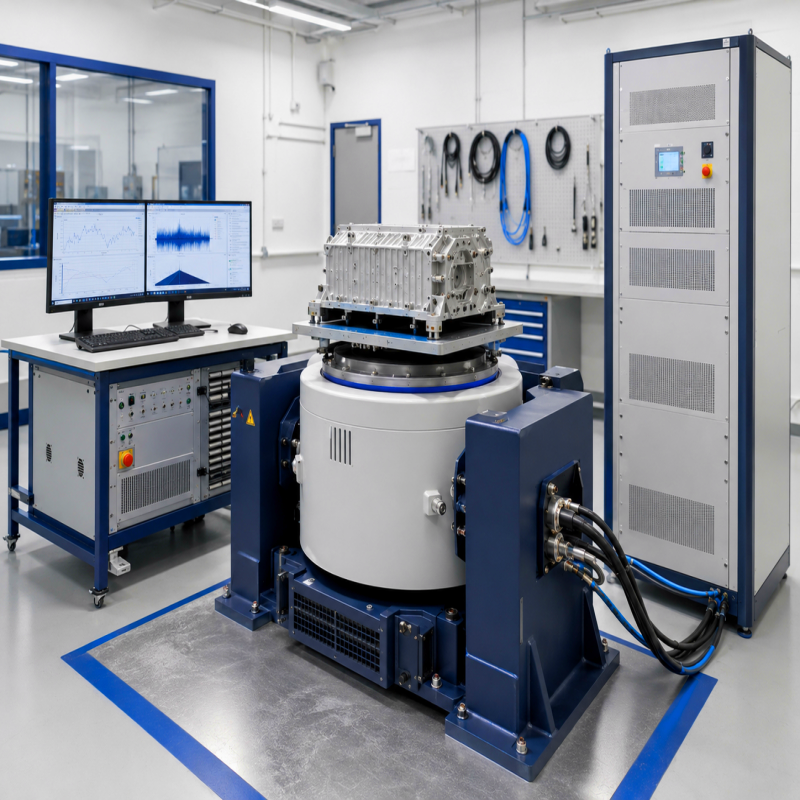
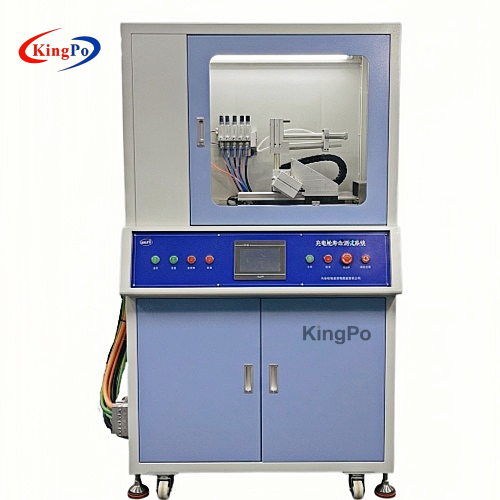
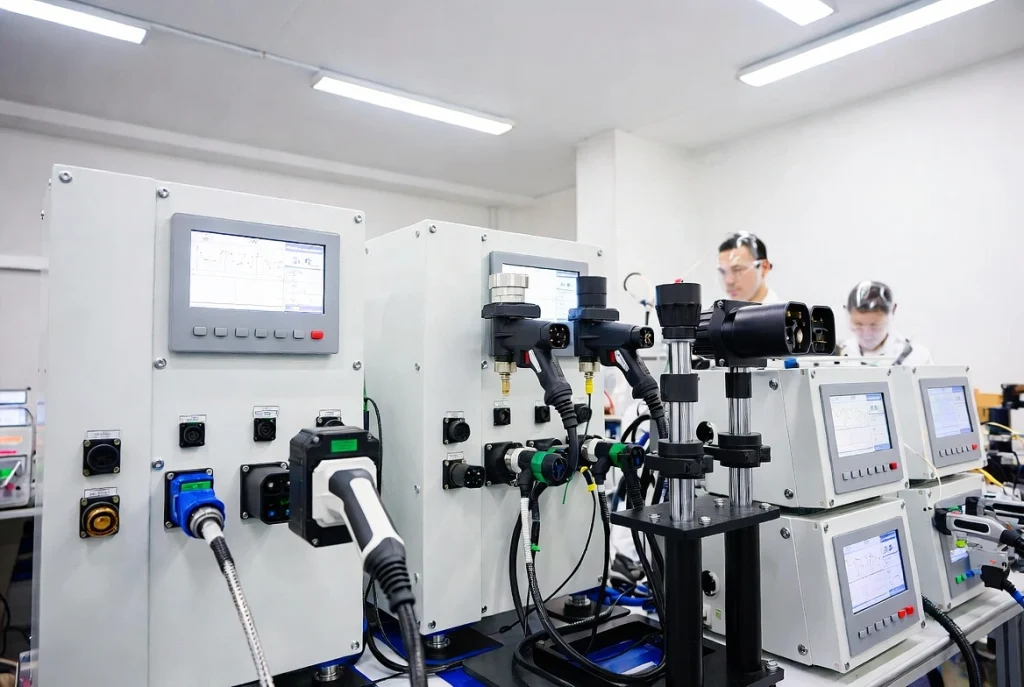
EV Charging Plug Life Test System
Engineering Considerations
- Monitor contact resistance trends throughout the entire test program — it is usually the earliest warning sign.
- Test temperature rise at or near the maximum rated current rather than relying only on nominal values.
- Always include environmental preconditioning before final thermal validation.
- Pay close attention to fixture repeatability and thermocouple attachment methods.
- Carefully balance design trade-offs: higher contact force improves thermal performance but may accelerate mechanical wear.
- Evaluate connector behavior after recovery periods, not only immediately after cycling.
Final Observations
In several projects, we have seen connectors pass certification comfortably during early testing, only to become unstable later after endurance cycling, humidity exposure, and high-current loading were combined together.
What makes IEC 62196-1 challenging is that failures rarely come from a single catastrophic mistake. More often, reliability slowly degrades through small changes in contact resistance, spring force, plating condition, or fixture consistency until thermal performance eventually crosses the limit.
This is also why connector reliability cannot be evaluated from initial test results alone. Long-term behavior under repeated mechanical and environmental stress is often what separates connectors that merely pass certification from those that remain stable in real field operation years later.