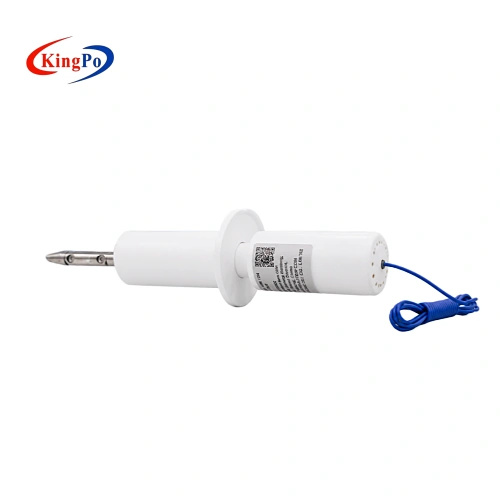
IEC 61032 Test Probe B for IP2X accessibility testing in an electrical safety laboratory
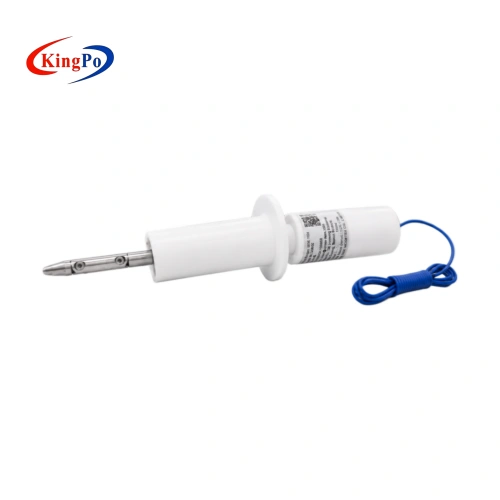
IEC 61032 jointed test finger for hazardous parts accessibility evaluation
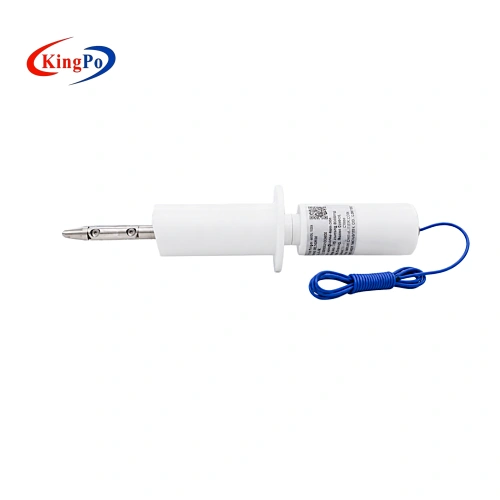
IP2X test probe with external contact indication connection for laboratory testing
IEC 61032 Test Probe B for IP2X accessibility testing in an electrical safety laboratory
IEC 61032 jointed test finger for hazardous parts accessibility evaluation
IP2X test probe with external contact indication connection for laboratory testing

IEC 61032 Test Probe B – IP2X Jointed Test Finger

The IEC 61032 Test Probe B is a jointed test finger designed for finger-accessibility and hazardous-part access testing through enclosure openings. It is suitable for electrical safety laboratories, certification testing and IP2X-related evaluation.

  • Test purpose: Evaluates whether a finger-type access probe can reach hazardous parts through enclosure openings
  • Main standard references: IEC 61032 and IEC 60529, with applicable use in IEC 60335-1 safety testing
  • Probe concept: Two-joint articulated finger for simulating human finger access
  • Laboratory use: Supports 10 N force application verified by a force gauge and external electrical contact indication
  • Typical users: Third-party laboratories, certification organizations, appliance manufacturers and electrical product safety teams
  • Documentation support: Calibration or dimensional inspection documentation can be provided according to confirmed project requirements

Product Overview

The IEC 61032 Test Probe B is intended for standards-based accessibility testing where laboratories need to determine whether a person could reach a live or otherwise hazardous part through an opening in an enclosure.

The test is not simply an opening-size check. The articulated finger can be introduced into accessible slots, apertures or enclosure openings and positioned during the evaluation to investigate possible access around guards, barriers and internal enclosure structures.

The probe uses a stainless steel jointed finger with two articulated joints, combined with a guard and polyamide handle. Its structure is intended to reproduce the geometry and movement of a standardized finger-type access probe.

For laboratory and certification applications, probe geometry, joint movement, applied test force and contact indication setup are important parts of the test arrangement. The applicable standard edition and test clause should therefore be confirmed before testing or quotation.

Technical Specifications

Key specifications of the IEC 61032 Test Probe B for laboratory and purchasing review.

Item Specification
Product Type Jointed test finger / Test Probe B
Primary Standard Reference IEC 61032
Enclosure Test Reference IEC 60529
Typical Safety Application IEC 60335-1, where the applicable requirement specifies Test Probe B
Main Test Purpose Verification of accessibility to hazardous parts
Probe Structure Two-joint articulated finger
Reference Finger Diameter Ø12 mm
Reference Articulated Finger Length 80 mm
Probe Material Stainless steel
Handle Material Polyamide
Surface Finish Chrome plating
Applied Test Force 10 N
Force Application / Verification Force gauge
Electrical Connection For external contact indication circuit
Built-in Indication Unit Not included
Documentation Calibration or dimensional inspection documentation available according to confirmed requirements
Documentation Note:
Final documentation scope and dimensional verification requirements should be confirmed before quotation.

Standards and Test Purpose

PRIMARY STANDARD

IEC 61032 Test Probe B

IEC 61032 defines test probes used to verify the protection provided by enclosures, including protection of persons against access to hazardous parts. The IEC 61032 Test Probe B is an articulated finger-type probe for finger-accessibility evaluation.

IP APPLICATION

IEC 60529 and IP2X Evaluation

The IEC 61032 Test Probe B is commonly used for finger-accessibility evaluations associated with IP2X-related testing. The applicable IEC 60529 procedure and relevant IP classification requirements should be reviewed for each project.

APPLIANCE SAFETY

IEC 60335-1 Applications

For household and similar electrical appliances, the jointed test finger may be used where the applicable IEC 60335 requirement specifies an articulated access probe. The edition, relevant Part 2 standard and test clause should be confirmed.

PROJECT REFERENCE

Additional and Legacy References

The original product specification also references IRAM 4220-1, SASO/IEC 60335-1, SASO IEC 60950 and IEC 60950 / EN 60950. For legacy projects, the exact edition and clause should be confirmed.

Jointed Finger Design and Access Simulation

01

Two-Joint Articulated Structure

The two-joint structure allows the finger to change direction during accessibility evaluation where straight insertion alone cannot represent the required access condition.

02

Standardized Finger Geometry

The probe incorporates a reference finger diameter of Ø12 mm and an articulated finger length of 80 mm, together with the joint, guard and stop-face arrangement.

03

Guard and Insulating Handle

The stainless steel finger section provides the functional probing geometry. The guard and polyamide handle support controlled handling and separate the operator’s handling area from the conductive finger.

Why probe geometry matters:
An oversized, undersized or incorrectly articulated probe may create a different accessibility condition. Dimensional verification is therefore important for standards-based laboratory work.
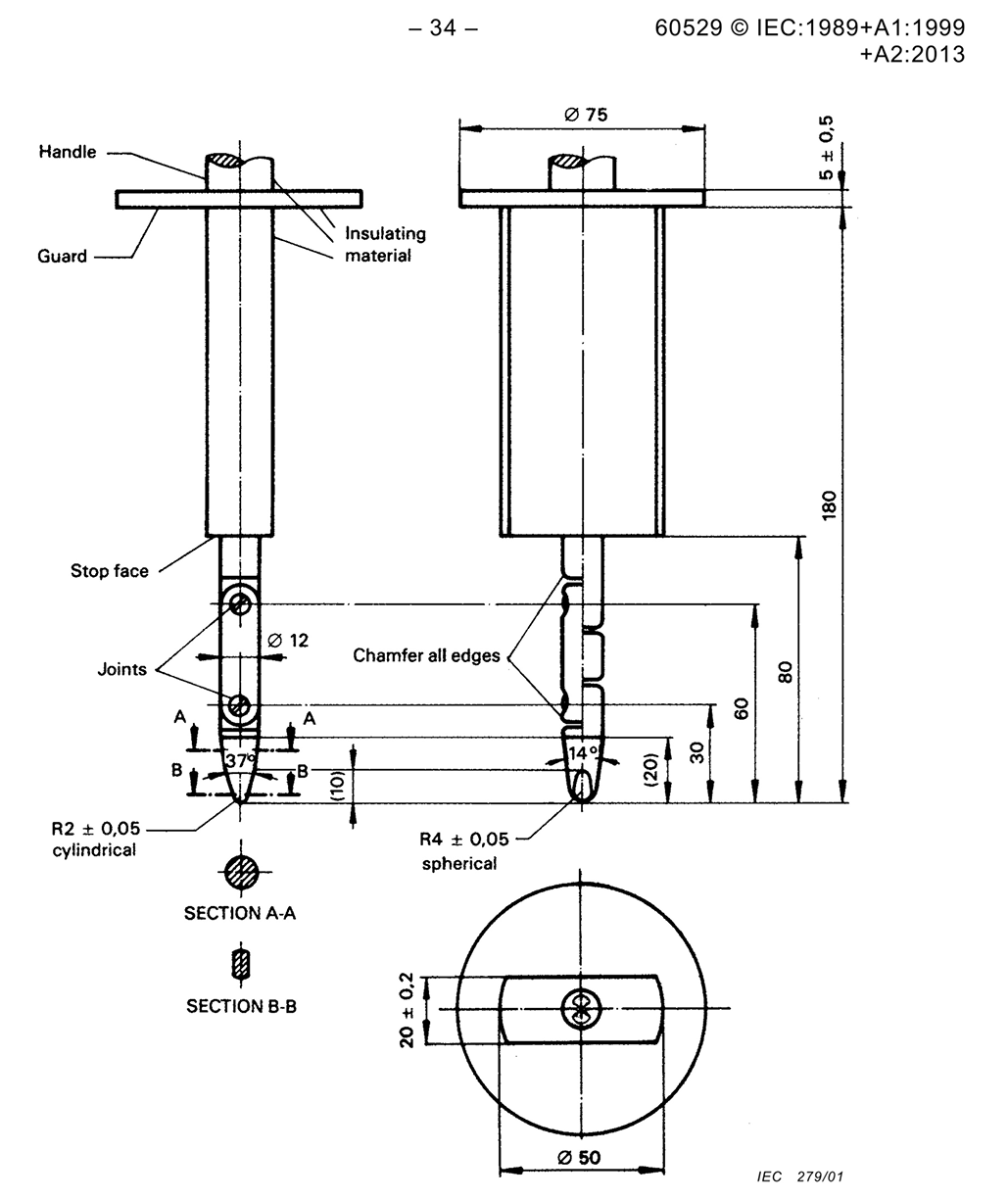
Standard dimensional drawing of IEC 61032 Test Probe B for IP2X accessibility testing

Test Procedure and Laboratory Use

A typical laboratory workflow for the IEC 61032 Test Probe B. Final test operation should follow the applicable standard and laboratory procedure.

  Test Procedure and Laboratory Use

  A typical laboratory workflow for the IEC 61032 Test Probe B. Final test  operation and evaluation should follow the applicable standard and laboratory  procedure.

01

Confirm the Test Requirement

Identify the applicable standard, edition and test clause. Confirm that IEC 61032 Test Probe B is the required access probe and check the specified test force and contact detection method.

02

Prepare the Test Sample

Place the enclosure, appliance or equipment in the condition required by the applicable safety standard and laboratory test procedure.

03

Apply and Articulate the Probe

Introduce the jointed test finger into or against the opening, slot or accessible area and position the articulated finger according to the applicable test procedure.

04

Apply the 10 N Test Force

For the referenced 10 N application, apply the test force using a force gauge to provide a controlled condition during the accessibility evaluation.

05

Verify the Applied Test Force

Verify that the required 10 N force is applied using the force gauge.

Force verification provides a more consistent test condition than subjective manual pressure. The force gauge or complete force application arrangement should be confirmed during quotation.

06

Check Electrical Contact Indication

Use the probe connection with the laboratory’s external contact indication circuit where electrical contact detection is required.A built-in buzzer, lamp or independent indication unit is not included with the probe. The intended indication arrangement should be confirmed before testing.

Test Setup Note:
The applicable standard edition, test clause, required force and contact indication method should be confirmed before the test. The probe does not contain a built-in fixed-force mechanism or indication device.

Typical Test Objects and Applications

The IEC 61032 Test Probe B is used for enclosure accessibility and electrical safety evaluations where an articulated finger probe is specified.

Household appliances
Electrical enclosures
Control equipment
Ventilation openings
Enclosure apertures
Protective guards
Accessible gaps
Electrical assemblies
LAB

Testing and Certification Laboratories

Suitable for standards-based accessibility testing where laboratories need controlled probe geometry, articulated movement, force application and technical documentation.

MANUFACTURER

Manufacturer Compliance Laboratories

Used during product development, enclosure design verification, pre-compliance testing, internal safety evaluation and quality investigation.

R&D

Product Safety and R&D

Supports evaluation of ventilation openings, internal barriers, protective covers and guard arrangements where Test Probe B is specified.

Laboratory Configuration Notes

Correct probe selection should be based on the applicable test requirement. Before ordering an IEC 61032 Test Probe B, review the following project information.

01   Standard and Clause

Provide the applicable standard number, edition and test clause. For IEC 60335 projects, identify the applicable Part 2 standard where relevant.

02   Test Sample

Provide the product type, enclosure information, opening location and sample photographs, especially for unusual guard or enclosure structures.

03   Force Gauge

Confirm whether the laboratory already has a suitable force gauge or requires force application equipment to be reviewed with the probe.

04   Contact Indication

The probe includes a connection for an external contact indication circuit. A buzzer, lamp or independent indication unit is not included.

Compliance & Regulatory Assurance

  • The IEC 61032 Test Probe B supports accessibility testing related to IEC 61032, IEC 60529 and applicable IEC 60335-1 requirements. It is intended for standards-based verification of protection against access to hazardous parts in laboratory, certification and manufacturer compliance testing.
  • To support compliance work, the applicable standard edition, test clause, required force and contact indication method should be confirmed before ordering. Calibration or dimensional inspection documentation can be provided according to confirmed laboratory and project requirements.

IEC 61032 Test Probe B Product Catalogue
Product catalogue covering the IEC 61032 Test Probe B, IP2X jointed test finger design, 10 N force application and household appliance accessibility testing.
Download PDF

Technical Inquiry & Expert Support

For accurate IEC 61032 Test Probe B selection, please share the following test information when sending an inquiry. This helps confirm the applicable probe requirement, force setup and documentation needs before quotation or supply.

Information Needed Example
Applicable standard IEC 61032 / IEC 60529 / applicable IEC 60335 requirement
Standard edition and clause Applicable edition and specific accessibility test clause
Test object Appliance, electrical enclosure, protective guard or equipment housing
Force gauge requirement Probe only / force gauge or force application arrangement required
Contact indication setup Existing external indication circuit or laboratory contact detection method
Documentation needs Calibration document, dimensional inspection record or project-specific technical documentation

KINGPO can review the applicable standard, probe application, force requirement and documentation scope before quotation. This helps reduce probe selection or configuration errors and supports laboratory, certification and manufacturer compliance testing.

Detail Display

FAQ

What is IEC 61032 Test Probe B used for?
The IEC 61032 Test Probe B is used to evaluate whether a person could reach hazardous parts through openings in an enclosure. Its articulated finger structure simulates possible human finger access and is commonly used in electrical safety, appliance enclosure and IP2X-related accessibility testing.
Which standards commonly reference Test Probe B?
Test Probe B is primarily defined in IEC 61032 and is commonly associated with accessibility evaluations under IEC 60529. It may also be used where applicable IEC 60335-1 or product-specific safety requirements specify an articulated finger probe. The exact standard edition and test clause should be confirmed before testing.
Can IEC 61032 Test Probe B be used for IP2X testing?
Yes. The IEC 61032 Test Probe B is commonly used for finger-accessibility evaluation associated with IP2X requirements. However, laboratories should review the complete IEC 60529 test procedure and applicable classification requirements rather than assuming the jointed test finger is the only equipment required for every IP2X project.
Why does Test Probe B use a jointed finger design?
The jointed structure allows the probe to change direction after entering an opening, better representing possible human finger movement. A rigid straight probe cannot reproduce the same access condition around guards, barriers or internal structures. For this reason, the articulated geometry is important in standards-based hazardous-part accessibility testing.
How is the 10 N test force applied to the probe?
For the referenced 10 N application, the test force is applied and verified using a force gauge. The probe should not be treated as having a built-in fixed 10 N force mechanism. The required force application method should be confirmed according to the applicable standard and laboratory test procedure.
Is a force gauge included with the IEC 61032 Test Probe B?
A force gauge is not automatically assumed to be included with the probe. Laboratories that already have a suitable force measurement arrangement may only require the IEC 61032 Test Probe B. Please confirm whether a force gauge or additional force application solution is required when requesting a quotation.
Does the probe include a built-in contact indication system?
No. The probe includes an electrical connection for integration with an external contact indication circuit, but a built-in buzzer, lamp or independent indication unit is not included. Laboratories should confirm their existing contact detection arrangement or describe the required indication setup before ordering.
What household appliance products can be evaluated with Test Probe B?
Typical applications may include appliance enclosures, ventilation openings, slots, protective guards and accessible gaps around covers or barriers. The probe is relevant where the applicable appliance safety standard specifies an articulated finger-access test to evaluate protection against access to live or otherwise hazardous parts.
Can calibration or dimensional inspection documentation be provided?
Calibration or dimensional inspection documentation can be provided according to confirmed project requirements. The required document type, dimensional inspection scope and laboratory acceptance criteria should be specified before quotation. Documentation should not be assumed to be included as standard without prior confirmation of the required scope.
What information should I provide before ordering an IEC 61032 Test Probe B?
Please provide the applicable standard, edition and test clause, together with the test object or appliance type. Sample photos and opening details are useful for unusual enclosure structures. Also confirm whether you require a force gauge arrangement, external contact indication support, calibration documentation or dimensional inspection records.

Related Products

Related News

Scroll to Top

Get A Free Quote Now !

Contact Form
If you have any questions, please do not hesitate to contact us.