Description
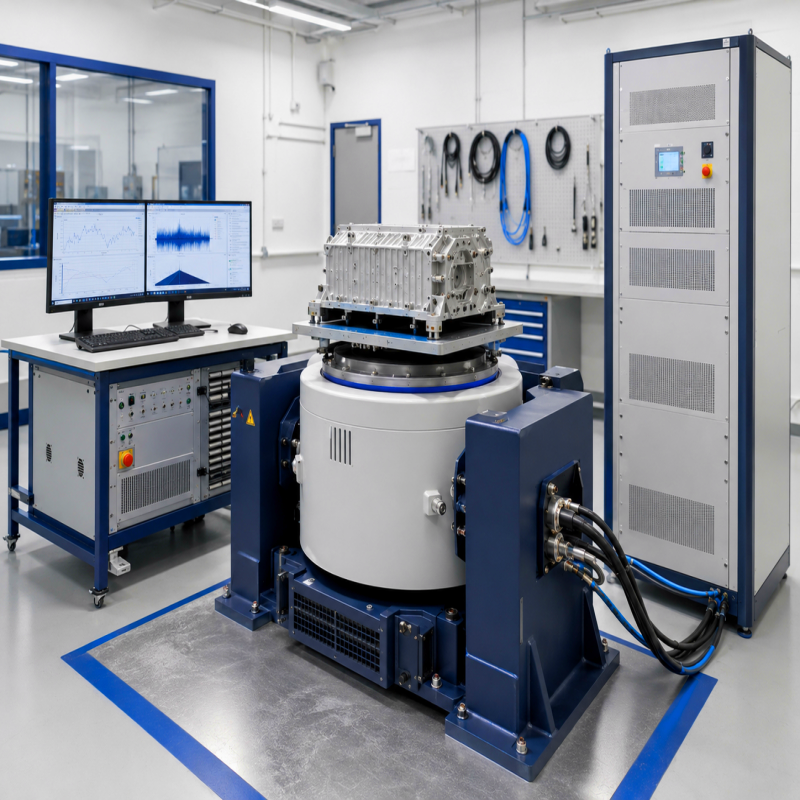
TheKP206VT650VCSusb-2 Electrodynamic Vibration Test System is designed for sine vibration, sine sweep, random vibration, shock simulation, and product reliability verification. It is suitable for testing electronic components, automotive parts, aerospace equipment, defense products, communication devices, household appliances, industrial modules, and research samples under simulated vibration and transportation environments.
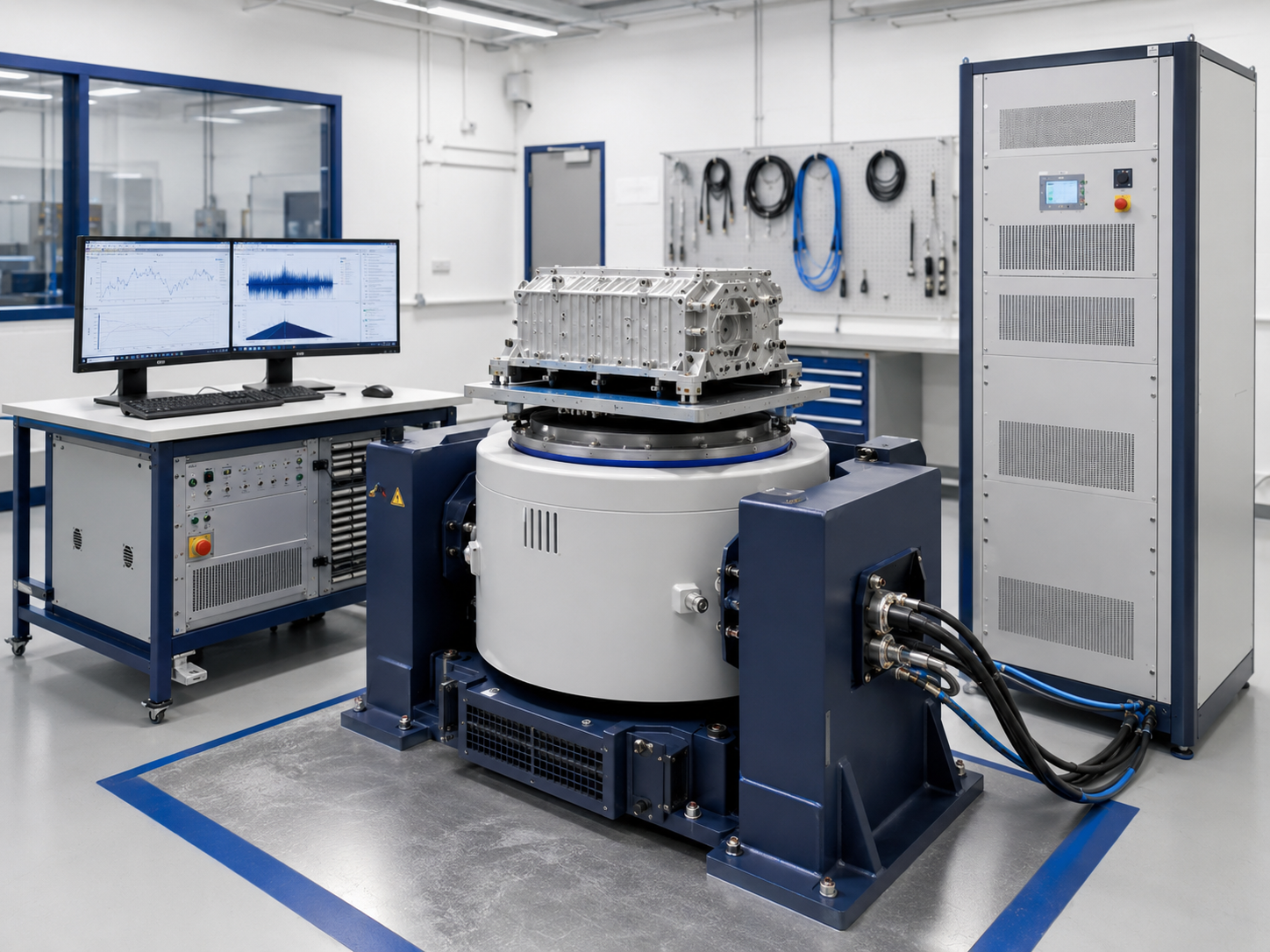
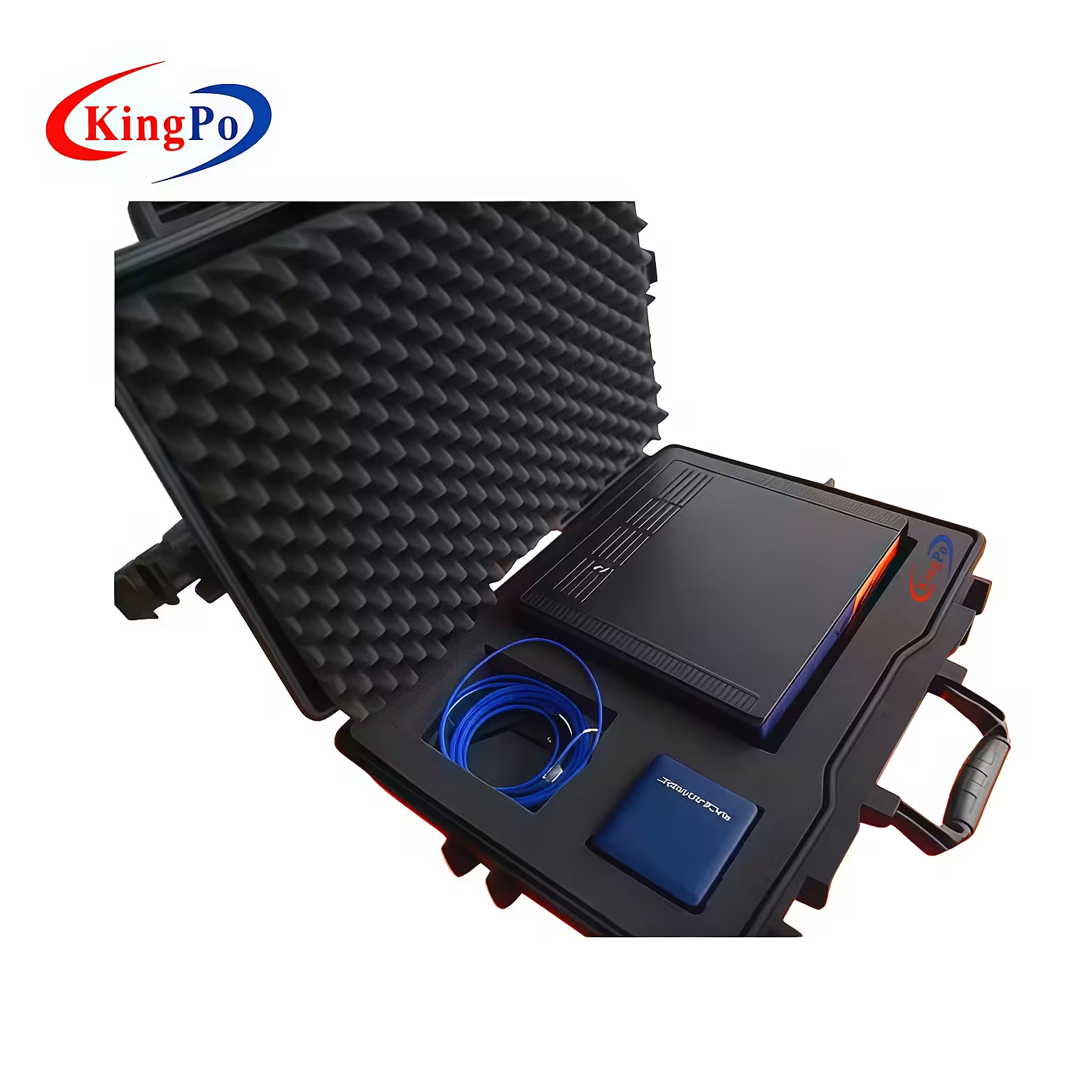
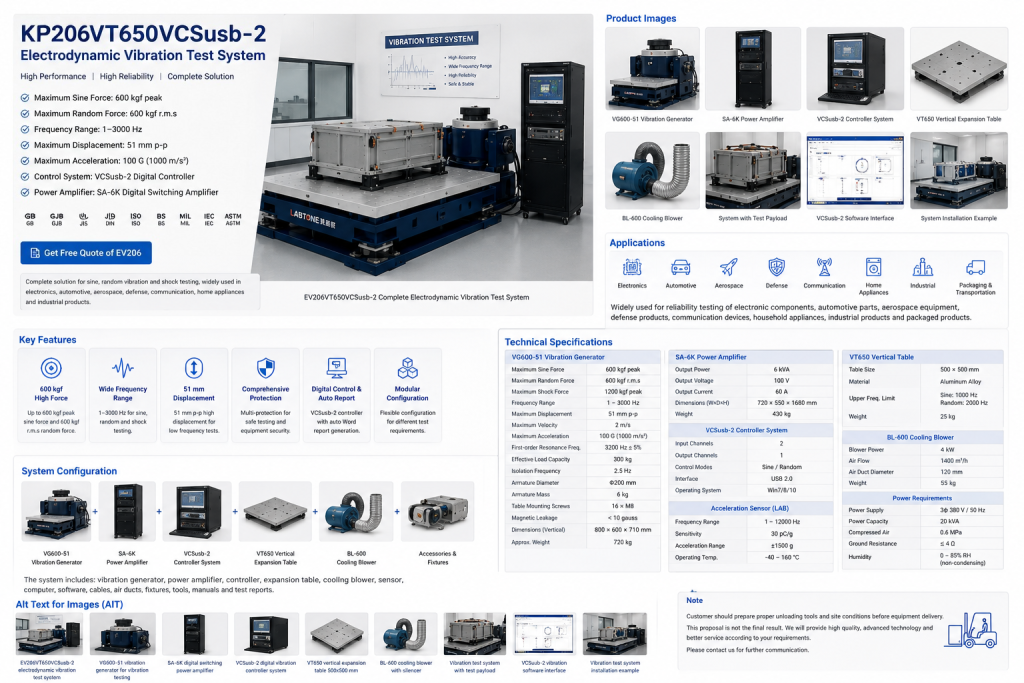
The complete system integrates a VG600-51 electromagnetic vibration generator, SA-6K digital switching power amplifier, VCSusb-2 digital vibration controller, VT650 vertical expansion table, BL-600 cooling blower, acceleration sensor, control computer, control software, cables, air ducts, fixtures, operating manuals, inspection report, certificate, and maintenance documents.
This system supports vibration testing according to customer test profiles and commonly referenced standards such as GB, GJB, UL, JIS, DIN, ISO, BS, MIL, IEC, and ASTM.
Key Features
600 kgf High Exciting Force
The vibration generator provides up to 600 kgf peak sine force, 600 kgf r.m.s random force, and 1200 kgf peak shock force, making it suitable for a wide range of reliability and durability tests.
Wide Frequency Range
With a frequency range of 1–3000 Hz, the system supports low-frequency displacement testing, sine sweep testing, and higher-frequency random vibration applications.
51 mm Peak-to-Peak Displacement
The 51 mm p-p maximum displacement provides stronger low-frequency test capability, which is important for transportation simulation, component fatigue evaluation, and resonance search.
Digital Closed-Loop Vibration Control
The VCSusb-2 digital vibration controller provides precise closed-loop control for sine and random vibration testing. It supports signal generation, time-domain and frequency-domain analysis, sine sweep analysis, data storage, parameter setting, and automatic test report generation.
Complete Safety Protection
The system includes protection functions for over-temperature, air pressure failure, over-displacement, over-voltage, over-current, input under-voltage, external fault, control power fault, logic fault, phase loss, and other abnormal operating conditions.
Modular System Configuration
The system is composed of a vibration generator, digital power amplifier, digital vibration controller, vertical expansion table, cooling blower, sensor, control software, and fixtures. The modular design makes it easier to configure the system according to different product sizes, payloads, and test requirements.
Technical Specifications
VG600-51 Electromagnetic Vibration Generator
| Item |
Specification |
| Maximum sine force |
600 kgf peak |
| Maximum random force |
600 kgf r.m.s |
| Maximum shock force |
1200 kgf peak |
| Frequency range |
1–3000 Hz |
| Maximum displacement |
51 mm p-p |
| Maximum velocity |
2 m/s |
| Maximum acceleration |
100 G / 1000 m/s² |
| First-order resonance frequency |
3200 Hz ±5% |
| Effective load capacity |
300 kg |
| Isolation frequency |
2.5 Hz |
| Armature diameter |
Φ200 mm |
| Armature mass |
6 kg |
| Table mounting screws |
16 × M8 |
| Magnetic leakage |
<10 gauss |
| Vertical shaker dimensions |
800 × 600 × 710 mm |
| Approx. shaker weight |
720 kg |
Maximum Payload vs Acceleration
| Acceleration |
Maximum Payload |
| 5 G / 50 m/s² |
114 kg |
| 10 G / 100 m/s² |
54 kg |
| 20 G / 200 m/s² |
24 kg |
| 30 G / 300 m/s² |
14 kg |
Note: The actual available payload depends on the fixture weight, expansion table weight, test profile, safety margin, and mounting method. Please provide your sample weight and test profile for configuration verification.
SA-6K Digital Switching Power Amplifier
| Item |
Specification |
| Output power |
6 kVA |
| Output voltage |
100 V |
| Output current |
60 A |
| Amplifier dimensions |
720 × 550 × 1680 mm |
| Amplifier weight |
430 kg |
The SA-6K digital switching power amplifier adopts reliable MOSFET or IGBT technology. It provides high stability, high conversion efficiency, low noise, automatic current sharing, and safe operating performance.
VCSusb-2 Digital Vibration Controller
| Item |
Specification |
| Input channels |
2 channels |
| Output channels |
1 channel |
| Control modes |
Sine, random |
| Interface |
USB 2.0 |
| Software language |
Chinese / English |
| Operating system |
Windows 7 / 8 / 10 |
| Report generation |
Word test report generation |
| Analysis functions |
Time-domain analysis, frequency-domain analysis, signal source, sine sweep analysis |
The vibration controller uses a distributed control structure. Closed-loop control is performed by the DSP processor, while the PC operates independently from the control loop. This design helps improve real-time performance, control stability, and control accuracy.
Random Vibration Control
| Item |
Specification |
| Frequency range |
0–4800 Hz, expandable to 18750 Hz |
| Resolution |
100 / 200 / 400 / 800 / 1600 / 3200 lines |
| Control dynamic range |
>90 dB |
| Control strategies |
Single-channel control, weighted average, maximum value, minimum value |
The random vibration control function uses transfer function equalization and adaptive control algorithms to respond to system nonlinearity, resonance frequency changes, and load changes during testing.
Sine Vibration Control
| Item |
Specification |
| Frequency range |
1–5000 Hz, expandable to 10000 Hz |
| Closed-loop time |
5 ms |
| Harmonic distortion |
<-100 dB |
| Linear sweep rate |
0–6000 Hz/min |
| Logarithmic sweep rate |
0–100 Oct/min |
| Sweep direction |
Upward sweep / downward sweep |
| Sweep duration |
By sweep cycles or test time |
The sine control function provides high-quality sine and sine sweep signals. Users can set dwell level, dwell frequency, sweep direction, sweep duration, and other test parameters.
Acceleration Sensor
| Item |
Specification |
| Frequency range |
1–12000 Hz |
| Sensitivity |
30 pC/g |
| Input type |
Charge type |
| Acceleration range |
±1500 g |
| Operating temperature |
-40°C to 160°C |
VT650 Vertical Expansion Table
| Item |
Specification |
| Material |
Aluminum-magnesium alloy |
| Surface treatment |
Hard anodized surface |
| Table size |
500 × 500 mm |
| Mounting inserts |
M8 stainless steel threaded inserts |
| Upper frequency limit |
Sine: 1000 Hz; Random: 2000 Hz |
| Weight |
25 kg |
The VT650 vertical expansion table provides a larger mounting surface for test specimens. The aluminum-magnesium alloy structure helps reduce weight while maintaining good stiffness and durability.
BL-600 Cooling Blower
| Item |
Specification |
| Blower power |
4 kW |
| Air flow |
1400 m³/h |
| Air duct diameter |
120 mm |
| Weight |
55 kg |
The cooling blower is used to remove heat from the vibration generator during operation and supports stable long-duration testing.
Electrical and Installation Requirements
| Item |
Requirement |
| Humidity |
0–85% RH, non-condensing |
| Power supply |
3-phase 380 V / 50 Hz |
| Power capacity |
20 kVA |
| Compressed air |
0.6 MPa |
| Grounding resistance |
≤4 Ω |
The customer should prepare suitable unloading tools, laboratory space, power supply, grounding, compressed air, and installation conditions before equipment delivery.
User Inquiry Conversion
Need Help Choosing the Right Vibration Test System?
Send us your test requirements and KINGPO engineers will help evaluate the suitable vibration test system configuration.
To recommend the right system, please provide:
- Product name and sample dimensions
- Sample weight
- Fixture weight, if available
- Required test direction: vertical, horizontal, or three-axis
- Test type: sine, sine sweep, random, shock, or combined test
- Frequency range
- Required acceleration
- Required displacement
- Required velocity
- Test standard or customer test profile
- Test duration
- Laboratory power supply conditions
- Need for horizontal slip table or environmental chamber integration
Get KP206 Vibration Test System Quote
Applications
The KP206VT650VCSusb-2 Electrodynamic Vibration Test System is designed to simulate vibration, shock, transportation stress, resonance, and fatigue conditions that products may experience during operation, transportation, storage, or long-term service.
It is widely used for product reliability verification, quality control, R&D validation, and standard-based vibration testing in multiple industries.
Electronics and Electrical Components
The system can be used for vibration testing of circuit boards, electronic modules, connectors, sensors, control units, power supplies, and other electronic assemblies. It helps evaluate solder joint reliability, structural stability, component looseness, and performance changes under vibration stress.
Automotive Parts and Vehicle Components
The system is suitable for testing automotive electronic modules, lamps, controllers, sensors, dashboards, battery-related components, wiring harnesses, mechanical parts, and other vehicle-mounted products. It helps verify resistance to road vibration, transportation vibration, and long-term fatigue conditions.
Aerospace and Aviation Equipment
The vibration test system can support reliability testing of aerospace components, avionics, aircraft-mounted devices, precision instruments, and structural assemblies. It is useful for sine sweep, random vibration, resonance search, and durability verification.
Defense and Military Products
The system can be applied to vibration testing of defense equipment, communication modules, electronic assemblies, mechanical structures, and mission-critical components that must maintain stability under demanding vibration environments.
Shipbuilding and Marine Equipment
For marine and shipborne applications, the system can be used to evaluate vibration resistance of electrical devices, control units, mechanical assemblies, communication equipment, and onboard components exposed to engine vibration and transportation stress.
Communication Equipment
The EV206VT650VCSusb-2 system is suitable for testing communication devices, base station components, antennas, network modules, electronic cabinets, and other products that require stable performance under vibration conditions.
Home Appliances and Consumer Products
The system can be used for vibration and transportation simulation testing of household appliances, small electrical products, consumer electronics, and packaged products. It helps identify potential structural weakness, abnormal noise, looseness, and transportation damage risks.
Industrial Products and Mechanical Assemblies
The system can test industrial instruments, mechanical modules, automation components, motors, sensors, control boxes, and structural parts. It helps verify durability, assembly strength, and operational reliability.
Packaging and Transportation Simulation
The vibration system can simulate transportation vibration for packaged products, helping manufacturers evaluate packaging protection performance, product stability, and shipping-related failure risks.
Research Laboratories and Quality Inspection Centers
The system is suitable for laboratories, universities, testing institutes, and quality inspection centers that need sine vibration, random vibration, shock simulation, frequency response analysis, and automatic test report generation.
Typical Test Purposes
- Product reliability verification
- Transportation vibration simulation
- Resonance search and dwell testing
- Structural fatigue evaluation
- Sine sweep vibration testing
- Random vibration testing
- Shock simulation
- Quality control and production inspection
- R&D validation
- Standard-based vibration testing
Common Test Objects
- Circuit boards and electronic modules
- Automotive parts and controllers
- Aerospace components
- Defense and military equipment
- Communication devices
- Household appliances
- Industrial instruments
- Mechanical assemblies
- Sensors and control units
- Packaged products
- Shipborne and marine equipment
FAQ
How to Choose a Vibration Test System for Your Lab
A practical buyer’s guide explaining how to select a vibration test system by checking force, payload, fixture mass, displacement, velocity, acceleration, frequency range, cooling method, and test direction.
Recommended anchor text: How to Choose a Vibration Test System
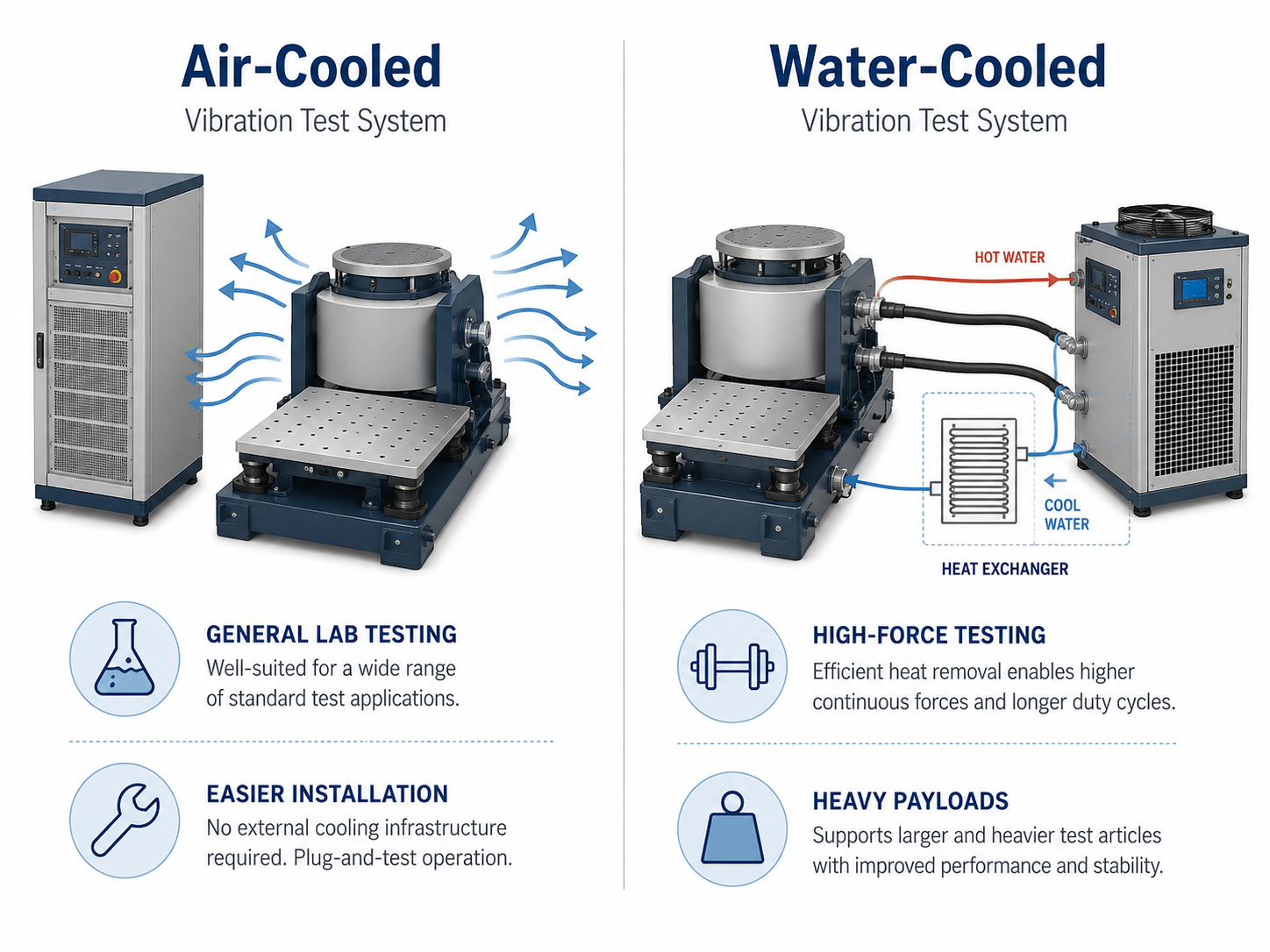
Air-Cooled vs Water-Cooled Vibration Test System
Learn the difference between air-cooled and water-cooled vibration systems and how to select the right cooling method for your testing application.
Recommended anchor text: Air-Cooled vs Water-Cooled Vibration Test System
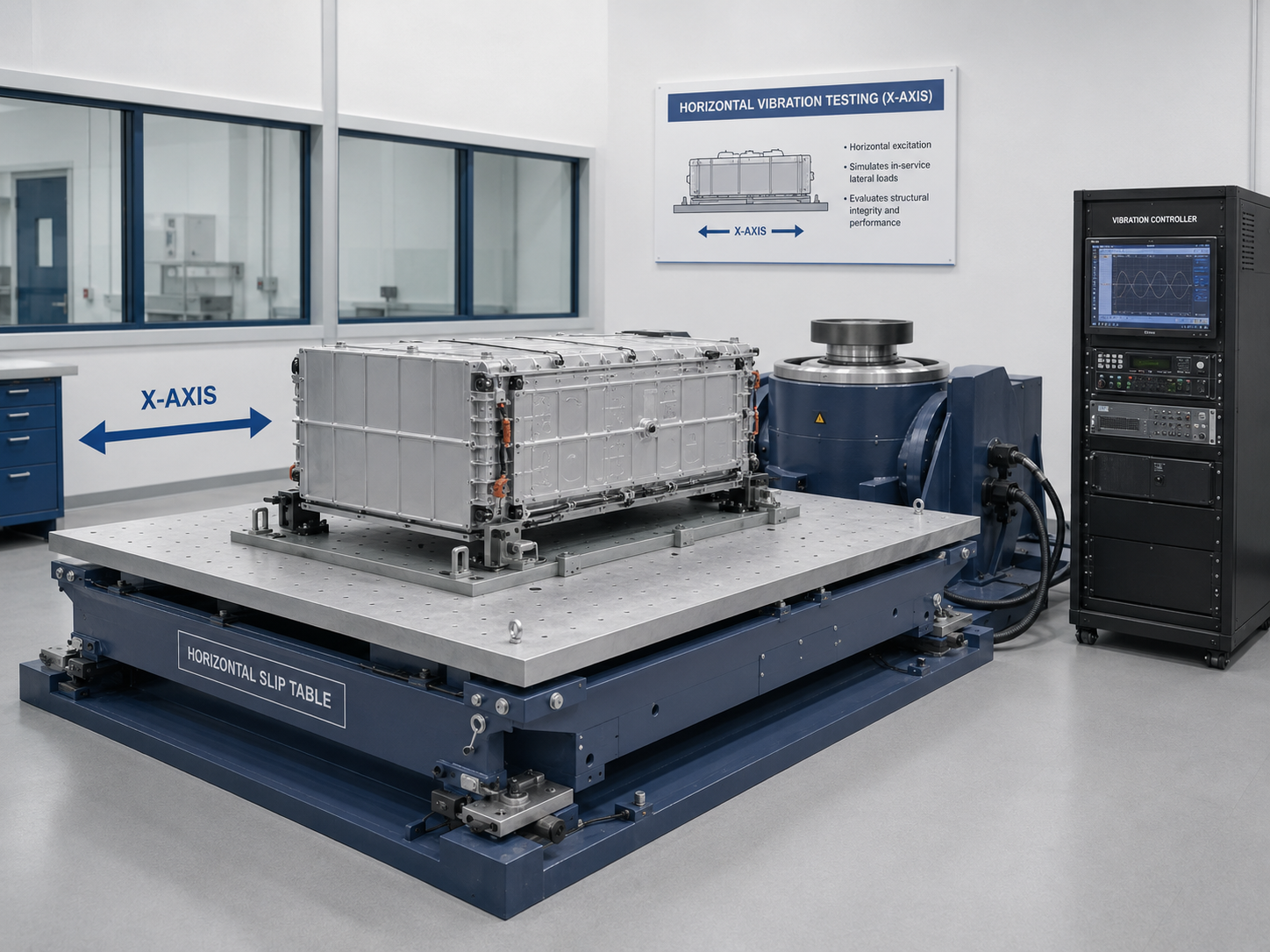
Horizontal Slip Table for Vibration Testing
Understand when a horizontal slip table is required for X-axis and Y-axis vibration testing, especially for larger products, battery modules, automotive parts, and products that must remain in normal operating orientation.
Recommended anchor text: Horizontal Slip Table Vibration Testing
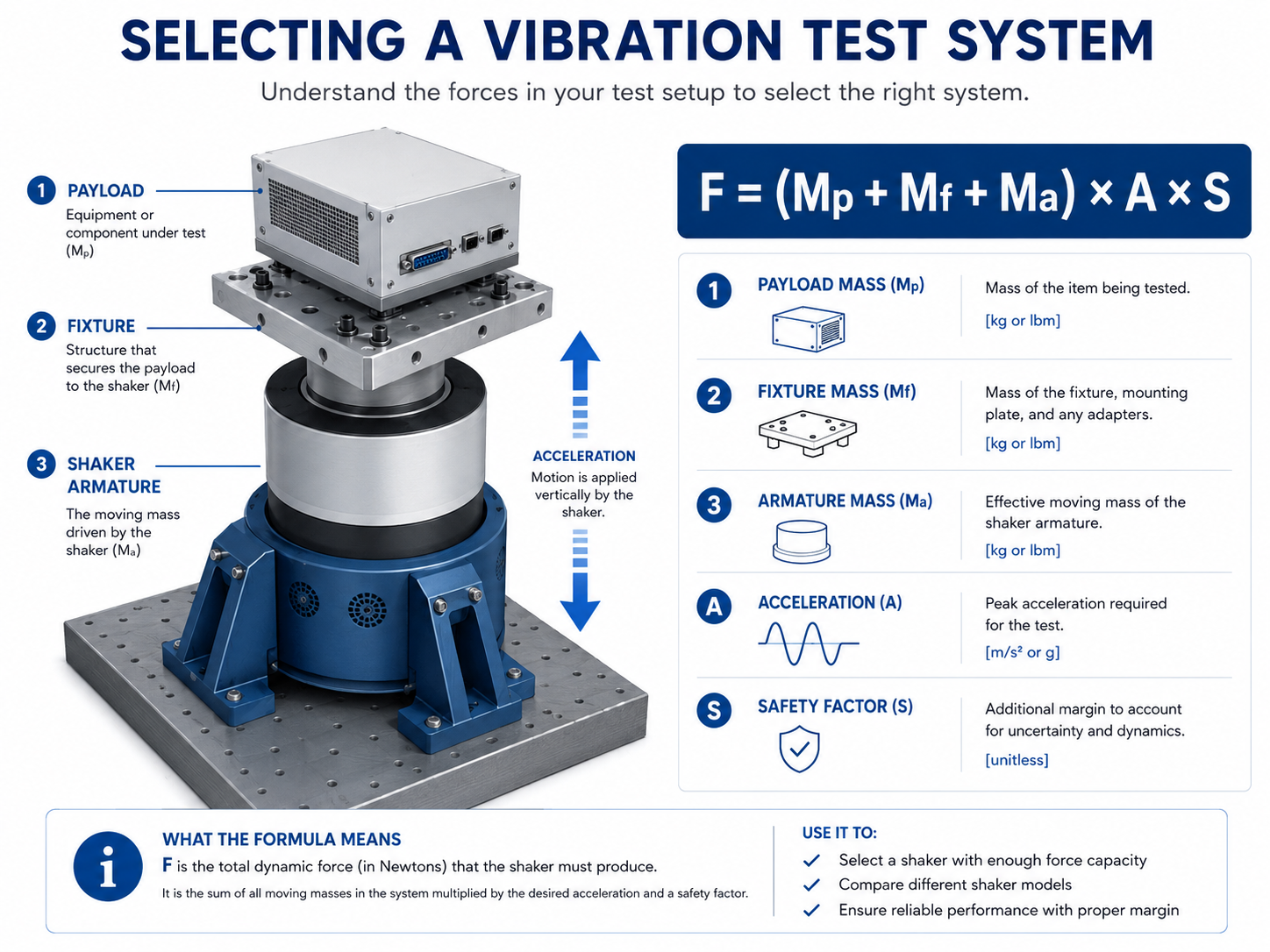
How to Calculate Required Shaker Force
A vibration test system should be selected by calculating total moving mass, including payload, fixture, expansion table, armature mass, acceleration, and safety factor.
Recommended anchor text: Vibration Shaker Force Calculation
Combined Temperature Humidity and Vibration Testing
Combined environmental vibration testing is used when products must be evaluated under temperature, humidity, and vibration stress at the same time.
Recommended anchor text: Combined Temperature Humidity Vibration Test System