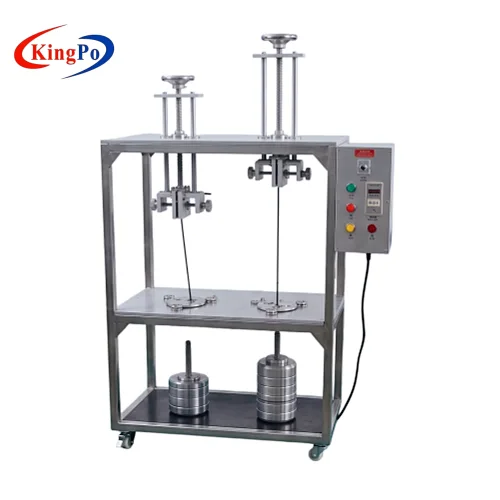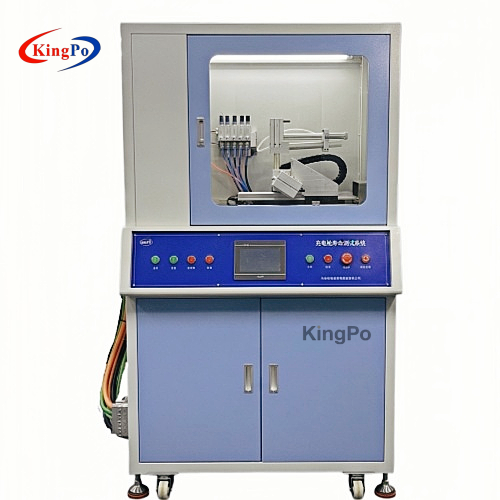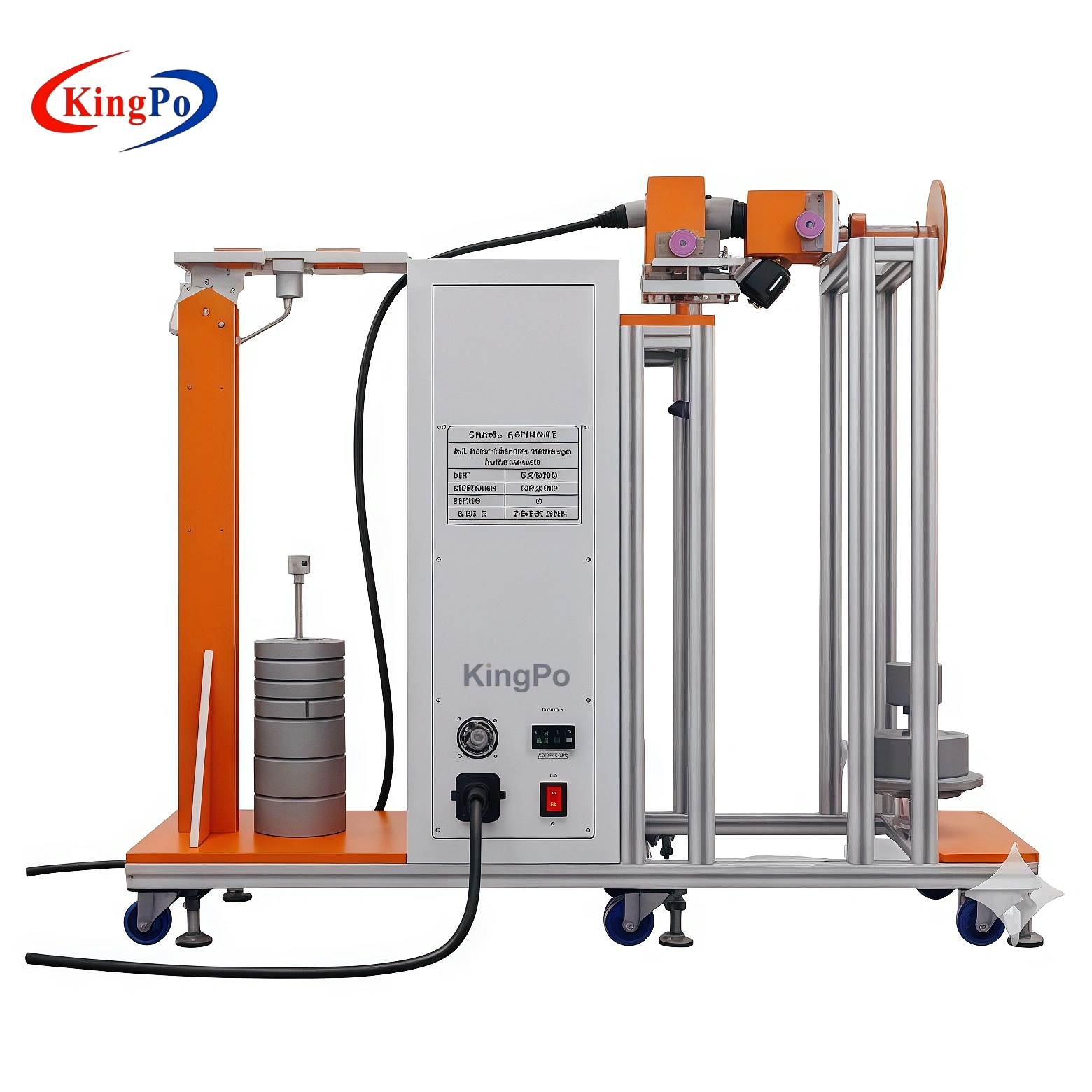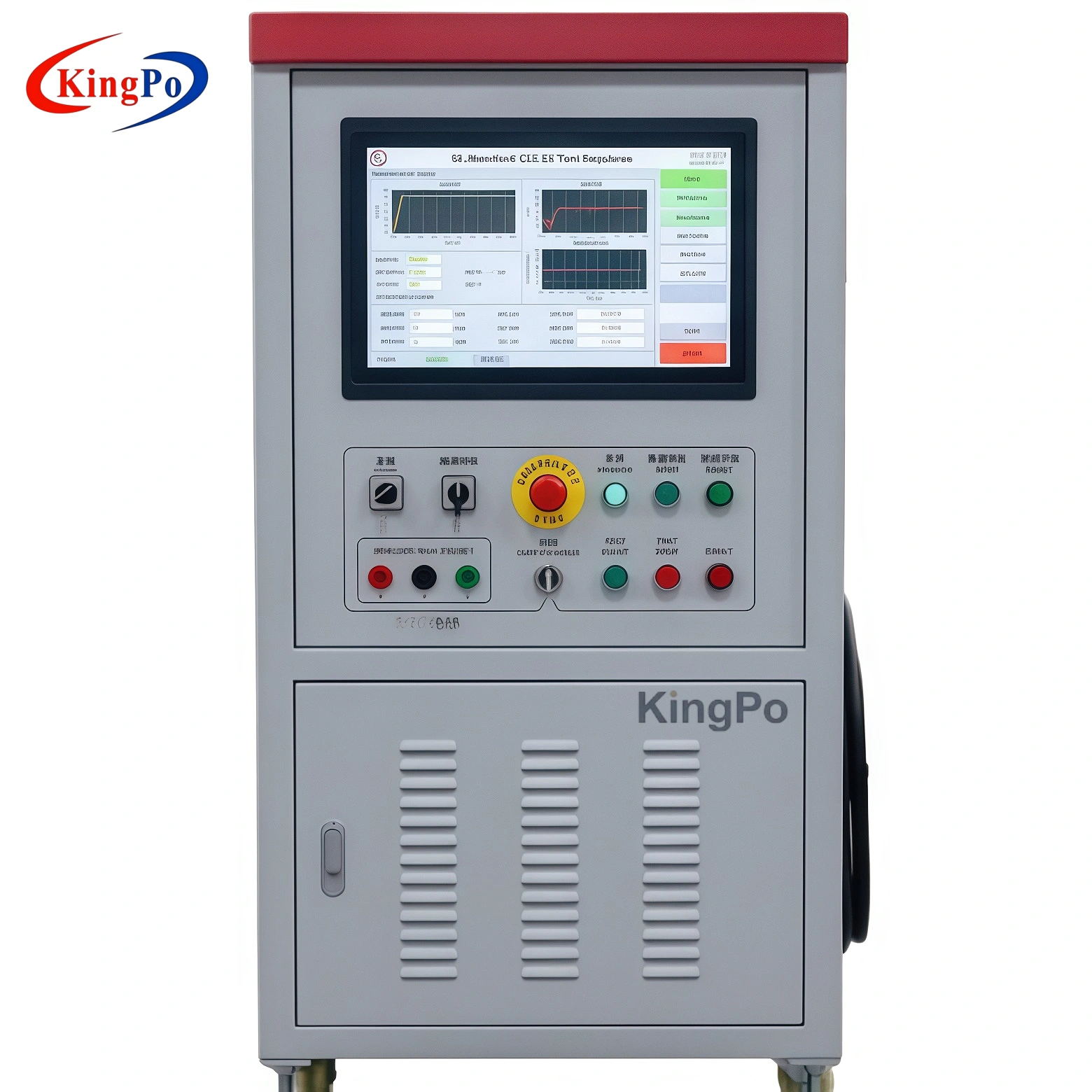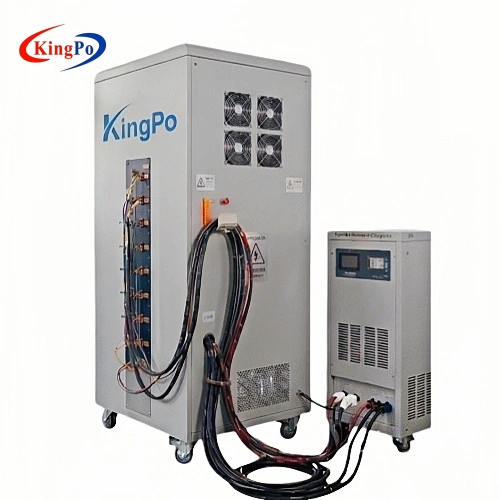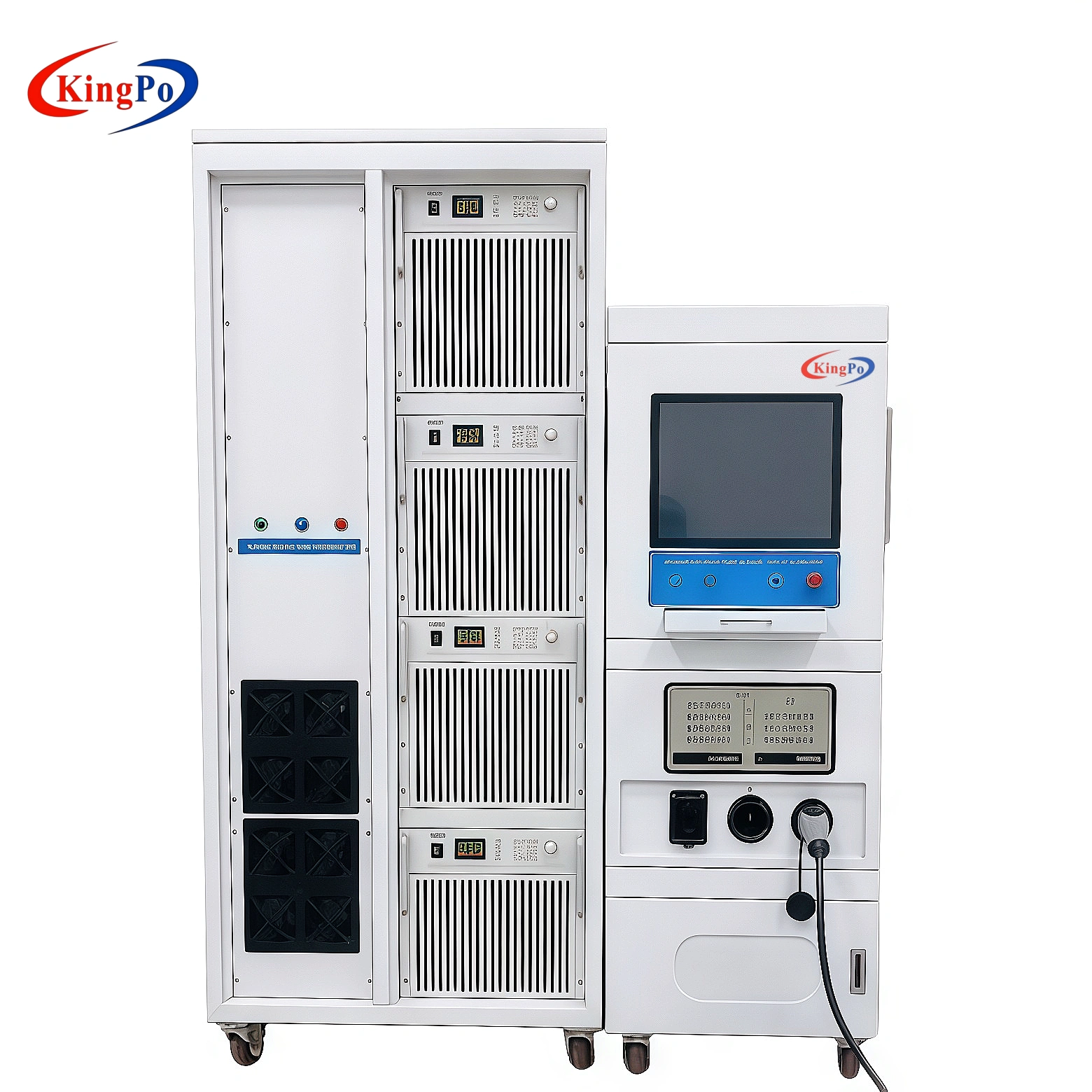
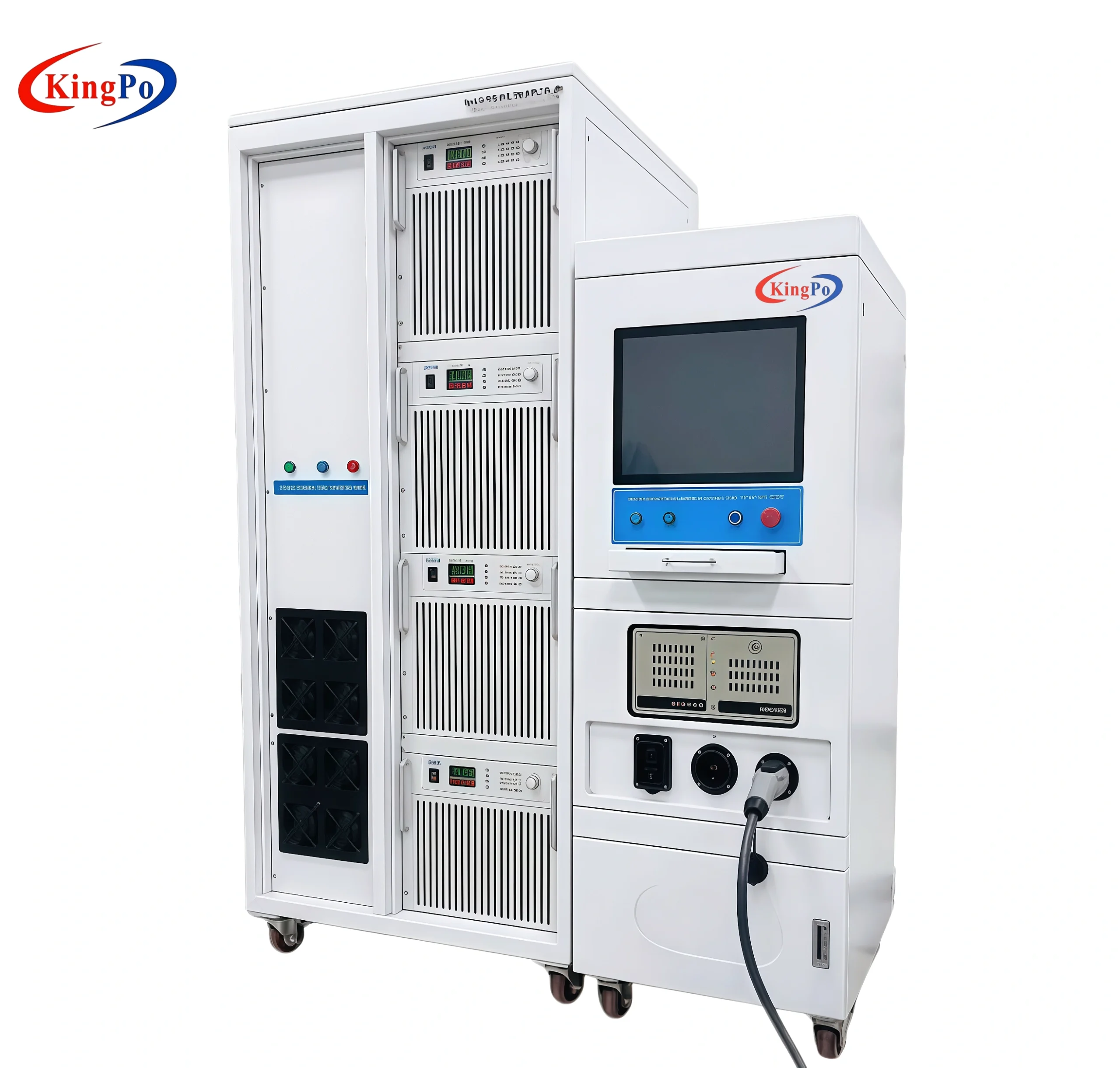
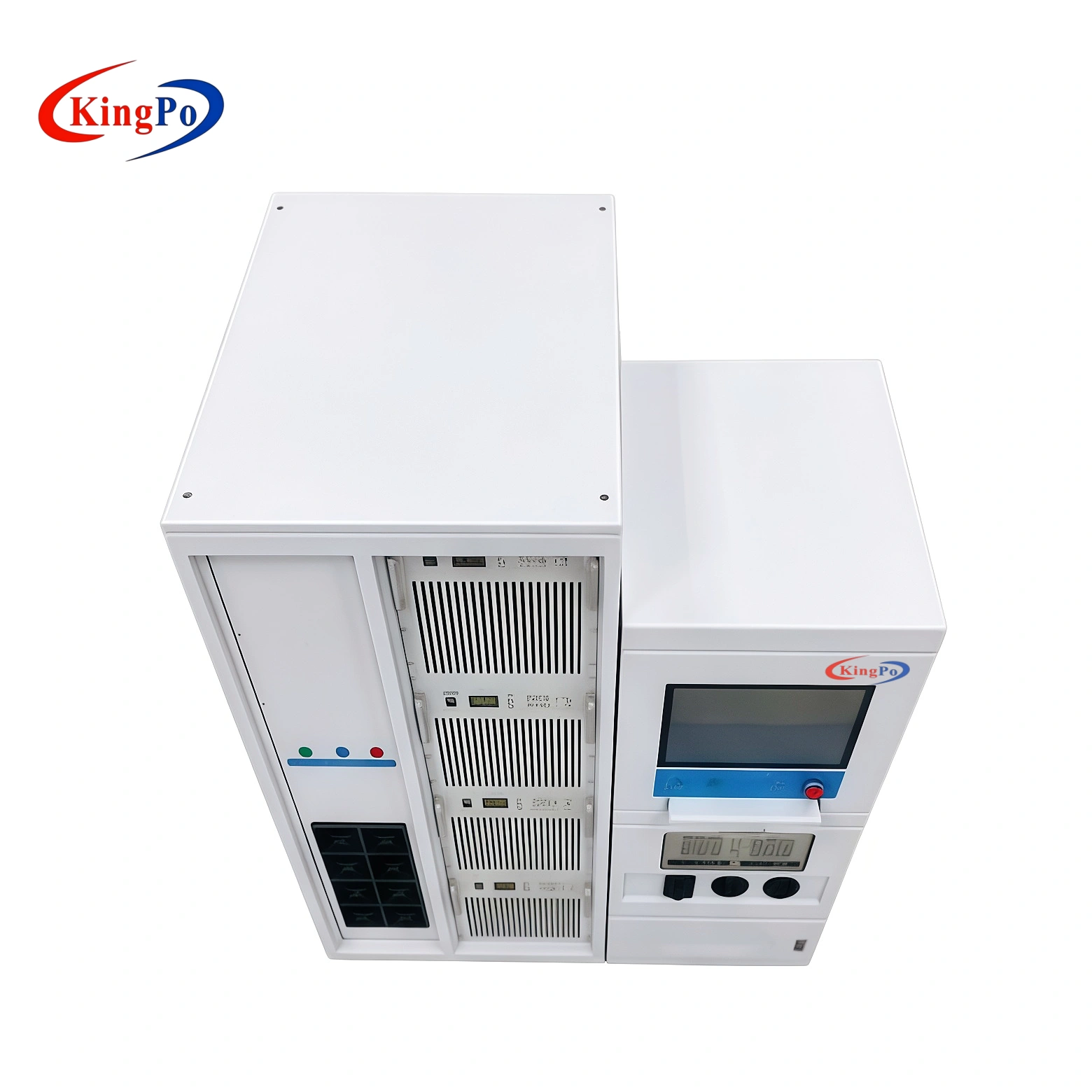
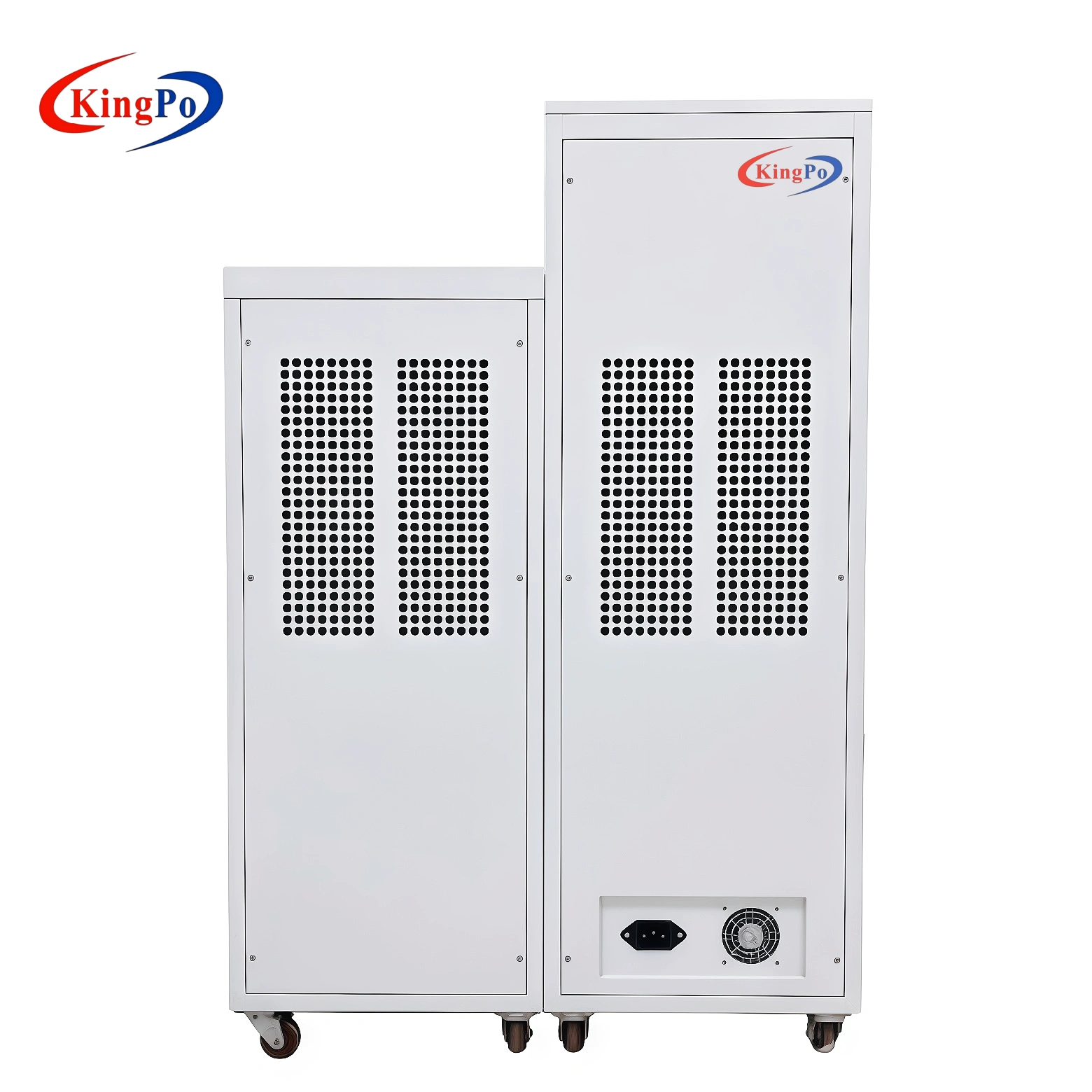


High-Stability 6500A EV Connector Temperature Rise Test System | 16-Channel Precise Thermal Analysis
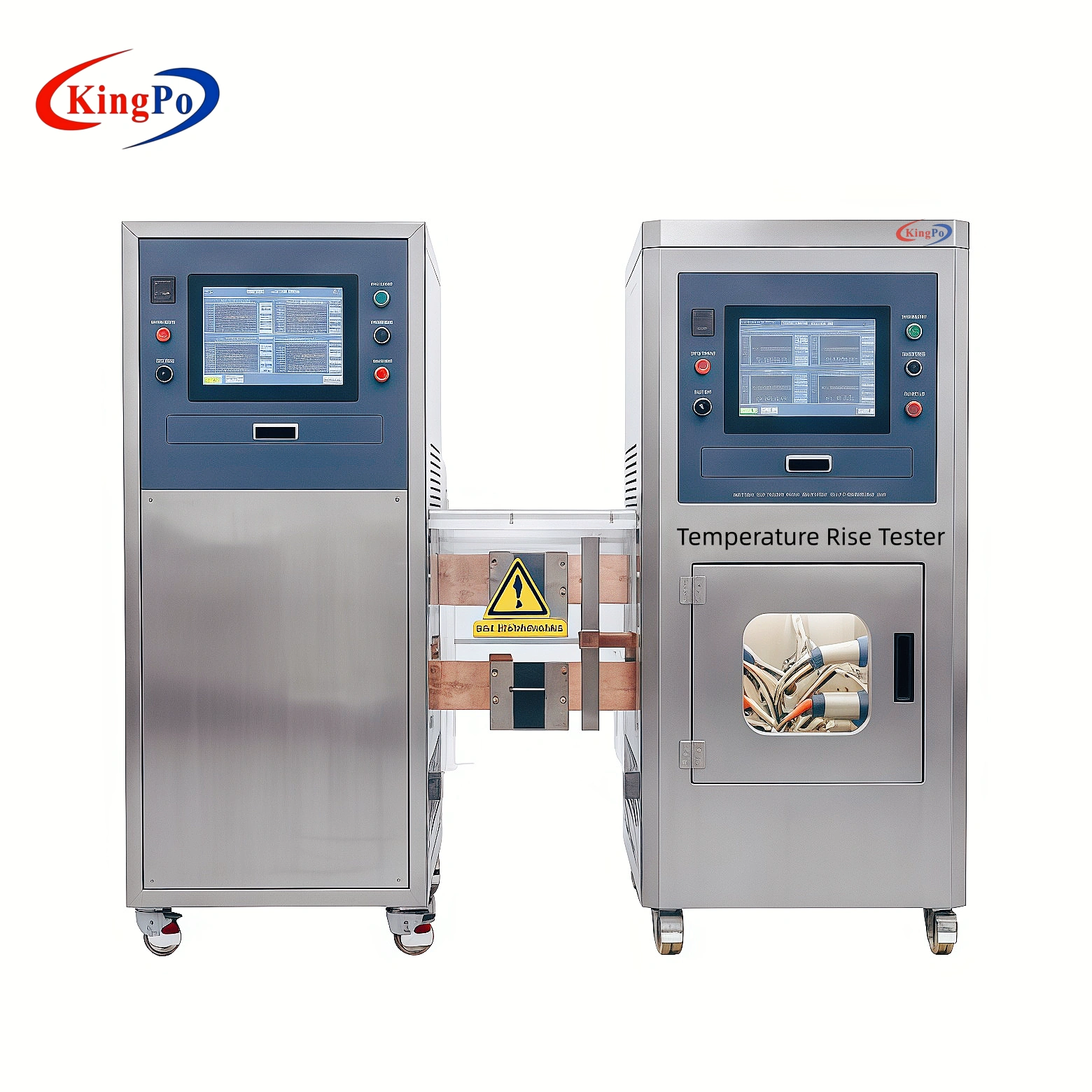
The EV Connector Temperature Rise Test System is a professional high-power thermal evaluation platform designed to accurately assess temperature rise and thermal safety of electric vehicle charging plugs, sockets, and connectors under high current conditions up to 6500A.
- Ultra-Stable High Current Output โ Continuously adjustable up to 6500A DC with ripple factor <1%, ensuring excellent stability during long-duration tests
- 16-Channel Precision Temperature Monitoring โ Wide range 0โ260ยฐC with ยฑ0.3% accuracy and automatic ambient temperature compensation
- Flexible Test Modes โ Continuous, On/Off cyclic, and Automatic Temperature Control modes
- Full Compliance with International Standards โ Designed in accordance with IEC 62196-1, IEC 62916-2, and IEC 62916-3
- Advanced Control & Data Management โ 15-inch industrial touchscreen + professional software with real-time curves and automated reporting
- Calibration & Traceability โ Delivered with factory calibration certificate; third-party ISO 17025 available upon request
EV Connector Temperature Rise Test System Description
EV Connector Temperature Rise Test System EV Connector High Current Test System
The EV Connector Temperature Rise Test System is a robust, high-precision thermal testing platform engineered for comprehensive evaluation of electric vehicle charging interfaces. It accurately measures temperature rise on plugs, sockets, terminals, and contacts under high current loading (up to 6500A), while also supporting short-time high current withstand testing.
Technical Parameters
| Parameter | Specification | Remark / Notes |
|---|---|---|
| Output Current | DC 200โ6500 A (continuously adjustable) | Constant current output |
| Ripple Factor | < 1% | High stability DC output |
| Maximum Output Voltage | DC < 15 V | Low voltage high current |
| Current Accuracy | ยฑ(0.25% of reading + 0.25% of range) | Resolution 1 A |
| Temperature Channels | 16 channels (including ambient) | K-type thermocouples |
| Temperature Range | 0โ260 ยฐC | Accuracy ยฑ0.3% + 1 ยฐC |
| Test Modes | Continuous / On/Off / Auto Temperature Control | Programmable timing |
| Control System | 15-inch industrial touchscreen + PC | Real-time curve & report generation |
| Dimensions & Weight | 1000ร1300ร1800 mm, โ400 kg | Heavy-duty mobile design |
The EV Connector Temperature Rise Test System is built with industrial-grade robustness and advanced engineering to handle extreme high-current testing. It features an oversized high-conductivity copper busbar system combined with a multi-stage intelligent forced-air cooling mechanism, effectively managing heat dissipation during prolonged operation at currents up to 6500A.
Precision current regulation is achieved through high-accuracy sensors and closed-loop feedback control, delivering ultra-low ripple (<1%) and exceptional long-term output stability. The 16-channel temperature acquisition system offers high-resolution measurement with automatic ambient temperature compensation, supporting multiple thermocouple types for maximum flexibility. An integrated industrial computer equipped with professional self-developed software enables fully automated test execution, real-time multi-channel data visualization, historical trend analysis, and comprehensive report generation.
Testing Principle
The system applies a precisely controlled high current (up to 6500A) to the EV connector assembly (plug and socket) while simultaneously monitoring temperature rise at multiple critical points, including terminals, contacts, housings, and cable interfaces. By analyzing real-time temperature curves and comparing results against standard limits, the system comprehensively evaluates thermal performance, heat dissipation capability, contact quality, and overall safety under both continuous and cyclic loading conditions.
Common Error Mitigation
- Use properly sized high-current cables and ensure low-resistance connections
- Secure thermocouples firmly at designated points with thermal conductive adhesive
- Strictly follow standard requirements for current values, test duration, and measuring points
- Maintain adequate ventilation around the equipment during testing
- Perform regular calibration of current and temperature channels to ensure measurement accuracy
Primary Use Cases & Business Value
This EV Connector Temperature Rise Test System is essential for manufacturers developing high-power charging solutions. It enables accurate thermal validation of liquid-cooled charging couplers, High-Power Charging (HPC) systems, and emerging Megawatt Charging System (MCS) components, helping identify potential overheating risks early, optimize product design, reduce certification failures, and ensure long-term operational safety and reliability of EV charging infrastructure.
Industrial Applications & Lab Scenarios
- EV charging connector and plug manufacturers
- High-Power Charging (HPC) and Megawatt Charging System (MCS) developers
- Electric vehicle supply equipment (EVSE) producers
- Third-party certification and testing laboratories
- Automotive and new energy vehicle R&D institutions
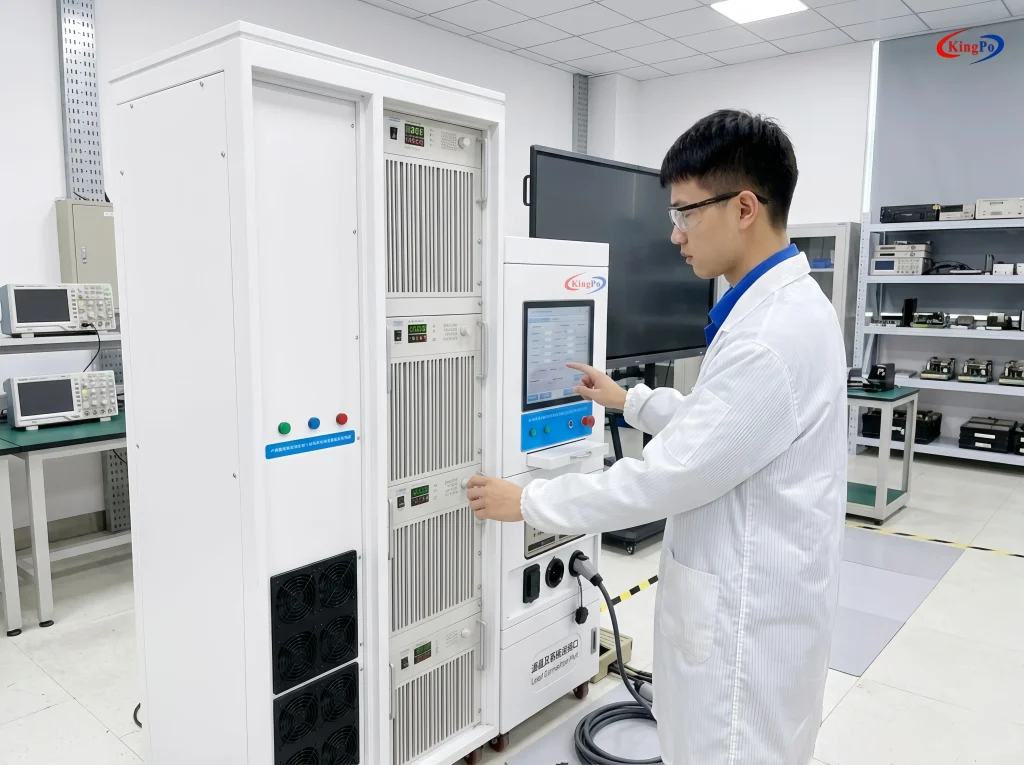
Strategic Procurement Advantages & Global Support
- Extremely stable high current output up to 6500A with advanced thermal management
- Comprehensive 16-channel precision temperature monitoring and intelligent automation
- Professional software with real-time curves and automated reporting
- Manufactured under ISO 9001, ISO 14001, ISO 45001 and CE certified quality system
- One-year warranty with responsive lifetime technical support from our Dongguan facility
Compliance & Regulatory Assurance
This EV Plug Temperature Rise Test System is engineered in strict accordance with IEC 62196-1, IEC 62196-2, and IEC 62196-3.It provides a standardized, high-reproducibility platform for thermal evaluation and high-current withstand verification of EV connectors.
Metrological Integrity & Validation
- Complimentary Calibration: Each unit includes a comprehensive factory calibration certificate as standard.
- Traceable Accreditation: Third-party ISO 17025 accredited certification (CNAS/ilac-MRA) is available upon request.
- Annual Verification: KingPo recommends yearly calibration of current output and temperature channels to maintain laboratory audit compliance.
Technical Inquiry & Expert Support
Contact our engineering team for custom test fixture design, software customization, special thermocouple configurations, or integration with other EV testing equipment.
The Core Value We Deliver
- Ultra-stable high current output up to 6500A with superior thermal management
- 16-channel high-precision temperature monitoring and comprehensive data analysis
- Optimized for HPC, liquid-cooled, and megawatt charging system applications
- Full compliance with the latest IEC 62196 series international standards
- Professional automated testing platform with intelligent reporting capabilities
Test Clause & Required Equipment List
| Clause | Measurement / Testing | Testing / Measuring Equipment & Material Needed | Equipment Classification |
|---|---|---|---|
| 8.8 | Check of markings | Water, n-hexane 95 %, piece of cotton cloth | R |
| 9 | Dimensions | Caliper, pull and push instrument, time meter, environment test chamber | R |
| 10 | Protection against electric shock | IEC 61032 Figure 2: Standard test finger, electrical indicator, Figure 9: Gauge A, Figure 10: Gauge B | R |
| 12.2 | Measurement of earthing contact resistance | AC source, measuring instruments | R |
| 12.3 | Short-time current withstanding test of earthing contact | Current source, measuring instruments, AC source | S |
| 13.2 | Test of insertability of conductors | Figure 11: Gauges | R |
| 13.3.1 | Rotation test | Figure 12: Rotation test equipment | R |
| 13.3.2 | Pull test | Weights, time meter, torquemeter | R |
| 14.1.3 | Electrical interlock test | Pull and push instrument, continuity test instrument, oscilloscope | R |
| 14.1.4 | Mechanical interlock test | Pull and push instrument, continuity test instrument | R |
| 14.1.5 | Interlock withdraw force test | Appropriate test apparatus according to Figure 13, weights, time meter | R |
| 14.1.6 | Interlock withdraw latching device | Appropriate test apparatus according to Figure 14, weights, time meter, continuity test instrument | R |
| 14.1.7 | Verification of the retaining means | Appropriate test apparatus according to Figure 15, caliper, measuring instruments, pull and push instrument, time meter | R |
| 14.1.8 | Verification of the proximity path | Appropriate test apparatus according to Figure 15, measuring instruments, pull and push instrument, time meter | R |
| 14.1.9 | Verification of the proximity switch | Appropriate gauge, pull and push instrument, time meter | R |
| 14.1.10 | Verification of the latching device | Pull and push instrument, time meter | R |
| 15 | Resistance to ageing | Heating cabinet | R |
| 16.5 | Permissible temperature test of touch parts | Heating cabinet, current source, measuring instruments, temperature measuring device | R |
| 16.8 | Latch release test | Weights, length meter | R |
| 16.15 | Check of withdrawal force | Appropriate test apparatus, weights | R |
| 17.2 | Contact tubes | Gauges to measure withdrawn force, test plug | R |
| 20.2 | Test of degrees of protection | Test equipment up to IP4x and IPx4 according to IEC 60529, torquemeter, high voltage test equipment | R |
| Test equipment above IP4x and IPx4 according to IEC 60529 | S | ||
| 20.3 | Humidity treatment | Humidity chamber | R |
| 21.2 | Insulation resistance test | Insulation test equipment | R |
| 21.3 | Electric strength test | High voltage test equipment | R |
| 22 | Breaking capacity test | Appropriate test apparatus, power source, adjustable load (resistors and inductors), measuring instruments, high voltage test equipment | S 3PPS |
| 23 | Normal operation test | Appropriate test apparatus, power source, adjustable load (resistors and inductors), measuring instruments, high voltage test equipment | S 3PPS |
| 24 | Temperature rise test | Current source, measuring instruments, temperature measuring device | R 3PPS |
| 25.3 | Cord anchorage test | Torquemeter, appropriate test apparatus according to Figure 21 incl. weights, apparatus for torque test | R |
| 26.1 | Cold treatment | Refrigerator | R |
| 26.2 | Impact test | Figure 22: impact test apparatus | R |
| 26.3 | Mechanical strength test | Appropriate test apparatus according to Figure 23 | R |
| 26.4 | Flexing test | Appropriate test apparatus according to Figure 24, weights, AC source, measuring instruments, high voltage test equipment | R |
| 26.5 | Torque test at screwed glands | Appropriate test arrangement incl. metal rods | R |
| 26.6 | Shutter test | Pull and push instrument, electrical indicator | R |
| 26.8 | Change of temperature test | Environment test chamber | R |
| 26.9 | Pull test | Appropriate test apparatus, weights, time meter | R |
| 27.1 | Torque test at screws | Torquemeter | R |
| 28.1 | Creepage distances, clearances | Caliper, appropriate gauges | R |
| 29.2 | Heat treatment | Heating cabinet | R |
| 29.3 | Ball-pressure test | Heating cabinet, test apparatus according to IEC 60695-10-2, caliper | R |
| 29.4 | Glow-wire test | Test apparatus according to IEC 60695-2-11 | R |
| 30 | Corrosion test | Chemicals, humidity cabinet, heating cabinet | R |
| 31 | Short-circuit current withstand test | Short-circuit testing arrangement according to Figure 25, 26, 27 incl. appropriate measuring devices | S 3PPS |
| 33 | Vehicle driveover | Vehicle driveover test apparatus, weights, velometer, tyre pressure meter | R |
| 34 | Thermal cycling | Humidity and heating chamber, temperature measuring device | R |
| 35 | Humidity exposure | Humidity and heating chamber, temperature measuring device | R |
| 36 | Misalignment | Pull and push instrument, continuity test instrument, oscilloscope, current source, current measuring instruments, temperature measuring device, humidity chamber | R |
| 37 | Contact endurance test | Humidity chamber, temperature measuring device | R |
EV Connector Temperature Rise Test System Detail Display
EV Connector Temperature Rise Test System FAQs
Related Products
Related News
Abstract / Technical Summary Learning how to test an EV charger tester is essential for manufacturers and laboratories performing EV […]