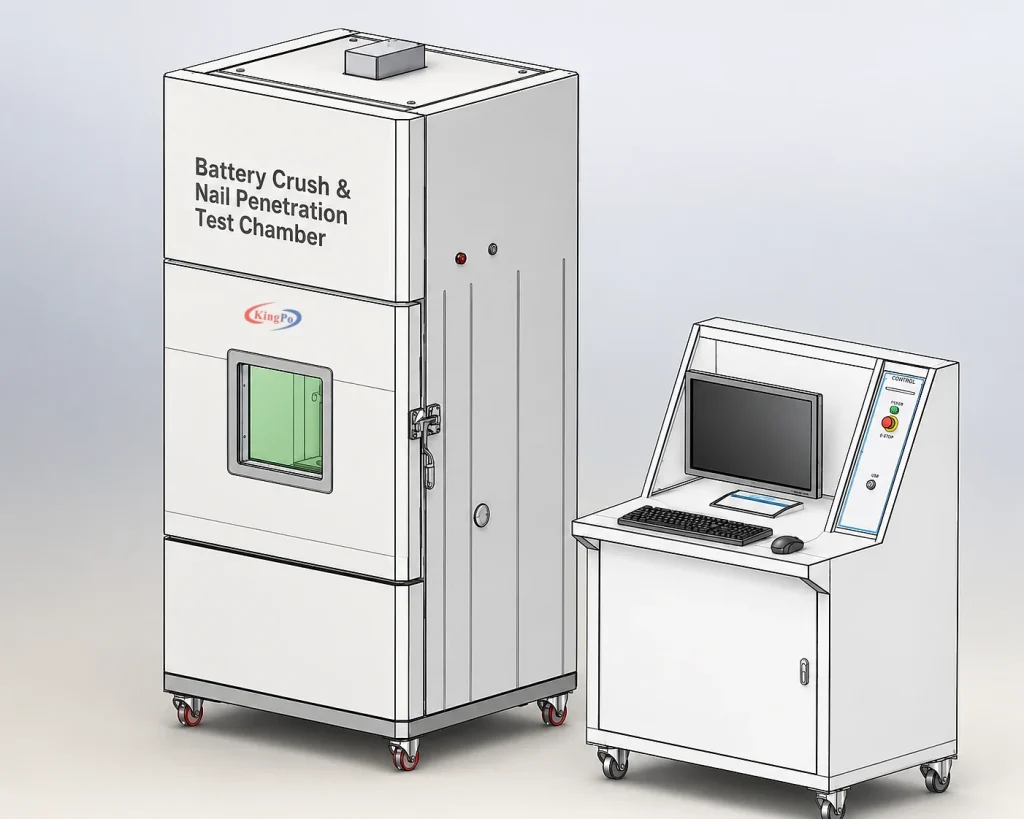
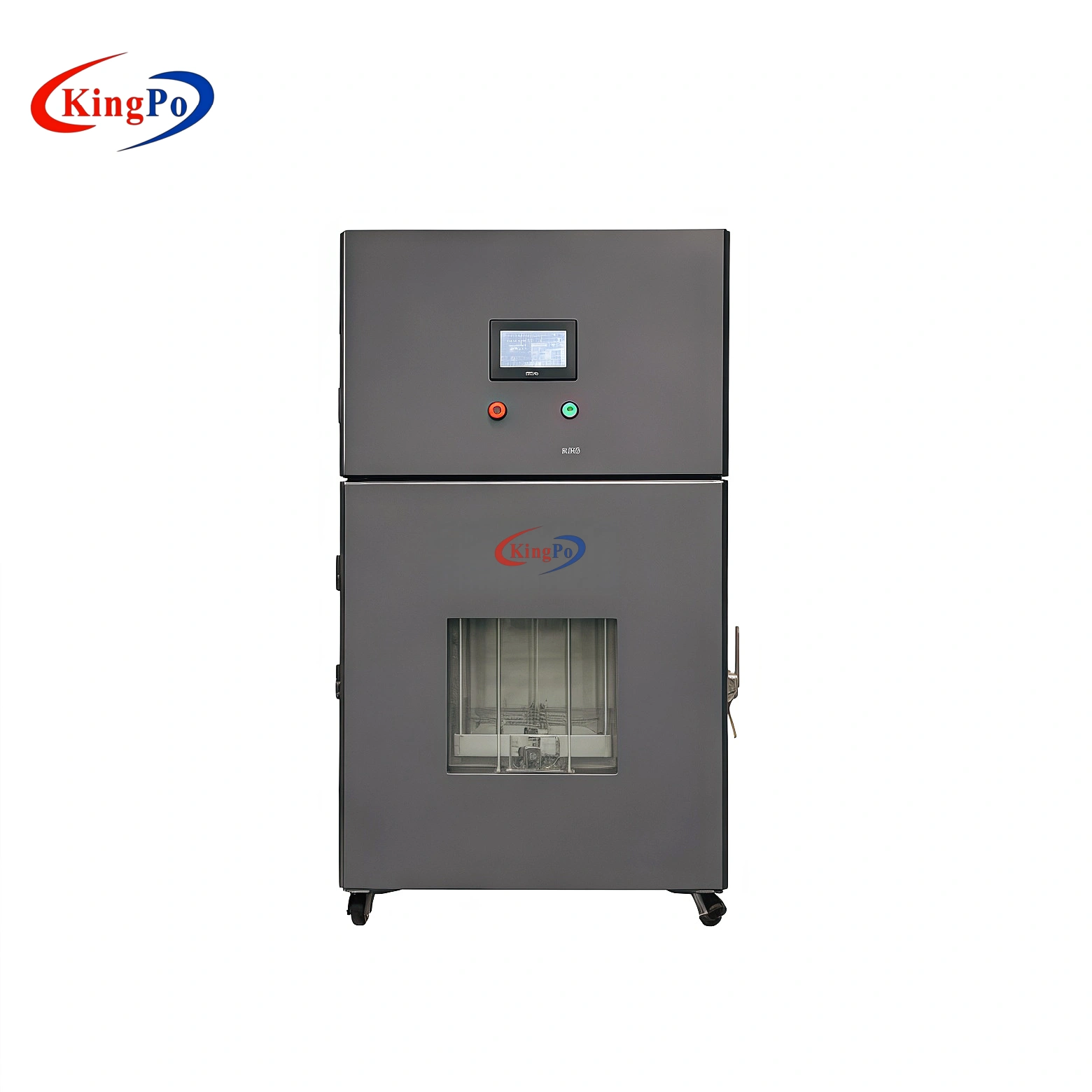
Close-up of UN38.3 Battery Crush Test Chamber โ€“ KingPo
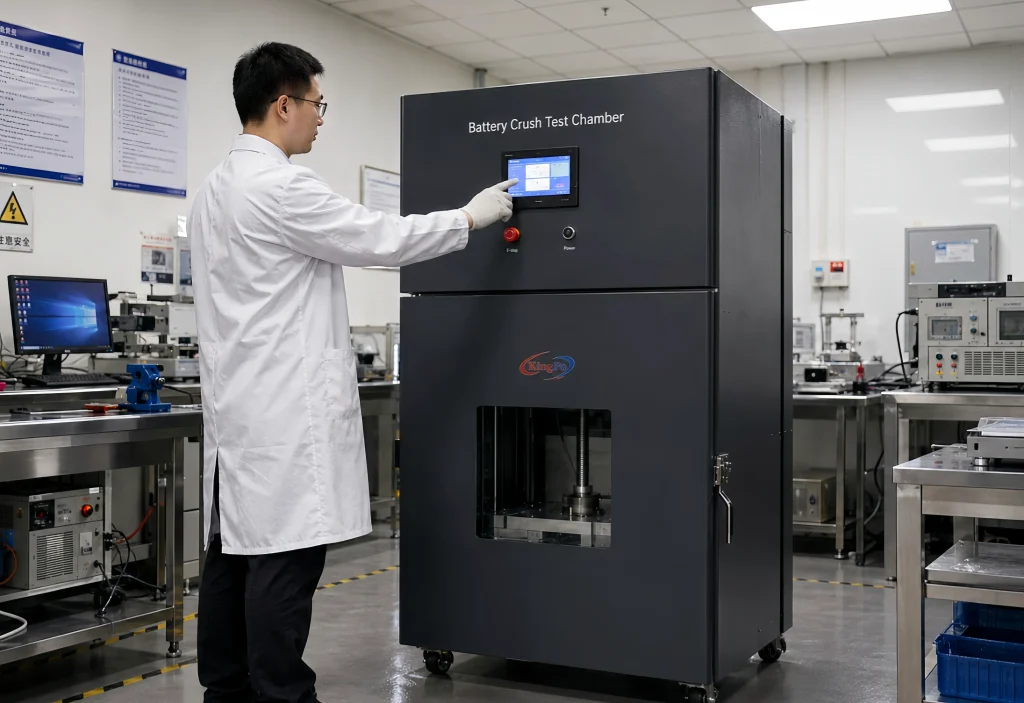
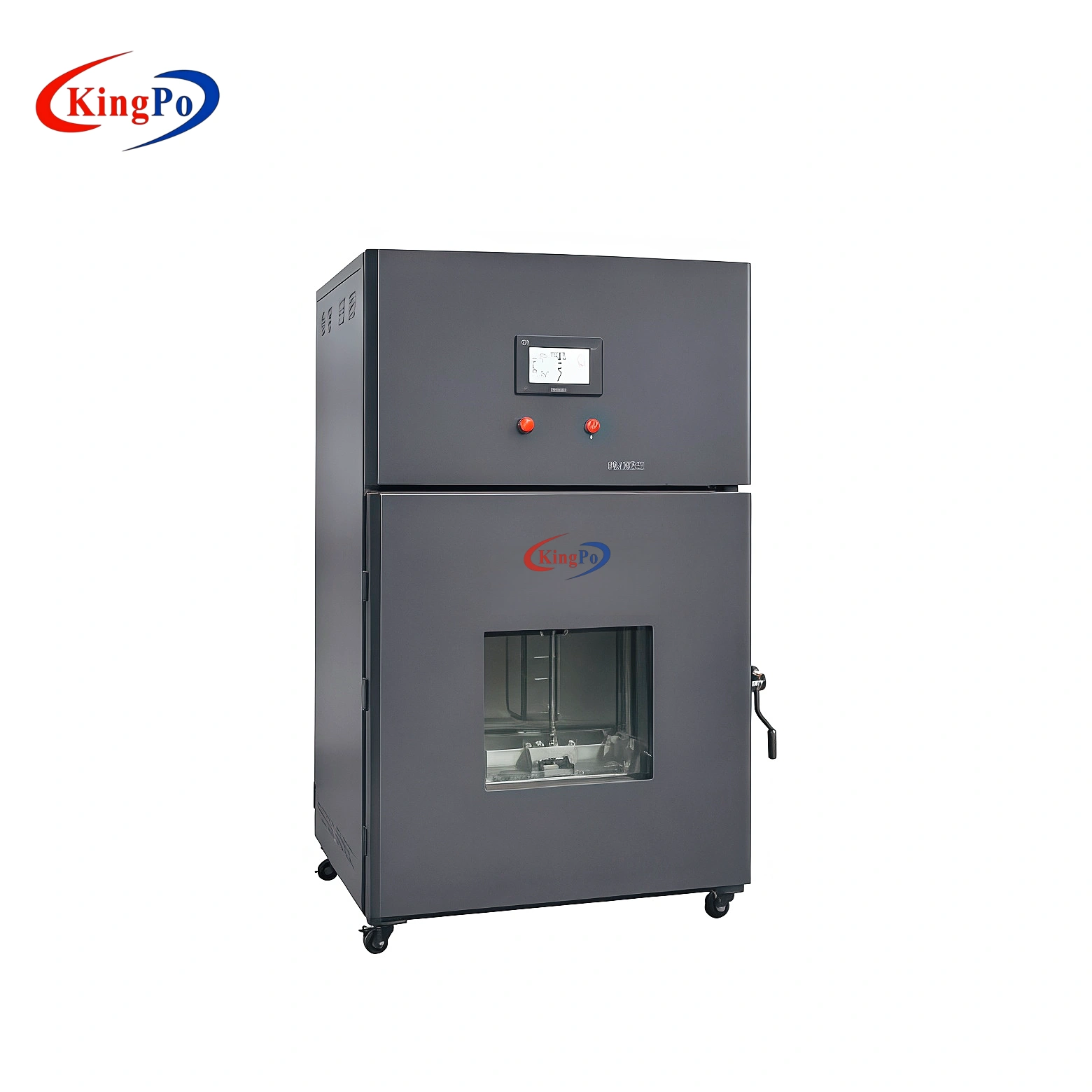
Battery Crush Test Chamber with Sample Inside โ€“ KingPo
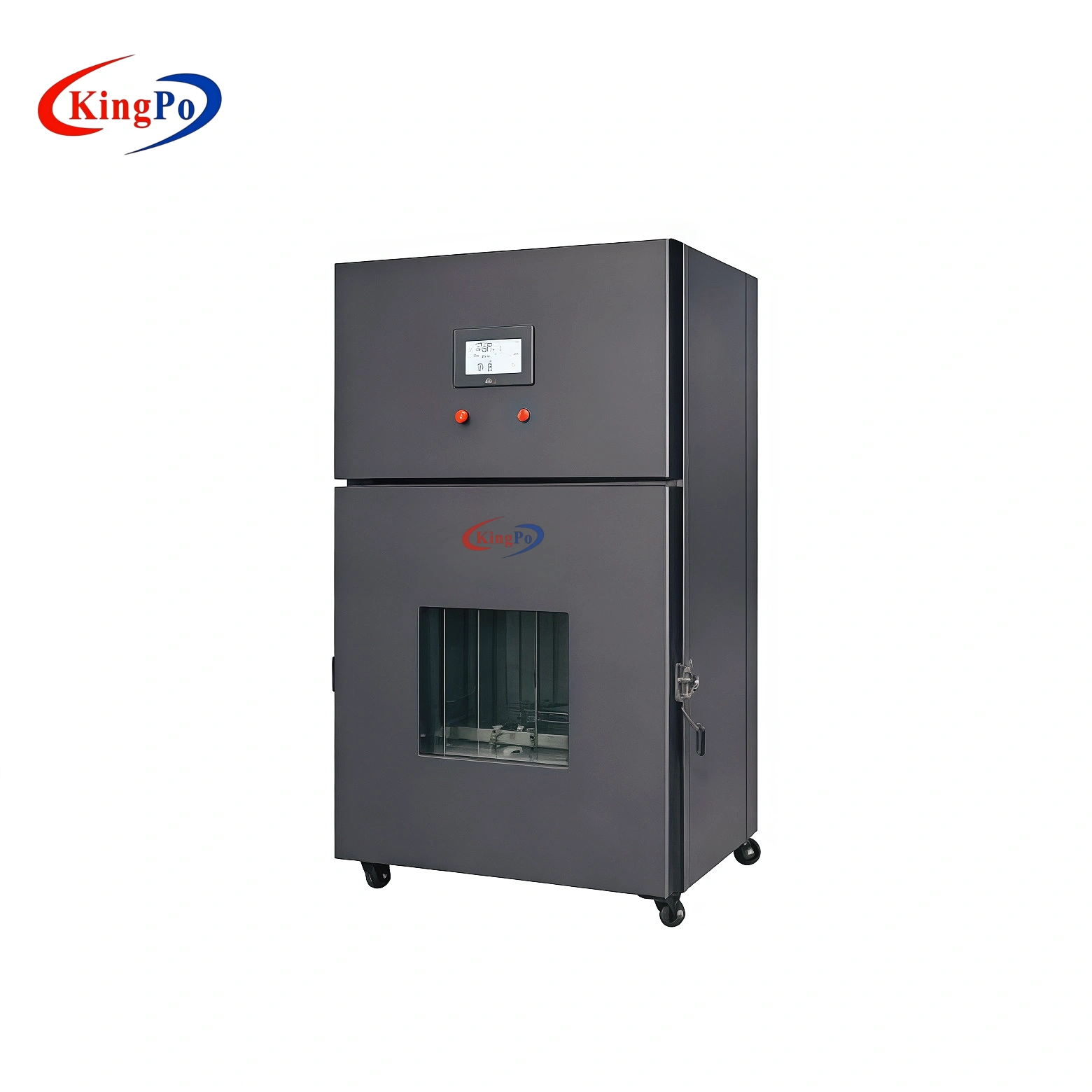
UN38.3 Battery Crush Test Chamber โ€“ KingPo
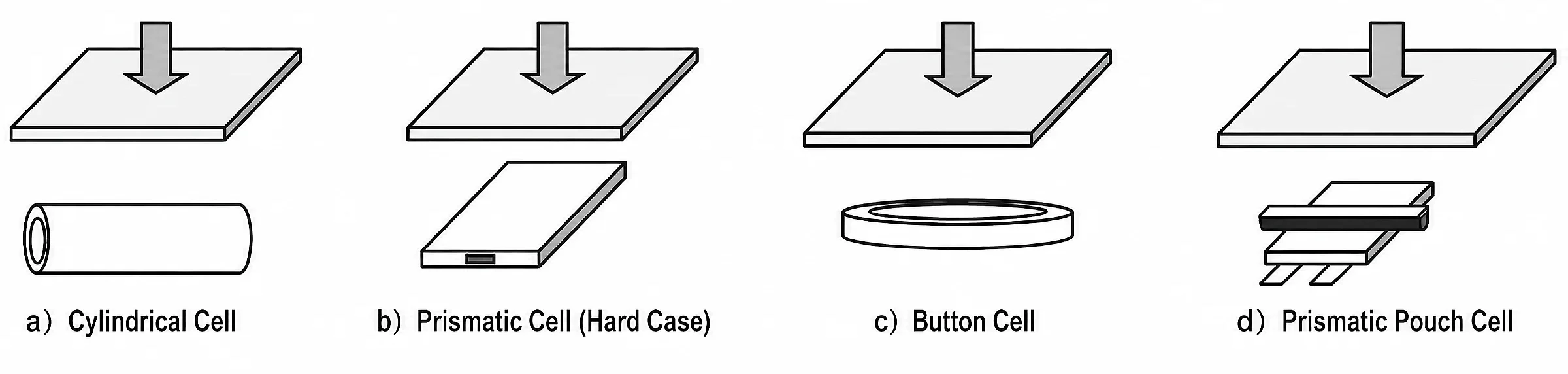
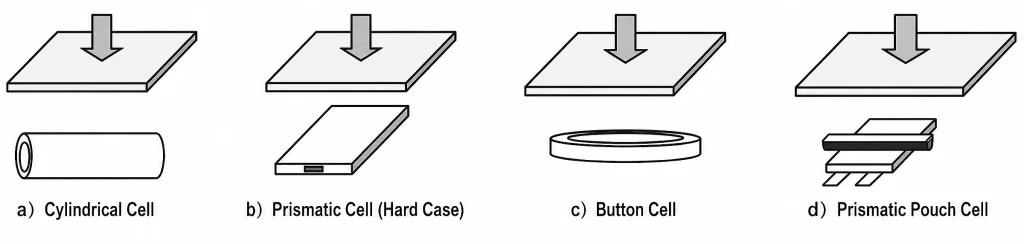
Fig.4 Batery Placement Diagram for Crush Test
Compatible with cylindrical, square, button, and soft pack batteries according to GB31241-2022 standards.
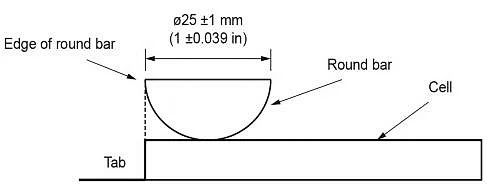
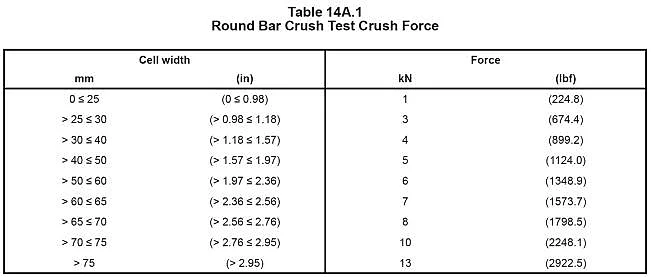
Table 14A.1 Round Bar Crush Test Crush Force
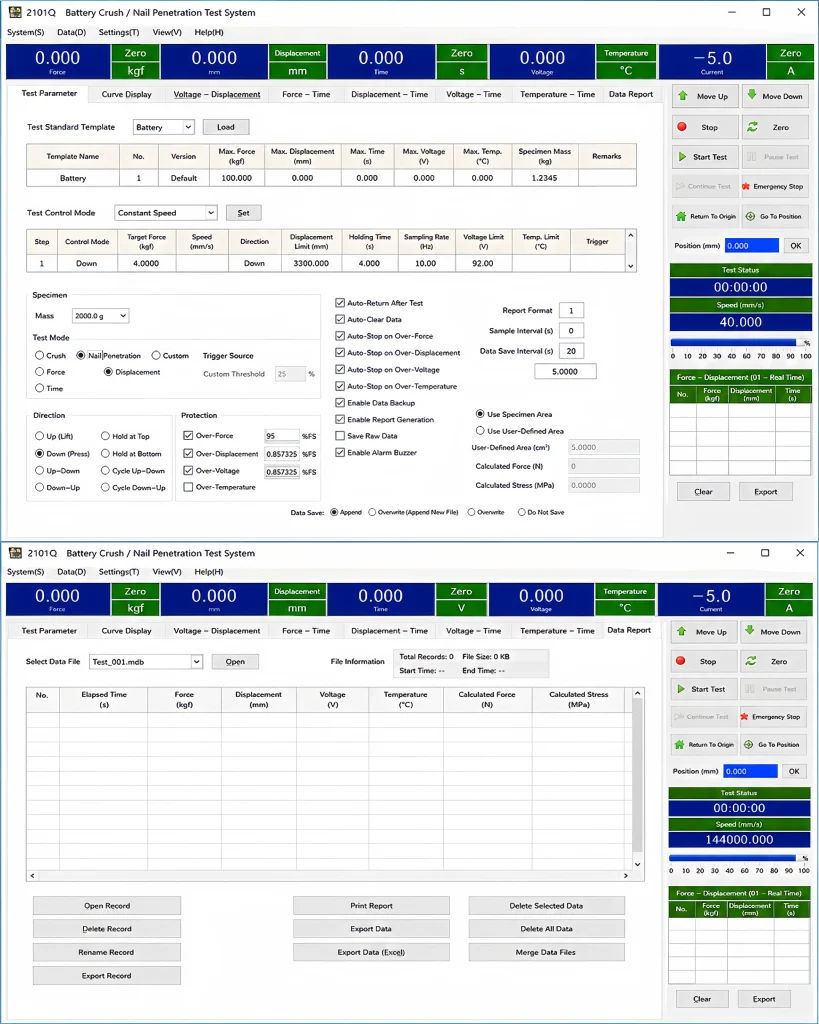
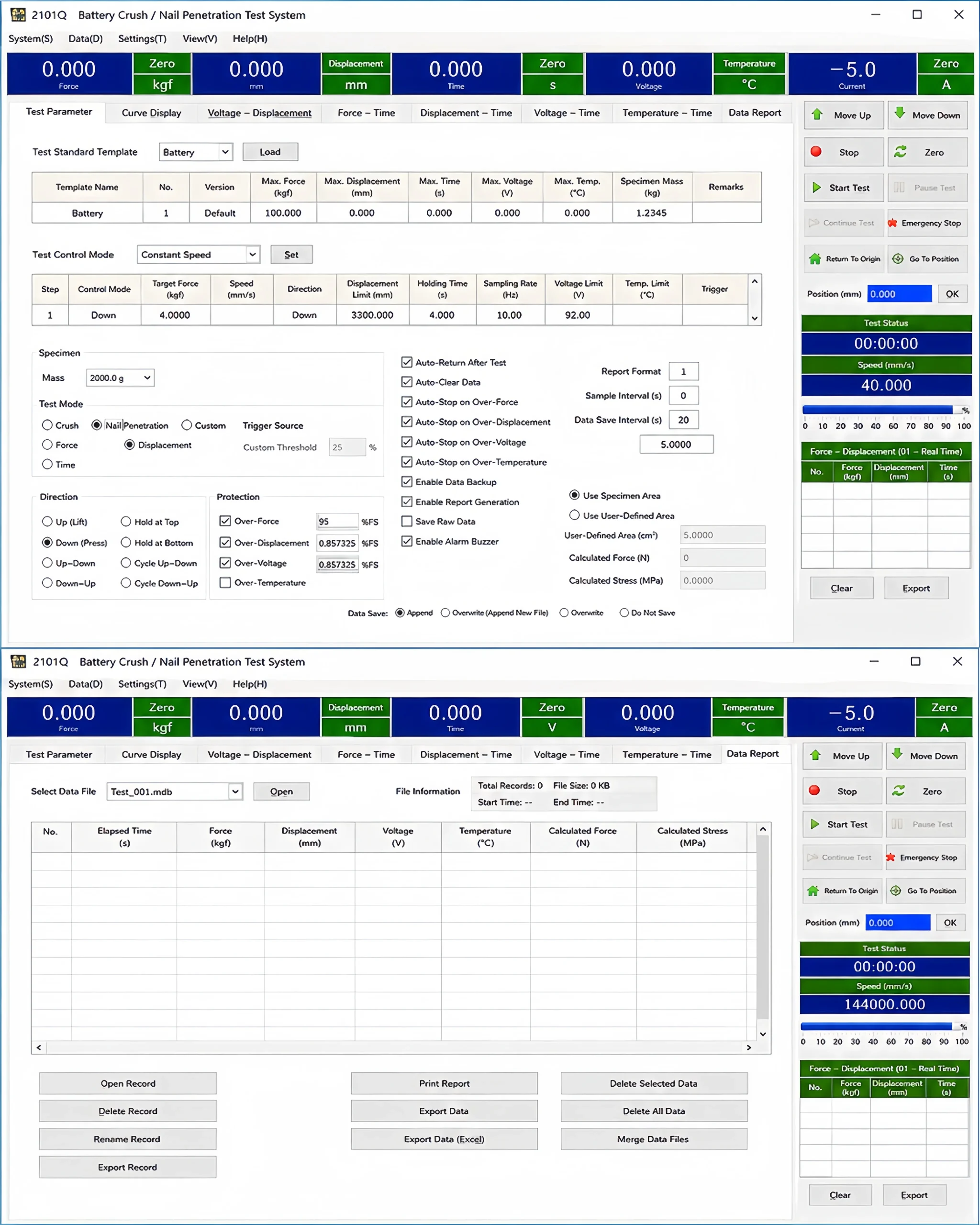
UN38.3 Battery Crush Test Equipment Data Acquisition & Control
Close-up of UN38.3 Battery Crush Test Chamber โ€“ KingPo
Battery Crush Test Chamber with Sample Inside โ€“ KingPo
UN38.3 Battery Crush Test Chamber โ€“ KingPo
Fig.4 Batery Placement Diagram for Crush Test
Compatible with cylindrical, square, button, and soft pack batteries according to GB31241-2022 standards.
Table 14A.1 Round Bar Crush Test Crush Force
UN38.3 Battery Crush Test Equipment Data Acquisition & Control

Battery Crush Test Chamber | UN38.3 Battery Crush Test Equipment

The Battery Crush Test Chamber supports UN38.3 battery crush and mechanical abuse testing, providing precise force control and enhanced safety protection for manufacturers and testing laboratories.

  • Standards Support: Designed to support UN38.3 battery crush testing and applicable GB/T 31241 and GB 38031 mechanical abuse requirements
  • Test Type: Controlled battery crush / extrusion testing with precise force and displacement control
  • Force Range: Standard force up to 20 kN; higher force ranges available for module and pack-level testing upon request
  • Drive System: Servo-hydraulic or electric drive system for stable force application and repeatable testing
  • Safety Design: Reinforced safety chamber with pressure relief, smoke exhaust interface, safety interlock, and emergency stop
  • Data Acquisition: Real-time force, displacement, voltage, and temperature monitoring with test curve recording
  • Optional Integration: Supports optional integration with external electrical monitoring or short-circuit test systems
  • Customization: Chamber size, force range, fixture design, and automation level can be tailored to test requirements
  • MOQ: 1 set
  • Delivery Time: 30 working days

Battery Crush Test Chamber Description

Smart Battery Testing Machine Battery Crush Test Chamber For Electronic Products

Battery crush testing is an important mechanical abuse test used to evaluate battery safety under external compression or deformation conditions. For lithium batteries, UN38.3 battery crush testing is widely used in transportation safety evaluation, while GB/T 31241 and GB 38031 may apply depending on battery type and target market.

This Battery Crush Test Chamber provides controlled force application, accurate measurement, and robust safety protection. It is suitable for battery manufacturers and testing laboratories conducting mechanical abuse evaluation during product development, quality verification, and certification processes. It helps reduce operator risk during hazardous battery testing while providing reliable data for product validation and compliance preparation.

Technical Parameters

Parameter Specification Remark / Notes
Applicable Standards UN38.3, GB/T 31241, GB 38031 Support for applicable mechanical abuse test requirements
Maximum Crush Force Standard up to 20 kN Higher force ranges available upon request
Force Accuracy ยฑ1% FS Subject to sensor configuration
Crush Speed Adjustable Configurable according to test method
Test Space Customizable Based on sample size and test requirements
Drive System Servo-hydraulic or electric Stable and repeatable force application
Safety Features Reinforced chamber, pressure relief, smoke exhaust interface, safety interlock, emergency stop Designed for high-risk battery abuse testing
Data Monitoring Force, displacement, voltage, temperature Real-time recording with curve export support
Optional Functions Electrical monitoring, short-circuit integration Available upon request
Battery Crush and Needle Penetration Tester
UN38.3 Battery Crush Test Equipment

Professional Construction & Technical Precision

The Battery Crush Test Chamber adopts a high-rigidity structural design with precision drive systems to ensure stable and repeatable force application during testing. The reinforced safety chamber includes pressure relief, smoke exhaust interface, and safety interlock systems to enhance protection during high-risk battery abuse tests.

The equipment supports accurate force and displacement control along with multi-parameter monitoring, making it suitable for battery safety evaluation under mechanical abuse conditions.

Testing Principle

Battery crush testing is a key mechanical abuse test used to evaluate the safety performance of batteries when subjected to external compressive forces. The test simulates potential mechanical damage that may occur during handling, transportation, or in-vehicle incidents, helping to assess the risk of internal short circuit, electrolyte leakage, or thermal runaway caused by cell deformation or structural failure.

During testing, a controlled crushing force is applied to the battery sample at a defined speed and displacement. The Battery Crush Test Chamber enables precise force application, real-time monitoring of key parameters such as force, displacement, voltage, and temperature, and provides a safe testing environment. Test acceptance criteria may vary depending on the applicable standard and battery type, and typically include evaluation of fire, explosion, rupture, leakage, and electrical performance after the test.

Common Error Mitigation

To obtain reliable crush test results, the following practices are recommended:

  • Confirm the specific test requirements and acceptance criteria according to the applicable standard and battery type.
  • Ensure proper sample fixation and alignment before applying force.
  • Use suitable fixtures and crush plates based on cell, module, or pack configuration.
  • Monitor key parameters such as voltage and temperature in real time.
  • Maintain safety interlocks and emergency stop functions in operational condition.
  • Perform regular equipment maintenance and sensor verification.

Primary Use Cases & Business Value

This Battery Crush Test Chamber helps battery manufacturers and testing laboratories perform mechanical abuse testing with controlled conditions and enhanced safety. It supports product safety evaluation and compliance processes for various battery types and applications.

Industrial Applications & Lab Scenarios

  • Battery manufacturers โ€” Mechanical abuse testing during R&D and production validation
  • Testing laboratories โ€” UN38.3 and national standard compliance testing services
  • EV and energy storage companies โ€” Battery safety performance verification
  • Certification bodies โ€” Mechanical abuse test execution and evaluation
  • Battery Crush Test Chamber for UN38.3 Lithium Battery Safety Testing
    Battery Crush Test Chamber for UN38.3 Lithium Battery Safety Testing
  • Research institutions โ€” Battery behavior studies under crush conditions

Strategic Procurement Advantages & Global Support

  • Designed to support UN38.3 battery crush testing with precise force control
  • Suitable for both new test systems and replacement/upgrade needs
  • Enhanced safety features for high-risk battery abuse testing
  • Supports optional integration with monitoring and combined abuse systems
  • Technical support available for test method setup and equipment configuration
Compliance & Regulatory Assurance

This equipment is designed to support battery crush and mechanical abuse testing according to applicable requirements in UN38.3, GB/T 31241, and GB 38031. It helps laboratories and manufacturers conduct standardized testing for safety evaluation.

Metrological Integrity & Validation

  • Factory calibration of force and displacement systems is provided.
  • Regular verification of sensors and mechanical components is recommended.
  • Third-party calibration services can be arranged upon request.

Download Product Documentation

Technical Inquiry & Expert Support

KingPo offers Battery Crush Test Chambers with customizable force range, chamber size, and optional integration functions. Our engineering team can provide consultation on test configuration and equipment selection. For detailed specifications or proposals, please contact us.

The Core Value We Deliver

  • Controlled battery crush testing with precise force application
  • Configurable for cell, module, and pack-level battery crush testing
  • Enhanced safety design for high-risk battery abuse testing
  • Flexible options for monitoring and combined abuse scenarios
  • Professional technical support and customization capability

Detailed Description

Fig.4 Batery Placement Diagram for Crush Test
Safety Features
  • Explosion-proof stainless steel test chamber (SUS304)
  • Pressure relief vent with protective screen
  • Smoke exhaust system with 450mยณ/h capacity
  • Explosion-proof chains on doors
  • Access control safety interlock
  • Three-color alarm light system
  • Emergency stop protection
  • Explosion-proof glass observation window

Table 14A.1 Round Bar Crush Test Crush Force

Testing Capabilities
Compatible with cylindrical, square, button, and soft pack batteries according to GB31241-2022 standards.
ย  ย Extrusion Heads:
  • Flat extrusion head: ร˜150 mm
  • Cylindrical extrusion head: ร˜25 mm ร— 200 mm

Steel Needles:

  • Material: SKD11, 45ยฐ tip angle
  • ร˜3 mm ร— 100 mm (5 pieces)
  • ร˜5 mm ร— 100 mm (5 pieces)

Compatible with cylindrical, square, button, and soft pack batteries according to GB31241-2022 standards.

Data Acquisition & Control
ย  ย Software Features:
  • Chinese/English interface selection
  • Real-time parameter recording (force, displacement, temperature, voltage)
  • Curve display and analysis
  • Data export to Excel format
  • Multi-channel data acquisition

UN38.3 Battery Crush Test Equipment Data Acquisition & Control

Battery Crush Test Chamber Detail Display

Battery Crush Test Chamber FAQs

What is UN38.3 battery crush testing?
UN38.3 battery crush testing is a mechanical abuse test used to evaluate lithium battery safety under external crushing forces. It simulates potential damage during transportation and helps determine whether the battery may experience internal short circuit, fire, or explosion.
Which standards does this Battery Crush Test Chamber support?
This chamber is designed to support battery crush and mechanical abuse testing according to applicable requirements in UN38.3, GB/T 31241, and GB 38031. The specific test parameters and acceptance criteria can be configured based on the standard and battery type.
What is the typical force range of this Battery Crush Test Chamber?
The standard configuration supports a crush force of up to 20 kN. Higher force ranges are available upon request for module and pack-level testing, depending on customer requirements and sample size.
Is this chamber suitable for testing large battery packs?
Yes. The chamber size, force range, and fixture design can be customized to accommodate different battery formats, including cells, modules, and battery packs, based on specific testing needs.
What safety features does the Battery Crush Test Chamber include?
The chamber is equipped with a reinforced safety structure, pressure relief system, smoke exhaust interface, safety interlock, and emergency stop function. These features are designed to enhance operator protection during high-risk battery abuse testing.
Can this chamber perform combined crush and short circuit testing?
Yes. The chamber supports optional integration with external electrical monitoring or short-circuit test systems, enabling combined mechanical and electrical abuse testing scenarios upon request.
What parameters can be monitored during testing?
The system provides real-time monitoring of force, displacement, voltage, and temperature. Test data and curves can be recorded and exported for analysis and reporting purposes.
Who typically uses Battery Crush Test Chambers?
These chambers are commonly used by battery manufacturers, EV and energy storage companies, testing laboratories, and certification bodies to conduct mechanical abuse testing during product development and compliance evaluation.
How often should the Battery Crush Test Chamber be calibrated or maintained?
Regular calibration of force and displacement sensors is recommended. Routine maintenance should include inspection of the drive system, safety interlocks, and chamber condition to ensure consistent and safe operation.
What is the main difference between UN38.3 and GB 38031 crush testing?
UN38.3 is primarily used for lithium battery transportation safety assessment, while GB 38031 focuses on safety requirements for electric vehicle traction batteries. Although both include crush testing, the specific test conditions, sample preparation, and acceptance criteria may differ.

Related Products

Related News

Key Takeaways IEC 60695 series standardizes fire hazard testing for electrotechnical products using glow-wire (GWEPT/GWFI/GWIT), needle flame, and 50W/500W horizontal/vertical […]

External defibrillators are performanceโ€‘critical devices. For thirdโ€‘party calibration and certification laboratoriesโ€”and for manufacturersโ€™ QA/production teamsโ€”the โ€œmake or breakโ€ is whether […]

Environmental test chamber solutions boost product reliability by simulating real-world stress, identifying weaknesses, and ensuring consistent performance.
Glow Wire Tester checks if electronics resist fire, ensuring your devices meet safety standards and protect your home from electrical fire hazards.
Scroll to Top

Get A Free Quote Now !

Contact Form
If you have any questions, please do not hesitate to contact us.