Key Takeaways
- UV Aging Test Chamber uses high-intensity UVA or UVB lamps combined with condensation and water spray to simulate years of outdoor sunlight, moisture and temperature extremes in just days or weeks.
- It is the standard accelerated weathering method to evaluate color fading, cracking, chalking, gloss loss and mechanical degradation of plastics, coatings, paints and resins.
- KingPo UV Aging Test Chamber complies with the latest ISO 4892-3, ASTM D4329, ASTM D4587, GB/T 16422.3 and other major standards.
- Electronic-eye irradiance control, precise temperature (±3℃) and humidity (45%~90% R.H.) ensure repeatable, certifiable results.
- Proper operation and regular maintenance significantly improve product durability prediction and reduce field failure risks.
Abstract / Technical Summary
In the development and quality control of coatings, plastics, paints, resins and other UV-sensitive materials, the UV Aging Test Chamber provides the most efficient accelerated weathering method to simulate natural sunlight, rain and dew. By combining 8 imported UVA or UVB fluorescent lamps, condensation cycles, water spray and precise temperature/humidity control, the chamber reproduces years of outdoor exposure in days or weeks, helping manufacturers accurately assess color stability, mechanical integrity and service life in accordance with the latest ISO 4892-3, ASTM D4329 and related international standards.
Introduction
We at KingPo have collaborated extensively with coating manufacturers, automotive suppliers, and accredited testing laboratories to evaluate the long-term UV resistance of materials. In real-world outdoor environments, exposure to sunlight, moisture, and temperature fluctuations causes material degradation far more rapidly than most expect. Accurate accelerated UV aging testing is therefore essential for effective R&D, quality control, and compliance with international standards such as ISO 4892-3. This comprehensive guide explains the principles, key standards, practical operation steps, and best practices of UV aging testing, based on more than 15 years of hands-on experience with the KingPo UV Test Chamber series.
Why UV Aging Test Chamber Matters in Today’s Market?
Modern materials face increasingly harsh outdoor environments. Without reliable accelerated testing, manufacturers risk premature fading, cracking, chalking or loss of mechanical strength, leading to costly warranty claims and brand damage. A professional UV Aging Test Chamber allows you to:
- Predict real-world durability in weeks instead of years
- Optimize formulations before market launch
- Meet strict international certification requirements
- Reduce field failure rates and accelerate product development
Understanding UV Aging Testing Standards?
UV aging testing is governed by several authoritative standards. The most important include the latest ISO 4892-3 (fluorescent UV lamp exposure of plastics), ASTM D4329, ASTM D4587, GB/T 16422.3 and SAE J2020.
UV Aging Test Standards Comparison Table
| Standard | Test Type | Key Features | Primary Applications |
|---|---|---|---|
| ISO 4892-3 | Fluorescent UV lamps + condensation | UVA-340 or UVB-313, precise irradiance control | Plastics, coatings, paints |
| ASTM D4329 | Fluorescent UV exposure | Cycle-based UV + condensation | Polymers and resins |
| GB/T 16422.3 | UV aging resistance | Similar to ISO 4892-3 | Chinese market compliance |
| ASTM D4587 | UV + water spray | Accelerated weathering for coatings | Paints and protective layers |
Key Features of Professional UV Aging Test Chamber
When selecting a UV Aging Test Chamber, focus on these critical capabilities.
Technical Specifications Table
| Parameter | Specification | Benefit |
|---|---|---|
| UV Lamps | 8 imported UVA or UVB lamps | Best simulation of sunlight spectrum |
| Lamp Service Life | 1600 hours | Long-term stable irradiance |
| Temperature Range | RT+10℃ ~ 70℃ ±3℃ | Precise PID control |
| Humidity Range | 45% ~ 90% R.H. | With condensation and water spray |
| Specimen Capacity | 48 pcs (75 × 150 mm) | High-throughput batch testing |
| Sample-to-Lamp Distance | 55 mm | Optimal exposure uniformity |
| Irradiance Control | Electronic-eye automatic system | High-precision, repeatable results |
| Standards Compliance | ISO 4892-3, ASTM D4329, GB/T 16422.3, SAE J2020 | Full international certification support |
How to Perform UV Aging Test?
Here is our practical, easy-to-follow process used in hundreds of successful projects:
- Step 1 – Specimen Preparation Mount up to 48 standard specimens (75 × 150 mm) on the holder, ensuring uniform exposure and proper spacing.
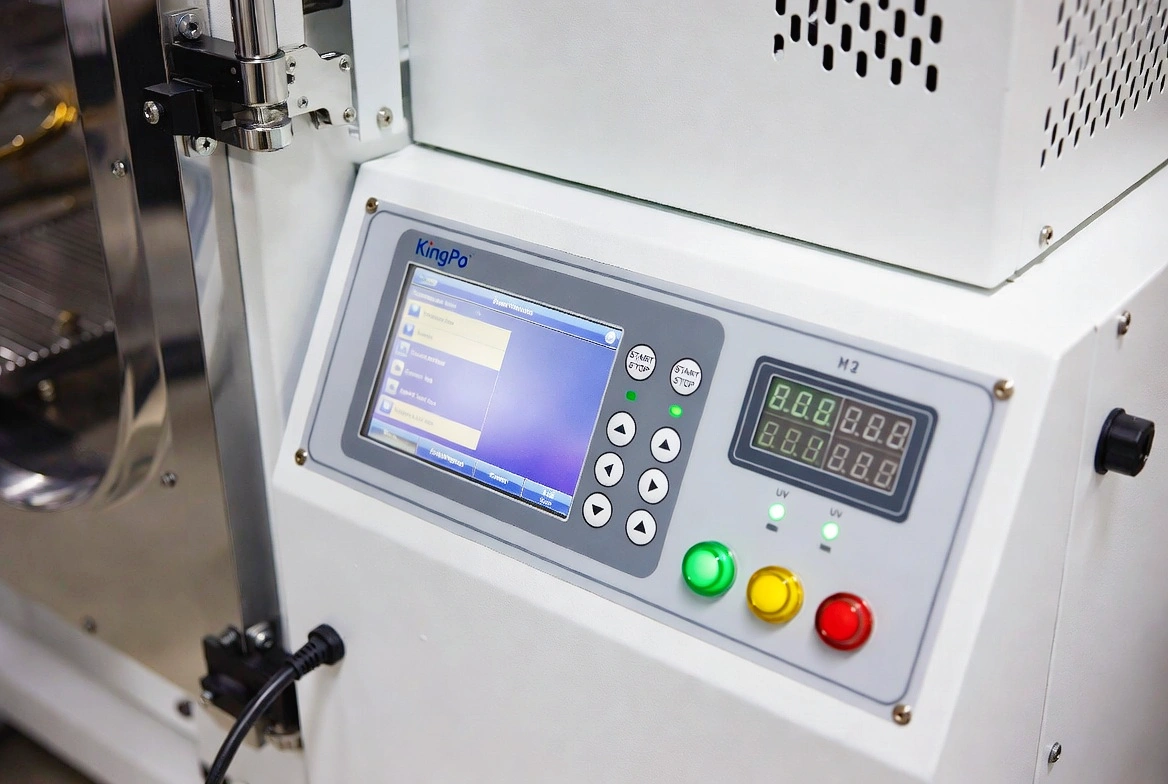
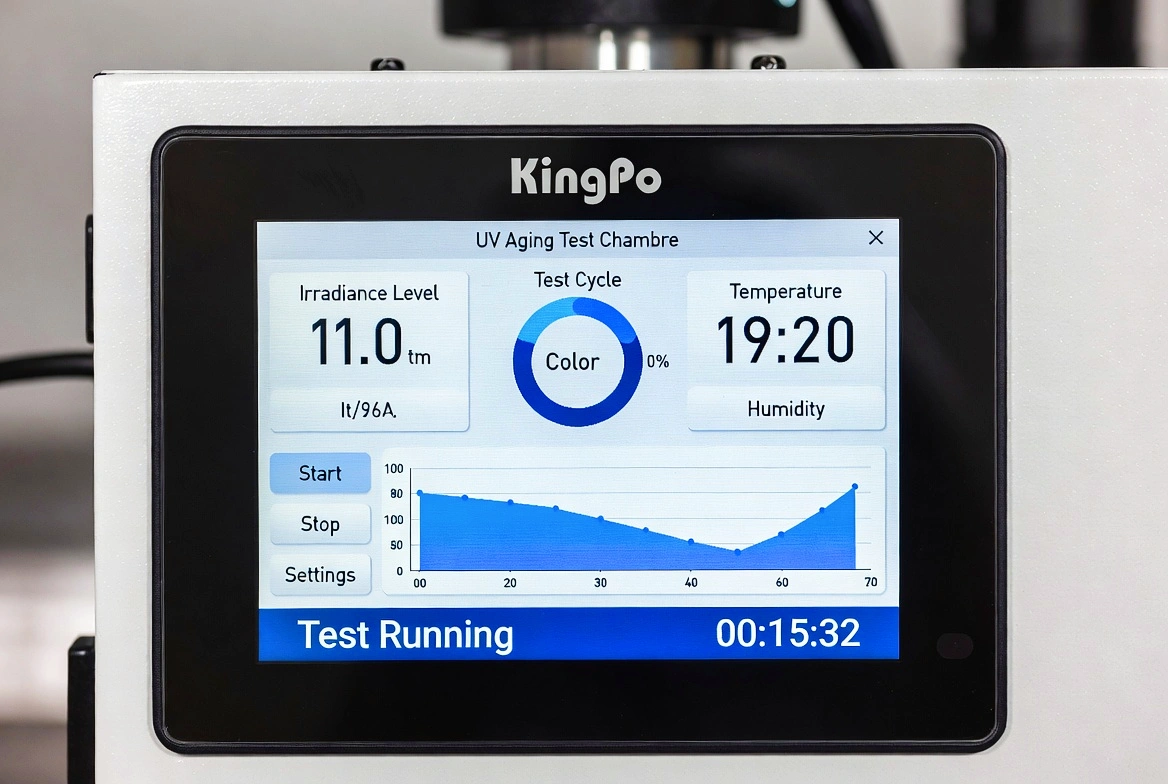
- Step 2 – Parameter Setting On the color LCD touchscreen, select UVA or UVB lamps, set irradiance level, temperature (RT+10℃~70℃), humidity (45%~90% R.H.) and test cycle (UV + condensation/spray).
- Step 3 – Test Execution Start the automatic program. The chamber alternates between UV exposure, condensation and water spray according to the selected standard cycle.
-
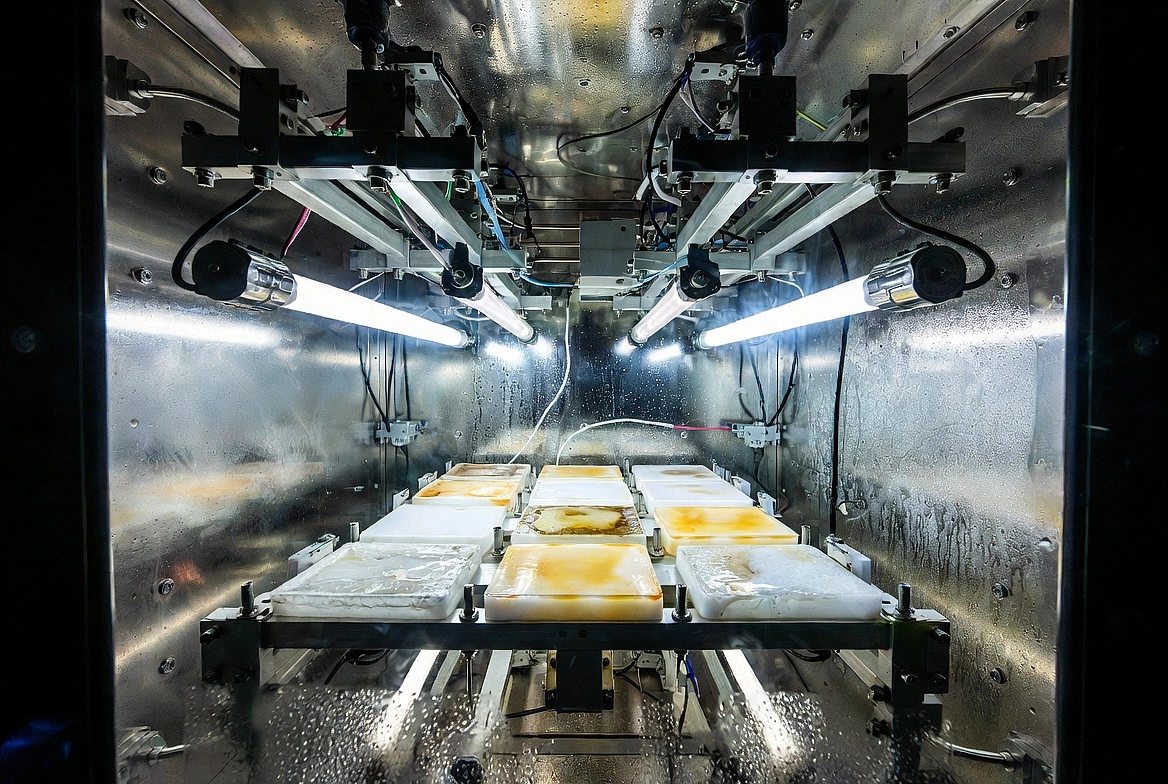
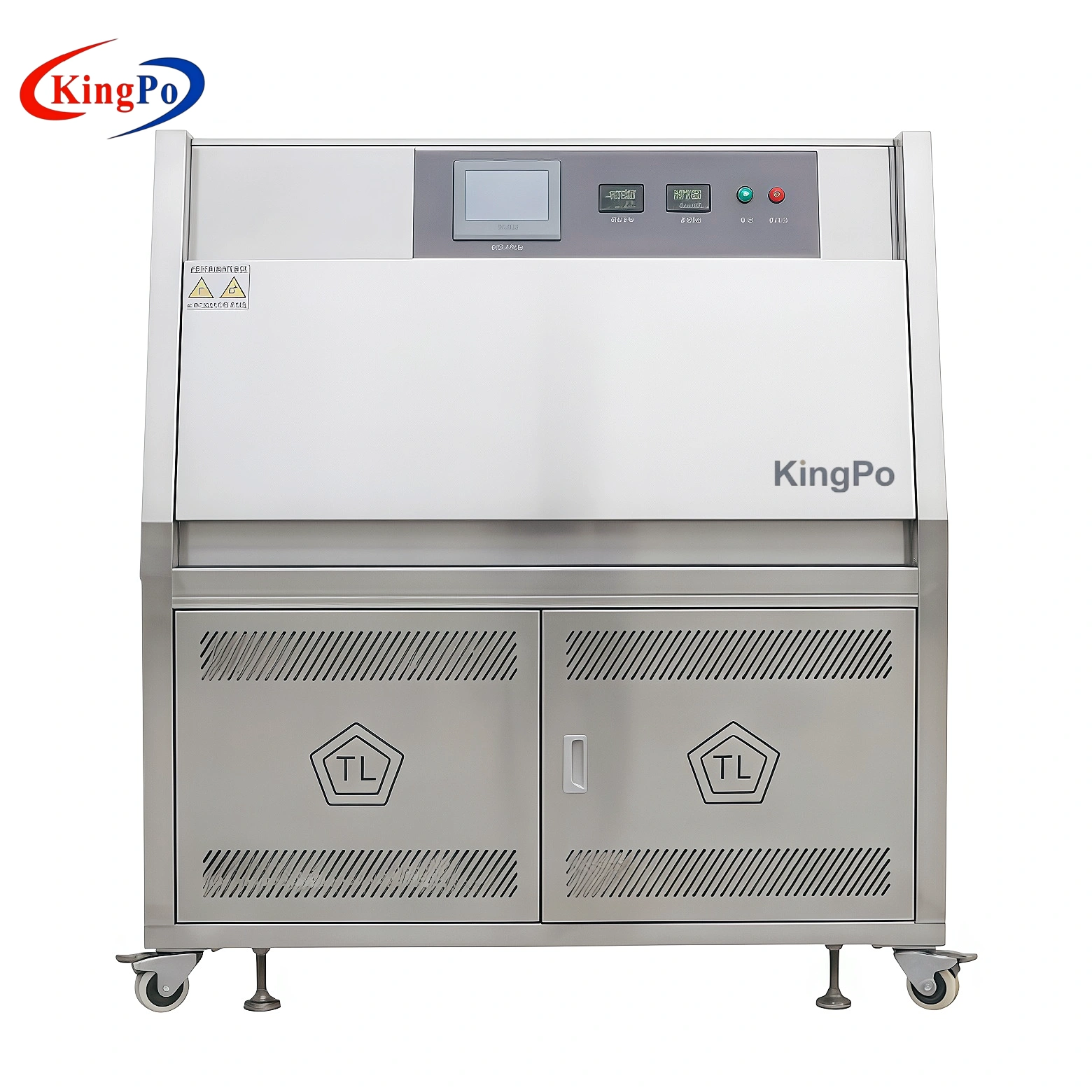
KingPo UV Aging Test Chamber during active accelerated weathering test with specimens inside. - Step 4 – Real-Time Monitoring The electronic-eye system continuously monitors and adjusts irradiance; temperature and humidity are maintained within ±3℃ and specified RH range.
- Step 5 – Post-Test Analysis After the required exposure time, inspect specimens for color change, gloss loss, cracking or mechanical degradation. Generate a complete traceable report automatically.
This five-step process delivers highly repeatable, certifiable results with minimal manual effort.
KingPo Advantages
We at KingPo design and manufacture our UV Aging Test Chamber under ISO 9001 and CE certification. Every unit includes:
- 8 high-quality imported UV lamps with 1600-hour service life
- Electronic-eye irradiance control for superior stability
- Condensation and water spray to simulate real outdoor humidity
- Robust construction with excellent thermal insulation
- 1-year comprehensive warranty, on-site installation and 48-hour technical response from our Dongguan facility
-
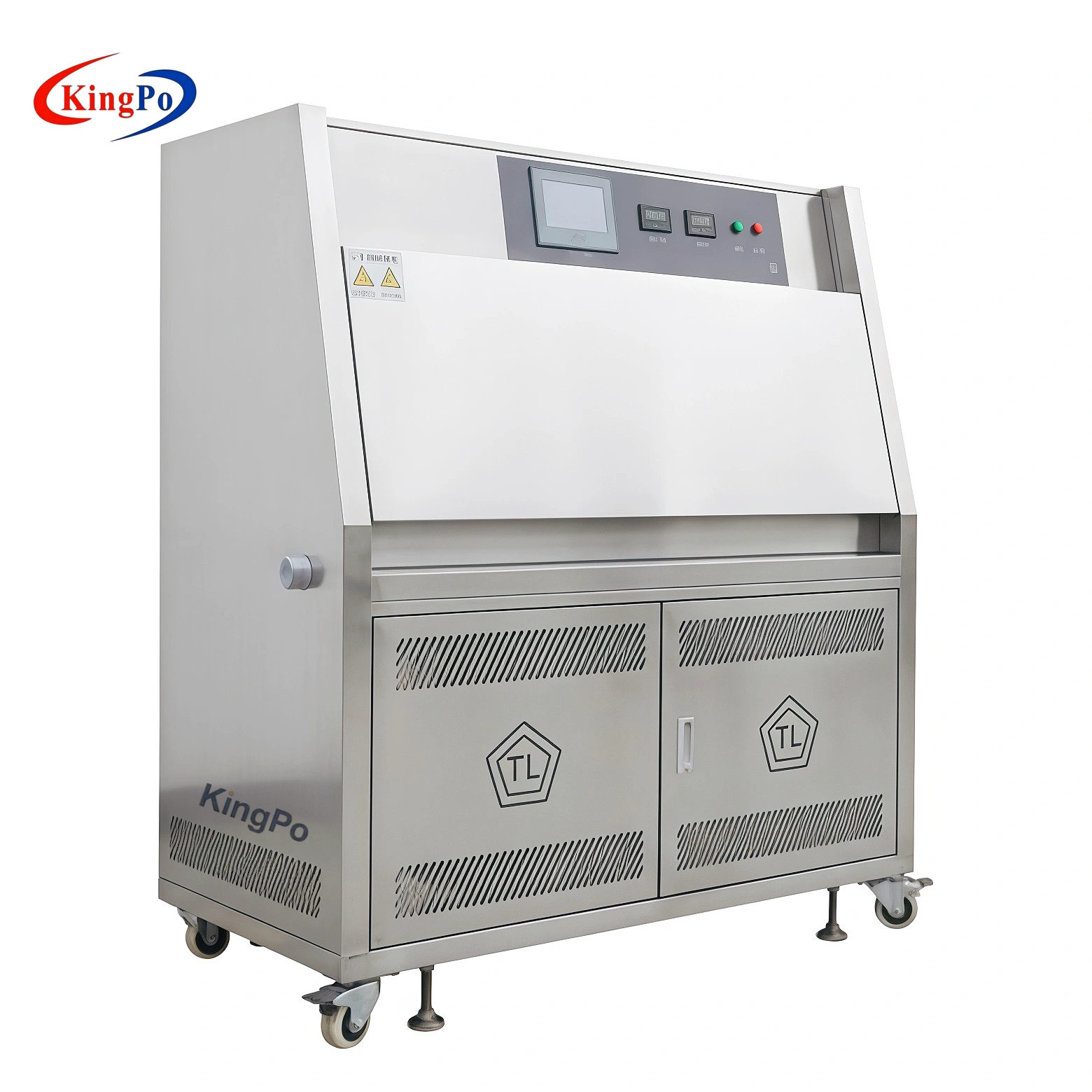
UV Aging Test Chamber during active accelerated weathering test with specimens inside.
Since 2022 we have delivered multiple UV Aging Test Chambers to leading coating and plastics manufacturers worldwide, consistently achieving excellent test repeatability and faster certification cycles.
Real-World Applications and Case Studies
Our UV Aging Test Chamber is widely used by automotive coating suppliers to predict color retention and gloss stability, by building material manufacturers to verify long-term weather resistance, and by electronics companies to test protective layers. One major coating client reduced field discoloration complaints by 42% after implementing our ISO 4892-3 protocol.
Best Practices and Maintenance for Long-Term Reliability
Consistent performance depends on disciplined maintenance. Follow this practical schedule:
Maintenance Checklist
| Frequency | Item to Check | Recommended Action |
|---|---|---|
| Daily | UV lamps and irradiance sensor | Visual inspection and cleaning |
| Weekly | Condensation tray and spray nozzles | Check water quality and clean |
| Monthly | Temperature and humidity sensors | Verify calibration |
| Quarterly | Lamp replacement schedule | Replace at 1600 hours or earlier |
| Annually | Full system calibration | Professional ISO-certified service |
After-Sales Support and Technical Assistance
We at KingPo provide comprehensive after-sales support including on-site installation, operator training, 1-year free warranty and lifelong technical assistance. Our experienced engineers are available 48 hours a day to resolve any issues.
Future Trends in UV Aging Testing
Demand is growing for chambers that combine UV exposure with xenon arc, temperature cycling and multi-stress testing in a single system. Our modular design ensures easy future upgrades, protecting your investment as testing requirements become more stringent.
Conclusion
A professional UV Aging Test Chamber is an essential tool for predicting material durability and ensuring product quality under real-world weathering conditions. By choosing KingPo’s high-precision UV Aging Test Chamber, manufacturers gain accurate, repeatable results that accelerate development and strengthen market competitiveness.
For a tailored configuration that precisely matches your UV aging testing requirements, please visit our UV Test Chamber product page. Our engineering team will respond with detailed technical specifications and a competitive quote within 24 hours.
FAQs
1. How often should the UV lamps be replaced in a UV Aging Test Chamber?
We recommend replacing the lamps after 1600 hours of operation or earlier if irradiance drops below the set value. Regular replacement ensures consistent UV intensity and reliable test results.
2. What is the main difference between UVA-340 and UVB-313 lamps?
UVA-340 provides the best simulation of natural sunlight in the short-wave UV range and is preferred for realistic outdoor weathering tests. UVB-313 delivers faster degradation and is used for quick screening, but may produce unrealistic results due to its shorter wavelengths.
3. How do I calibrate the irradiance of the UV Aging Test Chamber?
Use the built-in electronic-eye system for daily automatic monitoring. For full calibration, employ a traceable radiometer according to the manufacturer’s procedure, typically every 3–6 months or after 500 operating hours.
4. Can the UV Aging Test Chamber test both plastics and coatings simultaneously?
Yes. The chamber supports mixed specimen testing as long as all samples follow the same test cycle and irradiance level. Ensure proper spacing and uniform exposure to maintain accuracy.
5. What safety precautions are required when operating a UV Aging Test Chamber?
Always wear UV-protective goggles and skin-covering clothing. Never look directly at the lamps when the door is open. Ensure the chamber is properly grounded and the room has adequate ventilation to remove any ozone generated by UVB lamps.