
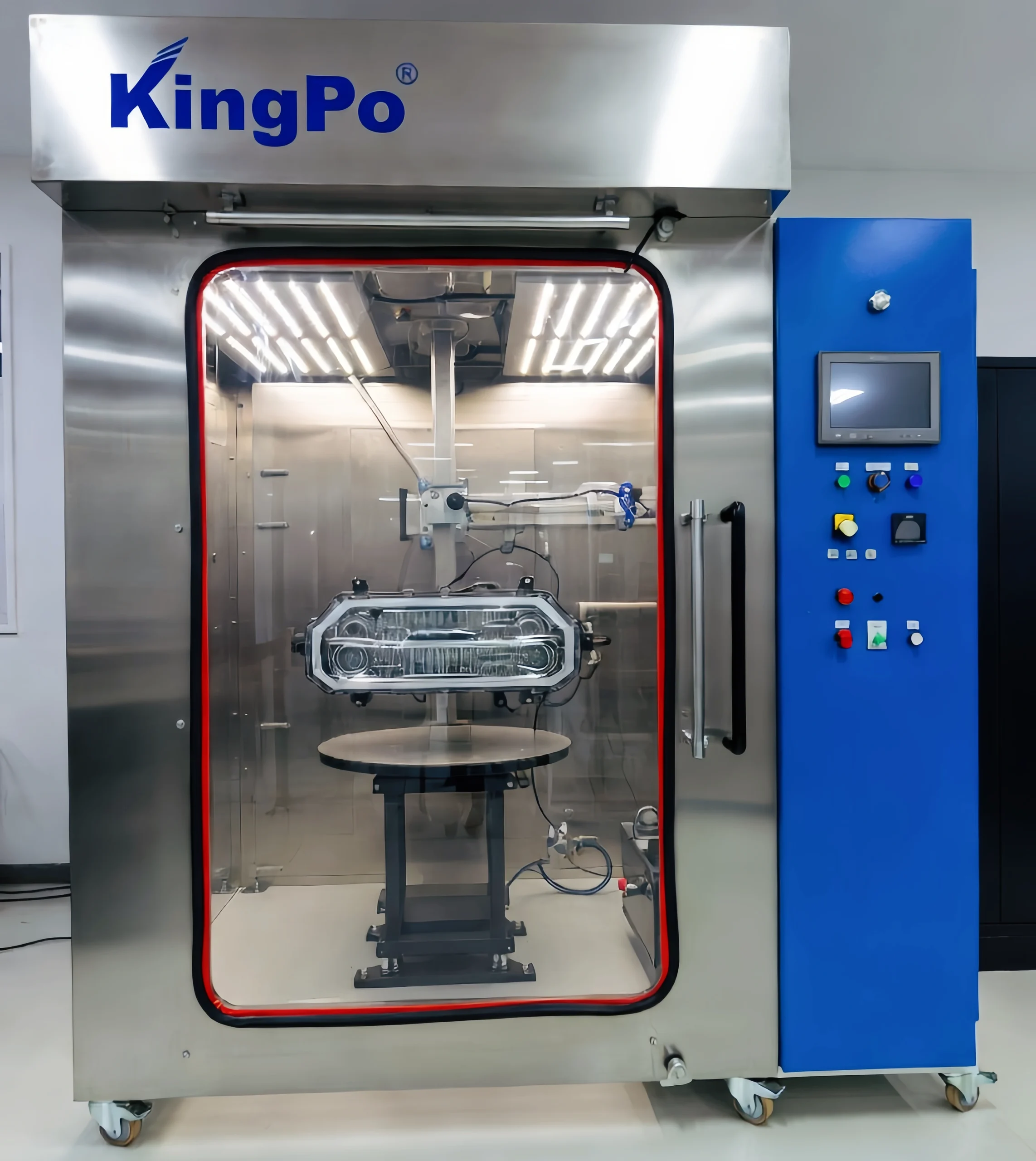
Abstract / Technical Summary
A professional rain spray test chamber is the essential equipment for conducting JIS D0203 automotive waterproof testing. This comprehensive guide details the full rain spray test chamber testing procedure, R1/R2 sprinkling and S1/S2 high-pressure spray methods using a precision rain test spray head, helping manufacturers achieve accurate, repeatable results and faster certification for automotive parts.
Introduction
Water ingress caused by rain and high-pressure spray is one of the most common failure modes for automotive components. In the field of JIS D0203 automotive waterproof testing, a high-precision rain spray test chamber provides controlled simulation of real-world conditions. This in-depth guide presents the complete rain spray test chamber testing procedure, key standard requirements, practical operation tips, troubleshooting strategies, maintenance best practices, and the benefits of using equipment manufactured with autonomous research and development capabilities.
Why Perform Rain Spray Test Chamber Testing for Automotive Parts?
Rain and high-pressure spray exposure can lead to immediate and long-term failures in automotive components. Key risks include:
- Electrical short circuits due to water penetration into connectors and ECUs
- Corrosion of internal components and wiring harnesses
- Reduced insulation resistance leading to system malfunction
- Accelerated seal degradation and material failure under repeated exposure
- Certification delays and costly warranty claims in global markets
Systematic rain spray test chamber testing for JIS D0203 automotive waterproof testing verifies waterproof performance, meets stringent regulatory requirements, and significantly reduces field failure rates while improving product competitiveness in harsh weather conditions.
Key Standards: JIS D0203 Automotive Waterproof Testing Requirements
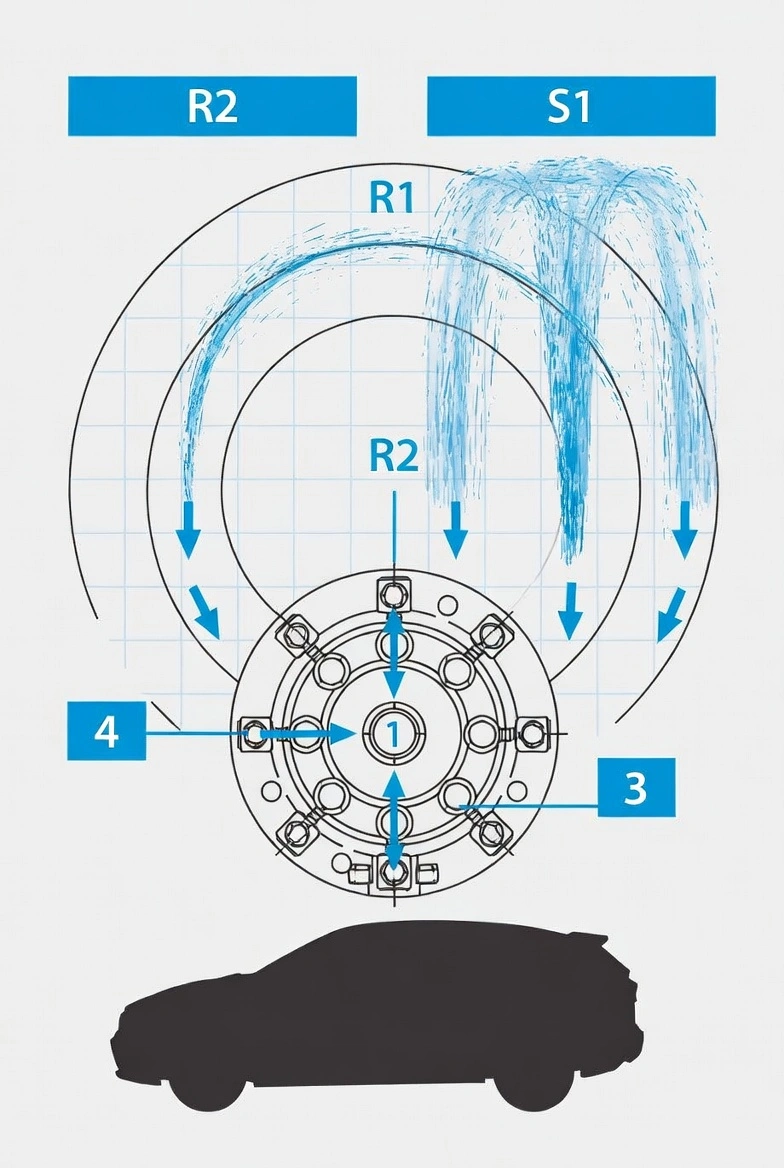
JIS D0203 Test Conditions (R1/R2/S1/S2)
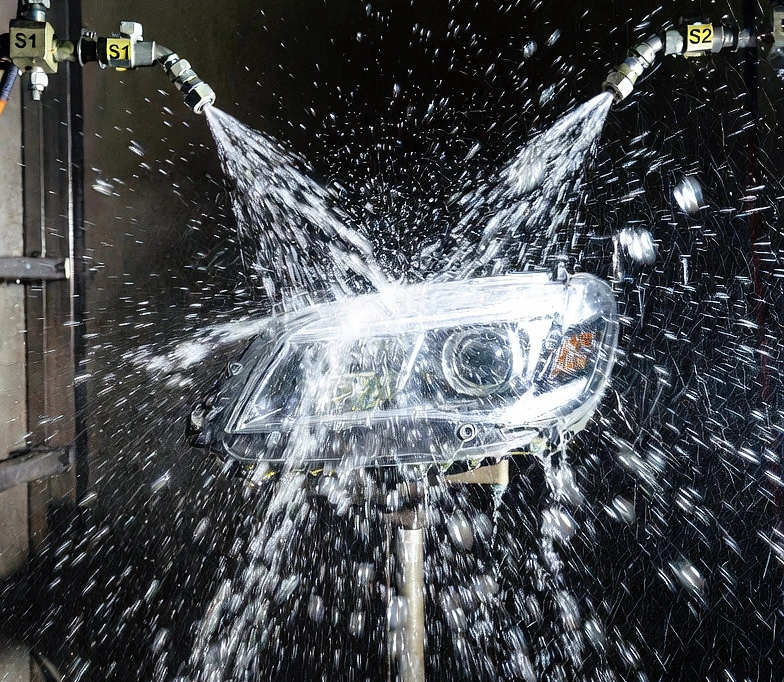
JIS D0203 is the primary standard for rain spray test chamber testing of automotive parts. It defines four distinct test profiles using a precision rain test spray head:
- R1/R2: Low-intensity sprinkling simulation
- S1/S2: High-pressure spray simulation
The standard requires closed-loop control of flow rate and pressure to ensure repeatability and reproducibility.
Comparison with KS R 0015 and Related Standards
KS R 0015 aligns closely with JIS D0203 but places additional emphasis on vehicle underbody and exterior components under high-pressure spray. Both standards focus on automotive waterproof testing, making a versatile rain spray test chamber indispensable.
The table below summarizes the primary parameters:
| Aspect | JIS D0203 (R1/R2/S1/S2) | KS R 0015 |
|---|---|---|
| Primary Focus | Rain and spray testing for automobile parts | Korean automotive waterproof standard |
| Rain Test Spray Head | Precision two-nozzle (R1/R2) + 40 outlets (S1/S2) | High-pressure spray nozzle array |
| Flow Rate / Pressure | Closed-loop controlled | Precise pressure and flow regulation |
| Typical Applications | Headlights, sensors, connectors, ECUs | Automotive underbody and exterior components |
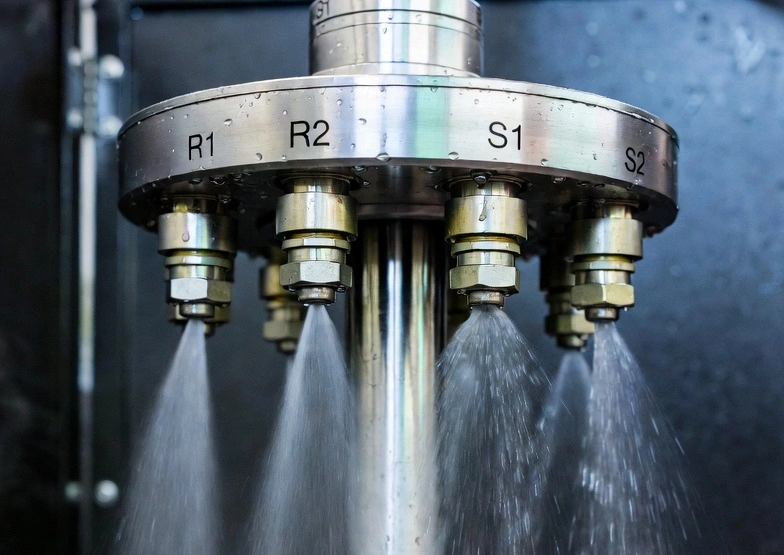
According to the official JIS D0203-1994 standard published by the Japanese Standards Association, the rain spray test chamber must simulate R1/R2 sprinkling and S1/S2 high-pressure spray conditions with precise flow rate and pressure control. For the complete official English version of the JIS D0203:1994 standard, including detailed test methods for automotive waterproof testing, please refer to the full document archived by the Internet Archive.
Root Cause Analysis of Common Failures in Rain Spray Test Chamber Testing
Seal Inadequacy
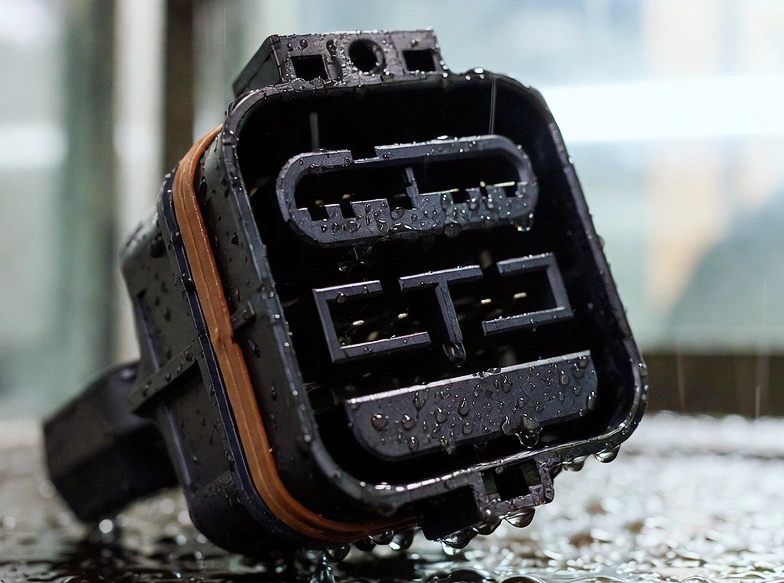
Poor gasket compression or assembly tolerances allow water ingress even at low spray pressures, leading to internal corrosion.
Drainage Design Flaws
Inadequate drainage paths cause water pooling inside the enclosure, resulting in long-term material degradation.
Material Degradation Under High-Pressure Spray
Repeated exposure to S1/S2 high-pressure spray accelerates seal hardening or cracking if the material is not properly selected.
Early identification of these root causes during rain spray test chamber testing enables targeted design improvements before final certification.
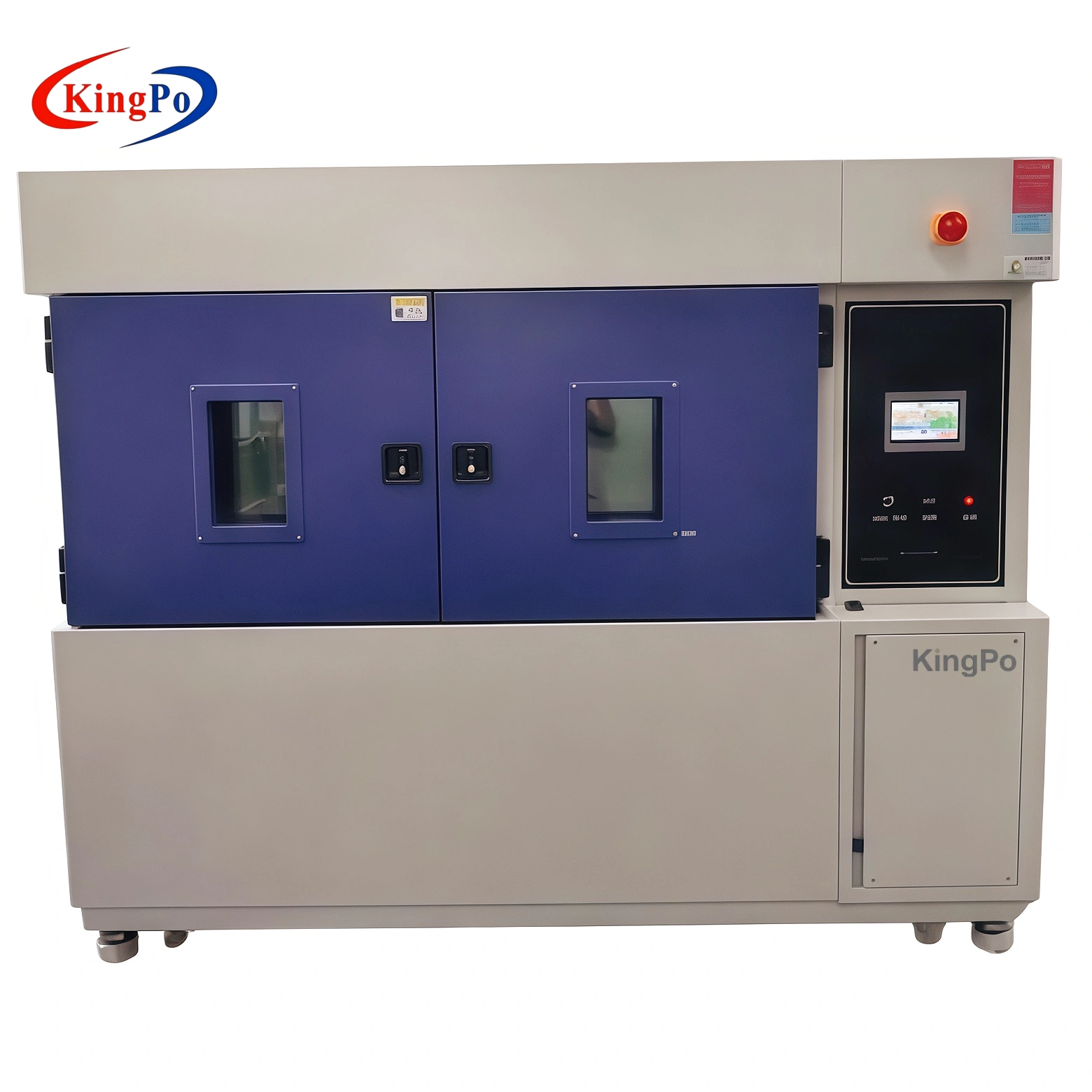
Technical Advantages of KingPo Rain Spray Test Chamber for JIS D0203 Automotive Waterproof Testing
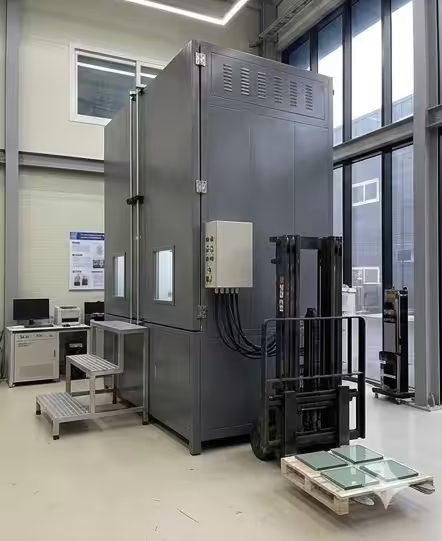
KingPo, with over 20 years of autonomous research and development, designs and manufactures its rain spray test chambers entirely in-house. This complete in-house control ensures superior precision, durability, and long-term reliability compared to assembled solutions.
Key advantages include:
- Precision rain test spray head with R1/R2 and S1/S2 test profiles
- Closed-loop regulation via flow/pressure sensors, PLC and frequency converter
- 7-inch color touchscreen with English menu for real-time monitoring
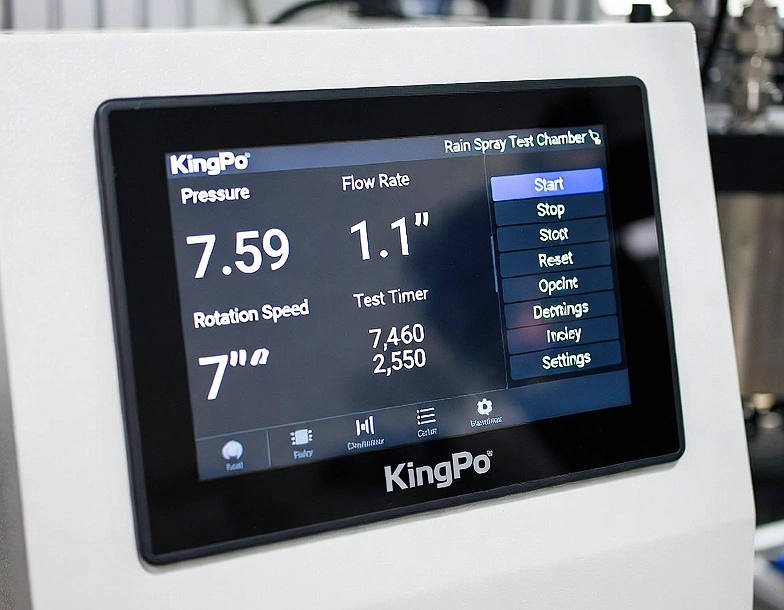
- Dual-motor drive system (Panasonic servo + stepper motor)
- Robust SUS304 stainless steel chamber with 50 kg turntable capacity
These features make KingPo rain spray test chamber the preferred choice for JIS D0203 automotive waterproof testing. For detailed technical specifications and configuration options, please visit the Rain Spray Test Chamber product page.
Step-by-Step Rain Spray Test Chamber Testing Procedure
Step 1 – Chamber and Sample Preparation
Thoroughly clean the chamber interior and inspect the precision rain test spray head, seals, and drainage system. Power on the test specimen if functional monitoring is required and document its initial condition with high-resolution photographs.
Step 2 – Specimen Positioning
Mount the automotive part in its normal operating orientation on the turntable. Ensure all critical surfaces are fully exposed to the rain test spray head.
Step 3 – Parameter Configuration
Set spray mode (R1/R2 or S1/S2), flow rate, pressure, and test duration via the 7-inch touchscreen interface.
Step 4 – Test Execution
Activate the precision rain test spray head while continuously monitoring pressure, flow, and rotation speed.
Step 5 – Real-Time Monitoring
Observe for any water ingress or performance degradation throughout the test cycle.
Step 6 – Post-Test Inspection and Reporting
Allow adequate settling time, carefully inspect for internal water accumulation, functional degradation, and seal integrity, then generate a comprehensive compliance report with photographic evidence.
Best Practices and Maintenance for Long-Term Reliability of Rain Spray Test Chamber
Weekly and Monthly Maintenance
- Weekly cleaning of the precision rain test spray head and nozzles
- Monthly calibration of flow and pressure sensors
Annual Full-System Inspection
Annual full-system inspection by certified technicians ensures consistent test results and extends equipment life.
Proper maintenance is critical for long-term reliability of your rain spray test chamber in JIS D0203 automotive waterproof testing.
Real-World Applications and Case Studies
In automotive R&D, rain spray test chamber testing has helped leading OEMs identify seal weaknesses in headlights and ECUs, reducing field failure rates by over 40%. Similar success stories are seen in sensor and connector validation for electric vehicles.
Conclusion
A well-executed rain spray test chamber testing procedure is fundamental to ensuring waterproof reliability of automotive parts under JIS D0203 automotive waterproof testing. Professional rain spray test chambers from KingPo accelerate certification and deliver measurable improvements in product quality and customer satisfaction.
For tailored recommendations on rain spray test chamber solutions that precisely meet your JIS D0203 or KS R 0015 requirements, please visit the Rain Spray Test Chamber product page.



Mm_1.webp)

