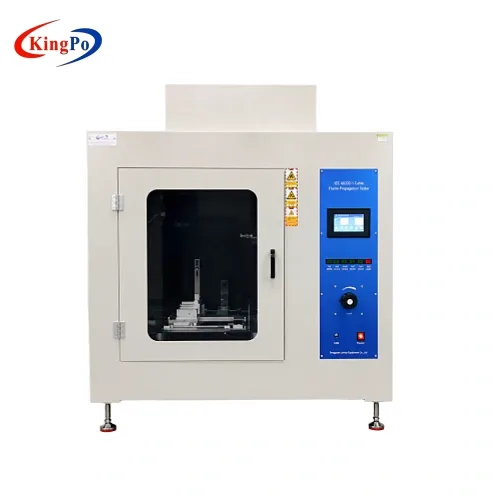
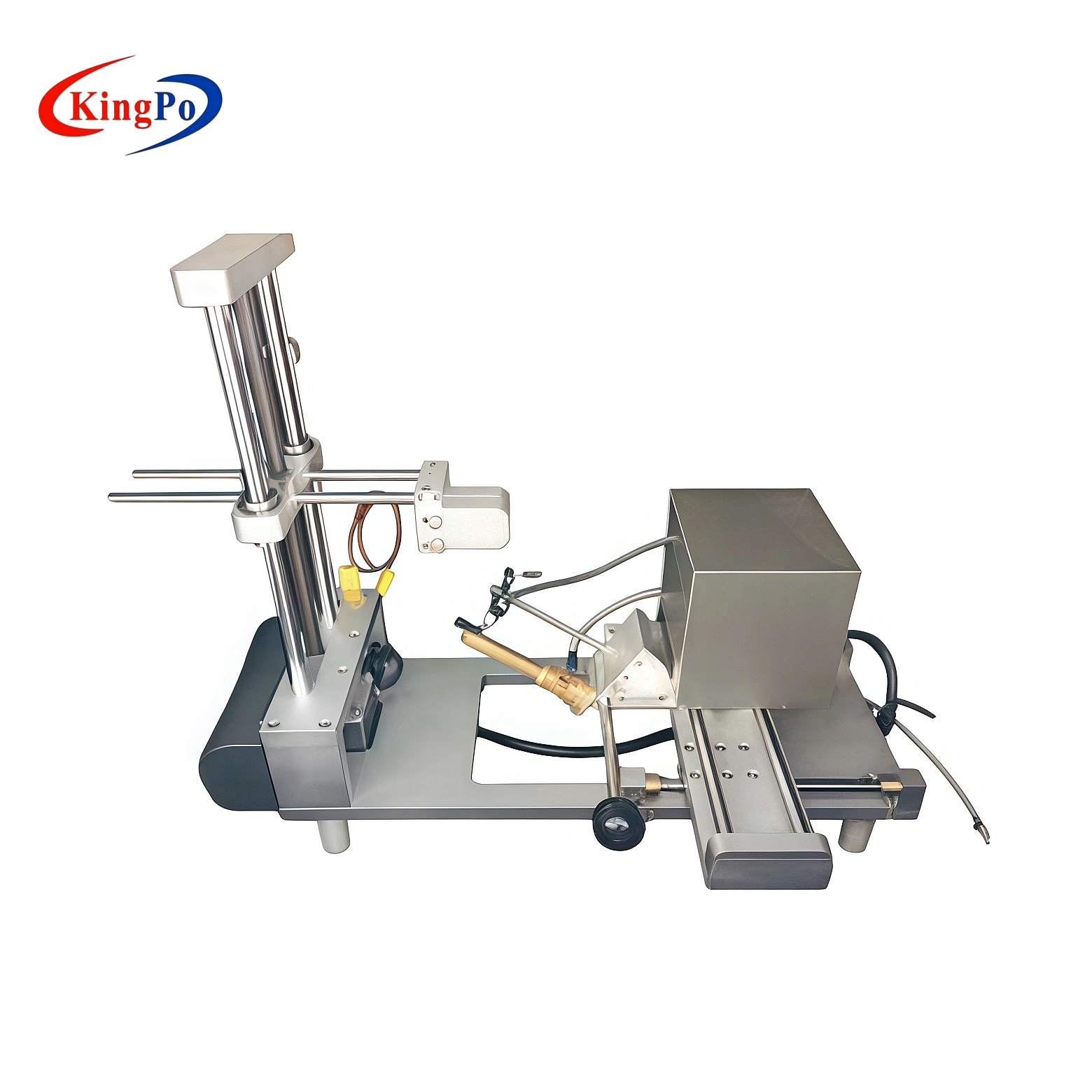
Glow wire testing and electrical insulation testing are not alternative methods for the same safety requirement. They evaluate different hazards and different failure mechanisms.
A glow wire test evaluates fire hazard associated with overheated or glowing electrical parts. An insulation resistance test evaluates how effectively an insulation system resists electrical conduction. A dielectric strength or hipot test verifies whether insulation can withstand a specified high voltage without breakdown. A leakage current test measures current flowing through defined leakage or accessible paths.
The needle flame test also evaluates fire hazard, but it uses a small open flame rather than an electrically heated glow wire. Understanding these differences is essential when selecting test methods, interpreting IEC requirements, specifying laboratory equipment or investigating product failures.
Quick Comparison: What Does Each Test Evaluate?
| Test Method | Primary Hazard | Applied Stress | Main Result / Observation | Typical Equipment |
|---|---|---|---|---|
| Glow Wire Test | Fire hazard from overheated or glowing parts | Electrically heated glow wire | Ignition, flaming, glowing, duration and droplets | Glow wire test apparatus |
| Insulation Resistance | Insufficient or degraded insulation | DC test voltage | Resistance in MΩ or GΩ | Insulation resistance tester |
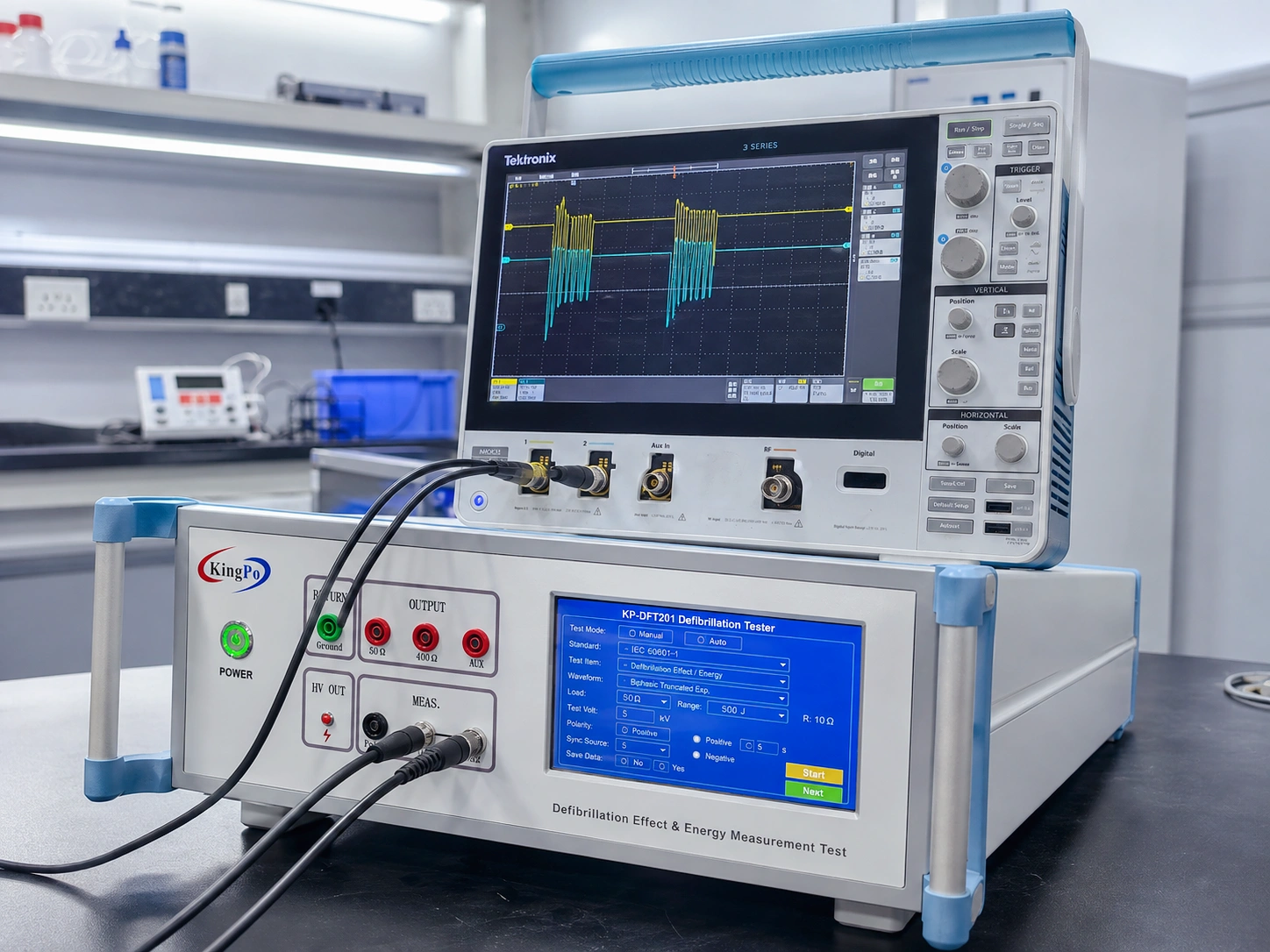
| Dielectric Strength / Hipot | Electrical insulation breakdown | High AC or DC voltage | Withstand, breakdown, flashover or current limit | Hipot / dielectric strength tester |
| Leakage Current | Current through defined leakage paths | Specified operating or test condition | Leakage current, typically mA | Leakage current tester / measuring network |
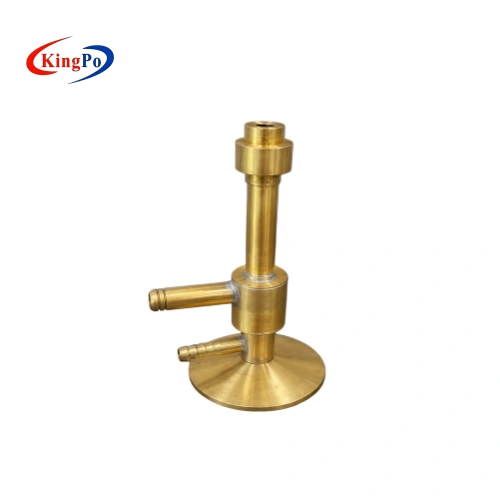
| Needle Flame Test | Fire hazard from a small flame source | Standardized open flame | Ignition, afterflame, afterglow and propagation | Needle flame test apparatus |
| UL 94 Flame Test | Burning behaviour of polymeric materials | Defined test flame | Burning rate, extinguishing behaviour and classification | Horizontal / vertical flame tester |
Why Glow Wire and Electrical Insulation Tests Are Not Interchangeable
Electrical products can present several different safety hazards.
A failure inside an appliance, connector, switch, power supply or electronic device may create abnormal heat capable of igniting nearby polymeric material. This is primarily a fire hazard.
A different failure may allow electrical current to pass through insulation intended to separate live parts from accessible or grounded parts. This is primarily an electric shock or insulation-system hazard.
Fire Hazard Testing
Evaluates ignition, combustion and flame propagation caused by abnormal thermal conditions or defined flame sources.
Electrical Insulation & Shock Testing
Evaluates insulation integrity and current reaching accessible or unintended conductive paths.
What Is a Glow Wire Test?
The glow wire test is a fire hazard simulation test used for electrotechnical products, components and materials.
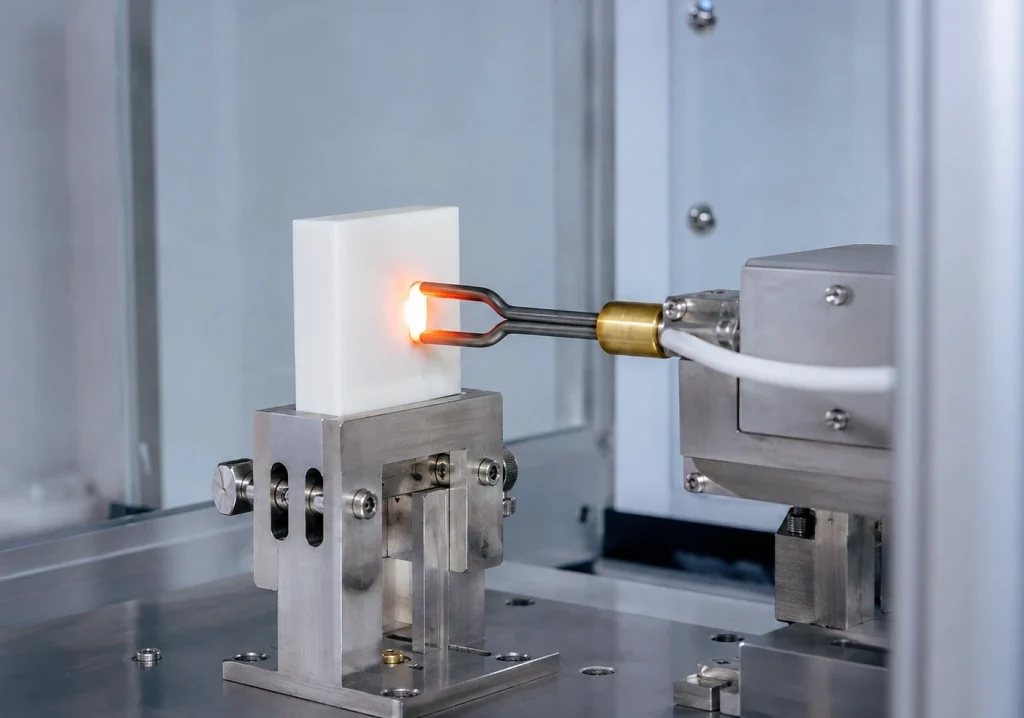
IEC 60695-2-10:2026 specifies the glow-wire apparatus and common test procedure used to simulate short-duration thermal stresses that can be produced by heat sources such as glowing elements or overloaded resistors. A standardized electrically heated wire is used as the ignition source.
Typical abnormal conditions represented by the method include:
- an overloaded resistor becoming excessively hot;
- a loose or high-resistance electrical connection;
- an overheated current-carrying component;
- thermal energy transferred from a hot metallic part to nearby polymeric material;
- localized electrical faults that create a hot solid surface.
Depending on the applicable test method, observations can include:
- whether ignition occurs;
- duration of flaming;
- duration of glowing;
- behaviour after removal of the glow wire;
- molten or burning material;
- whether falling material ignites the specified layer beneath the specimen.
Glow Wire Test vs Insulation Resistance Test
An insulation resistance test evaluates the ability of an insulation system to resist electrical conduction. A specified DC voltage is applied across the insulation and the resulting current is measured.
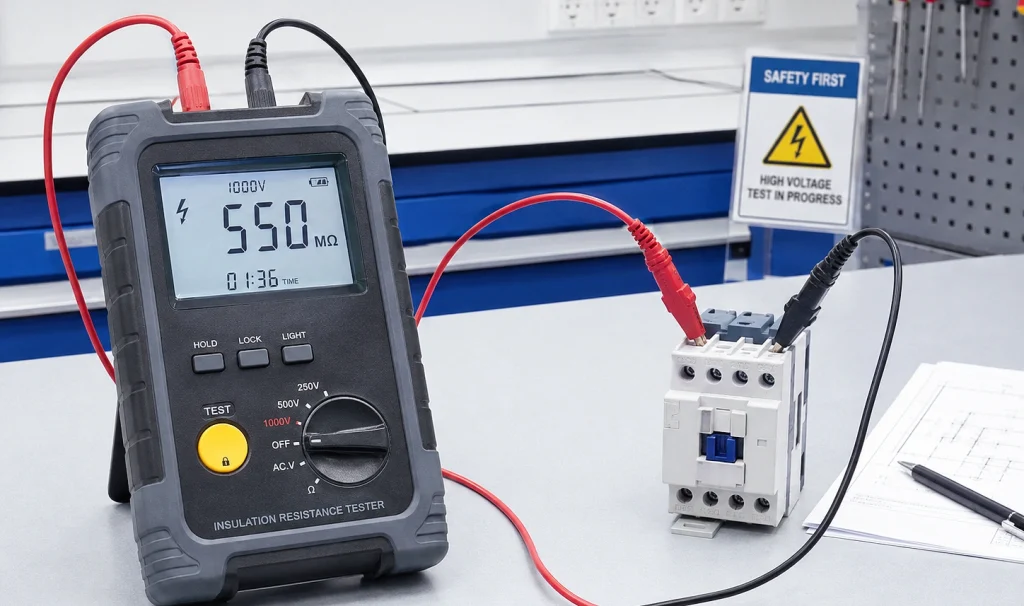
Because good electrical insulation allows only a very small current to flow, the resulting resistance is normally high and may be expressed in megohms (MΩ) or gigohms (GΩ).
| Comparison | Glow Wire Test | Insulation Resistance Test |
|---|---|---|
| Purpose | Fire hazard evaluation | Electrical insulation evaluation |
| Stress | High-temperature solid heat source | DC voltage |
| Result | Ignition and fire behaviour | Resistance |
| Typical Unit | Temperature / time observations | MΩ / GΩ |
Glow Wire Test vs Dielectric Strength / Hipot Test
A dielectric strength test evaluates whether an insulation system can withstand a specified electrical potential without unacceptable breakdown.
The method may also be described as a hipot test, high-potential test, withstand voltage test or electric strength test.
| Parameter | Glow Wire Test | Dielectric Strength / Hipot |
|---|---|---|
| Hazard | Fire | Electric shock / insulation breakdown |
| Stress | Thermal | Electrical |
| Failure Mechanism | Ignition / continued burning | Breakdown / flashover / excessive current |
| Equipment | Glow wire tester | Hipot tester |
Can a Product Pass Hipot but Fail the Glow Wire Test?
Yes. This is entirely possible.
An electrical connector may have adequate insulation and successfully withstand the required dielectric strength test, while polymeric material surrounding an abnormal high-resistance connection may still ignite or continue burning when exposed to abnormal thermal stress. The two tests evaluate different safety properties.
Glow Wire Test vs Leakage Current Test
Leakage current is electrical current flowing through a defined path other than the primary intended operating circuit.
Real electrical equipment may exhibit leakage current because of:
- EMC filter components;
- Y capacitors;
- transformer parasitic capacitance;
- distributed capacitance;
- insulation characteristics.
Leakage current testing therefore measures an electrical quantity under defined conditions, while glow wire testing evaluates fire behaviour under thermal stress. The two tests cannot replace one another.
Glow Wire Test vs Needle Flame Test
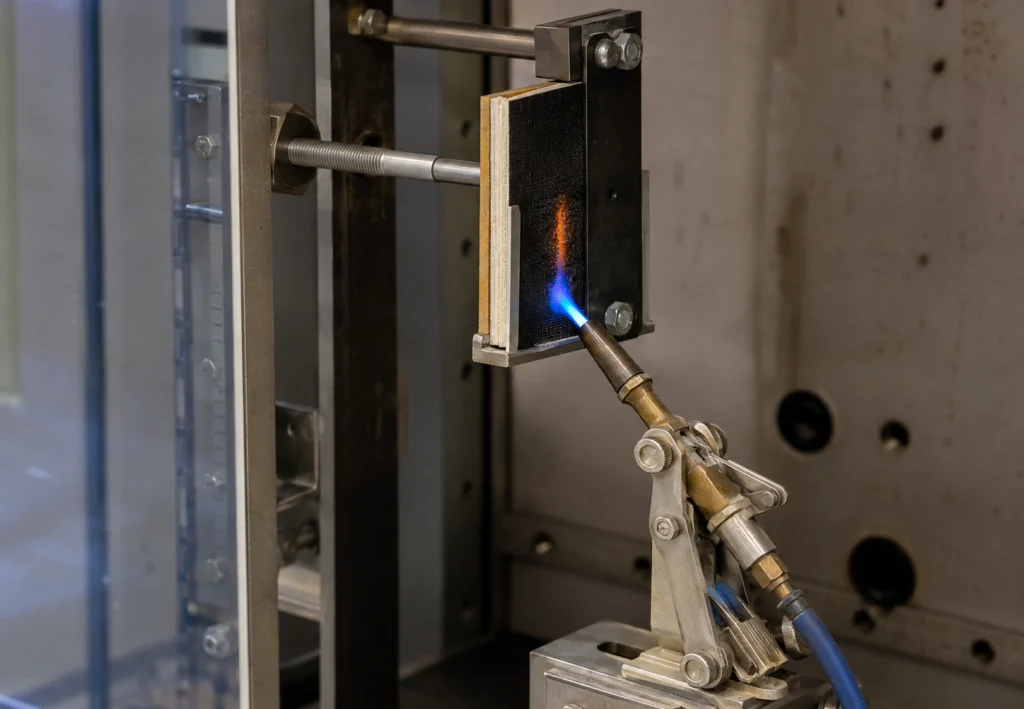
Glow wire and needle flame testing are more closely related because both belong to fire hazard testing, but the simulated ignition sources are different.
| Parameter | Glow Wire Test | Needle Flame Test |
|---|---|---|
| Test Family | Fire hazard testing | Fire hazard testing |
| Ignition Source | Electrically heated solid wire | Small standardized open flame |
| Simulated Condition | Overheated / glowing component | Small flame caused by a fault |
| Relevant IEC Family | IEC 60695-2 series | IEC 60695-11-5 |
For laboratories performing small-flame testing, see KingPo’s IEC 60695-11-5 Needle Flame Test Apparatus .
Glow Wire Test vs UL 94: Are They Equivalent?
No. A UL 94 material classification does not automatically replace an applicable IEC glow-wire requirement.
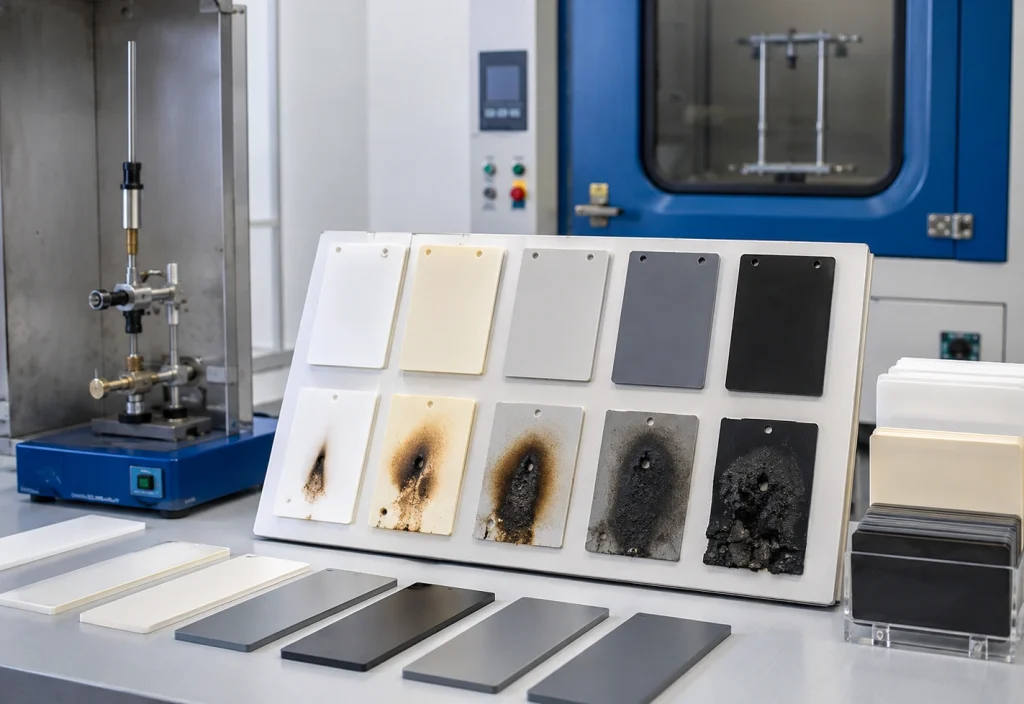
Although both methods address fire behaviour, they differ in:
- ignition source;
- specimen configuration;
- test procedure;
- observations;
- acceptance or classification system;
- application within the relevant product standard.
A material classified as UL 94 V-0 may be a useful candidate during material selection, but this classification should not automatically be interpreted as compliance with an applicable IEC glow-wire requirement.
IEC 60695-2-10, -2-11, -2-12 and -2-13 Explained
The expression “glow wire test” covers several related IEC methods. The specific method depends on whether the laboratory is evaluating the apparatus, an end product or a material specimen.
You can also browse KingPo’s broader testing standards resource center for related IEC test equipment and technical information.
| Standard | Primary Role | Test Object |
|---|---|---|
| IEC 60695-2-10:2026 | Glow-wire apparatus and common test procedure | Common apparatus / procedure foundation |
| IEC 60695-2-11 | Glow-wire flammability test for end products — GWEPT | End products / components |
| IEC 60695-2-12 | Glow-Wire Flammability Index — GWFI | Material specimens |
| IEC 60695-2-13 | Glow-Wire Ignition Temperature — GWIT | Material specimens |
IEC 60695-2-10:2026
IEC 60695-2-10:2026 is Edition 4.0 and specifies the glow-wire apparatus and common test procedure. The 2026 edition also introduces a normative annex concerning use of a pyrometer for glow-wire temperature measurement.
IEC 60695-2-11 — GWEPT
GWEPT applies to end products and is intended to evaluate product behaviour under defined glow-wire exposure conditions.
IEC 60695-2-12 — GWFI
GWFI applies to material specimens and evaluates material flammability behaviour under the standardized glow-wire method.
IEC 60695-2-13 — GWIT
GWIT also applies to material specimens, but its primary purpose is to evaluate the material’s resistance to ignition under glow-wire exposure.
GWEPT vs GWFI vs GWIT
| Term | Full Name | Test Object | Primary Purpose |
|---|---|---|---|
| GWEPT | Glow-Wire Flammability Test Method for End Products | End product / component | End-product behaviour under glow-wire exposure |
| GWFI | Glow-Wire Flammability Index | Material specimen | Material flammability performance |
| GWIT | Glow-Wire Ignition Temperature | Material specimen | Material ignitability |
Which Test Does Your Product Actually Need?
| Engineering Question | Likely Test Category |
|---|---|
| Can abnormal overheating ignite surrounding polymeric material? | Glow Wire Test |
| Can a small fault flame cause unacceptable fire propagation? | Needle Flame Test |
| Is insulation resistance sufficiently high? | Insulation Resistance Test |
| Can insulation withstand the required high electrical stress? | Dielectric Strength / Hipot Test |
| How much current flows through a specified leakage path? | Leakage Current Test |
| How does a polymeric material behave under a specified flame? | Applicable Flame / Material Flammability Test |
The applicable product standard ultimately determines the required test method, test conditions and acceptance criteria. A single product may require several different tests because fire, electric shock and insulation hazards must be evaluated independently.
Test Equipment for IEC 60695 Fire Hazard Testing
Laboratories performing IEC 60695 fire hazard testing should select equipment based on the applicable standard, edition and test method rather than the generic instrument name alone.
For glow-wire testing, important equipment considerations include:
- controlled glow-wire heating;
- accurate temperature measurement;
- stable specimen positioning;
- controlled contact movement;
- repeatable timing;
- safe observation of ignition and flame behaviour;
- calibration and documentation support.
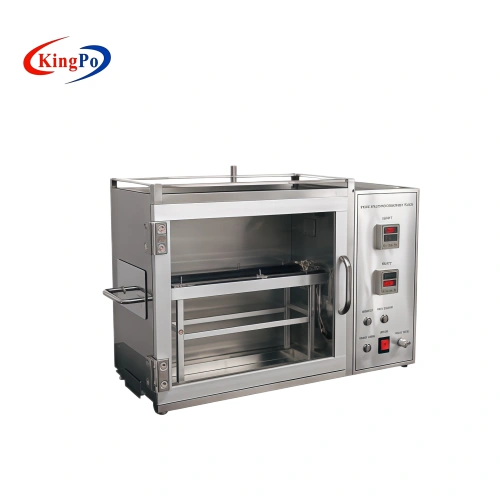
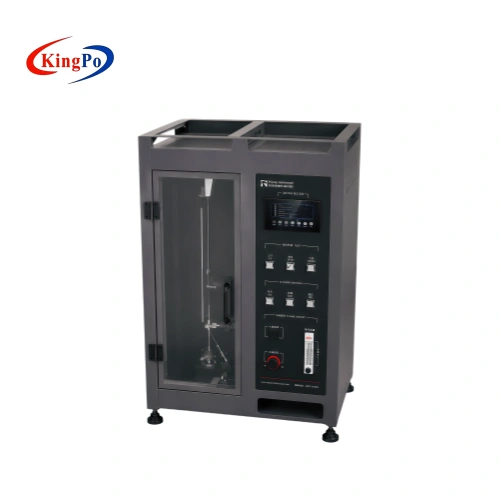
IEC 60695-2-10 Glow Wire Test Apparatus
Designed for controlled glow-wire heating, specimen application, timing and observation for laboratory fire-hazard testing.
IEC 60695-11-5 Needle Flame Test Apparatus
Uses a standardized small flame to evaluate fire hazards that may arise from fault conditions.
Glow Wire Test Guide: Principles, Test Procedure and Applications
Key Takeaways
Glow Wire Test: evaluates fire hazard resulting from abnormal thermal stress.
Insulation Resistance: evaluates resistance to electrical conduction through an insulation system.
Dielectric Strength / Hipot: evaluates whether insulation withstands specified high electrical stress without breakdown.
Leakage Current: measures current flowing through defined leakage or accessible paths.
Needle Flame: evaluates fire hazard caused by a small standardized open flame.
UL 94: evaluates specified burning characteristics of polymeric materials under defined flame conditions.
Frequently Asked Questions
1. Is a glow wire test an electrical insulation test?
No. Glow-wire testing is primarily a fire hazard test. Insulation resistance and dielectric strength testing evaluate electrical insulation properties.
2. What is the difference between a glow wire test and a hipot test?
Glow wire testing applies thermal stress and evaluates ignition and fire behaviour. Hipot testing applies high electrical voltage and evaluates insulation withstand performance.
3. What is the difference between glow wire and insulation resistance testing?
Glow wire testing evaluates fire behaviour under abnormal heat. Insulation resistance testing applies a DC voltage and measures how effectively the insulation resists electrical conduction.
4. Can a product pass hipot but fail the glow wire test?
Yes. The electrical insulation system can withstand the required voltage while a nearby polymeric material still performs poorly under abnormal thermal stress.
5. What is the difference between glow wire and needle flame testing?
Both evaluate fire hazard, but glow wire uses a heated solid ignition source while needle flame testing uses a small standardized open flame.
6. Are GWFI, GWIT and GWEPT the same test?
No. GWFI evaluates material flammability, GWIT evaluates material ignitability, and GWEPT applies to end products.
7. Does UL 94 V-0 replace an IEC glow wire requirement?
Not automatically. UL 94 and IEC glow-wire methods use different ignition sources, procedures and evaluation systems. The applicable product standard determines the required tests.
8. Which IEC standard defines the glow wire apparatus?
IEC 60695-2-10:2026 specifies the glow-wire apparatus and common test procedure. Related methods are specified in IEC 60695-2-11, IEC 60695-2-12 and IEC 60695-2-13.
9. Which test should a manufacturer perform first?
There is no universal sequence. The applicable product safety standard determines which hazards must be evaluated and which test methods are required.
10. What information is needed when selecting glow wire test equipment?
The laboratory should identify the applicable standard and edition, test method, material or end-product application, required test temperature, specimen geometry, fixture requirements, automation requirements, calibration scope and documentation needs.
Need Help Selecting the Correct Test Method?
To confirm the appropriate glow wire, needle flame or electrical safety test configuration, please provide:
- Applicable standard and edition
- Specific clause or test method
- Test object or material
- Required test conditions
- Calibration and documentation requirements
KingPo can review the applicable test method and recommend the corresponding laboratory equipment configuration before quotation.