Abstract / Technical Summary
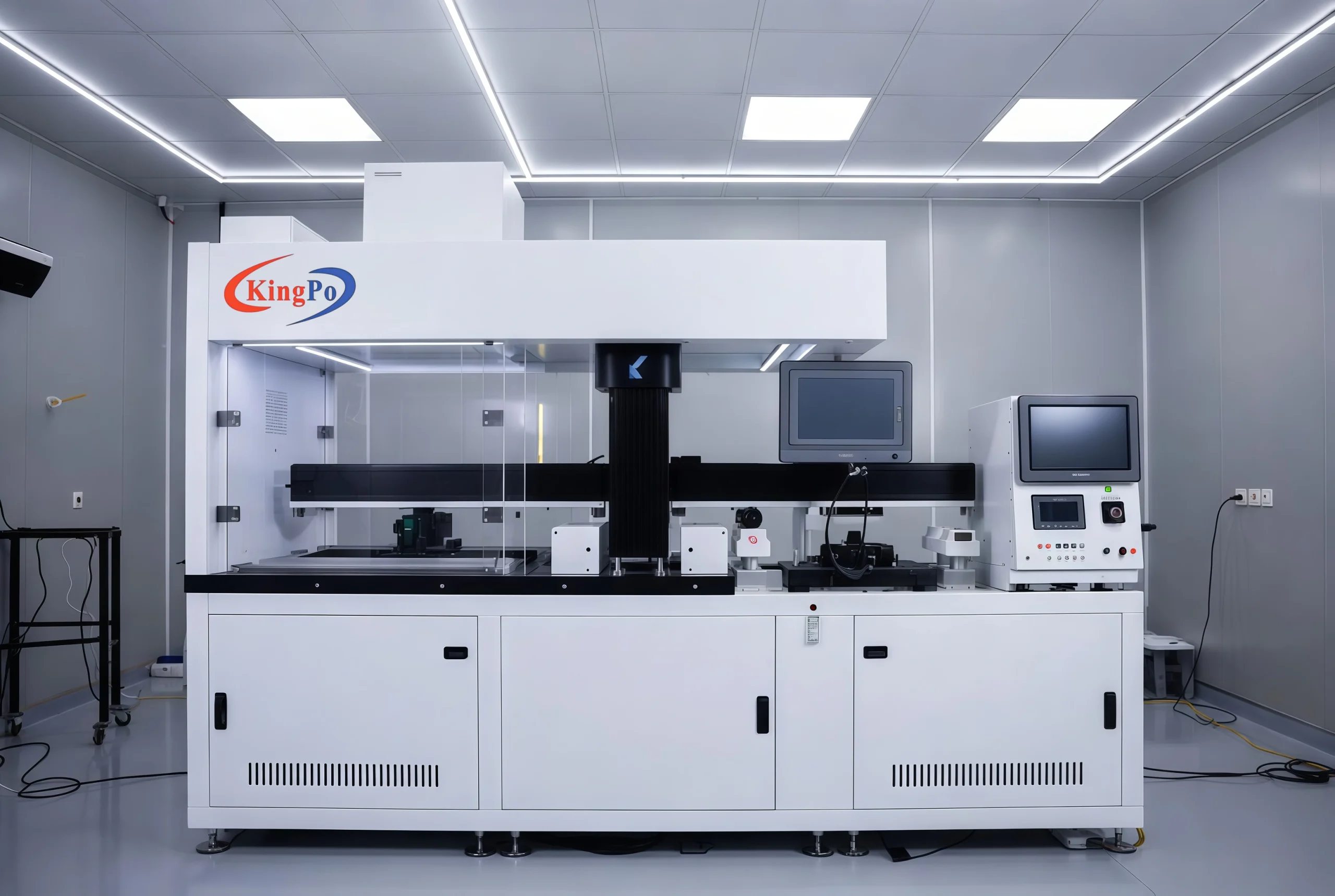
Laser test equipment represents the cornerstone of modern precision optics and laser manufacturing. It provides high-accuracy characterization of beam profile, power, energy, and spectral properties essential for laser cutting, engraving, marking, and safety validation. At KingPo, our IEC 60825-1-2-12 compliant laser testing equipment integrates the Centuari True RMS Power Meter, BGS-USB3-SP932U Beam Profiler, PE10-C/PE25-C Energy Probes, motorized opto-mechanical stages, and miniature spectrometer. This in-depth guide offers a complete technical reference — from fundamental measurement principles to advanced selection criteria, operational procedures, maintenance protocols, and real-world applications — enabling manufacturers and laboratories to achieve repeatable results with measurement uncertainty below 1 %.
Introduction
We at KingPo have dedicated more than 15 years to the development and refinement of laser test equipment that meets the stringent requirements of IEC 60825-1-2-12. In high-precision industries such as automotive, electronics, medical devices, and aerospace, even minor deviations in laser beam parameters can lead to defective products, safety incidents, or failed certifications. Our laser testing equipment delivers comprehensive, traceable data for beam profiling, power measurement, energy quantification, and spectral analysis, ensuring both performance optimization and regulatory compliance. This guide consolidates our practical expertise and technical specifications to assist engineers and quality managers in making informed decisions.
Why Laser Test Equipment Is Indispensable in Contemporary Manufacturing?
- Laser systems now operate at power levels ranging from milliwatts to kilowatts and pulse durations from femtoseconds to continuous wave. Without precise laser test equipment, manufacturers cannot reliably quantify critical parameters such as beam diameter, centroid position, ellipticity, power density, or temporal stability.
- Consequences of inadequate measurement include: • Increased scrap rates due to inconsistent cutting or marking quality • Safety risks from unverified beam divergence or energy output • Prolonged certification cycles and potential regulatory non-compliance • Reduced competitiveness in global markets that demand documented IEC 60825 conformity
- Professional laser testing equipment mitigates these risks by providing real-time, high-speed data acquisition (up to 10 000 Hz) and automated reporting, directly contributing to higher yield, faster time-to-market, and enhanced product reliability.
Understanding Laser Test Equipment Standards and Core Measurement Principles
The international benchmark is IEC 60825-1-2-12, which specifies safety requirements and standardized test methods for laser products. Our laser testing equipment is engineered to exceed every clause of this standard, supporting both continuous-wave and pulsed lasers across UV, visible, and IR wavelengths.
Key measurement domains include:
- Radiometric power and energy — using True RMS detection for accurate average and peak values
- Beam spatial characteristics — 2D/3D profiling with pixel-level resolution
- Temporal dynamics — high-frequency sampling to detect jitter and instability
- Spectral properties — wavelength accuracy to 1.9 nm resolution
Comprehensive Component Comparison Table
| Component | Model / Specification | Wavelength Range | Key Technical Index | Primary Application |
|---|---|---|---|---|
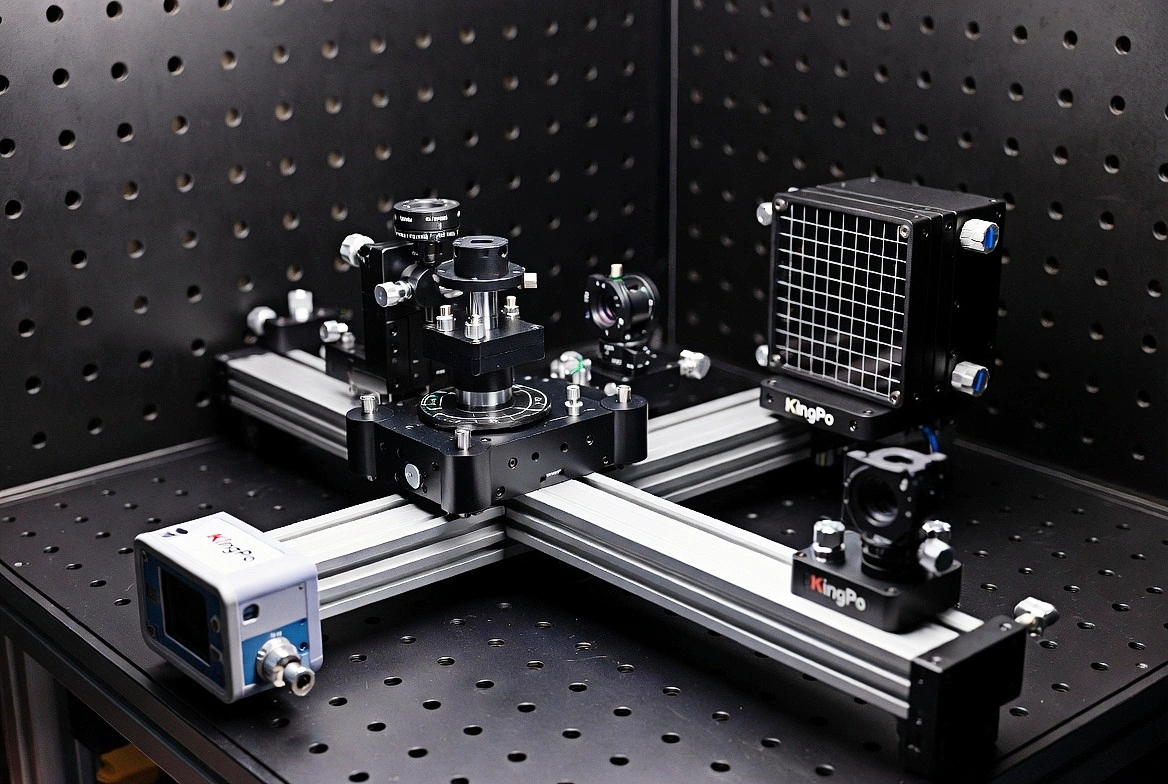
| Power Meter | Centuari True RMS + PD300 series | 200–1800 nm | 10 000 Hz recording, dual power/energy | Real-time stability & density calculation |
| Beam Profiler | BGS-USB3-SP932U | 350–1100 nm | 2048×1536 pixels, 3.45 μm pixel size | 2D/3D profile, centroid, ellipticity |
| Energy Probes | PE10-C / PE25-C | 0.15–12 μm | 25 kHz / 10 kHz max, high damage threshold | Pulsed energy measurement |
| Integrating Sphere | IS6-D-VIS-V1 | 0.4–1.1 μm | ±60° divergence, 20 μW–30 W | Total power for divergent beams |
| Miniature Spectrometer | SGM2020-VNIR | 350–1020 nm | 1.9 nm resolution | Spectral characterization of sources |
These components form a fully integrated laser testing equipment platform capable of handling large divergence angles and high LIDT (laser-induced damage threshold) requirements.
Key Features to Look for in Professional Laser Testing Equipment
When selecting laser test equipment, engineers should evaluate:
- Data acquisition speed ≥10 000 Hz to capture transient events
- Pixel resolution and dynamic range sufficient for micron-level beam analysis
- Motorized stages with sub-micron repeatability for automated alignment
- Comprehensive software with baseline normalization, fill factor, and automatic report generation
- Full traceability through ISO 17025-accredited calibration
Our systems incorporate all these features as standard, with modular design allowing future upgrades without hardware replacement.
Step-by-Step Operational Procedure for Laser Test Equipment
Step 1 – Installation and Safety Commissioning
Mount the laser source on the motorized linear/rotary stage. Connect the Centuari power meter, beam profiler, and safety interlocks. Verify compliance with IEC 60825-1-2-12 Class 1–4 requirements before powering on.
Step 2 – Beam Alignment and Profiling
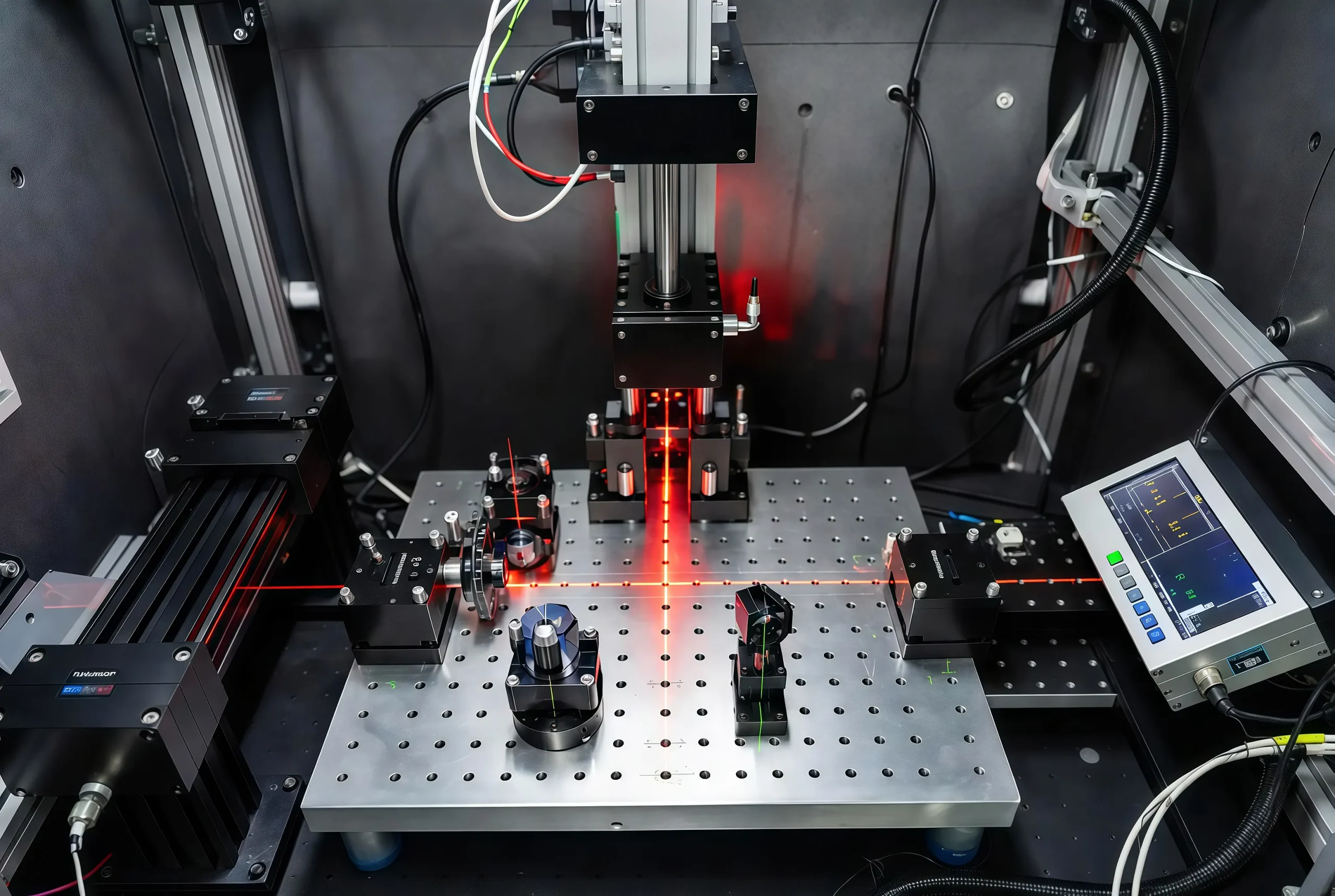
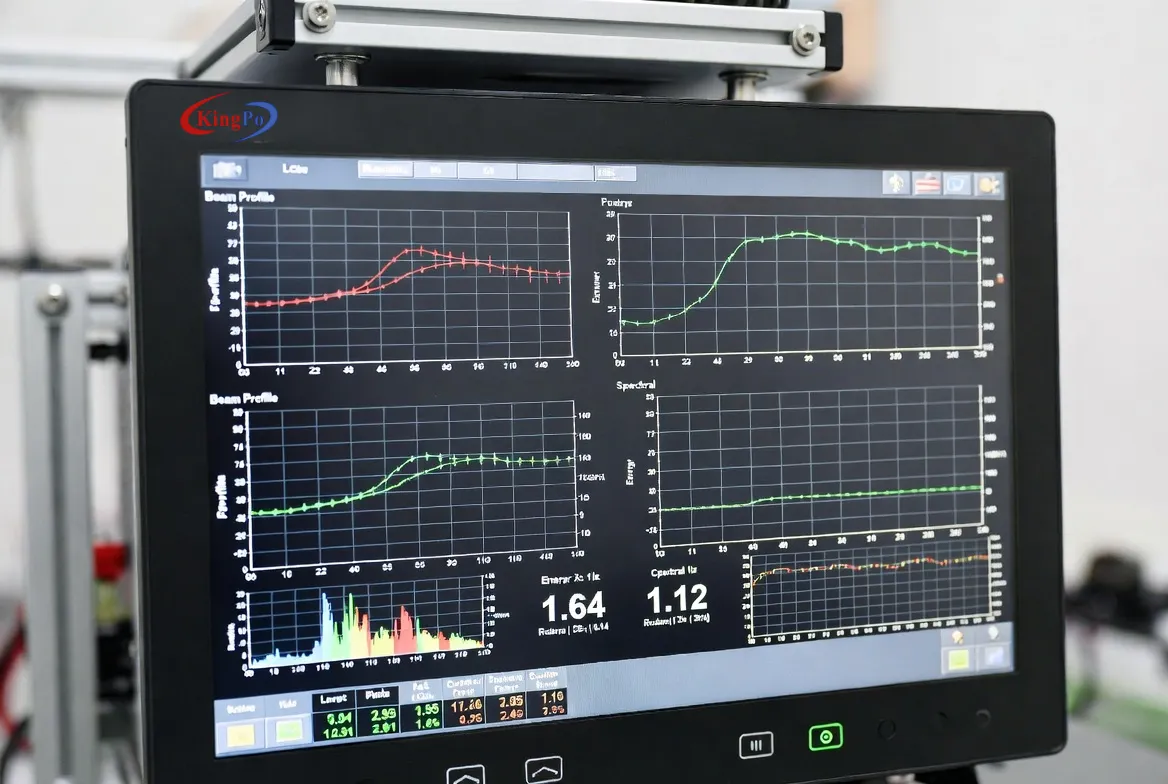
Activate the BGS-USB3-SP932U profiler. Capture live 2D/3D intensity maps and adjust motorized stages until the centroid is centered within specified tolerance and ellipticity meets application requirements.
Step 3 – Power and Energy Characterization
Switch the Centuari module to power mode for continuous-wave measurement or engage PE10-C/PE25-C probes for pulsed operation. Record at maximum sampling rate to quantify stability, peak power, and energy density.
Step 4 – Spectral and Temporal Analysis
Insert the SGM2020-VNIR spectrometer for wavelength verification. Use the fast photodetector probe (FPS-1) when sub-nanosecond rise times are required.
Step 5 – Data Analysis, Reporting, and Archiving
The integrated software performs automatic calculations of beam diameter, power density, fill factor, and baseline normalization, generating fully traceable PDF reports compliant with IEC 60825-1-2-12 documentation standards.
KingPo Laser Test Equipment Technical Advantages
We at KingPo manufacture our laser testing equipment under ISO 9001 and ISO 17025 accreditation. Every system undergoes rigorous factory calibration and includes:
- ISO 17025 calibration certificates with measurement uncertainty statements
- On-site installation, operator training, and validation support
- 1-year comprehensive warranty (excluding consumables) plus lifetime software upgrades
- 48-hour technical response guarantee from our Dongguan engineering facility
-
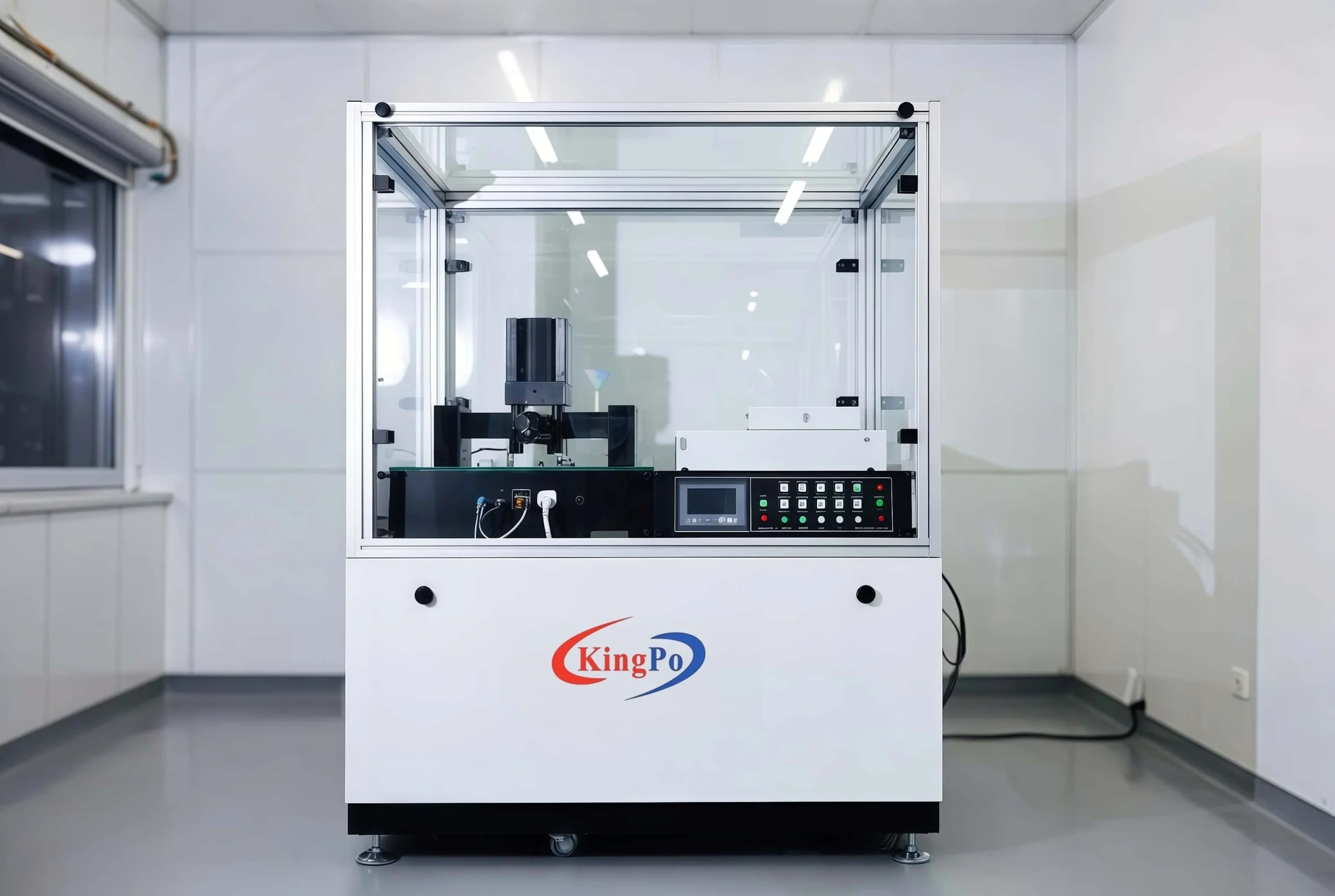
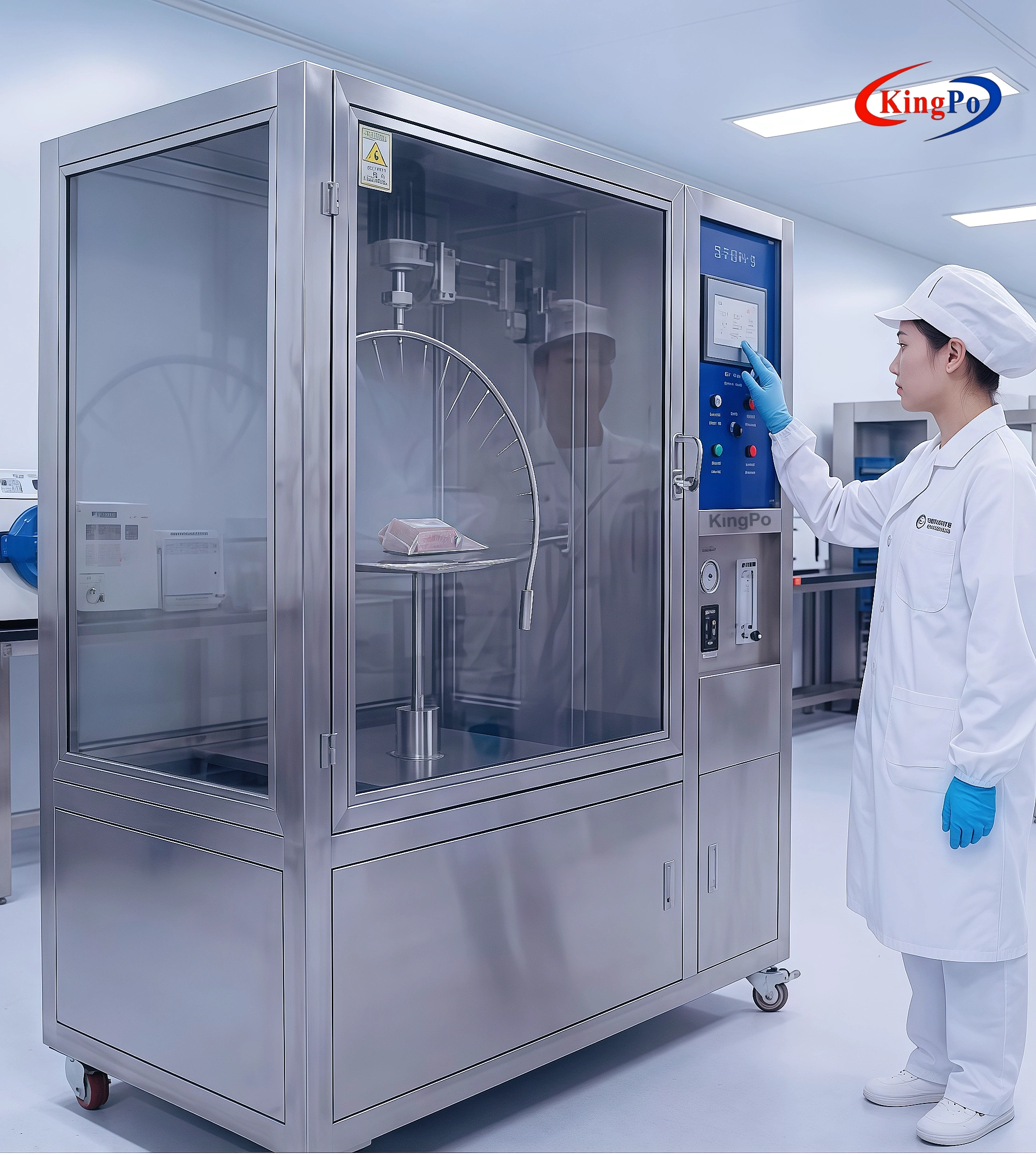
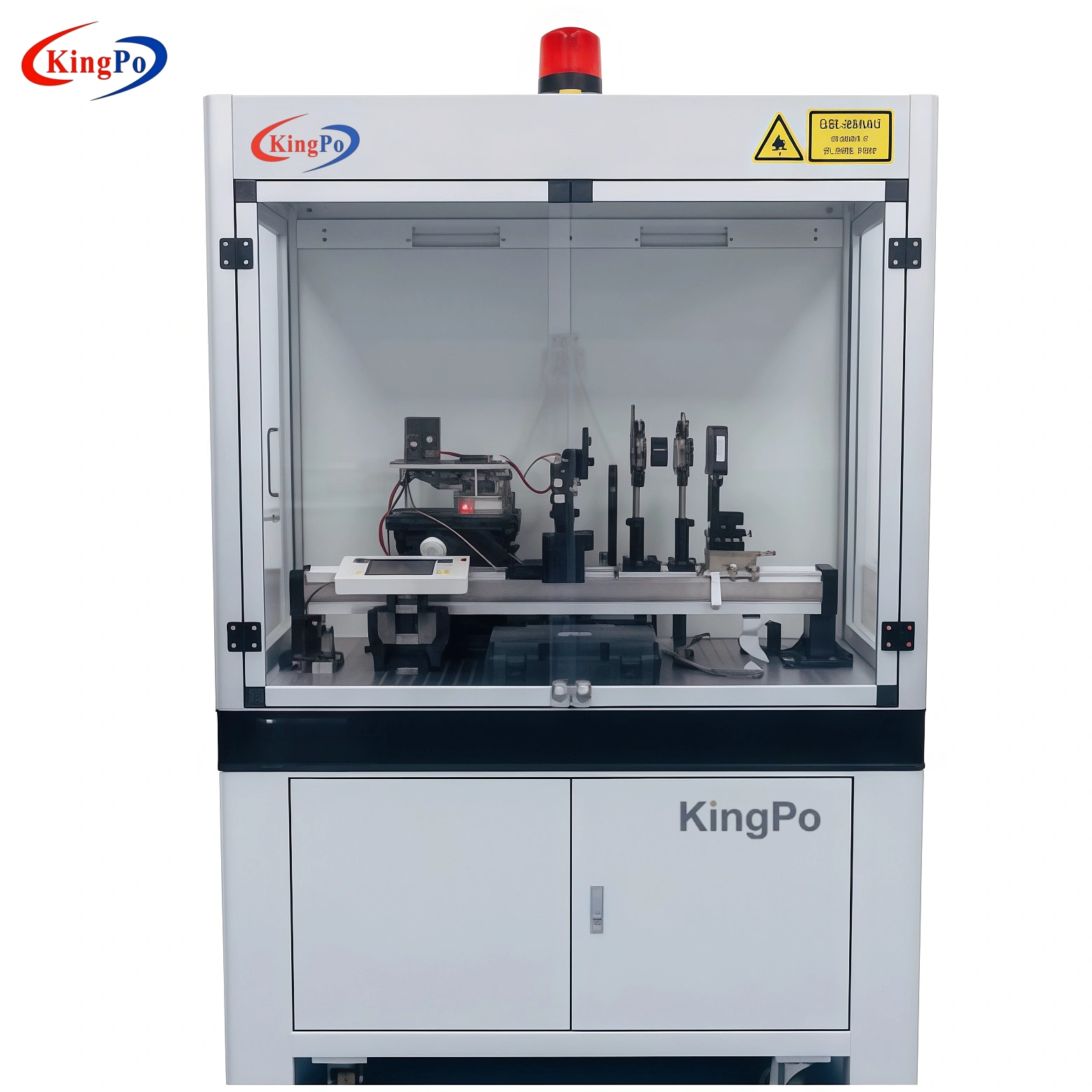
KingPo laser test equipment full enclosed cabinet with safety interlocks and KingPo branding.
Since 2026, we have successfully delivered multiple complete IEC 60825-1-2-12 laser testing systems to manufacturers and accredited laboratories in China, Europe, and Asia, consistently achieving measurement repeatability better than 0.5 %.
Common Challenges in Laser Testing and How Professional Equipment Resolves Them
Challenge 1: Beam instability due to thermal drift — resolved by high-speed 10 000 Hz sampling and real-time centroid tracking.
Challenge 2: Measurement error with divergent beams — addressed by the IS6-D-VIS integrating sphere with ±60° acceptance angle.
Challenge 3: Pulsed energy accuracy at high repetition rates — solved by PE10-C/PE25-C probes with response times up to 25 kHz.
Challenge 4: Traceability for certification audits — eliminated through built-in ISO 17025 documentation and automated reporting.
Real-World Applications and Case Studies
- In industrial laser cutting lines, our laser test equipment has enabled automotive suppliers to maintain sub-10 μm kerf width consistency across 24/7 production. Medical device manufacturers use the beam profiler and spectrometer combination to validate therapeutic laser wavelengths within ±1 nm, ensuring patient safety and regulatory approval. Third-party certification labs rely on our systems to issue IEC 60825-1-2-12 reports that are accepted by authorities worldwide, significantly shortening approval cycles.
Best Practices and Maintenance for Sustained Accuracy
Long-term performance depends on disciplined maintenance.
Detailed Maintenance Checklist
| Frequency | Component | Recommended Action | Acceptance Criterion |
|---|---|---|---|
| Daily | Optical surfaces & attenuators | Clean with lint-free tissue and isopropyl alcohol | No visible contamination |
| Weekly | Motorized stages & bearings | Inspect alignment, lubricate per manufacturer schedule | Sub-micron repeatability |
| Monthly | Power meter & energy probes | Zero calibration and reference verification | ±1 % of reading |
| Quarterly | Full system diagnostic | Run automated self-test suite | All parameters within spec |
| Annually | ISO 17025 recalibration | Professional service with updated uncertainty report | Full traceability certificate |
Adherence to this schedule maintains measurement uncertainty below 1 % over years of continuous use.
Future Trends in Laser Test Equipment
Emerging demands include higher-speed profiling for ultrafast lasers, AI-driven anomaly detection, and integration with Industry 4.0 data platforms. Our modular design ensures KingPo laser testing equipment can incorporate these advancements through firmware and software updates without requiring hardware replacement.
Conclusion
Laser test equipment is the critical link between laser source performance and final product quality. By investing in a professional IEC 60825-1-2-12 compliant system such as KingPo’s, manufacturers secure precise, traceable data that accelerates development, ensures safety, and strengthens market position.
For a tailored configuration of laser test equipment that precisely matches your laser cutting, engraving, marking, or safety validation requirements, please visit our Laser Testing Equipment product page. Our engineering team will provide detailed technical specifications and a competitive quote within 24 hours.